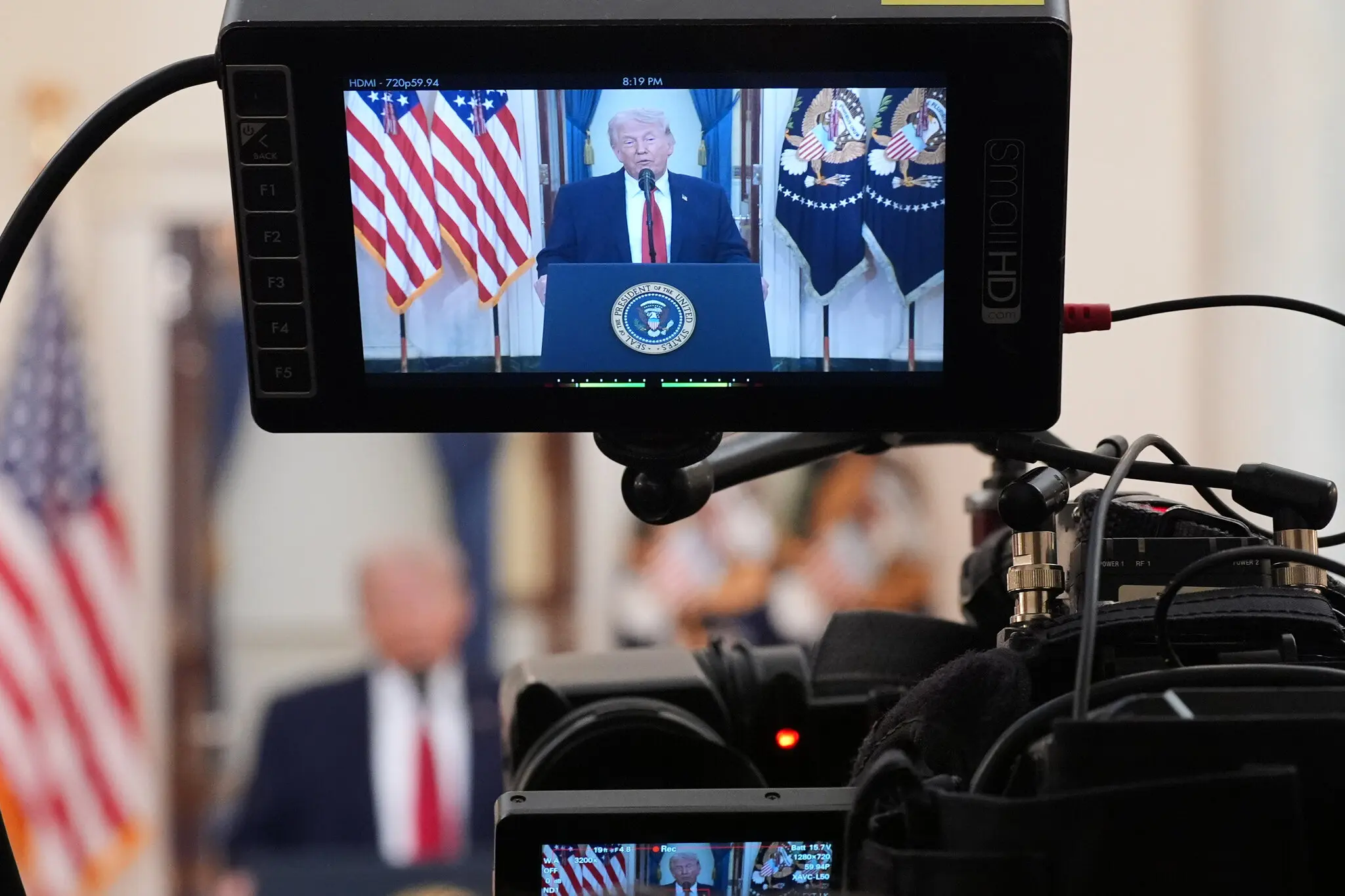






















Financial markets were waiting for one thing from Donald Trump’s White House speech: a boundary. Not another display of resolve, but some visible edge to the war with Iran — a signal that escalation was approaching its limit rather than opening into a longer and more unstable phase. Instead, investors heard the opposite.
In a 19-minute address, the U.S. president said the war was “nearing completion” but offered no credible path to de-escalation and no workable timeline for how the conflict might end. More importantly, he coupled that claim with a pledge for further attacks over the next two to three weeks. For markets, that was not the language of closure. It was the language of an expanding risk premium.
The reaction was immediate and unsurprising. Oil moved sharply higher, equities turned lower, and traders began repricing not only the military danger itself but the duration of the disruption now hanging over the global economy. In moments like this, markets can tolerate severity better than ambiguity. What they punish most is a conflict with no clear outer limit.
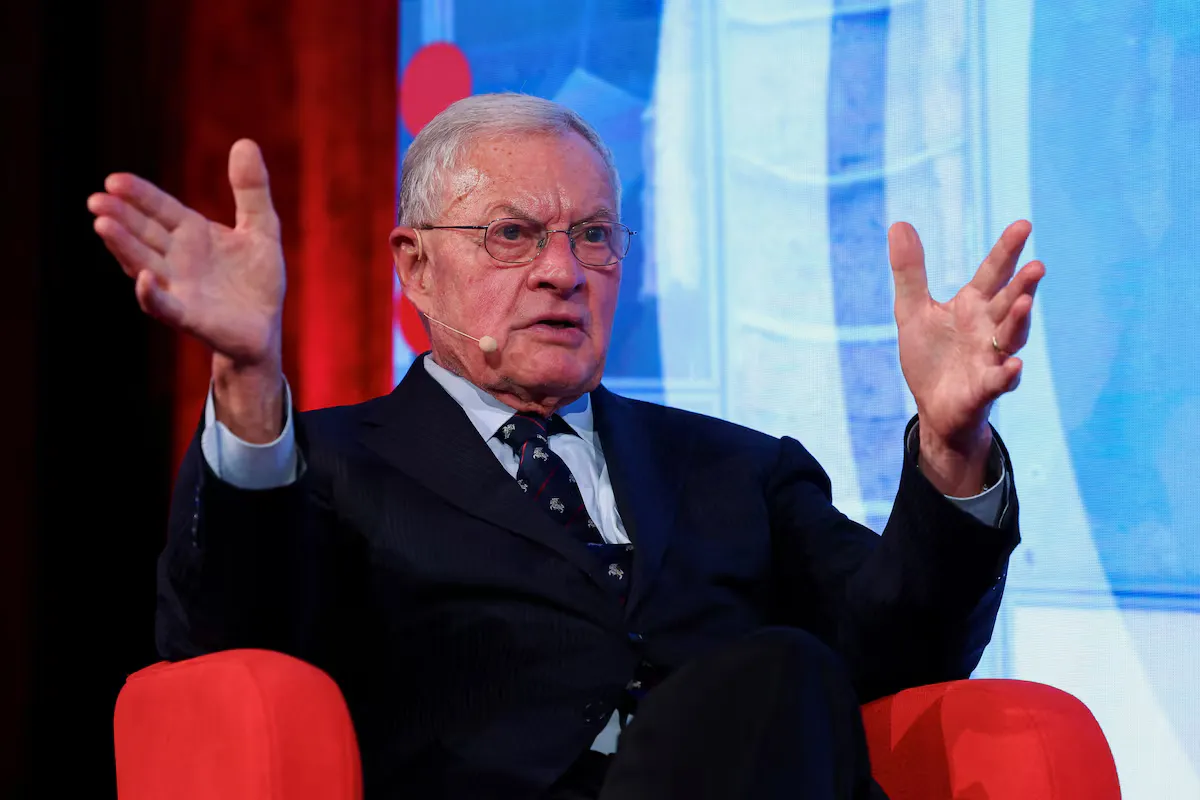
In Deykom’s assessment, investors are no longer treating this war as a short geopolitical shock. They are increasingly pricing in a prolonged interruption to energy flows, where the central variable is no longer only the scale of the damage but the length of time required to restore a functioning supply system.
Brent crude, the global benchmark, climbed to around $108 a barrel, while West Texas Intermediate rose to roughly $106. Those levels do not yet amount to a full return to the energy crises of earlier decades. But they do say something important: the market is losing faith in a quick collapse of the war premium built into oil.
At the center of this anxiety remains the Strait of Hormuz, the narrow corridor between Iran and Oman through which roughly one-fifth of the world’s oil supply normally passes, along with critical volumes of natural gas. As long as that route remains effectively compromised, every presidential statement, every strike, every military signal is instantly translated into price.
This is no longer just a story about commodity desks, tankers and futures contracts. It is a story about inflation, logistics, industrial costs and household pressure. When oil rises sharply, the effects radiate outward through transport, electricity, petrochemicals, aviation, agriculture and manufacturing. In wealthy economies, that means a higher cost of living. In more vulnerable ones, it can mean real stress on access to fuel, electricity and basic goods.
Asia feels that pressure first and hardest. Its economies import vast quantities of oil and gas, and its growth models are acutely sensitive to energy costs. The market declines in Japan and South Korea were not simply emotional reactions to a speech from Washington. They reflected a colder calculation: energy-dependent economies are always among the first to absorb the financial shock of instability in the Gulf.
Europe’s reaction was somewhat more restrained, but the logic was the same. A continent that has already lived through a painful energy reset can ill afford another commodity surge with no clear end point. For Europe, this is not merely a market event. It is a renewed threat to industrial margins, trade balances and consumer resilience.
The most politically visible consequences are already emerging at the pump. In the United States, gasoline prices rose to a national average of $4.08 a gallon, while diesel climbed to $5.51. That is more than a transportation story. Gasoline remains a powerful emotional and electoral signal in American politics, while diesel is the bloodstream of freight, farming and domestic distribution. When diesel rises fast, inflation does not stay in the abstract. It enters supply chains and grocery bills.
And here the timing matters. Retail fuel prices do not move in perfect lockstep with crude; they usually lag by several days and sometimes longer. That means the pain visible now may still understate the full effect of the latest oil move. If Brent remains elevated for even a few more weeks, households and businesses will face a second wave of pressure, not on trading screens but in operating costs and monthly budgets.
That is why the idea of a “temporary disruption” is becoming harder to sustain. Even if active fighting were to ease, energy markets do not simply snap back into place. Damaged infrastructure, broken shipping schedules, insurance risk, rerouted cargoes and lost confidence all take time to repair. Political messaging can shift in a day. Energy systems cannot.
This is the deeper problem now confronting the world economy. What begins as a military crisis can harden into a structural energy problem long after the headlines move on. Once a critical artery of supply is disrupted, the entire system compensates through higher inventories, more expensive freight, tighter credit conditions and a steeper price for risk itself. Those costs do not disappear. They settle into the price of everything downstream.
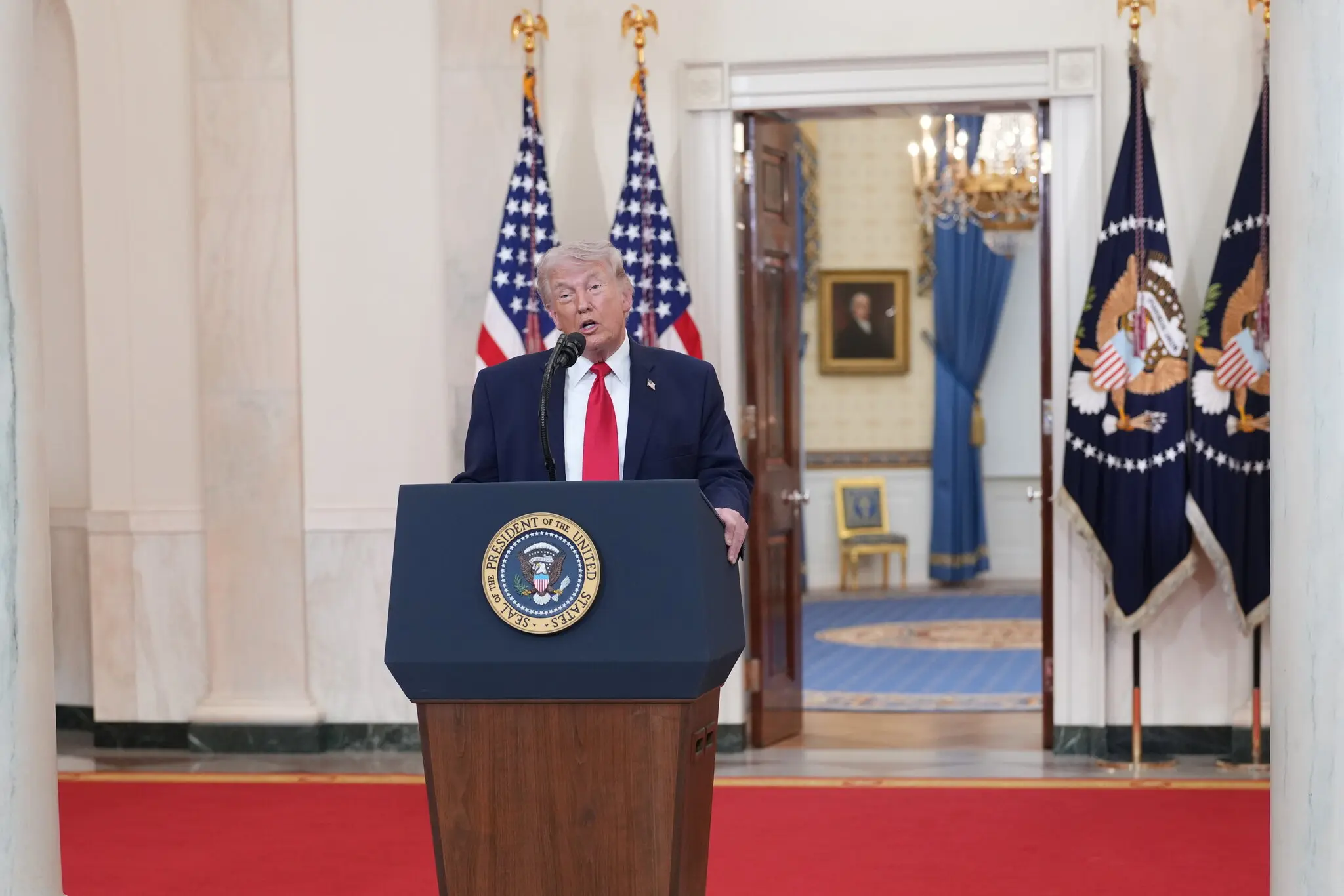
 Трамп завершив свою промову і не зробив жодних нових заяв щодо конфлікту — Фото басейну від Алекса Брендона
There is also a more severe possibility that analysts increasingly view as plausible: rationing. That word does not enter economic discussion lightly, but it becomes relevant when supply losses persist long enough that substitution is no longer sufficient. The longer the gap between global supply and demand remains open, the more likely countries are to alter not just where they buy energy, but how they consume it.
That would mean a forced turn to dirtier fuels in some regions, fresh disruptions to industrial production, tighter state control over strategic allocation and sharper pressure on emerging economies that have fewer fiscal tools and weaker reserves. In those countries, an energy shock quickly stops being a market issue and becomes a social one.
The central consequence of Trump’s speech, then, lies not in the force of its rhetoric but in its failure to narrow the horizon of fear. Investors can live with a violent episode if they can identify its limit. They react far more negatively when a government speaks of imminent success while promising weeks of further escalation. That contradiction undermines the reassurance the speech was supposed to provide.
For the White House, this creates a trap of its own. The longer the administration speaks in the language of military determination without a persuasive stabilization plan, the more its foreign-policy posture collides with domestic economic reality. American voters may support toughness abroad. They are far less patient with higher gasoline prices, weaker markets and another inflationary squeeze at home.
In that sense, the latest jump in oil is not simply a response to events in the Middle East. It is also a referendum on whether Washington can contain the economic consequences of its own strategy. Wars often last longer than political messaging suggests. Energy shocks often travel farther than policymakers expect.
For now, markets have reached a clear conclusion. The end of the war does not look close enough to price in. Another stretch of instability does. That is why oil is rising not only because missiles are flying, but because clarity is not.