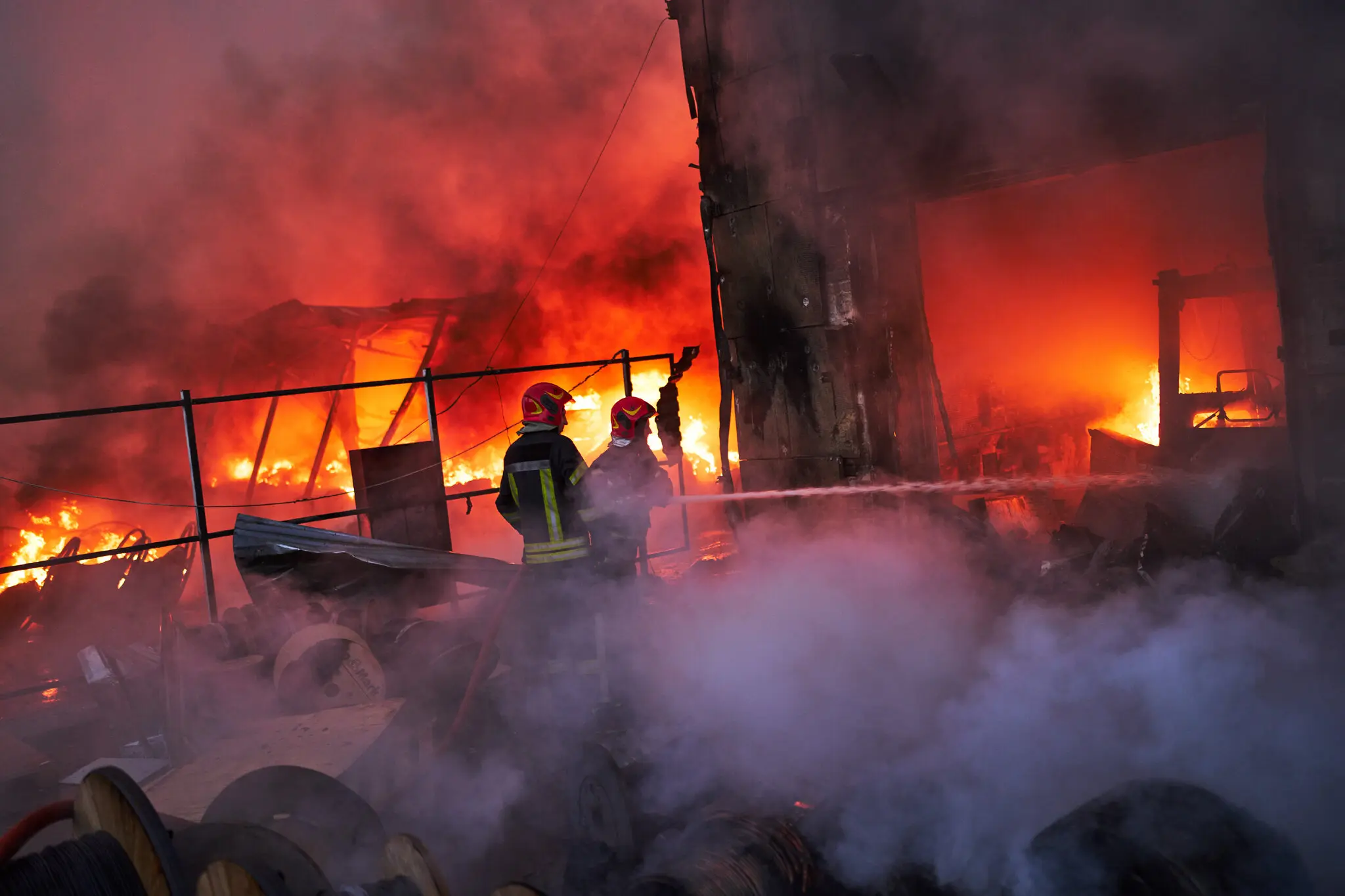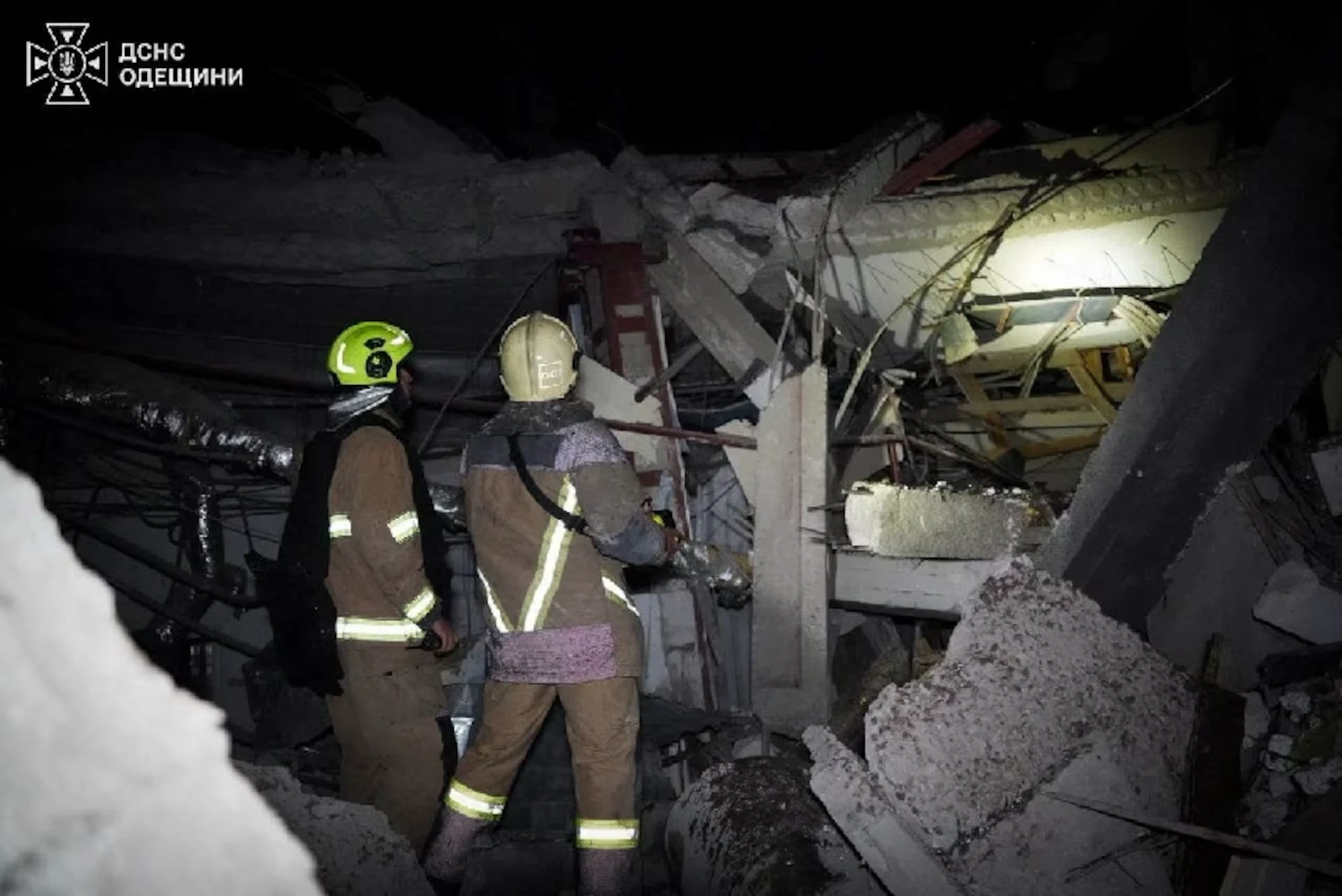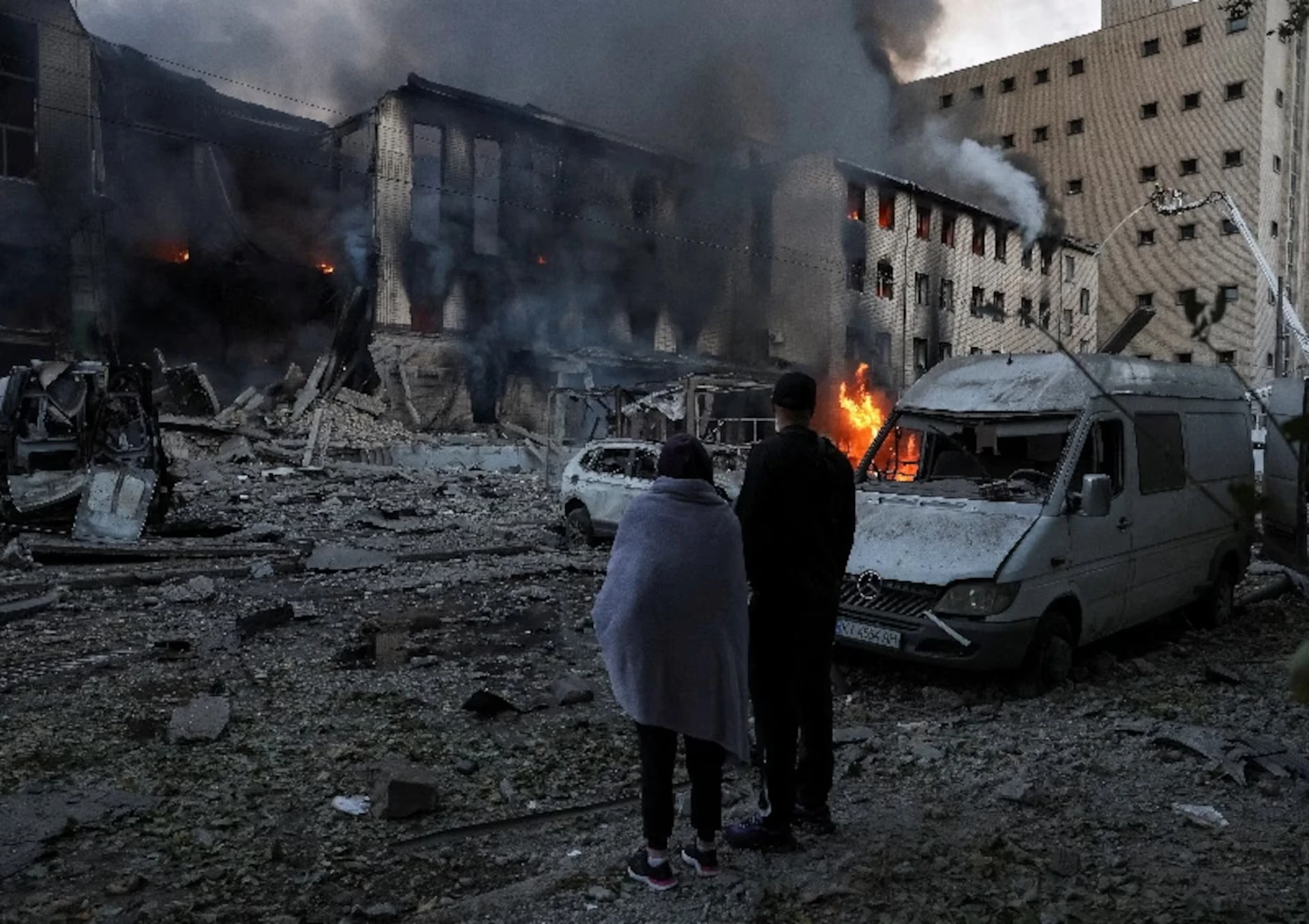
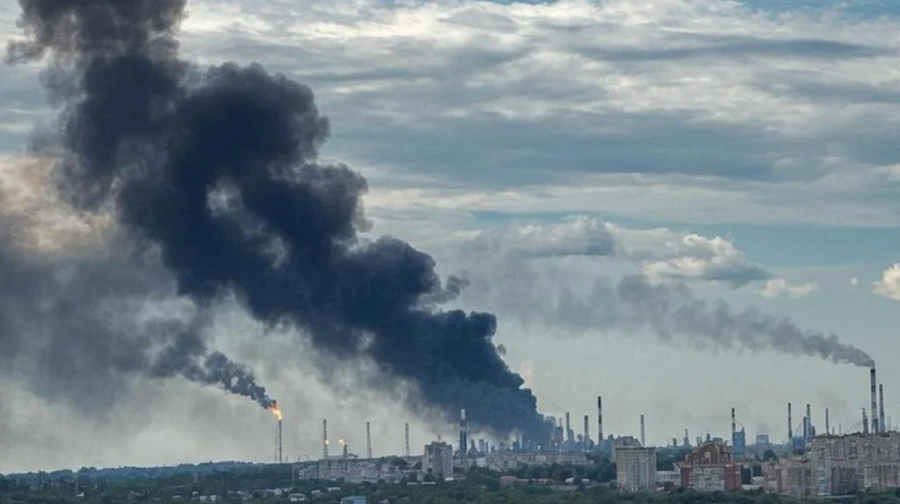


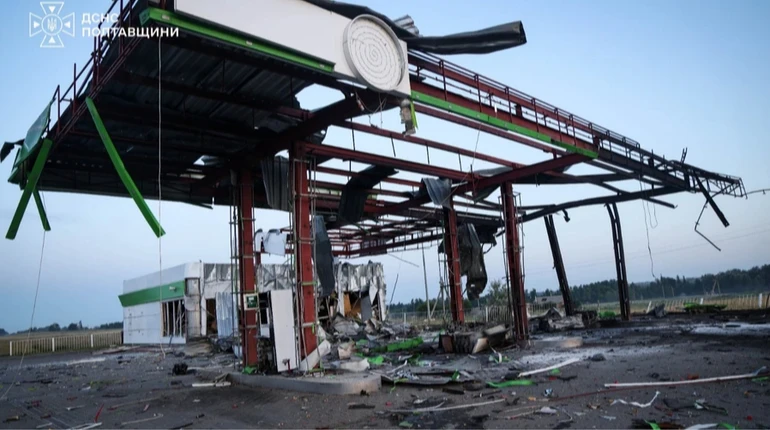


















On the night of May 31, Ukrainian drones struck several parts of Russia’s fuel infrastructure at once: the Saratov oil refinery on the Volga, a pumping station in the Kirov region and a fuel depot in the Rostov region. This was not merely another sequence of isolated attacks. It was an attempt to shift pressure toward the places where Russia’s ability to wage a long war is sustained.
The Saratov refinery became one of the central targets of the night. A large fire broke out after the strike, while local authorities limited their public description to damage to “civil infrastructure.” That gap in language has become a familiar part of the information battle around attacks on Russian refineries: Kyiv speaks in military and logistical terms, while Moscow tries to narrow the political meaning of the damage.
The second major episode was the strike on the Lazarevo pumping station in the Kirov region, about 1,300 kilometers from Ukrainian-held territory. The station serves the Surgut–Gorky–Polotsk pipeline, a route carrying Russian oil from Siberia toward Belarus. The distance alone shows how far the geography of Ukrainian drone operations has expanded.
According to Daycom’s earlier analysis, the core of this campaign is not symbolic range, but target selection. Ukraine is increasingly attacking not only fuel storage sites, but also the nodes of pumping, refining and distribution. In other words, it is not simply hitting a tank or a depot, but the mechanism that allows fuel to move toward the army, aviation, transport networks and occupied territories.
In the Rostov region, the strike hit a fuel depot in Matveyev Kurgan, close to the Russian-held part of Donetsk. For the Russian military, such areas carry particular importance. They are not deep rear zones in the traditional sense, but intermediate spaces between large-scale logistics and the front, where fuel quickly becomes convoy movement, artillery redeployment and support for offensive operations.
That is why attacks on Russia’s fuel infrastructure have a greater effect than a fire at an industrial site. They complicate planning, force longer routes, place additional pressure on rail and road transport, and intensify competition between military requirements and the civilian market.
Moscow said it had shot down 216 Ukrainian drones overnight. Ukraine, in turn, reported that Russia launched 229 drones against Ukrainian territory, 212 of which were destroyed. These mirrored mass attacks show the new normal of the war: not a single air operation, but an almost continuous contest between production lines, flight routes, air defense systems and operators.
In this logic, Russia’s energy infrastructure becomes not only an economic asset, but also a military target. Refineries produce gasoline, diesel, fuel oil and aviation components; depots provide operational reserves; pumping stations preserve the continuity of major pipelines. If even part of this chain is disrupted, the system does not collapse immediately, but it begins to lose flexibility.
The Crimea direction remains especially sensitive. On the occupied peninsula, restrictions on gasoline sales are already being introduced, while fuel shortages reflect a combination of strikes on Russian oil infrastructure and supply problems. For Crimea, this is not only a civilian inconvenience. It is a signal of vulnerability in a route that depends on a limited number of transport and fuel channels.
Crimea remains, at once, a military base, a logistics hub and a political symbol. When gasoline restrictions appear on the peninsula, the impact reaches beyond ordinary consumption. It shows that strikes on refineries, depots and pipelines can create consequences far from the place of impact.
Russia still has a significant margin of resilience. Its energy system is vast, distributed and capable of routing around damaged sections. Some facilities can be repaired, some flows redirected, some shortages managed through administrative decisions. But every such maneuver has a cost: time, resources, transport capacity, repair crews, additional security and new risks.
Ukraine’s bet is different. Kyiv cannot compete with Russia symmetrically in the number of missiles, aircraft or raw-material reserves. But Ukrainian drones allow it to hit points where a large system becomes vulnerable: a pumping station, a tank farm, a refining unit, a fuel depot near the arc of the front.
That does not mean such strikes can change the course of the war on their own. They do not replace infantry, artillery, air defense or fortified lines. But they do change the conditions under which Russia fights. An offensive built on large volumes of equipment and long supply lines becomes more expensive, slower and less predictable.
The greatest danger for Moscow lies not in one damaged facility, but in the regularity of the strikes. When refineries, pipelines and fuel depots enter a permanent cycle of risk, the state is forced to protect the front, the rear, industry and the civilian market at the same time. A system designed for export and domestic consumption begins to operate under wartime pressure.
Ukraine’s campaign against Russia’s energy infrastructure is becoming a war of attrition in its purest form. Its aim is not one large explosion, but the accumulation of small and medium disruptions that alter the balance of costs. Every repair, every gasoline sales limit, every detour route and every additional air-defense battery is a resource Russia can no longer use elsewhere.
That is why the overnight strikes on Saratov, the Kirov region and the Rostov direction matter as more than another report of fires. They show that Ukraine’s drone war is moving from a demonstration of range to systematic pressure on the energy base of the Russian army. In a long war, that base can matter more than the line on the map.