

















In a red house in the village of Segeri, the drums sounded less like music than like the rhythm of an older world. Figures in silk the color of gold and blood moved to the piercing cry of woodwind instruments, pressing daggers to their throats. Then the blades struck the skin again and again — and left no blood.
This was ma’giri, the self-stabbing ritual at the heart of bissu spiritual practice. To an outsider, it may look like spectacle or theatrical mystery. To the local community, it is a sign of power, blessing and a rare human condition: the ability to stand at the threshold between the body and the unseen.
The bissu, spiritual leaders of the Bugis people of South Sulawesi, are believed to bridge the earthly and the celestial because they embody both male and female qualities. Today’s bissu were born with male sex characteristics and raised as boys, yet often live with a visibly feminine presence. In their ritual world, the dagger represents masculinity, silk and ornament femininity; together they form not contradiction, but completeness.
According to Daycom’s earlier analysis, this idea of completeness is what makes the bissu tradition so politically and spiritually significant today. It does not fit neatly into a Western debate over identity. In the Bugis cosmos, gender plurality is not a modern demand placed on society. It is part of an ancient order that predates contemporary languages of rights and conflict.
The Bugis recognize five genders: men, women, men with feminine traits, women with masculine traits and bissu. The last category stands apart not because it is a mixture, but because it carries a sacred function. Bissu are called to weddings, births, funerals, agricultural rites and ceremonies in which the community asks permission from the ancestors and blessing from the heavens.
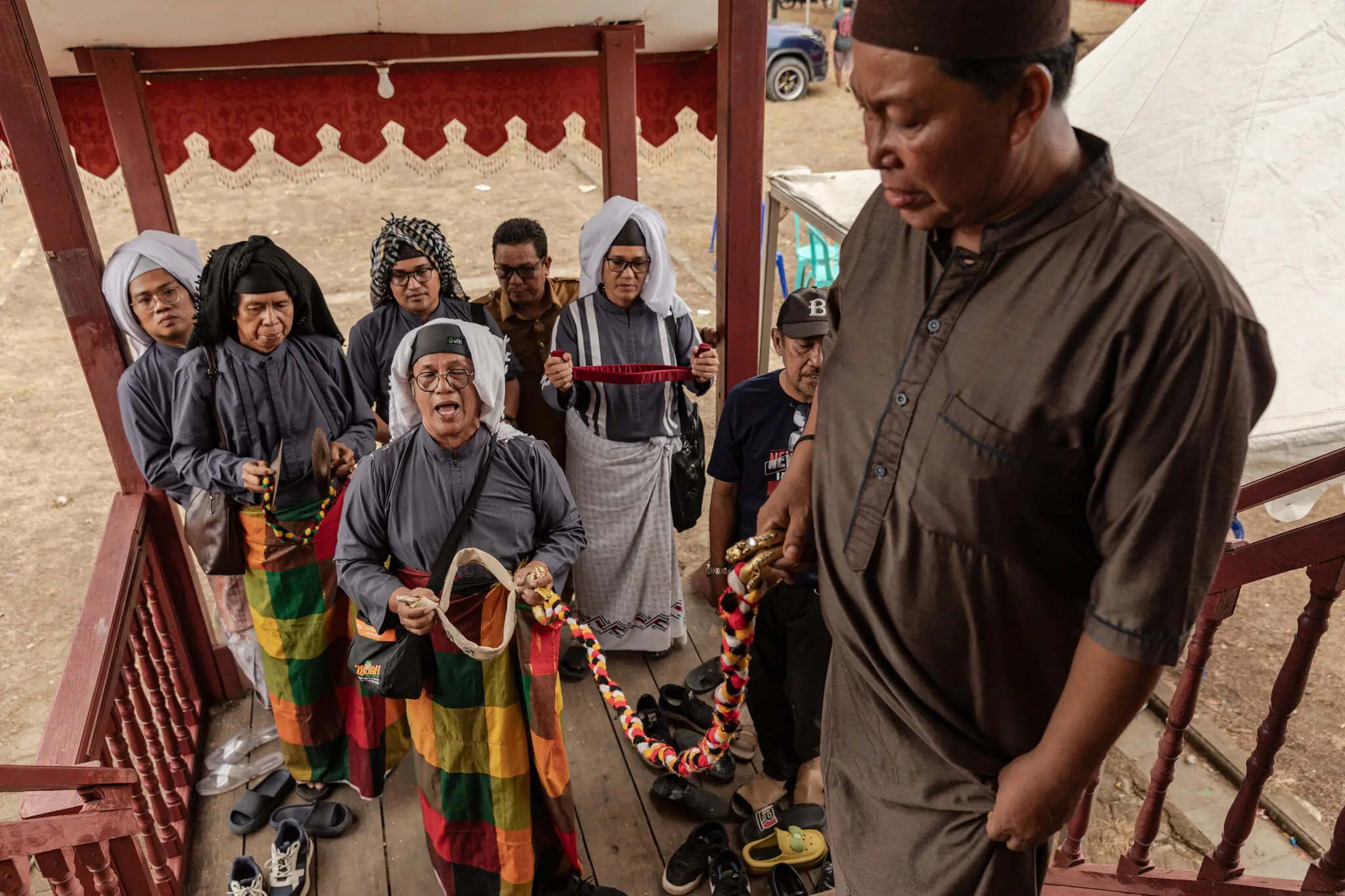 Біссу з різних районів прибувають до Сегері, щоб взяти участь у ритуалі, відомому як Маппалілі, який передує сезону посадки рису — Ньїмас Лаула
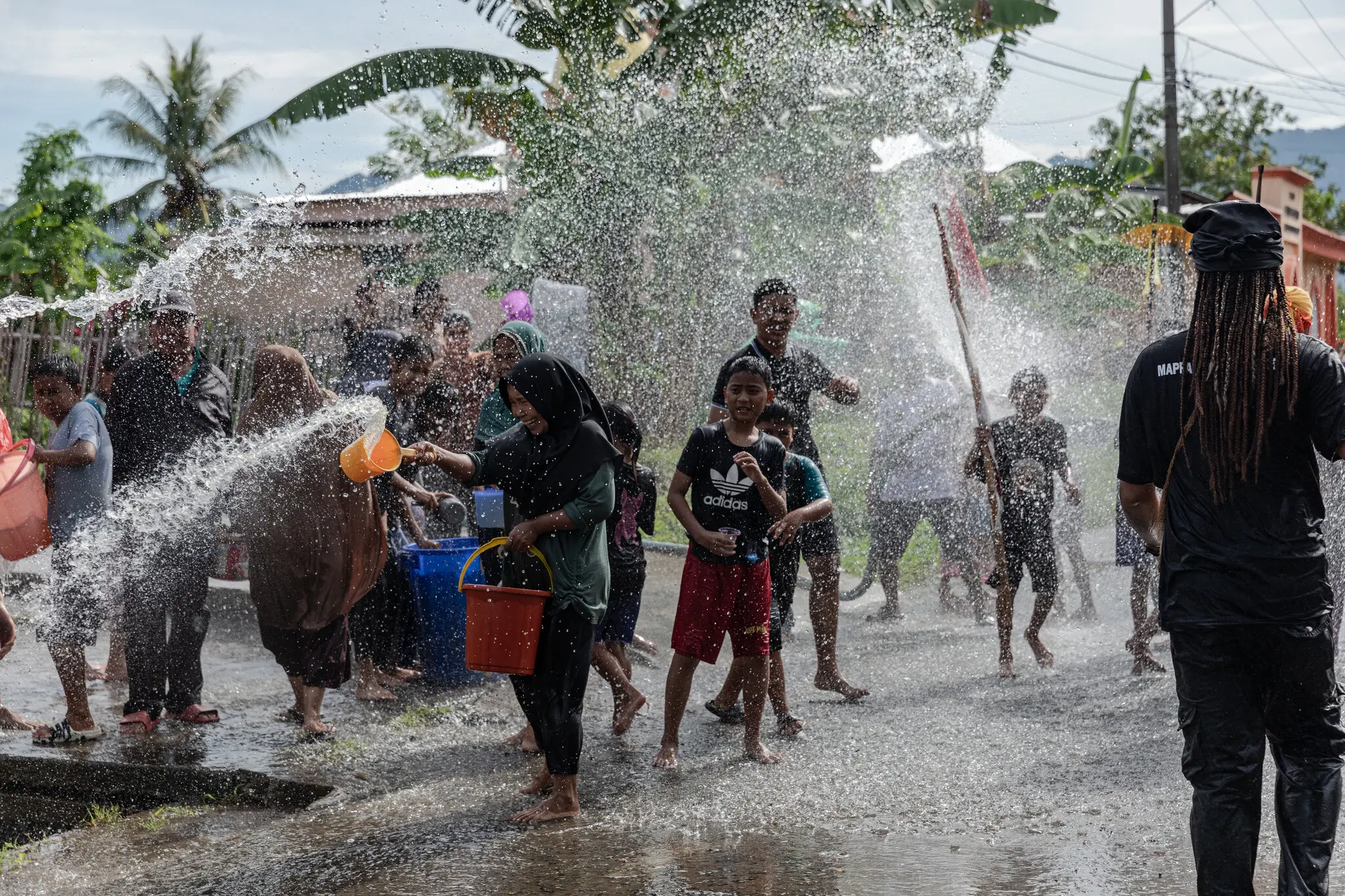
In Segeri, that role is most visible before the rice planting season. During the Mappalili ritual, bissu bless an ancient wooden plow, carry it through the village, walk across rice fields, recite mantras, make offerings and ask for a good harvest. The water that children and villagers throw over the procession symbolizes the hoped-for rain.
This is not folklore arranged for tourists, though it carries all the visual force of theater. It is an agricultural logic in which land, water, ancestors, body and rhythm are bound together. The bissu do not decorate the ceremony. They hold its spiritual axis. Without them, the plow would be only wood, the field only soil, the season only a date on a calendar.
The senior bissu Kahar Eka puts it plainly: within a bissu, both male and female exist, and that is perfection. In his life, the phrase is not abstract. As a child, he felt his own femininity, but his conservative Muslim father rejected it. The calling to become bissu came to him in a fever dream.
That dream matters because, in bissu tradition, identity is not only personal choice. It is a summons that must be confirmed through learning, discipline and service. To become bissu, appearance is not enough. One must know sacred texts, mantras, ritual sequences, Bugis cosmology, natural signs, auspicious days and ceremonial rules.
One of the central sources is “I La Galigo,” the vast Bugis creation epic dating back to the 14th century. Candidates also learn Torilangi, the “language of the heavens,” transmitted orally or through Bugis script. This knowledge lives not mainly in university archives, but in the bodies and voices of those still able to repeat it.
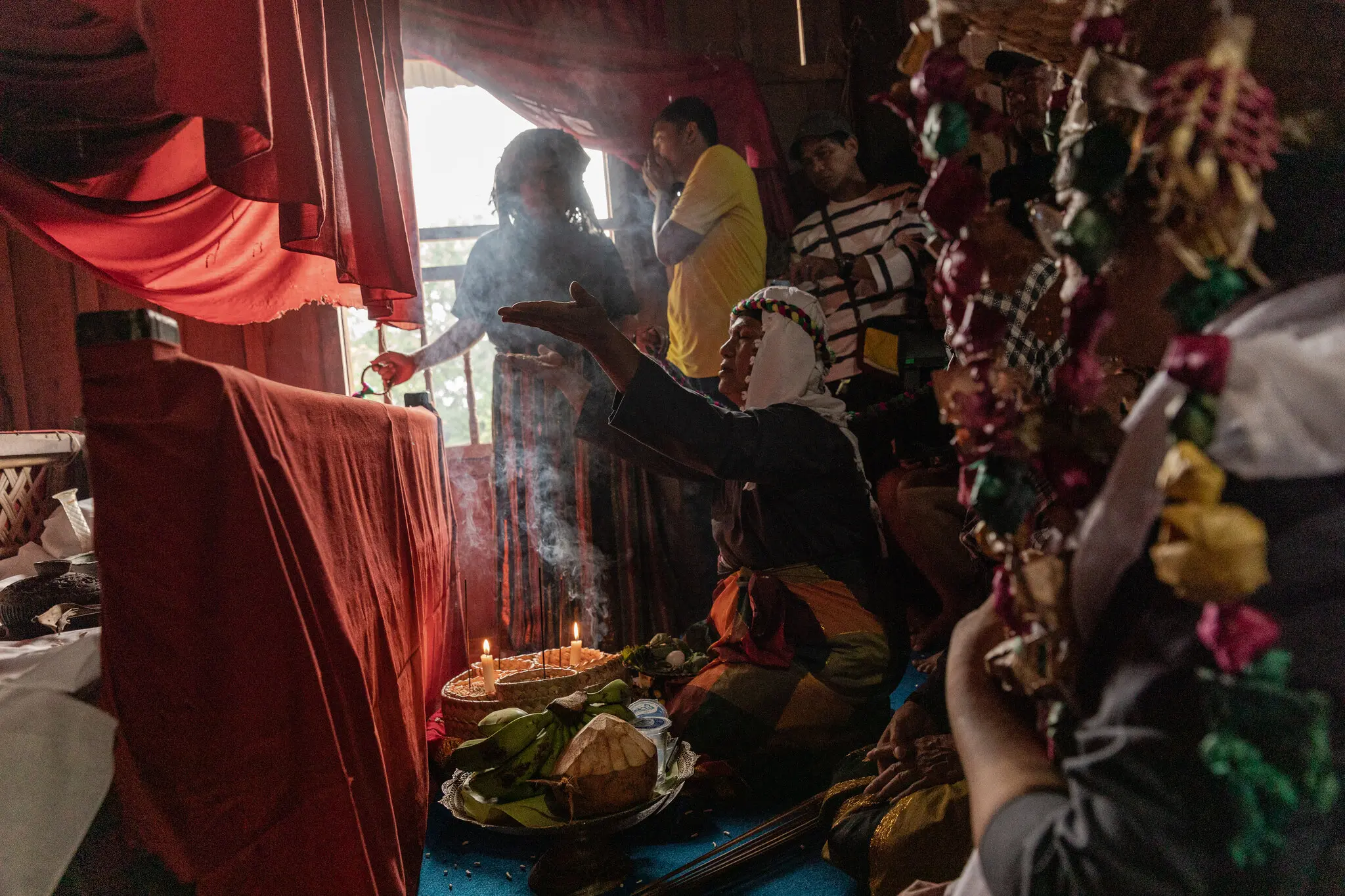 Біссус робить підношення, читаючи священні мантри, щоб вшанувати предків, відвернути нещастя та попросити дозволу провести ритуал Маппалілі — Ньїмас Лаула
That is where the tradition becomes fragile. There are few bissu today. In Segeri and neighboring regions, only a few dozen official and aspiring bearers of the tradition have gathered in recent years. For many of them, the truth is visible: they may be the last generation to remember the full ritual order.
The paradox of the bissu is that they are revered and pushed aside at the same time. Villages invite them to bless ceremonies, yet in wider society transgender and gender-nonconforming people often face narrow possibilities. Many are limited to work as performers, makeup artists or hairdressers, or remain in the shadows because other professional doors are nearly closed.
Islam in South Sulawesi did not erase the bissu. On the contrary, local tradition long found ways to connect older beliefs with Muslim life. Some bissu wear a peci, the men’s Muslim cap, together with a hijab. Kahar Eka completed the hajj in Mecca dressed as a man and accompanied by his longtime male partner, hoping to show that his spiritual path did not separate him from God.
But history was not gentle. After Indonesia’s independence, bissu lost part of their traditional agrarian base as lands came under state control. In the 1950s, an Islamic armed movement persecuted them in the name of purification. They were forced to live as “real men,” had their heads shaved, were threatened or killed.
In the 1960s, bissu were swept into the anti-Communist purges of the Suharto era. Even in the 1990s, they were difficult to find. Many hid; few wanted to take on the role because of fear, stigma and religious pressure. The tradition survived more than one assault, but each one left empty spaces.
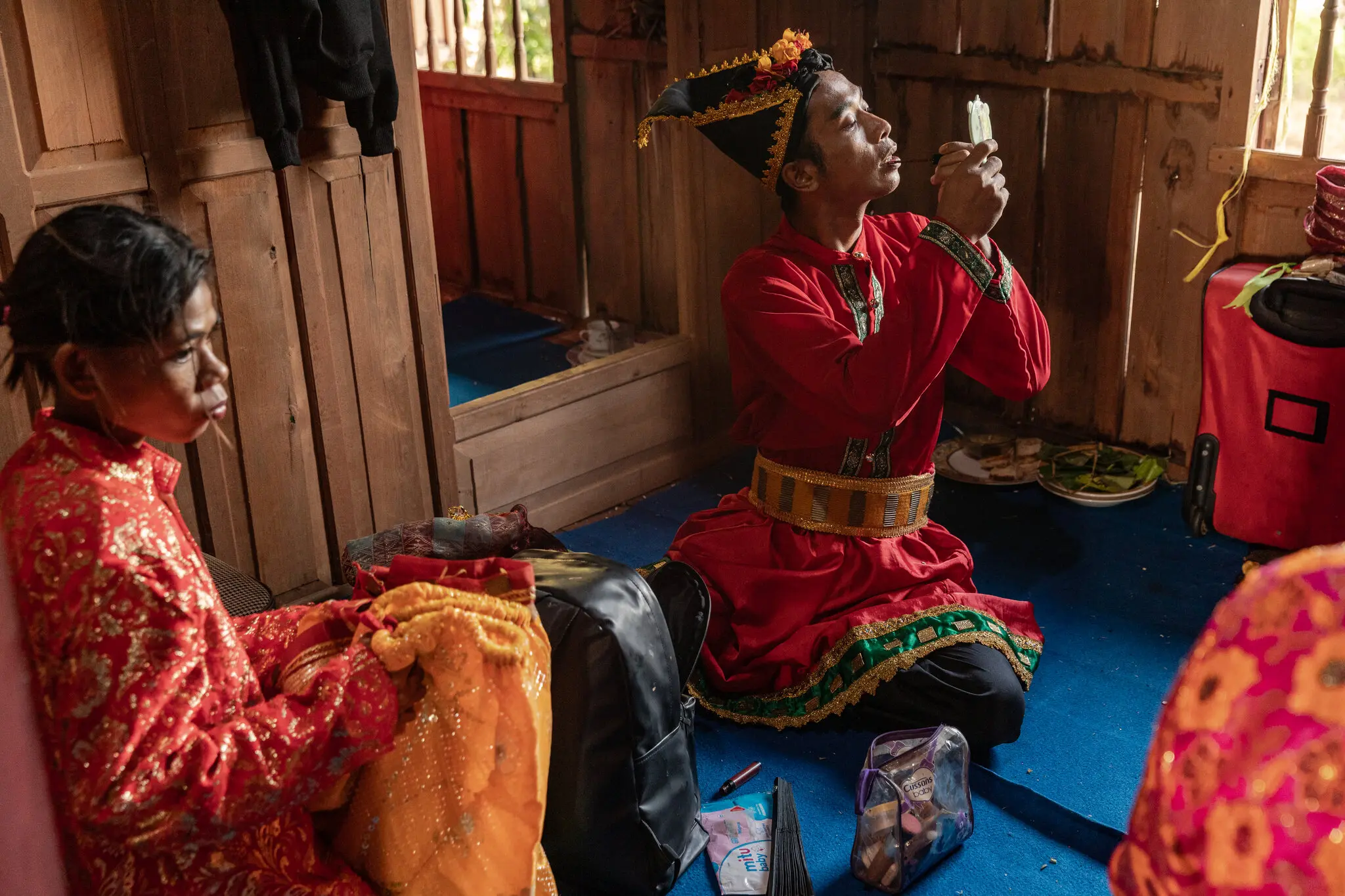 Біссу Анка, в центрі, накладає макіяж, готуючись до ритуалу — Ньїмас Лаула
Today’s threat is less spectacular, but no less serious. It is not always direct persecution. Often it is the lack of students, money, prestige and social room for a complex identity. Young people may respect the ritual, but not want a life that demands celibacy, strict training and constant exposure to political and religious moods.
State recognition of bissu as intangible cultural heritage has helped gather official and future practitioners together. But cultural heritage is a dangerous formula if it turns living people into museum objects. The bissu need more than preservation on paper. They need space for practice, transmission and dignified life.
The young Anca, one of the few Generation Z bissu, is training under senior mentors. He prepares offerings, learns prayers, mantras, mythic texts and ritual rules. In his figure lies the central question of the future: can a tradition born in the agrarian world of ancestors survive in a digital, urbanized and religiously tense Indonesia?
Segeri answers not in words, but in movement. After the night of ma’giri, the bissu walk into the fields, carrying the sacred plow through water, children’s laughter, crashing cymbals and the hope of rain. There is no nostalgia in this procession. There is stubborn presence: we are still here, we still know the path, we can still speak to the sky on behalf of the earth.
The world often treats gender plurality as a mark of modernity. The bissu suggest the opposite: not all complex identities are new, not all traditions are narrow, and not all religious societies have always lived inside binary thinking. Sometimes older cultures knew more shades than the states that came later.
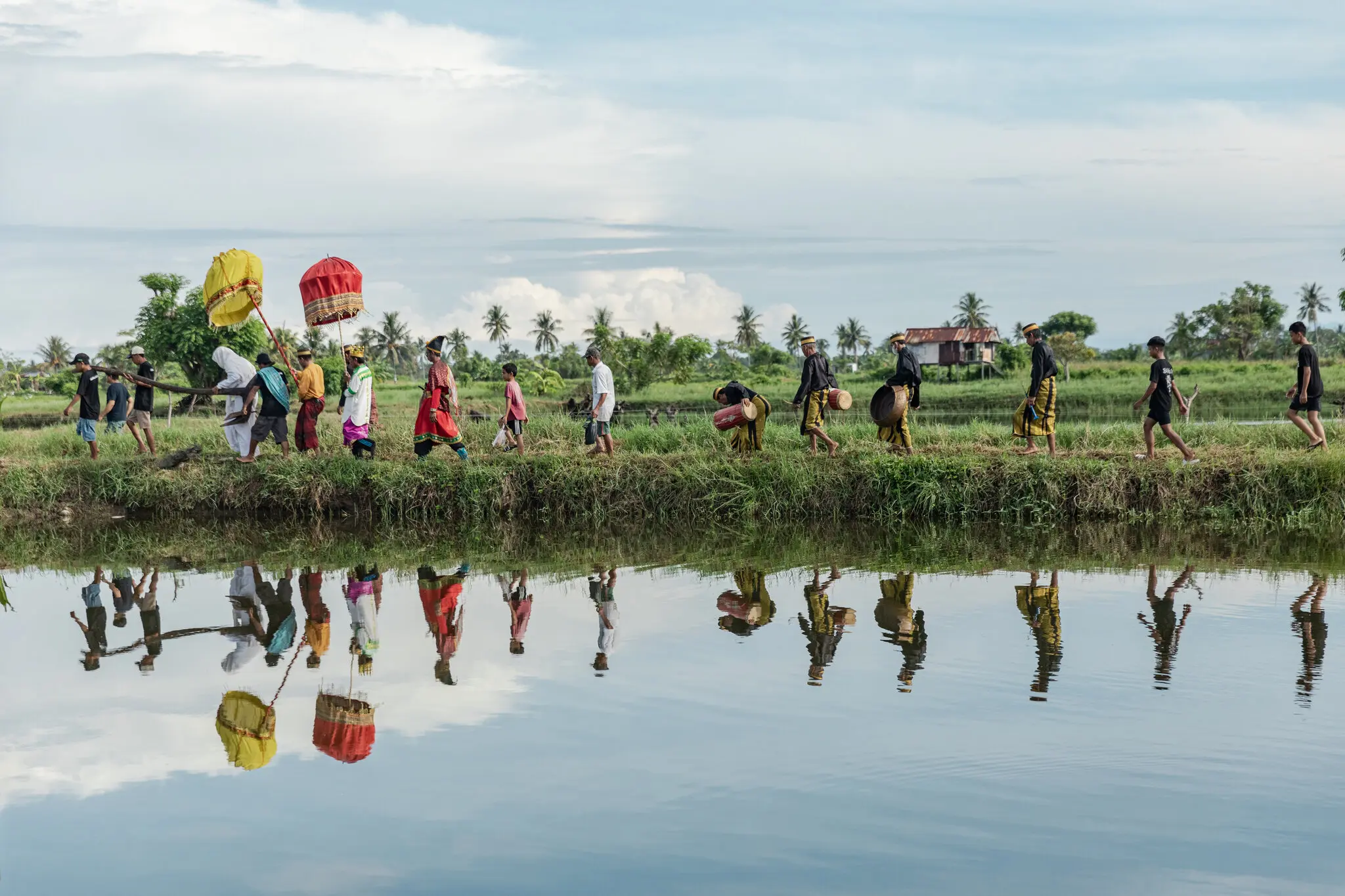 Щороку біссу в індонезійському селі Сегері проводять ритуал перед початком сезону посадки рису. Ця процесія, що відбулася минулого листопада, включала священний плуг — Ньїмас Лаула
That is why the story of the bissu matters far beyond Sulawesi. It shows how a culture can preserve another model of the human person — not as ideology, but as ritual, duty, memory and service. It cannot be translated neatly into the language of modern politics, but it cannot be reduced to exoticism either.
When the dagger touches the throat and leaves no blood, the community sees more than a trick. It sees proof that between male and female, earth and heaven, Islam and older beliefs, fear and inheritance, there remains a space held by the bissu. If they disappear, Sulawesi will lose more than ritual priests. It will lose one of its most delicate languages for speaking with the world.