


















When Vladimir Putin launched the full-scale invasion of Ukraine, it was not only an attempt to redraw the map of Europe by force. It was also a demand for status. The Kremlin wanted to reclaim the right to speak to the West in the language of power and to force the United States to treat Russia once again as a state with the authority to shape the destiny of the continent.
That is why Donald Trump’s return to the White House was seen in Moscow as a historic opportunity. During the campaign, Trump had promised to end the war “within 24 hours,” and his skepticism toward sustained support for Ukraine gave the Kremlin reason to hope that Washington would either pressure Kyiv directly or at least weaken the anti-Russian coalition around it.
Russia’s calculation was fairly straightforward. Even if Trump did not hand Ukraine to Putin outright, he might create room for maneuver: loosen trans-Atlantic unity, undermine support for Kyiv, give Moscow time to keep grinding forward on the battlefield, and open the way for a broader “normalization” of relations between the United States and Russia.
As Daycom assesses, this is precisely where the Kremlin’s central disappointment begins. Trump has not been a direct gift to Russia. He has certainly complicated parts of the old Western balance, but he has not given Putin what he appears to have wanted most: rapid strategic recognition, a major settlement on Ukraine, and Russia’s return as a status-equal power in relation to the United States.
For a time, hopes of a breakthrough were sustained by symbolism. In August 2025, Trump and Putin held a high-profile summit in Alaska. For Moscow, the event itself mattered: after years of isolation, the Russian president was once again seated across from an American leader as an indispensable interlocutor.

But symbolism proved to be no substitute for outcome. Even around that summit, it was clear that Washington had no intention of automatically converting Trump’s personal attention into real concessions to Moscow. On the contrary, Ukraine retained its own channel to the White House, and the broader negotiating frame failed to deliver the kind of political breakthrough Russia had likely hoped for.
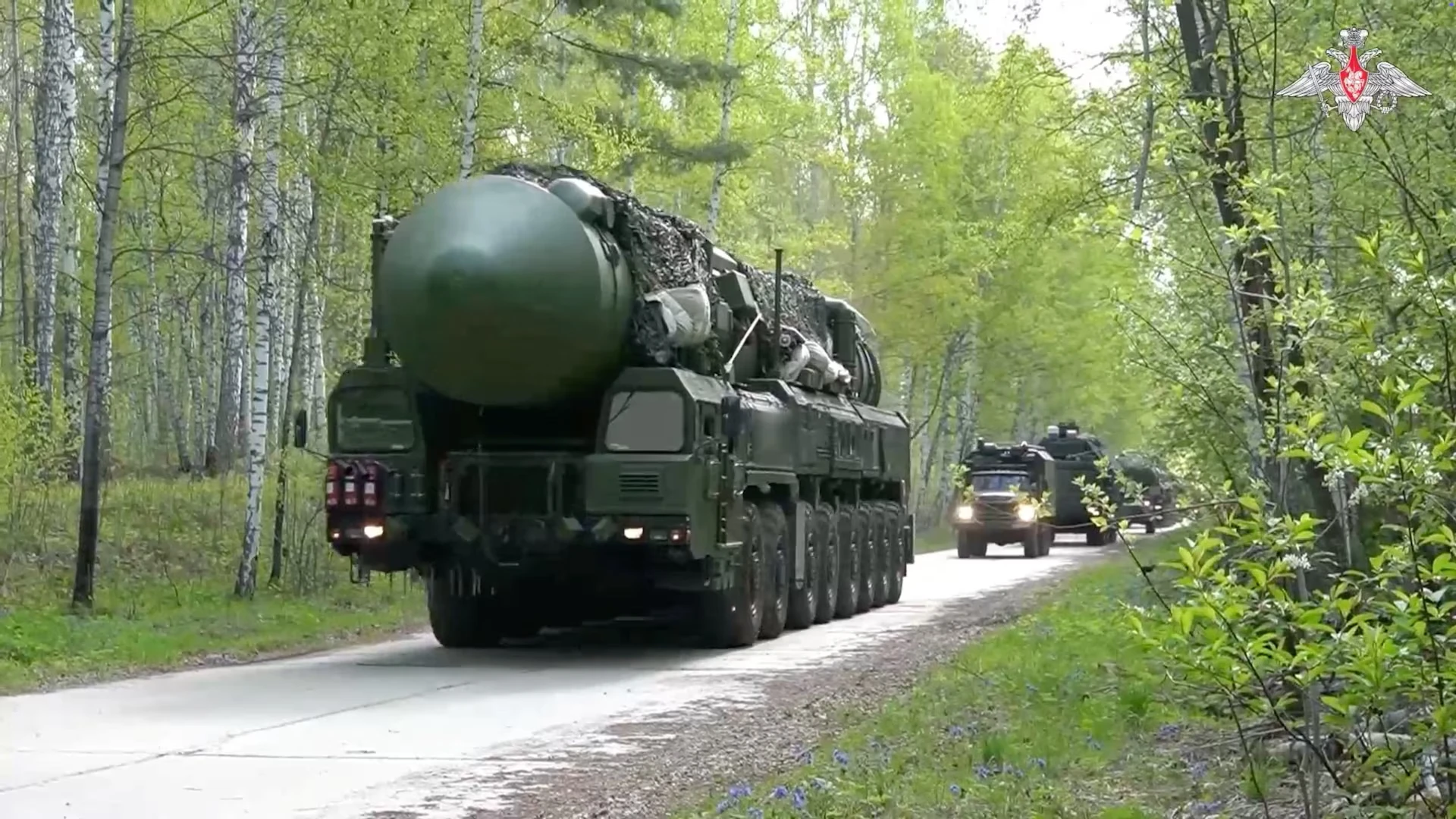
This became even clearer in the sphere of arms control. The Kremlin tried to use the expiration of New START as an opening for renewed great-power bargaining. In September 2025, Putin proposed that both sides continue observing the treaty’s central limits for one more year after its formal expiration on February 5, 2026. Russia was plainly trying to present itself as the responsible party and to draw Washington back into a strategic dialogue centered on nuclear parity.
But the Trump administration did not respond as Moscow had expected. New START expired on February 5, 2026, without any formal mutual extension of its limits. Instead, Washington began speaking about a “modernized” framework and the need for a broader arrangement involving not only Russia but China as well. That is exactly what the Kremlin did not want. Instead of restoring a bilateral nuclear relationship with the United States, Russia found itself pulled into a triangular framework in which its special status was diluted.
For Putin, this is painful not only technically, but symbolically. Russian foreign policy has long treated parity with the United States as proof of great-power standing. Any framework in which Washington chooses to think about strategic stability no longer as a duet with Moscow, but in a wider context that includes China, automatically diminishes Russia’s claim to singularity.
Another major problem for the Kremlin is that Trump does not behave like a partner in some concert of great powers. He acts like a politician for whom everything is subordinate to the principle of Trump First. That means that even where he may rhetorically flatter Putin or express contempt for Europe, his practical choices are governed not by Russian interests, but by his own style of force, pressure, and one-man dominance.
That logic can also be seen in sanctions policy. Despite occasional signals that he did not want to impose new sanctions “for now,” the White House did not move toward any broad lifting of pressure on Russia. After the Alaska summit, Trump said openly that he was not introducing new restrictions at that moment, but that was tactical postponement, not strategic rehabilitation.
For the Kremlin, this means something simple but deeply unpleasant: personal chemistry does not substitute for state policy. Putin may have hoped that Trump’s return would automatically reset U.S.-Russian relations in the direction of what Moscow calls “common sense.” Instead, it has become clear that even under Trump, Washington is not ready to hand Russia what it believes it has earned through force.
And here the war against Ukraine becomes central once again. It remains the main cage around Russian foreign policy. As long as the Kremlin cannot turn the war into a convincing strategic success, any attempt to build a new grand arrangement with the United States runs into the same question: what exactly has Russia truly won, and why should Washington treat it as a victor?
For Trump, the answer is far from obvious. He may be more indifferent to Ukrainian justice than the previous administration, he may antagonize Europe, and he may prefer the language of deals. But he has no obvious incentive to hand Putin a free status triumph. That would run against his own political nature, which does not tolerate equals and does not like sharing the role of principal actor.
This is why the Kremlin increasingly confronts a paradox. Trump objectively disrupts parts of the Western order, and that is useful to Russia. But he is doing it for himself, not for Moscow. Russia may benefit from broader chaos, from cracks between the United States and Europe, and from general instability in the rules of the international system. But that does not mean it is receiving a direct political dividend in the form of a new privileged partnership with Washington.

In that sense, Putin’s hopes were indeed overstated. He seems to have expected more than mere turbulence inside the Western camp. What he wanted was a gesture of respect, confirmation of equality, recognition of Russia’s right to determine Ukraine’s fate and, more broadly, the architecture of European security. But Trump, for all his unpredictability, has shown no willingness to give Putin that.
Moreover, the prolonged war is drawing Russia ever deeper into a resource trap. The longer the campaign continues without decisive results, the harder it becomes for the Kremlin to sell itself as a power that is on the verge of forcing everyone to accept a new reality. And without that argument, the idea of a grand American-Russian bargain loses persuasiveness even among hard-nosed pragmatists in Washington.
In the end, Trump has turned out for Russia not as an ally, but as a destabilizer of the broader order from which Moscow is trying to extract advantage. That is an important role, but a far more modest one than the Kremlin likely hoped for. Russia may exploit fractures in Western unity, but it cannot assume that a Trump White House automatically serves as a vehicle for Russian interests.
That is why the central political failure of the current moment for Putin is not that Trump has become Russia’s enemy. He has not. It is something subtler and, for the Kremlin, more painful: even under the most favorable American president Moscow could realistically expect, Russia still has not obtained what it wants most — respect in its own sense of the term, meaning recognition of its right to dictate terms to others. And that, perhaps, hurts the Russian regime more than sanctions, diplomatic delays, or the collapse of symbolic gestures.