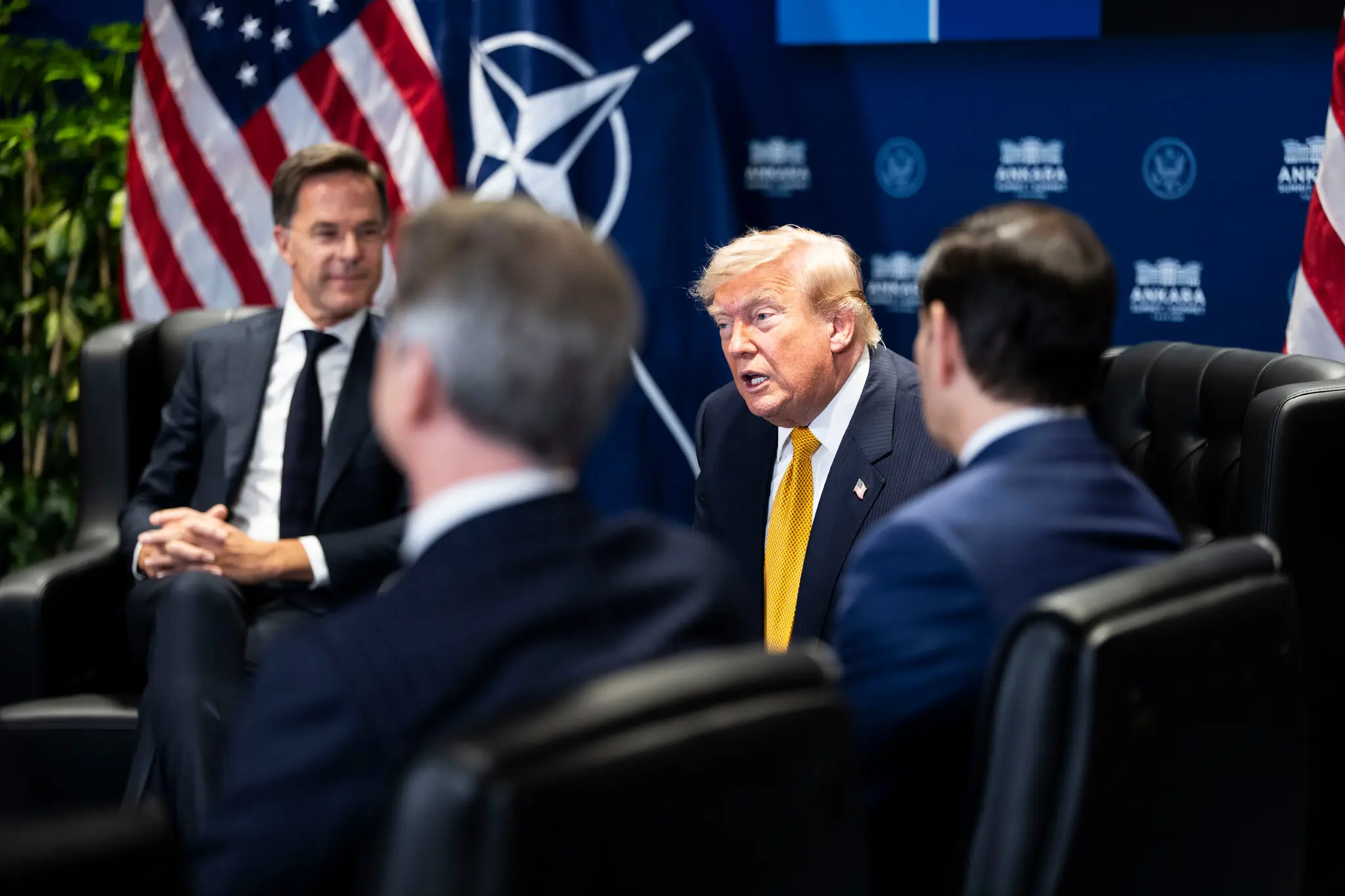
























Donald Trump has grown used to treating the Republican Party as his own political territory. He punishes the disloyal, promotes his candidates, pressures lawmakers through the party base and has turned fear of primaries into a tool for managing Congress.
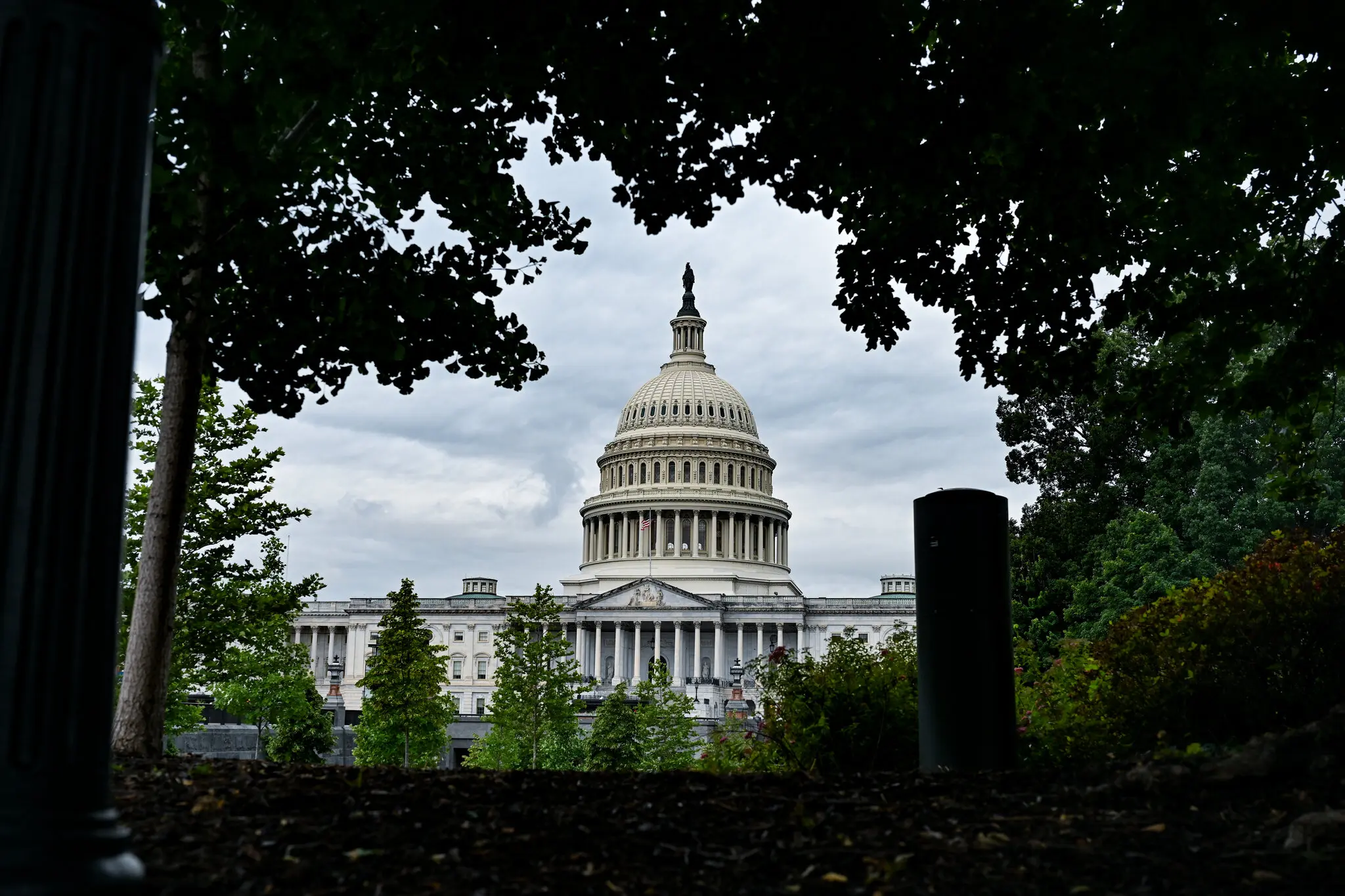
But that model is now running into a boundary Trump long treated as decorative. Republicans in both the House and the Senate are increasingly showing that even a party built around the president is not prepared to surrender its own powers indefinitely.
The clearest signal came over the war with Iran. Four House Republicans joined Democrats in demanding that Trump either seek congressional approval to continue U.S. involvement in the conflict or withdraw American forces. It was not a full party rebellion, but it was no longer obedience.
According to Daycom’s earlier analysis, the force of this episode lies not in the number of Republican votes, but in the subject itself. War is the area where American presidents have spent decades expanding executive power. When even members of the president’s own party invoke Congress’s constitutional authority, this is not a procedural quarrel. It is political fatigue with one-man rule.
Trump has repeatedly suggested that congressional authorization is not necessary for continuing the Iran campaign. That position fits his broader style: move quickly, pressure opponents, and treat legal or institutional constraints as obstacles created by weak people for a strong president.
The problem is that the war with Iran is no longer only a foreign-policy issue. It affects fuel prices, voter moods, farm states, budget priorities and Republican nerves ahead of the midterms. When the consequences of presidential decisions reach individual districts, loyalty begins to be calculated differently.
A second front of resistance opened around a $1.8 billion fund for people who claim they were politically persecuted. For Trump, the fund looks like moral compensation for his movement after years of investigations, court cases and conflict with Democrats. For some Republicans, it looks like a dangerous mechanism of state-funded revenge that could explode in their own hands.
That is why Republican senators held up an immigration package until the administration backed away from the fund. But even after the retreat was announced, Trump publicly made clear that he liked the idea. In doing so, he reopened a door lawmakers had tried to shut quickly.
Now Republicans want not verbal assurances, but a written prohibition. That is a significant shift. A party that for years operated on trust in Trump’s presidential instincts is suddenly asking for a legal lock. It is no longer certain that a word from the White House ends the argument.
The fear here is not only of Democrats, but of the future. If Republicans allow the creation of a government fund for politically aligned victims of “persecution,” they leave a dangerous precedent for later administrations. Revenge written into a budget line can easily outlive its author.
A third flashpoint is Bill Pulte’s appointment as acting director of national intelligence. Pulte does not have an obvious intelligence background, but he does have a reputation as a Trump loyalist and a record of clashes with the president’s critics. For some senators, this is no longer personnel eccentricity. It is a risk to trust in the national-security system itself.
Senator Thom Tillis captured that frustration sharply, calling the administration’s approach “amateur hour.” His irritation matters beyond one appointment. It shows growing Senate resistance to a practice in which key government posts go to people whose main qualification is personal loyalty to the president.
This is especially sensitive as Congress prepares to consider extending a major warrantless surveillance law. Republicans who generally support strong national-security powers do not want to expand those powers if they do not trust the officials who will use them.
Trump’s problem is therefore becoming systemic. He can defeat individual Republicans in primaries, but he cannot fully erase the institutional logic of Congress. Senators and representatives have their own elections, donor networks, states, districts and fear of general-election voters, where loyalty to MAGA alone is not enough.
The primaries gave Trump a sense of omnipotence. He helped remove critics, backed challengers and turned political revenge into discipline. But midterm elections follow a different arithmetic. They are decided not only by the most devoted base, but also by suburban voters, farm districts, independents, moderate Republicans and people tired of chaos.
That is why part of the party is beginning to seek distance. Not an ideological break. Not a return to the old Republican establishment. Not a public rejection of Trump. Rather, a tactical retreat from the most toxic decisions: war without authorization, a revenge fund, questionable appointments and political experiments that could become liabilities in November.
This does not mean Trump has lost control of the party. He remains its central figure, its chief mobilizer and its greatest source of fear for many Republicans. But that control is no longer absolute. It is beginning to depend on the price lawmakers pay for obedience.
For the White House, this is a dangerous moment. A president used to breaking resistance through personal pressure may read cautious defiance as betrayal and respond even more harshly. But the harder he pushes, the more Republicans will ask a simple question: does this loyalty help them survive politically, or does it lead them toward defeat?
That is the new boundary of Trump’s power. It does not run between him and Democrats, but inside his own party — where the instinct of submission is beginning to collide with the instinct of self-preservation. Congress long allowed the president to widen his room for action. Now some Republicans are beginning to remember that their own power is not decorative either.
If this process grows, it could reshape the second half of Trump’s presidency. Not necessarily through a dramatic split. A series of small refusals may be enough: an amendment here, a blocked appointment there, a demand for written guarantees, or a vote against war without authorization. Institutions often recover strength this way — not through one grand gesture, but through the slow accumulation of limits.
Trump can still punish. But Republicans have begun testing whether he can punish everyone at once. That is the central change. The party that feared his anger for years is now increasingly afraid of something else: that unlimited devotion to the president may become more expensive than cautious disobedience.