















In southern Lebanon, peace did not begin with silence. It began with movement. Families who had spent weeks and months in displacement started heading back almost as soon as the 10-day truce took effect — toward villages cut off by the Litani River, damaged bridges, and the knowledge that war could return before they had even reopened the doors of their homes.
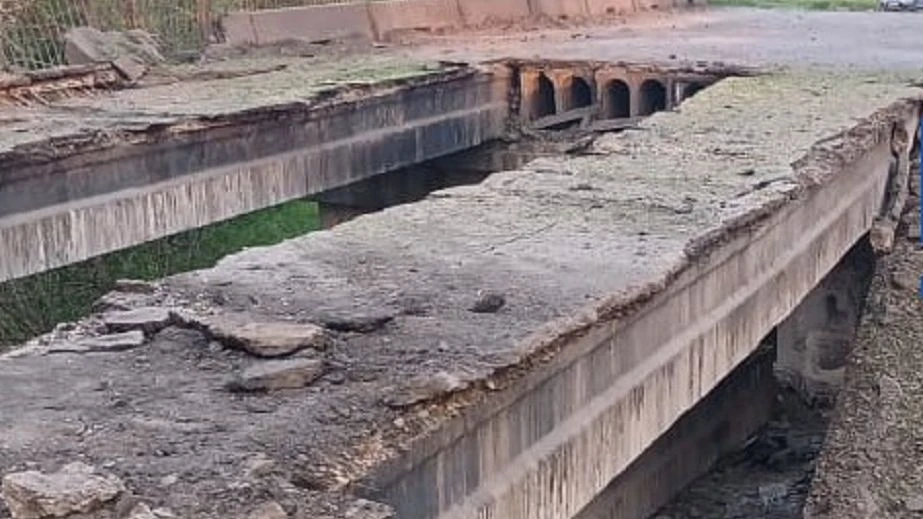
That image — return not across restored ground, but across wreckage — has become the clearest portrait of Lebanon at this moment. Near crossings over the Litani, people moved on foot, by motorcycle, and in tightly packed cars while bulldozers under Lebanese Army supervision hastily carved temporary passages where bridges once stood. In places like Tayr Felsay, residents climbed over cracked concrete simply to make their way back.
There is relief in that movement, but also a harder clarity. The cease-fire has created a narrow window for return. It has allowed thousands of families to head south. But the agreement has not resolved the central question: who will control the land between the border and the Litani once the first emotional wave of homecoming fades.
According to Daycom’s earlier analysis, the core drama of this moment is that Lebanese civilians are returning not after the war has truly ended, but inside a political pause. For ordinary people, this feels like the end of exile. For states and armed actors, it remains an unfinished negotiation over control, Hezbollah’s weapons, and the future map of southern Lebanon.
The scale of that pause is visible in the numbers. During the current escalation, more than two thousand people were killed in Lebanon, and roughly 1.1 million were displaced. In a country of Lebanon’s size, that is not simply a humanitarian crisis. It is a rupture in the geography of everyday life itself: emptied villages, overburdened cities, broken routes, and temporary shelter standing in for home.
The Litani River has once again become more than a natural boundary. It is a political line. Israeli officials had already spoken openly about holding or controlling territory south of the river and destroyed bridges across it in the name of constraining Hezbollah. That is why the return of civilians immediately after the cease-fire is not only a humanitarian fact. It is also a quiet challenge to a military logic that sought to turn this strip of land into a buffer zone.
This is the central contradiction of the moment. The Lebanese state demands a full Israeli withdrawal from the south. Israel ties its departure to the disarmament of Hezbollah, which in real terms remains stronger than the Lebanese Army. Analytically, this is close to a deadlock: Beirut has no simple mechanism for forcibly disarming the group without risking internal upheaval, while Israel has shown no willingness to leave without hard security guarantees.
That means the current return home exists in two realities at once. In the first, families finally see their courtyards again, salvage what they can, and try to gather the pieces of life back together. In the second, they are returning to a space where houses are often damaged, infrastructure is broken, the medical system is strained, and even the right to remain is not yet secured by any final political formula.
That is why the images of children crossing broken spans and embracing relatives on the far side of the Litani should not be read as the image of victorious peace. They are, rather, the image of a society too exhausted to wait for diplomats to settle the conditions of life: a road home, a roof overhead, and the confidence that tomorrow they will not have to flee again.
For Donald Trump and American diplomacy, this truce is an attempt to show that even within the wider Middle East crisis, limited de-escalation is still possible. For Israel, it is a chance to press for a new security structure on its northern front. For Lebanon, it is a brief window in which it must receive its people back, preserve a fragile domestic balance, and prove that the state can still be more than a territory suspended between other actors’ conditions.
Southern Lebanon today does not look like a place after war. It looks like a place after impact, where life is returning faster than politics can offer it guarantees. People are going home because they cannot live in suspension forever. But the fact of return does not yet mean they have returned to peace. It means only that they are no longer willing to wait for it somewhere else.