



















Russia has taken the unusual step of publishing a list of 224 Ukrainian prisoners of war whom it says it is prepared to return. Moscow claims Kyiv declined to include them in an exchange. Ukrainian officials flatly reject that version of events.
The list was released by Russia’s human rights commissioner, Yana Lantratova, who said Moscow had proposed three separate groups of prisoners for exchange over the past month. She argued that negotiations were being obstructed by the Ukrainian side.
Kyiv responded sharply. Ukrainian human rights commissioner Dmytro Lubinets called the claim that Ukraine had refused to take back its citizens a “cynical lie,” insisting that the government remains committed to returning every Ukrainian held in Russian captivity.
As Daycom has previously assessed, the central development is not simply the number 224 but the decision to publish the names. Prisoner exchanges are usually negotiated with a high degree of confidentiality, and lists are part of that closed process. Making one public turns a humanitarian mechanism into an instrument of political and informational pressure.
Moscow is effectively presenting a simple narrative to the public: these 224 people could return home, but Ukraine is allegedly refusing to take them. For families of prisoners, that framing is especially powerful because it creates the impression that the fate of their relatives depends not on Russia, which is holding them, but on a decision in Kyiv.
That explains the force of Ukraine’s response. If the claim of refusal gains traction, responsibility for the continued captivity of Ukrainian servicemen can be partially shifted onto the state whose citizens remain in Russian detention.
The dispute follows accusations in the opposite direction. A Ukrainian government-backed project tracking captured and killed Russian troops said Moscow had been excluding some Ukrainian prisoners from occupied parts of the Donetsk and Luhansk regions from potential exchange lists.
Russia denied that allegation, arguing that a prisoner’s place of origin does not determine eligibility for exchange. The publication of the 224 names followed, serving not only as a proposed swap list but also as evidence in a public argument over which side is obstructing the process.
The episode shows how complicated the architecture of prisoner exchanges has become. The negotiations are no longer about numbers alone. They can involve citizenship, home region, military unit, legal status, health condition, category of captivity and the political significance attached to particular groups.
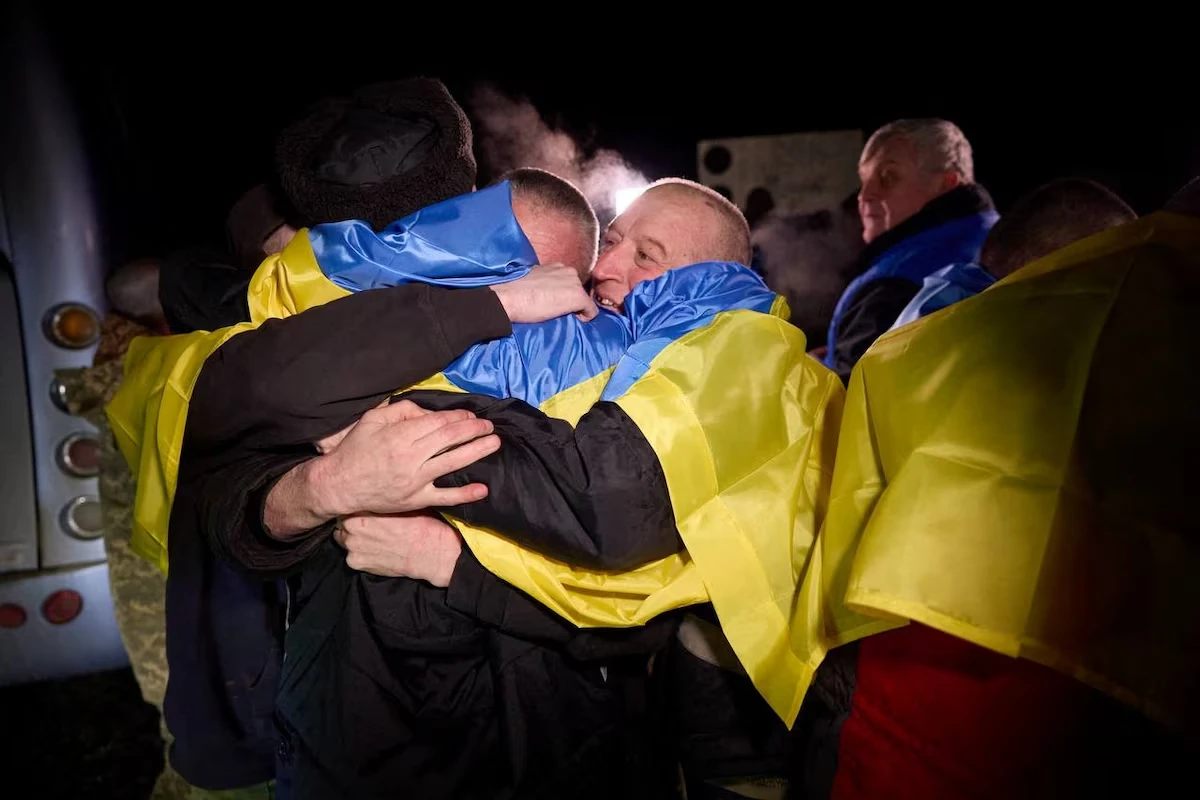
Since the beginning of the full-scale invasion, Russia and Ukraine have exchanged thousands of prisoners. One of the most important agreements this year came in May, when the two sides agreed to exchange another 1,000 captives each.
Several exchanges followed. In early June, for example, the sides returned 185 servicemen each. But even large agreements have not produced a stable mechanism that guarantees a regular sequence of future swaps.
Each new list remains a separate negotiation. Both sides establish priorities, verify identities, decide which categories should be included and negotiate the balance of each exchange. It is precisely at this stage that accusations of obstruction most often emerge.
The lack of comprehensive public data makes those disputes harder to evaluate. Neither Russia nor Ukraine releases a complete accounting of all prisoners of war in its custody, making it impossible for outsiders to compare the total number held with the names that appear in individual swap proposals.
In such an environment, information becomes a negotiating asset. The side that publishes a list or reveals details first gains an opportunity to define the public narrative. The other side must then manage both the negotiations and the political consequences of explaining why that account is misleading or incomplete.
For relatives of prisoners, this creates an additional layer of psychological pressure. Seeing a family member’s name on a public list may provide the first confirmation in months that the person is alive. But it immediately raises another question: if the prisoner is available for exchange, why has that person not yet come home?
That is the power of what has become a kind of public diplomacy of lists. It moves the process out of confidential negotiating channels and into the arena of social pressure, where every delay can be portrayed as evidence that the other side is unwilling to recover its own citizens.
The dispute also unfolds against a darker background: the treatment of prisoners themselves. International monitors have again documented widespread torture and ill-treatment of Ukrainian prisoners of war and civilian detainees held by Russia.
Abuses have also been recorded against Russian prisoners held by Ukraine, but on a markedly different scale. That distinction matters because prisoner exchanges are not only about how many people return, but also about the physical and psychological condition in which they come back.
A prisoner swap has therefore become much more than a numerical transaction. It is simultaneously a humanitarian process, a negotiating instrument, a rare channel of indirect communication between two warring states and a struggle over political responsibility before domestic audiences.
Russia’s publication of the 224 names underscores that transformation. The list could still become the basis for a future exchange, but its political purpose has already been served: Moscow has pushed the dispute into the open and forced Kyiv to respond publicly to the accusation that it is refusing to take back Ukrainian prisoners.
The main danger is that information warfare begins to substitute for practical negotiation. The more often prisoner lists are used as leverage, the harder it becomes to preserve the confidentiality required for sensitive exchanges and the more the process becomes dependent on the political value of every decision.
For the prisoners themselves, the argument has a far simpler meaning. Behind every name is a person waiting to return and a family for whom the diplomatic phrase “the sides have not reached agreement” means another day of uncertainty.
The real measure of success will therefore not be which side offers the more persuasive explanation for the delay. It will be how many people actually cross back home in the next exchange. In a war where almost every humanitarian issue has become entangled with politics, the return of prisoners remains one of the few outcomes that can still be measured in individual human lives.