

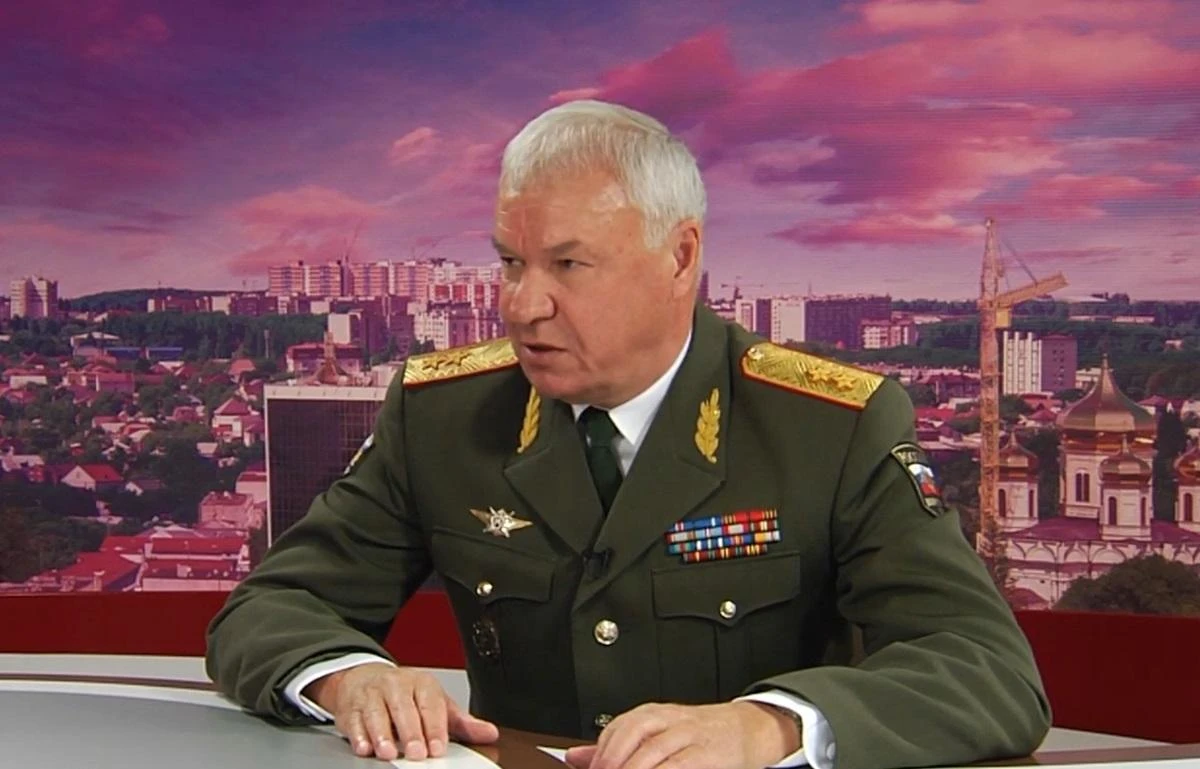















Russia says it is prepared to consider new American ideas for ending the war in Ukraine, but the conditions attached to that openness are substantial. Deputy Foreign Minister Sergei Ryabkov said any proposal would have to match the objectives set by Vladimir Putin and take account of what Moscow calls the “realities on the ground.”
That makes the statement less of a concession than it might initially appear. Russia has not announced a change in its territorial position, accepted an unconditional ceasefire or withdrawn any of its previous demands. It is signalling a willingness to discuss new mechanisms, but not necessarily new strategic outcomes.
Ryabkov also spoke unusually positively about the current US administration. He said Washington had shown a willingness to engage in “constructive dialogue” and a better understanding of Russia’s position. The more important question, he argued, was whether the United States could influence Kyiv and European governments.
That framing is significant. Moscow continues to portray any future settlement largely as an arrangement to be negotiated with Washington, after which the United States would persuade Ukraine and Europe to accept the result. Kyiv insists that decisions about Ukrainian territory and security cannot be made without Ukraine itself.
According to Daycom’s analysis, the Ukraine peace talks are stalled not because diplomatic channels are absent, but because the parties still define compromise in fundamentally different ways. Washington is searching for a “middle ground,” Moscow wants military gains reflected in a settlement, and Kyiv rejects the legalisation of borders changed by force.
Ryabkov’s interview came amid a prolonged slowdown in negotiations. US mediation has lost momentum as the expanding confrontation around Iran has absorbed a growing share of the Trump administration’s diplomatic and military attention.
The Kremlin said on August 20 that it had no information about a possible new trip to Moscow by Trump envoys Steve Witkoff and Jared Kushner. Both men have previously played central roles in direct US contacts with the Russian leadership over the war.
Diplomacy has not stopped altogether. In July, Secretary of State Marco Rubio said after meeting Russian Foreign Minister Sergei Lavrov in Manila that Washington remained committed to helping find a way to end the war, although he cautioned that no quick agreement should be expected.
Rubio described the American challenge as finding an outcome both sides could accept, using the phrase “middle ground.” Ryabkov has now responded by saying Moscow is prepared to listen to new US proposals built around that search for a possible compromise.
But the Russian diplomat immediately defined the boundaries of that discussion. Moscow, he said, would consider only ideas consistent with Putin’s stated objectives and the military situation. He also made clear that Russia did not intend to abandon what it calls its “principled positions.”
The phrase “realities on the ground” has a direct territorial meaning. After nearly four and a half years of full-scale war, Russia controls roughly a fifth of Ukraine’s internationally recognised territory when Crimea and occupied parts of the east and south are included.
Moscow has repeatedly demanded that any settlement take account of its claims to Crimea and to the Donetsk, Luhansk, Zaporizhzhia and Kherson regions. It has also continued to claim the entirety of those four regions, including areas that Russian forces do not control.
That is why “realities on the ground” can mean more than freezing the current front line. In Russian diplomatic language, it can also imply demands for additional Ukrainian territorial concessions beyond the territory Moscow currently occupies.
The international legal status of those territories has not changed. The United Nations General Assembly has repeatedly affirmed Ukraine’s sovereignty and territorial integrity within its internationally recognised borders and has rejected Russia’s attempts to annex occupied Ukrainian territory.
Military control and legal sovereignty therefore remain separate questions. Russia can use occupied land as negotiating leverage, but occupation alone does not produce international recognition of annexation. The principle that territory cannot lawfully be acquired through force remains central to the international response.
Ukraine and its principal European partners have advanced a different negotiating logic. They have indicated that the current line of contact could serve as a starting point for ceasefire talks, while rejecting any automatic legal recognition of territorial changes achieved through military force.
Kyiv also insists that any durable settlement must include binding security guarantees. European governments have discussed continued military support, multinational security arrangements and mechanisms intended to deter or respond to another Russian attack after a ceasefire.
Territory therefore remains one of the hardest elements of the negotiation. Earlier US-mediated contacts did not resolve the difference between stopping hostilities along the existing front and formally recognising territorial changes — something Ukraine continues to reject.
Moscow’s argument that Washington should focus primarily on pressuring Kyiv presents only one side of the diplomatic picture. On August 11, President Volodymyr Zelenskyy said Ukraine had already provided US negotiators with its own proposals for ending the war, although he did not disclose their contents.
Kyiv has repeatedly said it is prepared to discuss a ceasefire and a broader political settlement, but ties any sustainable outcome to credible security guarantees. Ukrainian officials also accuse Russia of using diplomatic pauses to continue offensive operations and improve its position before future negotiations.
The parties are therefore fighting over more than the substance of a possible deal. They also disagree over who is obstructing diplomacy. Moscow blames Kyiv and European governments, while Ukraine argues that Russia has shown no readiness to stop the war without obtaining major territorial and strategic concessions.
Ryabkov’s rhetoric illustrates that divide. He said time was working against Kyiv and the European Union, a formulation that suggests Moscow still sees military and economic pressure as part of its negotiating strategy rather than something that must stop before a political settlement can emerge.
The battlefield picture, however, is not simply one of uninterrupted Russian advance. Moscow continues to announce the capture of settlements, but the overall pace of its gains slowed during parts of 2026. Ukraine has also reported recovering some territory in the southeast.
That means the “realities on the ground” remain fluid. The military situation itself makes territorial language especially sensitive: both sides are trying to enter any future talks from the strongest possible position, and the fighting continues to alter the map that negotiators may eventually confront.
Washington’s own idea of a “middle ground” also remains undefined in public. Rubio has not explained where the United States sees a workable compromise between Russian territorial demands, Ukrainian security guarantees and the principle of not recognising borders changed by force.
Ryabkov’s statement should therefore be read primarily as a signal that Moscow wants to preserve its channel to Washington, not as evidence of a breakthrough. Russia says it is willing to discuss new methods, provided the eventual result does not contradict the Kremlin’s core objectives.
The Russian diplomat also raised a second issue with major strategic implications: nuclear arms control. Ryabkov said Moscow remained interested in political and diplomatic contacts with Washington over strategic weapons following the expiration of the New START treaty.
New START expired in February 2026. For the first time in more than half a century, the United States and Russia — the world’s two largest nuclear powers — are operating without a legally binding bilateral treaty limiting their deployed strategic nuclear arsenals.
The treaty capped each side at 1,550 deployed strategic nuclear warheads and imposed limits on intercontinental missiles, submarine-launched systems and heavy bombers. After its expiration, Moscow said it would voluntarily observe the principal numerical limits as long as Washington did the same.
That creates a separate incentive for Russia and the United States to keep direct channels open even while talks on Ukraine remain stalled. Strategic nuclear stability concerns both countries directly and cannot depend entirely on whether they can quickly reach an agreement over the war.
Even here, however, Ryabkov spoke only of a willingness to seek political and diplomatic ways to stabilise the situation. He did not announce an agreed negotiating process for a successor treaty, leaving open both the timing and the scope of any future arms-control arrangement.
For the Ukraine peace talks, the next meaningful test will not be Moscow’s willingness to “listen to new ideas,” but the appearance of a concrete US proposal and the responses it receives in Kyiv, Moscow and European capitals. No agreed date for a new negotiating round has yet been announced.
Ryabkov’s remarks therefore convey two messages at once. Moscow does not want to close the door on the Trump administration and appears interested in renewed US mediation. But it is also showing no readiness to abandon the conditions that have so far made a rapid compromise extraordinarily difficult.
The central question is not whether Russia is prepared to hear new proposals. Diplomacy will begin to move only when it becomes clear whether the parties are prepared to change their own positions. For now, Moscow is offering to fit new ideas into old demands — leaving the peace process formally open, but strategically blocked.