






















Ukraine woke again with new names added to its list of the dead. After the deadliest strike of the year on Kyiv, Russia continued overnight attacks on other regions. Four people were killed and ten more were wounded in the latest strikes.
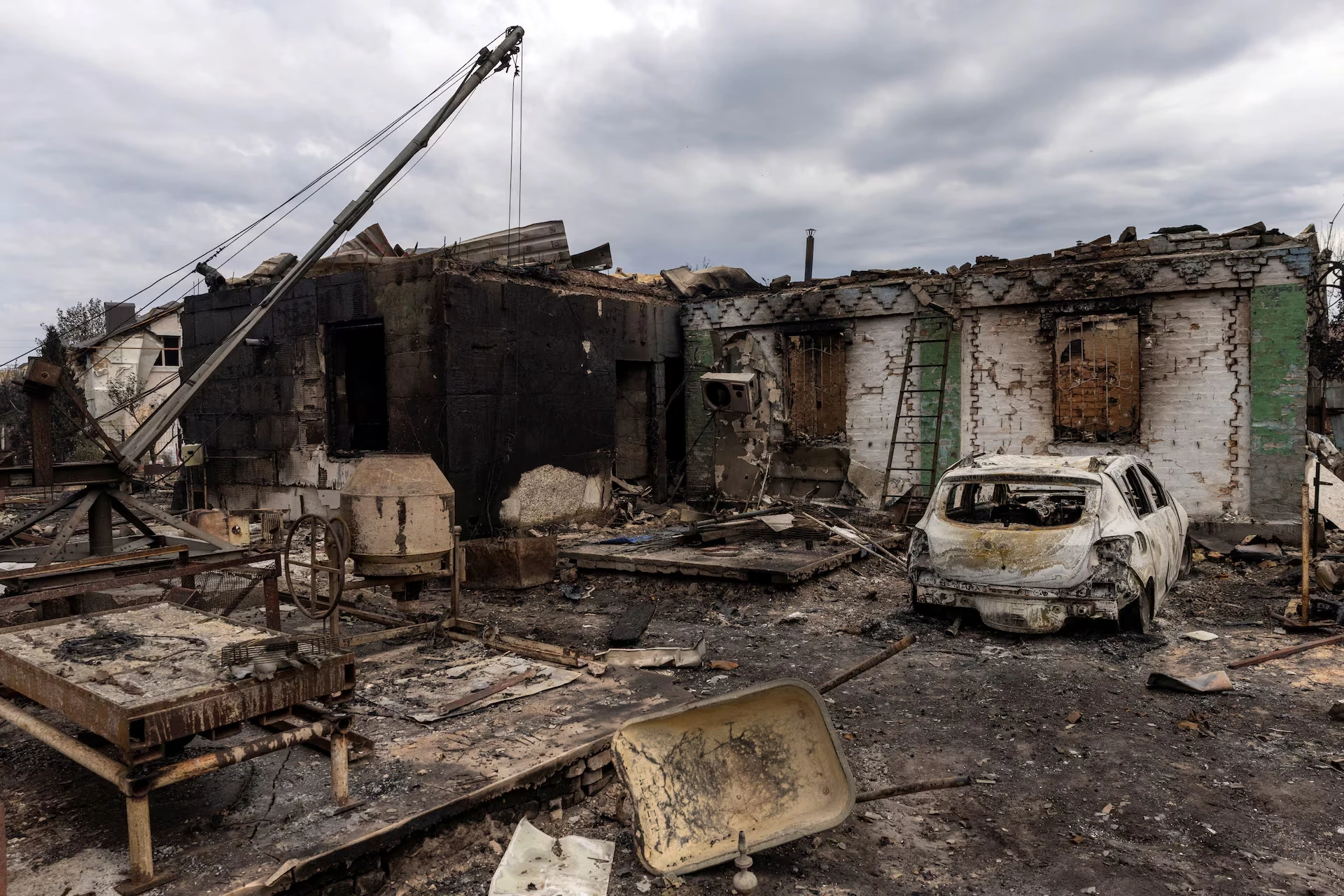
The heaviest toll was recorded in Sumy region. A Russian drone hit a house in the border area, killing two women, an elderly man and a girl younger than two. Three other people were wounded.
In Kryvyi Rih, Volodymyr Zelensky’s hometown, a Russian missile struck a densely built urban area. Seven people were wounded. In such districts, even a single impact spreads damage widely: shattered windows, debris, damaged apartments and fear in the surrounding buildings.
According to Daycom’s earlier analysis, these strikes show that Russia’s campaign against Ukraine is not limited to large attacks on the capital. It relies on the constant expansion of danger: after Kyiv comes Sumy region, after Sumy comes Kryvyi Rih, after one day of mourning comes another night of loss.
That continuity is one of the central instruments of Russia’s war. The goal is not only to carry out a separate strike. The goal is to prevent the country from emerging from the previous tragedy, forcing people to live between sirens, funerals, repairs and new reports of the dead.
Sumy region has long been one of Ukraine’s most vulnerable areas. Its proximity to the Russian border turns towns and villages into spaces of constant risk. Drones, artillery, guided aerial bombs and missiles create a war there with no clear pause between the front and civilian life.
A strike on a house where a child was killed exposes the nature of that danger most brutally. War enters not abstract infrastructure, but rooms where people were sleeping or trying to survive the night. When the victims include a girl younger than two, Russian formulas about “responses” or “targets” lose all meaning.
Kryvyi Rih carries a different, but no less painful, scale. It is a large industrial city, stretched across a vast area, with dense residential districts and sites Russia has repeatedly tried to keep under pressure. A missile strike on a built-up area there almost inevitably harms civilians.
Together, such attacks form a single map of Russian pressure. Kyiv faces mass combined strikes. Border regions live under near-daily threats from drones and artillery. Large cities endure missile attacks on areas where military and civilian geography exist side by side, but where people suffer first.
On Friday, Kyiv was observing a day of mourning after an attack that killed at least three dozen people. But even a day of mourning did not become a pause for the country. While the capital lowered flags and searched for the missing beneath rubble, other regions were already counting their own losses.
This is the reality of a war of attrition. Russia is trying to make Ukraine pay everywhere at once: in the capital, at the front, in border villages, in industrial cities, in hospitals, in rescue services and in families that check every morning’s messages with dread.
After major attacks, there is often an illusion that the next event will be smaller, almost peripheral. But for people in Sumy region or Kryvyi Rih, there is no periphery. A house hit by a drone is the center of a family’s world. A missile landing near homes is a catastrophe regardless of how many cameras arrive.
Russia uses precisely this inequality of attention. A mass strike on Kyiv becomes international news, while an overnight attack on a border home risks being lost in the stream of updates. But for Ukraine, these events belong to one system of violence, in which every region has its own form of vulnerability.
Moscow often presents such attacks as part of a broader military campaign. But the political result is different: civilians again become the main target of fear. The women, elderly man and little girl killed in Sumy region are not an argument of war. They are evidence of its criminal logic.
Every new night also returns Ukraine to the question of air defense. Air defenses are needed not only in Kyiv, where mass attacks overload systems. They are needed across the country — in cities, border communities, industrial centers, energy sites and areas living under constant risk.
No country can fully close its sky when an enemy launches missiles, drones and ballistic weapons in waves. But every additional interceptor, every battery, every detection system and every counter-drone capability reduces the space in which Russian weapons can fall on homes with impunity.
For Ukraine’s allies, these attacks should not sound like a repetition of an old tragedy, but as an argument for speed. A decision delayed by a week in this war can mean one more house, one more child, one more list of the wounded and one more community waking among debris.
Ukraine is holding the front, repelling air attacks, clearing rubble after Kyiv and responding to new strikes across the regions all at once. Such multilayered pressure exhausts the state no less than battles on the front line. It demands resources, people, equipment, psychological endurance and the constant readiness of emergency services.
After the strikes on Sumy region and Kryvyi Rih, the larger picture becomes even clearer. Russia does not stop after a major attack on the capital. It stretches pain across space and time, forcing the country to bury the dead, search for the missing, treat the wounded and prepare for the next night at the same time.
That is why Kyiv’s day of mourning is not only a capital’s event. It is a day in which all of Ukraine sees the shared nature of its vulnerability. Flags are lowered in one city, but death arrives in different regions. The answer must be equally broad: protection of the skies, pressure on the aggressor and support for those living under attack.
Russia’s war is trying to turn Ukraine’s map into a map of constant losses. But every such strike also shows why Ukraine cannot afford exhaustion. Behind the dry formula “four killed and ten wounded” stand a child, families, homes, a city and a country that must once again endure the night.