




















Russia’s economy received a rare external gift from the U.S.-Israeli war against Iran: higher oil and gas prices that temporarily boosted budget revenues. For a country financing a prolonged war against Ukraine under sanctions pressure, the surge looked like a reprieve.
But the reprieve was brief. As tensions in the Persian Gulf eased and oil prices slipped back toward prewar levels, it became clear that the Middle East crisis had not solved Russia’s budget problem. It had only masked it for a few weeks.
The Kremlin is again facing the reality that military spending is growing faster than commodity revenues can cover it. In the first half of the year, federal spending reached about $320 billion, roughly 55 percent of the annual budget. That is not merely accelerated spending. It is the sign of an economy being pulled deeper into a war vortex.
According to Daycom’s assessment, the central point is not that the Russian economy is on the verge of immediate collapse. It still has reserves, administrative rigidity and raw-material income. But its resilience is becoming more expensive, and every additional month of war demands a harsher redistribution of resources.
The budget deficit for the first half of the year reached about $75 billion. That is far above what was expected when the budget was adopted and more than $30 billion higher than in the first half of last year. For a state used to treating oil and gas income as a shock absorber, this trajectory is alarming.
The second quarter helped Moscow only partially. Higher energy prices caused by the conflict around Iran increased oil revenues, but the gain could not offset a weak first quarter, when prices were low. Overall, Russia’s oil and gas revenues in the first six months were more than 22 percent lower than in the same period last year.
That matters because Russia’s war model depends on a constant flow of money. The front requires equipment, payments, ammunition production, repairs, logistics and compensation. The slower the army advances, the more expensive each kilometer of war becomes. An economy that recently grew on military stimulus is now beginning to feel its reverse side.
The commodity bonus from Iran did not become a new foundation for the budget. By the end of June, the price of Russian crude had fallen from its May peaks back toward levels seen before the Middle East escalation. Unless the conflict in the region reignites fully, Moscow cannot count on high prices to provide stable external support for its revenues.
Another problem lies inside Russia’s fuel market. Because of a fiscal mechanism designed to keep domestic gasoline prices stable, the state must transfer a large share of oil income to refiners. After Ukrainian strikes on oil refineries, these facilities need money more urgently than before.
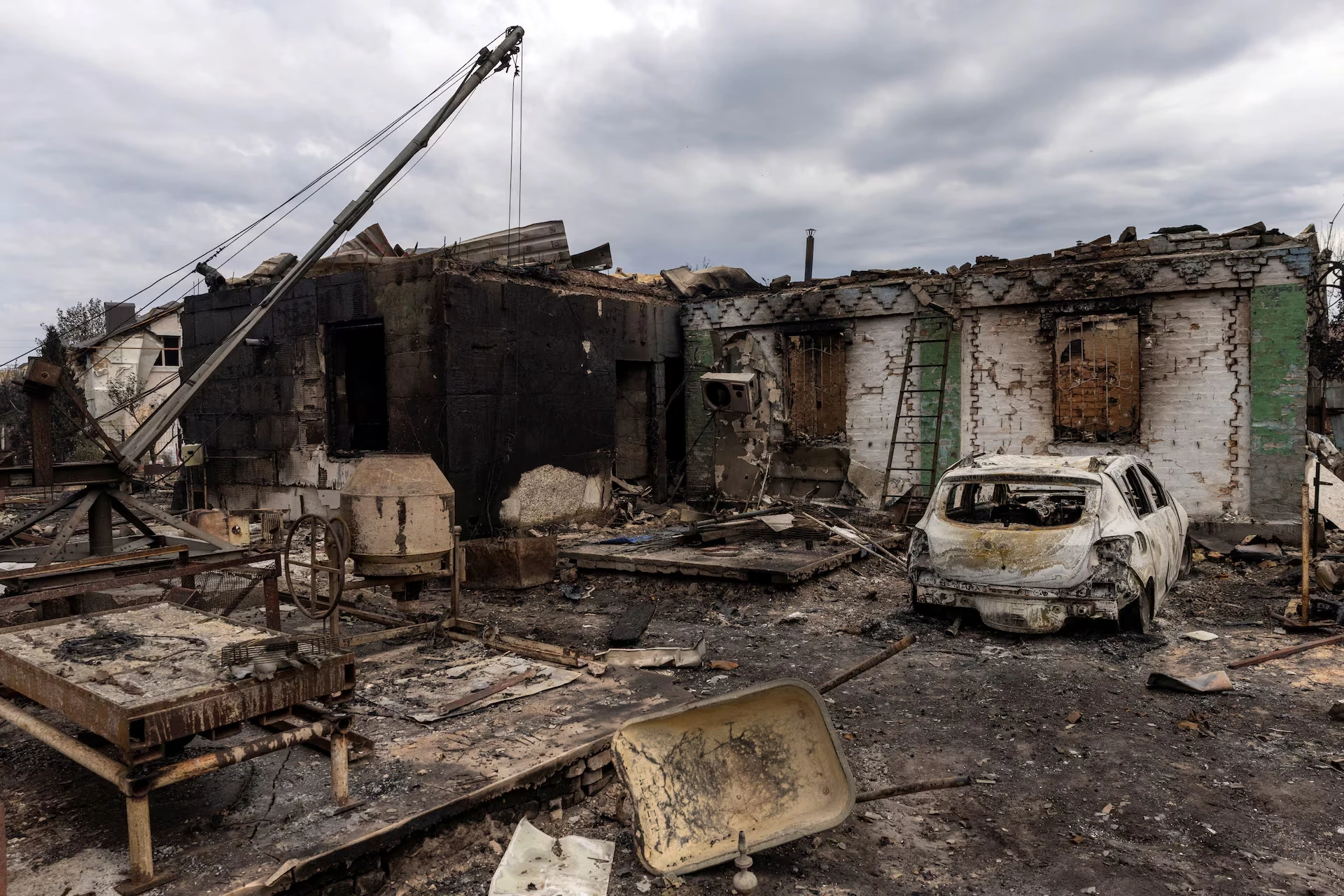
Ukrainian attacks on refineries, ports and fuel depots have changed the nature of pressure on Russia. For many Russians, the war is no longer a distant television reality. Lines at gas stations, fuel shortages and damaged enterprises show that rear infrastructure is no longer safe.
For the Kremlin, this is painful in two ways. Strikes on refining increase costs and complicate supply. But they also weaken the public sense of normality. Russian authorities have long tried to sell the war as something that should not radically alter everyday life. Fuel shortages puncture that illusion.
At the same time, military spending cannot be reduced without a political admission of stalemate. The army needs more resources precisely because quick results have not come. The offensive is slow, losses are heavy, and Ukrainian drones and rear strikes complicate Russia’s numerical advantage. The economy has become hostage to the strategy of exhaustion it must finance.
Signs of strain now extend far beyond the defense sector. Small businesses complain about higher taxes, major developers seek state support, and state-run monopolies are showing dangerous debt levels. Even giants such as the railway system are being forced to look for ways to urgently free up money.
This shows that the war economy is not merely reallocating resources toward the front. It is squeezing oxygen out of civilian sectors. In the short term, this can look manageable: the state keeps control, orders continue, factories operate. In the long term, fatigue accumulates across business, infrastructure and consumers.
The Central Bank is now under special pressure. Putin expects lower interest rates because expensive money is choking business, construction and consumer demand. But high inflation leaves the regulator little freedom. Cutting rates sharply while public spending is rising could quickly accelerate prices.
Elvira Nabiullina has effectively marked the boundary of political desire. The rate was lowered only symbolically, by a quarter of a percentage point, because deeper easing could push the country toward stagflation — weak growth combined with high inflation. For Russia, that is one of the most dangerous scenarios: the economy fails to accelerate while prices continue eroding household income.
Monetary policy has become a battlefield between war and stability. The Kremlin wants cheaper financing for the economy, but it is itself driving spending higher. The Central Bank is trying to contain inflation, but it cannot cancel the military budget. Business wants affordable credit, but receives taxes, expensive loans and uncertainty.
The Russian system can still contain these contradictions administratively. It can redistribute money, pressure companies, change tax rules, use reserves and shift part of the burden onto the population. But such methods do not create new sources of growth. They only extend the state’s ability to pay for the war.
That is why cautious talk about the need to end the fighting is becoming more frequent. For part of the economic elite, the issue is no longer politics but arithmetic. The longer the war continues, the more it turns the budget into an instrument of the front and the civilian economy into a source of extraction.
Yet economic logic collides with political logic. For the Kremlin, admitting the need to stop the war would mean admitting that the price has become too high. That is dangerous for a government that has spent years telling society the campaign is proceeding according to plan and toward a historic goal. Financial pressure may not quickly lead to peace. It may instead lead to new attempts at escalation before the resource base weakens further.
The brief oil gain from the conflict around Iran revealed Moscow’s dependence on external shocks. Russia can temporarily benefit from other people’s crises when they lift commodity prices. But it does not control their duration or scale. Once prices fall back, its own problem becomes visible again: the war costs more than the budget can comfortably admit.
Russia’s financial system is not facing immediate collapse. But it is moving into a narrower corridor. High spending, falling oil and gas revenues, fuel shortages, expensive credit and rising debt do not form one crisis, but a network of connected constraints. Each can be softened temporarily. Together, they change the cost of continuing the war.
The Kremlin can still buy time. But that time is becoming more expensive. If oil prices no longer provide a reliable breather, Russia’s budget will increasingly have to choose between the front, inflation, business, social obligations and domestic stability. That choice reveals the real weakness of a war economy: it can endure for a long time, but less and less without a visible price for the country.