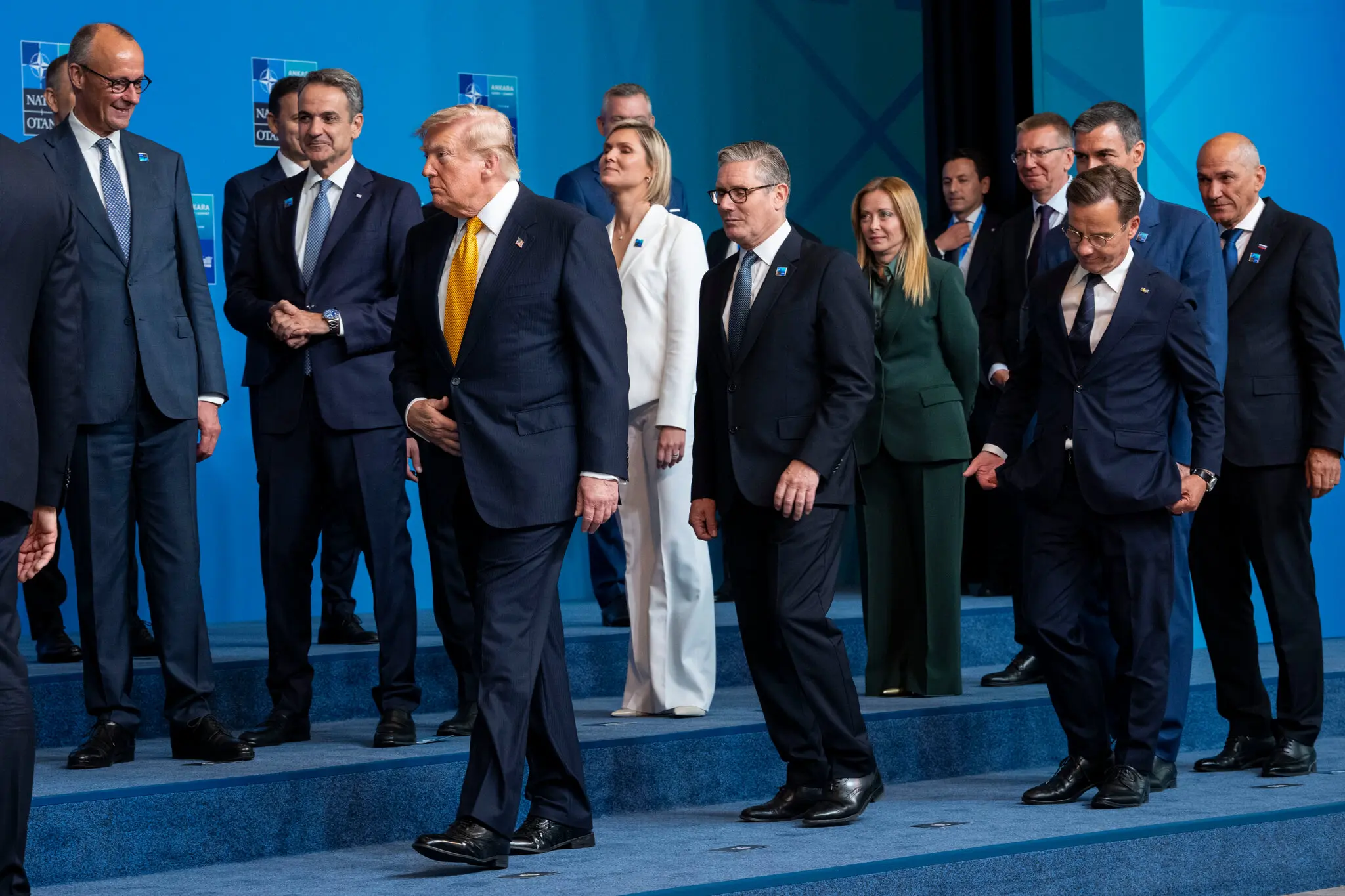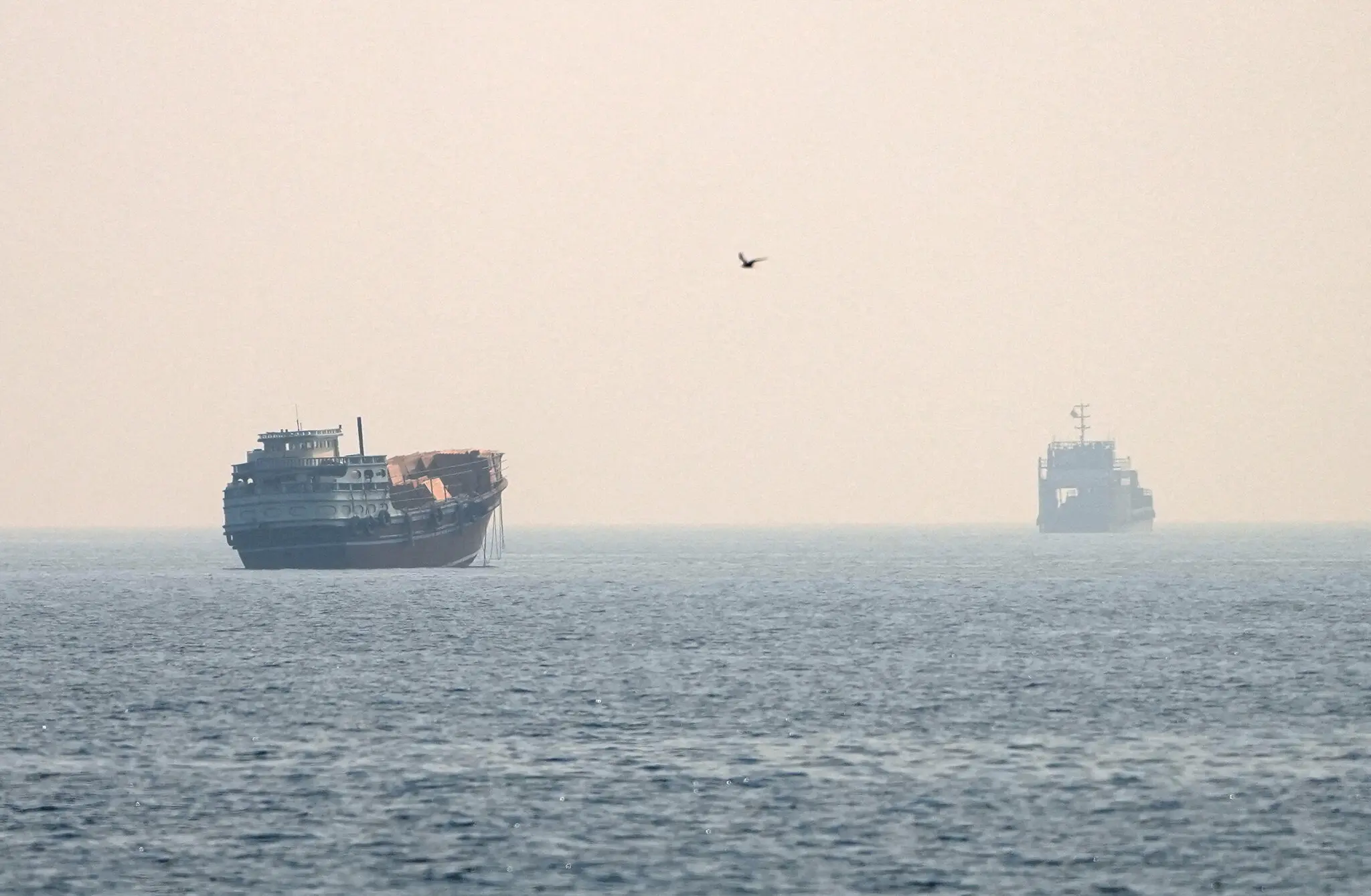
























Mark Rutte’s statement that Europe needs time to “come together” on the Strait of Hormuz is more than a procedural comment. It is one of the clearest public acknowledgments yet that NATO’s European members are not ready to move from general concern about the waterway to immediate joint action. The alliance may broadly agree that Hormuz must remain open to global trade, but agreement on principle is not the same as readiness in practice.
What makes the moment especially revealing is Rutte’s explanation for the delay. According to reporting on his March 26 remarks, he told Donald Trump that Europe could not be expected to react quickly because the United States had not been able to inform allies in advance of the Feb. 28 strike on Iran. That matters because it turns the debate over Hormuz into something larger than maritime security. It becomes a question of how much collective responsibility allies can realistically assume for a campaign they did not help plan at the outset.
According to the preliminary assessment of Daycom, the key word in Rutte’s formula is not “Hormuz” but “time.” Time, here, is a polite way of describing a deeper alliance problem: the United States expects political support for the consequences of a war that it launched with limited prior coordination, while Europe wants clarity on mission scope, legitimacy, and strategic end state before it takes on that burden. That is an inference, but it is strongly supported by Rutte’s remarks and the broader European reaction.
Rutte has not distanced himself from Washington. On March 19 he said allies were “intensely discussing” how to handle the closure of the Strait of Hormuz and stressed that the waterway could not remain shut because of its importance to the global economy. On March 26, he went further, praising the U.S. effort to degrade Iran’s capabilities and describing the alliance as stronger than ever.
That is precisely where the contradiction in his position lies. Politically, Rutte appears determined to avoid an open break with Trump and to keep NATO aligned with the broader American strategic case against Iran. Operationally, however, he is admitting that Europe is not prepared to follow Washington at the same speed. This is not simply a military delay. It is a sign that support for the United States does not automatically translate into readiness to join a mission in the Gulf.
The resistance inside Europe is now public. Finland’s President Alexander Stubb said on March 26 that the war in Iran is “not a NATO matter,” a notable statement coming from the leader of one of the alliance’s newest and most Atlanticist members. That suggests the argument in Europe is no longer only about timing. It is also about the nature of alliance obligations and whether NATO should be drawn into a conflict outside its traditional collective-defense framework.
Rutte’s own description of the emerging coalition underlines the uncertainty. He said more than 30 countries, most of them NATO members, were now discussing how to keep the Strait of Hormuz open, but he also conceded that it remained unclear what exactly such an effort would mean, when it could begin, and where its operational boundaries would lie while the war is still ongoing. That is a telling admission: the alliance is discussing a mission whose political concept may exist before its strategic design does.
This is why the current debate is less about ships than about political risk. A minesweeping or escort mission can be framed as defensive. But if it begins while the U.S.-Iran war is still active and without a cease-fire, many Europeans will see it as de facto participation on Washington’s side. That is also why Rutte highlighted Keir Starmer’s role in trying to answer the core questions of what such an effort would be, when it would happen, and under what conditions. Britain is again acting as the bridge between a more impatient Washington and a more cautious continental Europe.
For Trump, Europe’s slow pace is proof of weakness. For Europe, it is the consequence of an American campaign that began too abruptly for allies to absorb politically. When partners are not fully brought into the logic of a military opening, they cannot instantly share the political liability of what follows. In that sense, the pause now visible around Hormuz is not merely hesitation. It is the price of a one-sided start.
In the broader view, the Hormuz episode exposes a defining NATO problem in the Trump era. The alliance may still share a common language about threats, but it no longer shares an automatic consensus on how to respond to them. Europe and the United States can agree that Iran poses a danger to regional and even allied interests, yet still disagree on speed, scope, and political ownership of the response.
That is why Rutte’s appeal for time matters. It is not a technical aside. It is a recognition that NATO has entered a phase in which threats may be collective, but the political cost of reacting to them is not. And while Europe is still “coming together,” the Strait of Hormuz remains not only a choke point for the global economy, but also a test of whether NATO can still function as a coherent political alliance beyond its own territory.