



















Europe’s heat now has a color. While Western Europe remains under a dome of high pressure, winds are lifting dust from the Sahara and carrying it north — across the Mediterranean, over France and toward southern England. The sky may turn milky, sunsets may grow deeper, and rain may leave a rusty film on windows and cars.
This is not a rare apocalyptic event, although photographs often make it look that way. Saharan dust regularly reaches Europe in spring and summer. Most episodes pass almost unnoticed: the air turns hazier, the sun becomes softer and less defined, and after a brief shower, surfaces may be left with a dirty orange residue.
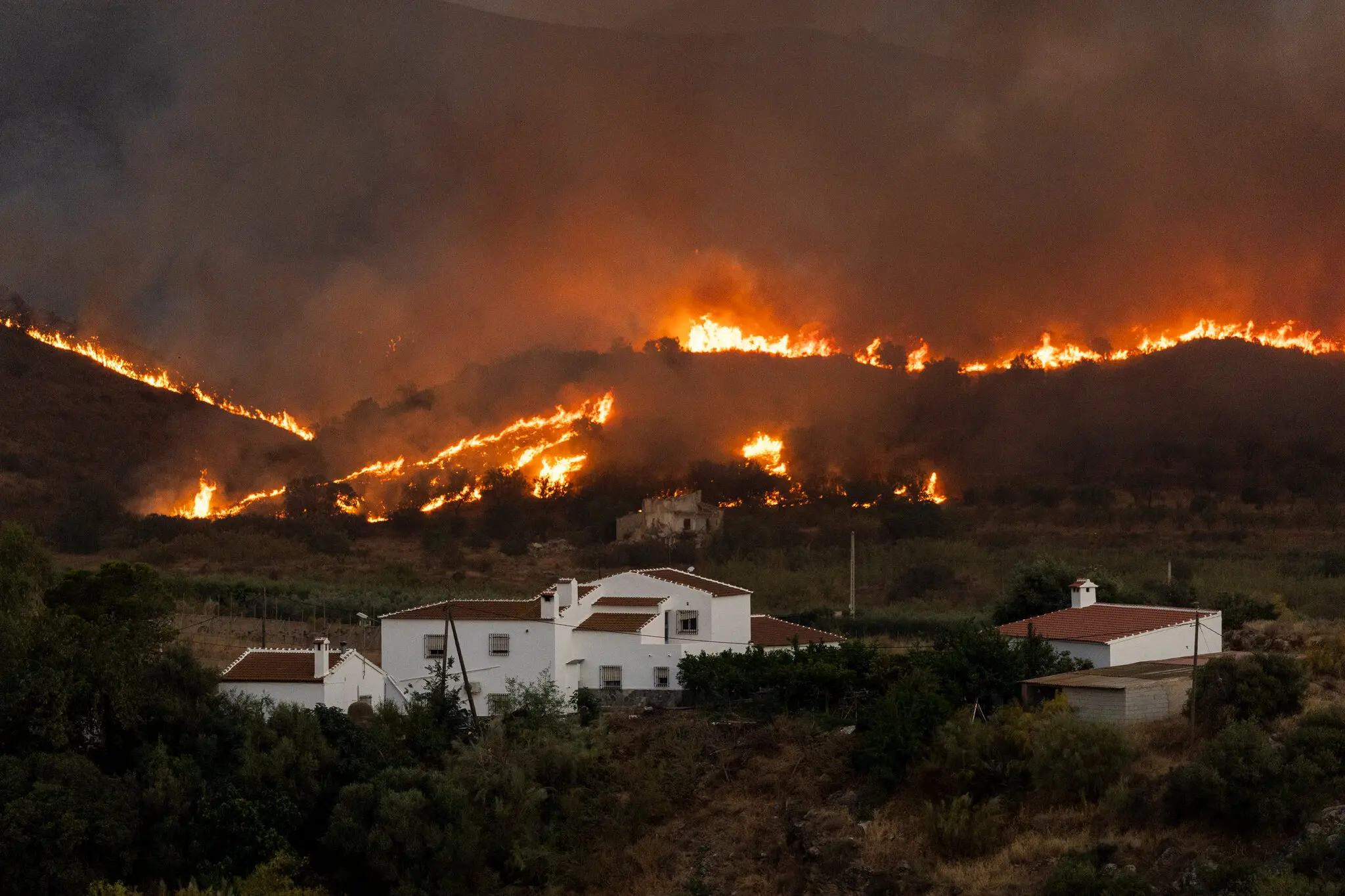
This time, however, the dust is arriving on top of a far more dangerous story — one of Europe’s strongest heatwaves in years. That is why even a familiar atmospheric event takes on a different meaning. It does not create the heat, but it makes it visible: European cities receive not only a temperature, but an almost cinematic image of an overheated continent.
According to Daycom’s earlier analysis, Saharan dust matters here not in isolation, but as a marker of Europe’s new climate sensitivity. What once might have been treated as a brief meteorological curiosity now lands in a context of records, deaths, closed schools, strained infrastructure and anxiety over public health.
The mechanism is simple enough, but powerful. A storm system off the coast of Portugal and the heat dome over central Europe have created an atmospheric corridor that lifts dust in North Africa and carries it across long distances. Air currents move in waves over Europe, and the dust travels with them.
At first, the unstable edge of this pattern may bring rain and thunderstorms to Spain and Portugal. Later, moist air may reach southern England, while France faces a higher chance of rain toward the end of the week. That is when dust, mixing with falling rain, may return to the ground in reddish droplets.
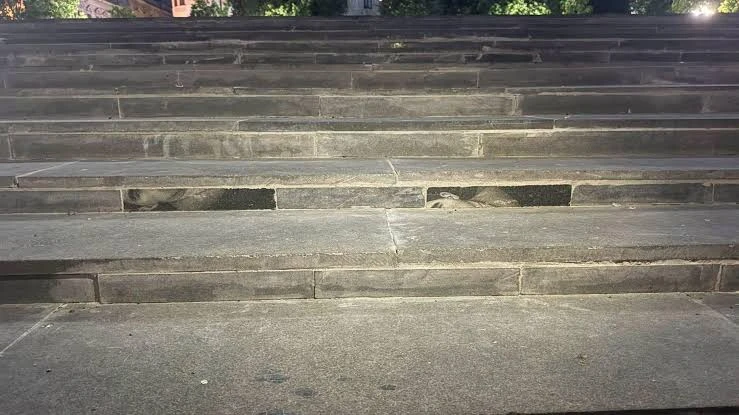
The popular phrase “blood rain” sounds far more dramatic than the phenomenon usually is. In most cases, the rain does not look red in the air. The color becomes visible only after drops dry and leave a thin layer of dust on glass, roofs, balconies or car bodies. Only the rarest and most intense episodes can color rain or snow more strongly.
This week’s dust concentrations are not expected to be exceptional. They are likely to resemble the ordinary spring and summer dust intrusions Europe sees many times each season. The difference is timing: the dust is arriving while the continent is already under pressure, with record heat, cities searching for shade and people struggling through long, hot days.
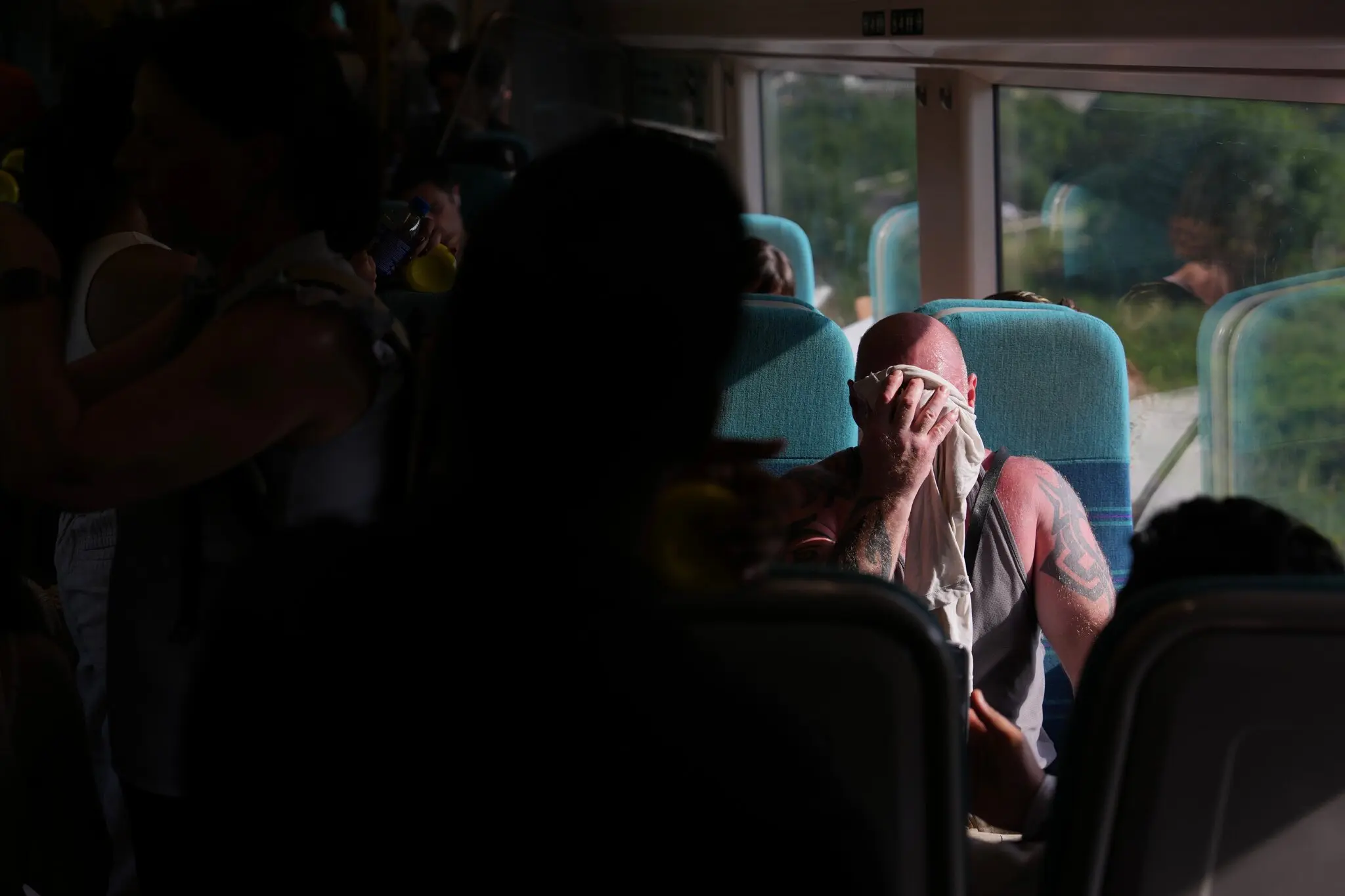
In such conditions, even moderate dust can alter the feeling of the atmosphere. The sky becomes less transparent, the light heavier, the horizon clouded. Combined with temperatures above 35–40°C, it can create the psychological effect of an enclosed space, where the air is not only hot but physically weighted.
Saharan dust also reminds Europe that climate processes do not respect borders. Particles lifted in Africa can settle on French rooftops, British cars or Alpine snow. The same air that was part of desert dynamics yesterday can become part of urban European life tomorrow.
That matters for understanding the new climate era. Europe’s heat is not only a European event. It is tied to atmospheric flows over the Atlantic, North Africa, the Mediterranean and the Arctic. When one system stalls or bends out of place, the consequences are felt not by one region, but across a continental space.
Dust alone is not proof of climate catastrophe. But climate change can influence the conditions under which such episodes become more intense. Hotter temperatures, shifting rainfall in North Africa, drier surfaces and stronger winds can lift more dust into the atmosphere. That does not necessarily mean dust intrusions will become more frequent, but individual episodes may become denser.
This is the subtle logic of climate. Not every event becomes more common in simple arithmetic. Sometimes it changes in intensity, timing or its ability to combine with other risks. Saharan dust over Europe is no longer seen separately from heat, drought, energy demand, air quality and urban vulnerability.
For city residents, the signs are ordinary and immediate. Windows are coated with a rusty film. Cars need washing. Sunsets become unusually vivid. The daytime sky looks milky. But behind the spectacle lies a question of adaptation, not aesthetics: how to live in an atmosphere where extreme heat, dust, smog and a shortage of cooling increasingly arrive together.
The most vulnerable remain people with chronic illness, respiratory problems, older residents, children, outdoor workers and those without access to air-conditioned spaces. When heat already strains the body, any additional deterioration in air quality becomes not a detail, but a risk factor.
Tourism is also entering a new reality. European cities have long sold summer as light, walking, museums and open squares. But when the sky is hazed with dust, temperatures remain dangerous and landmarks shorten their hours, the tourist image loses its ease. The traveler begins looking not for beauty, but for water, shade and cool air.
It is symbolic that the dust is arriving just as Europe is already speaking of a heat dome and an Omega block. One mechanism traps the heat; the other gives it color. Together, they create an image of summer in which weather is no longer a background, but the main force shaping school schedules, transport systems, museum hours and human behavior on the street.
Europe has seen Saharan dust before, and it will endure heatwaves again. But increasingly, these events overlap, creating more complex episodes than ordinary “hot weather.” That layering of risks is the new problem: heat, dust, drought, pressure on power grids and urban inequality operate at the same time.
A reddish rain or orange residue on glass should therefore not be treated only as an atmospheric oddity. It is a brief material trace of a larger system in which desert, ocean, European cities and global warming are linked in one chain. Dust falls quietly, but its arrival makes visible what is usually hidden in maps and models.
This week, the Sahara may only lightly touch Europe with its dust. But the scene itself has already changed. The continent is living under a heat dome, counting deaths, limiting infrastructure and looking at a sky with an unfamiliar tint. This is not the end of the world. It is a warning about a world in which even the color of rain may increasingly remind Europe of the climate threshold it has already crossed.