





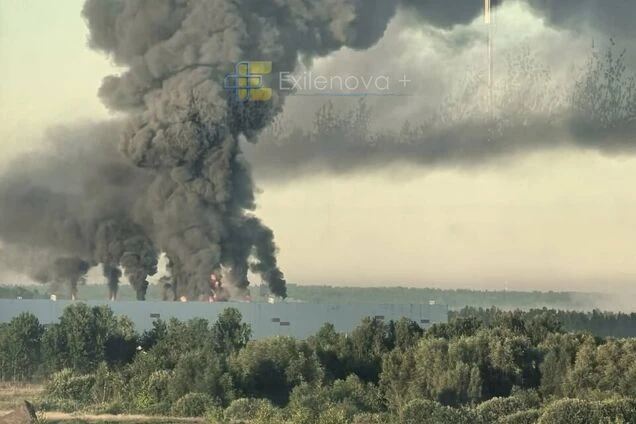












Ukrainian drones have again shown that Russia no longer has a fully distant rear. In Sevastopol, the largest city in occupied Crimea, a strike on energy infrastructure caused power outages, stopped trolleybuses and pushed the city into what was effectively a regime of wartime restrictions.
This was not an isolated episode in a night of attacks. It was part of a broader Ukrainian campaign against Russian oil refineries, substations, depots, supply routes and industrial nodes. Kyiv is increasingly striking not only the front line, but the system that allows Russia to keep fighting.
Crimea has special significance in this campaign. The peninsula, seized by Russia in 2014, remains a military base, a logistics hub and a symbol of occupation. For Ukraine, strikes on Crimea are not a display of range for its own sake. They are a reminder that occupied territory cannot be a stable rear for the aggressor.
According to Daycom’s earlier analysis, the latest attacks on Sevastopol matter because they combine military and psychological effects. When power disappears, transport is curtailed, street lighting is dimmed and parents are told to keep children at home, the war stops being abstract even for the occupation administration.
Russian officials in Sevastopol are trying to describe the situation as an attempt to spread panic. But the need to change city rules, limit cafes, transport and lighting already says something else: Ukrainian strikes are forcing the occupation regime to move from the rhetoric of control to the practice of defense.
The key target was energy infrastructure. Ukraine’s drone command said the main substation at the Sevastopol power plant had been hit. If such infrastructure is knocked out even partially, the consequences go beyond one night: transport, communications, repair services, military logistics and the city’s ability to return quickly to normal rhythm are all affected.
For Crimea, this comes on top of an existing fuel crisis. Ukrainian strikes on Russian refineries, oil depots and supply routes have pushed up gasoline prices in Russia and led to sales restrictions in some regions. On the peninsula, shortages are especially sensitive because Crimea depends on complex and vulnerable logistics.
That is why Sevastopol has become not only a military target, but an indicator of Russia’s ability to maintain occupied territory as a normal administrative space. If fuel, electricity and transport become unstable, occupation loses the central element of its propaganda: the image of final control.
Ukraine’s strategy is clear. Kyiv is trying to raise the cost of the war for Russia not only at the front, but deep inside its system. Refineries, substations, industrial facilities, gas processing plants, airfields and routes through Crimea and southern Russia are now parts of the same battlefield.
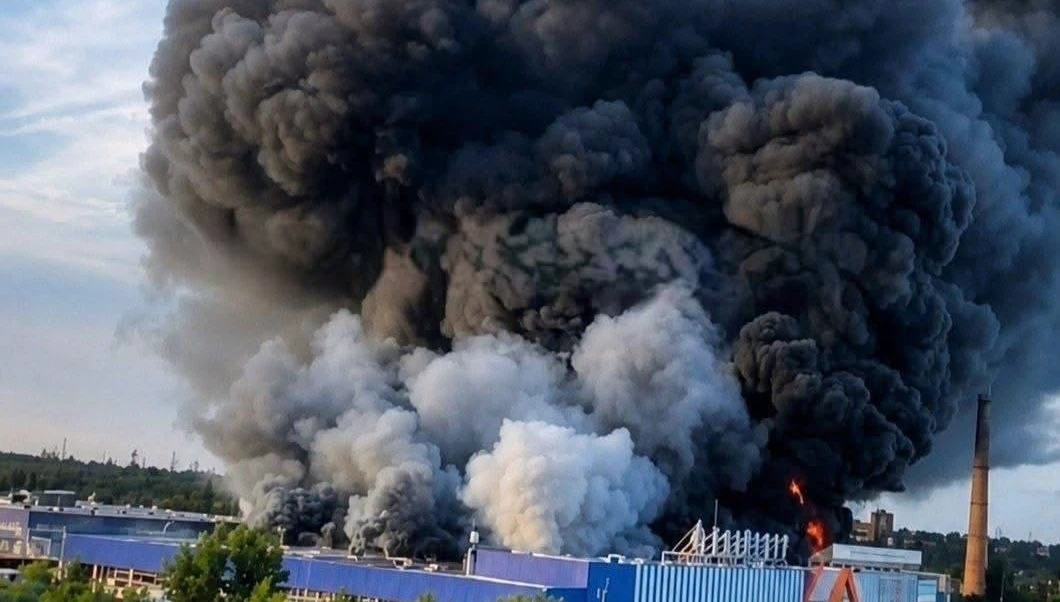
In the Nizhny Novgorod region, drone debris damaged an industrial facility, and local authorities reported deaths. The region is home to major refining capacity that had already been forced to halt or scale back operations after previous attacks. This shows that Ukrainian drones are reaching not only border regions, but also Russia’s industrial core.
Another signal came from the Orenburg region, more than 1,000 kilometers from Moscow. Drones were downed over an industrial facility in a region that hosts gas and oil infrastructure. Even without confirmed large-scale damage, the fact of an attack at such distance forces Russia to stretch air defenses and security across a vast territory.
Moscow said it intercepted more than 300 drones overnight. For Russian propaganda, that number is meant to sound like proof of defensive effectiveness. Strategically, it also says something different: Ukraine is capable of launching mass waves that overload the system and force it to respond simultaneously in Crimea, central Russia, the south and around critical industrial zones.
In this war, the drone has become more than a cheaper alternative to the missile. It is an instrument of exhaustion. Its task is not always a single spectacular explosion. Sometimes it is enough to force the enemy to halt production, reroute supplies, repair substations, keep air defenses near plants and explain to the population why lights or gasoline have disappeared.
For Russia, this is especially painful because its war machine depends on energy. Fuel feeds the front, aviation, logistics, production, railways and maritime routes. When Ukraine strikes refining and power supply, it is not attacking an abstract economy. It is hitting the circulatory system of the war.
At the same time, this phase makes the conflict broader and more dangerous. Russia continues to strike Ukrainian cities, energy facilities and civilian infrastructure. In Balakliia, Russian shelling killed one person. In Russian border regions, drone attacks are also producing casualties. The war is entering civilian life more deeply on both sides of the border.
But the moral and strategic distinction remains fundamental. Russia has spent years destroying Ukrainian cities, striking residential areas, the power grid, ports and hospitals in an effort to break social endurance. Ukraine, in response, is focusing on infrastructure that sustains aggression: refineries, substations, factories, logistics and occupation military nodes.
Vladimir Putin has described these strikes as an attempt to destabilize Russian society. Inside that accusation is an unstated admission: Ukraine’s strategy has begun to affect not only military plans, but Russia’s internal resilience. If fuel prices rise, regions impose restrictions and Crimea dims its streets, the war is no longer a managed television image.
Ukraine cannot quickly stop Russian aggression through defense alone. That is why it is moving pressure into the aggressor’s rear, trying to make the continuation of the war more expensive, more complicated and politically less comfortable. This does not guarantee a rapid turning point, but it changes the arithmetic of attrition.
Sevastopol without power is not just a local outage after a drone strike. It is a symbol of how occupied Crimea is being transformed from a Russian showcase into a vulnerable node of war. The longer Moscow holds foreign territory and continues its aggression, the more its own energy system, logistics and industry become part of Ukraine’s response.