


















The ceasefire in Lebanon lasted for less time than diplomacy required. Within hours of the truce agreement, Israel and Hezbollah were again exchanging fire, while the planned round of U.S.-Iran talks in Switzerland was thrown into doubt.
This became the first serious test of the preliminary U.S.-Iran deal, which was meant to halt fighting on all fronts, including Lebanon. That phrase had looked vulnerable from the start: Washington and Tehran can negotiate with each other, but they do not fully control the logic of the Israeli-Lebanese front.
Lebanon has long ceased to be a secondary stage in the regional war. Hezbollah is not merely Iran’s ally, but a central element of its strategy for deterring Israel. For Jerusalem, this is not a diplomatic detail, but a direct military threat on its northern border that cannot simply be postponed for the sake of a text agreed with Tehran.
According to Daycom’s assessment, Lebanon is the point where Trump’s Iran deal has collided with its own internal contradiction. The document tries to end a broad war through a political gesture, but does not answer who will actually stop Iran’s proxy forces or who will guarantee Israel’s security after such a halt.
The Israeli military said Hezbollah fired more than 50 projectiles at Israeli forces in southern Lebanon. Israel responded with strikes on what it described as Hezbollah targets. Lebanese reports of overnight airstrikes and deaths only deepened the sense that the ceasefire was not a stable regime, but a brief pause before another flare-up.
For Iran, the episode became a reason to pull out of the planned talks. That is telling: Tehran uses Lebanon not only as a military front, but also as a diplomatic lever. If Israel continues striking Hezbollah, Iran gains grounds to accuse Washington of failing to ensure implementation of the agreement.
This is where the weakness of the American structure becomes visible. The United States can negotiate with Iran about ending hostilities, but it cannot simply order Israel to ignore a threat from the north. For Benjamin Netanyahu’s government, Hezbollah remains a force attacking northern Israel, holding a rocket arsenal and operating as Tehran’s forward instrument.
Israel’s ambassador to the United States said the country had stopped offensive operations in Lebanon and was ready to observe the ceasefire if Hezbollah also halted its attacks. But he also stressed that Israeli forces would remain in southern Lebanon. That is the conflict: for Iran and Hezbollah, this may look like a violation of sovereignty; for Israel, it is a necessary security zone.
The U.S.-Iran deal tries to compress this complicated reality into a general formula for ending the war. But Lebanon is not a technical annex to the negotiations. Its own forces, traumas and logic of retaliation and deterrence are at work there. Every strike can derail the diplomatic process between Washington and Tehran.
For Netanyahu, the situation is almost impossible. Inside Israel, he faces intense pressure to respond to Hezbollah attacks and prevent the northern border from remaining a zone of permanent threat. If he accepts the constraints embedded in the U.S.-Iran deal, critics will accuse him of making concessions without guarantees.
That is why Israel’s reaction to the Iran deal was so cold. In Jerusalem, the document is seen as failing to resolve three central issues: Iran’s nuclear program, its ballistic missiles and its proxy networks. Now Lebanon shows that even the promise of ending fighting on regional fronts may remain a declaration without an enforcement mechanism.
For Washington, this is a dangerous signal. If talks with Iran depend on quiet in Lebanon, and quiet in Lebanon depends on Hezbollah’s behavior and Israel’s decisions, then American diplomacy is tied to a front it does not fully control. Every local exchange of fire can become sabotage of the larger deal.
Iran also benefits from this uncertainty. Tehran can keep open the possibility of negotiations while using their collapse as pressure. When the terms are useful, it returns to the table. When they are not, it points to Israel, Lebanon and “ceasefire violations,” trying to shift responsibility back onto Washington.
In that sense, the Lebanon front is not peripheral, but a test of the agreement’s real value. If the United States cannot ensure implementation of a clause ending hostilities “on all fronts,” then the question is how it will enforce far more complex commitments: nuclear inspections, limits on enrichment, control over assets and the conduct of Iranian proxies.
The situation is further complicated by the fact that the Iran deal is deeply unpopular in Israel. It is criticized for postponing the nuclear issue, leaving the missile program untouched, requiring U.S. forces to leave the region and potentially constraining Israeli operations in Lebanon. Every new Hezbollah attack strengthens the case made by opponents of the deal.
For Israeli society after Oct. 7, the logic of preventive force has become part of the security consensus. Promises of diplomatic settlement are not convincing if rockets, militants and the possibility of another attack remain in the north. That is what makes Lebanon so explosive in the context of the Iran talks.
For Trump, the problem is different. He wants to present the deal as a way to end the war, ease energy pressure, reopen the Strait of Hormuz and show that the United States can force enemies into agreement. But if Lebanon is burning again, the image of a grand peace deal quickly loses credibility.
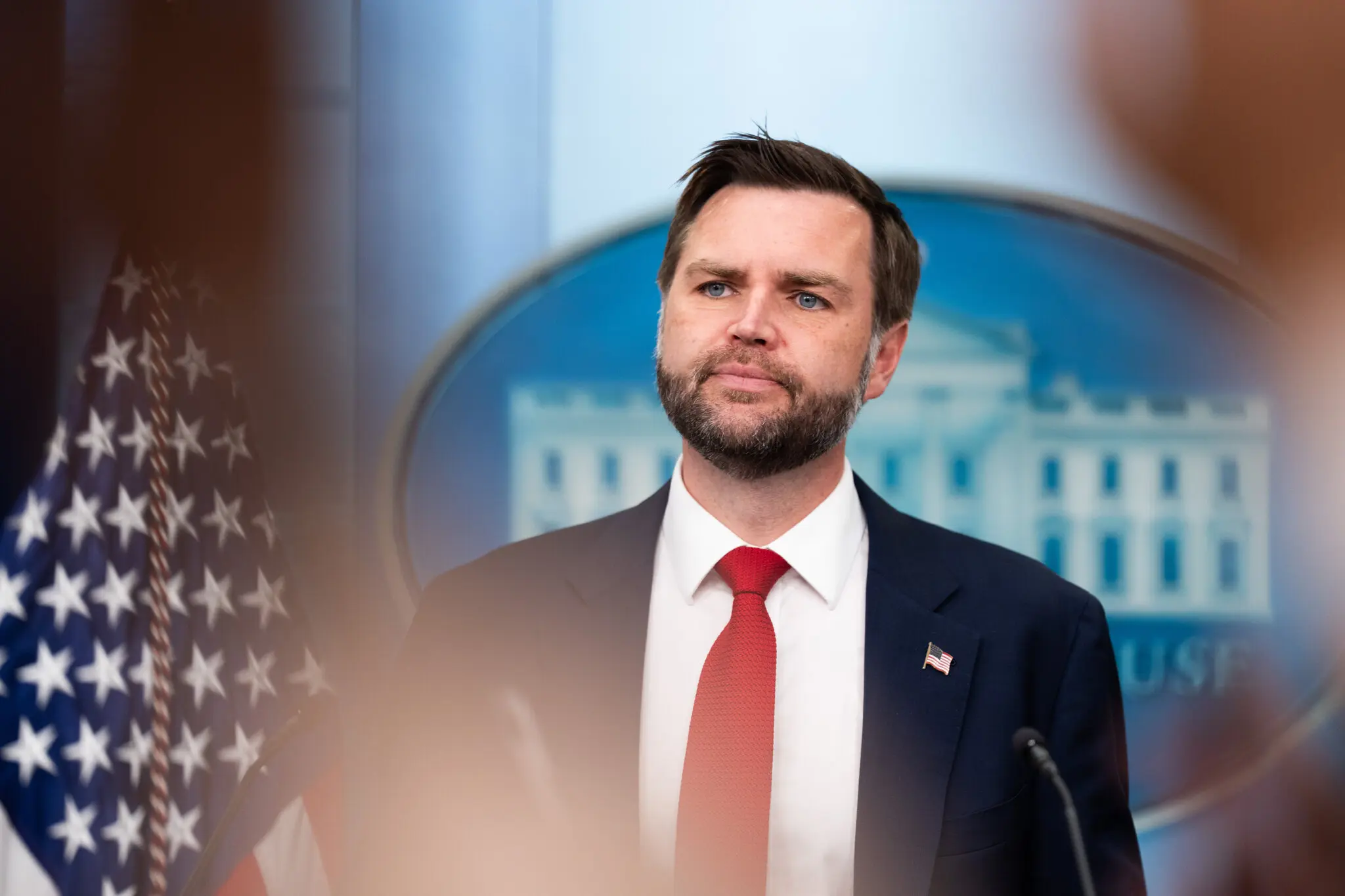
The postponement of Vice President JD Vance’s expected role in the Swiss talks underlined the fragility of the moment. Diplomacy that only a day earlier was meant to look like the next stage after the memorandum suddenly depends on night strikes, military statements and whether Hezbollah chooses to issue a public position.
This does not mean the talks are doomed. They could resume if the parties quickly restore quiet in Lebanon and find a formula that allows Iran to return to the table without losing face. But it is now clear that any future deal cannot handle Lebanon through general language alone.
A mechanism is needed to answer concrete questions. Who monitors the ceasefire between Israel and Hezbollah? Who records violations? What happens to the Israeli presence in southern Lebanon? What limits are imposed on Hezbollah? How does Iran answer for the actions of a force it supports but can formally describe as independent?
Without these answers, the Lebanon clause will remain not a guarantee of peace, but the weak point of the entire structure. Israel will not stop striking if it sees the threat as real. Hezbollah will not lose its value to Iran simply because a memorandum says hostilities should end. And the United States cannot indefinitely balance between an ally and an agreement with that ally’s main enemy.
The clashes in Lebanon have shown the core lesson: wars fought through proxies do not end with signatures from two capitals. They require control over networks, arsenals, borders and the political obligations of forces that are not formally seated at the main negotiating table.
That is why Trump’s Iran deal is now facing its first serious test not in Tehran or Washington, but in southern Lebanon. Without quiet there, there will be no larger peace. There will only be a diplomatic text promising the end of war while the war itself finds another way to return.