




















What mattered in Kaja Kallas’s remarks this week was not only their sharpness, but their timing. Europe’s top diplomat chose to say out loud what many European capitals fear privately: that a war can be “ended” in a way that leaves its core premise intact — that force can seize land first and negotiate legitimacy later.
That is why this debate is larger than Donbas, or even Ukraine alone. For Brussels, the issue is not whether Kyiv should surrender territory to buy a pause in the fighting. It is whether Europe is prepared to accept a principle under which an aggressor turns military gains into diplomatic currency, and then calls the result realism.
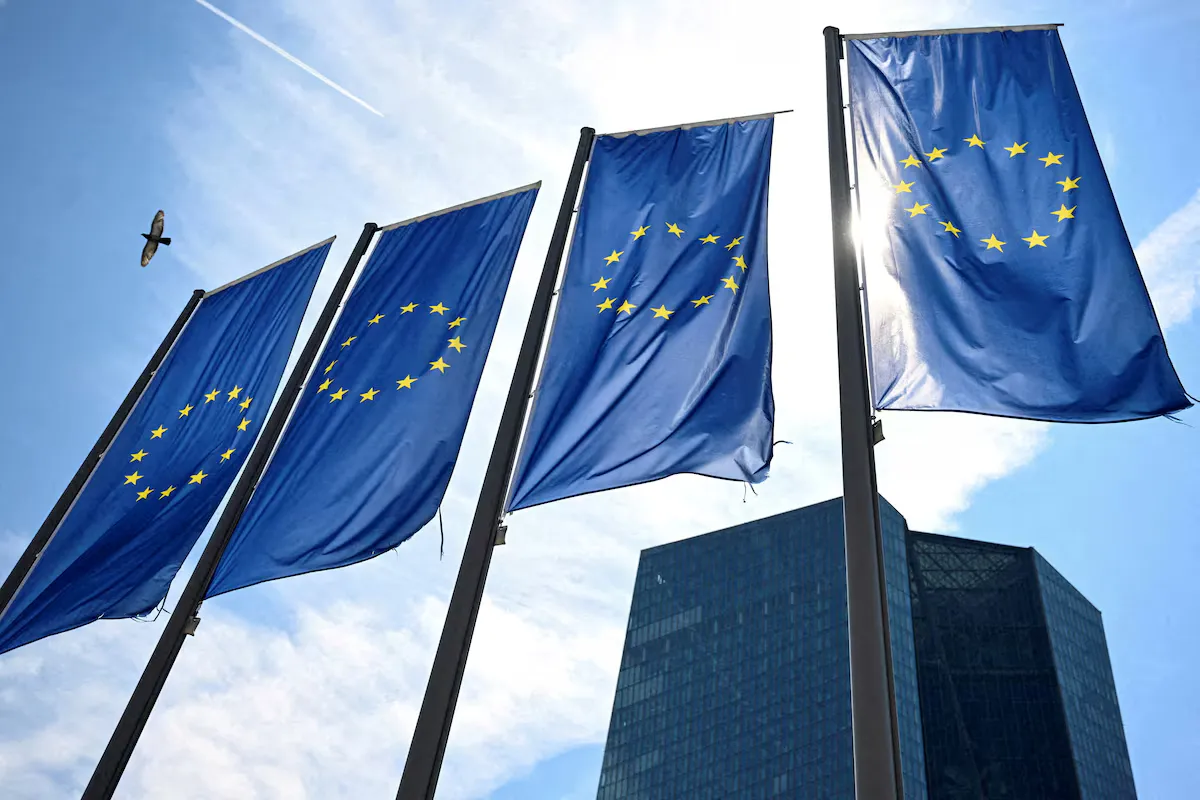
The European Union’s formal line leaves little ambiguity. On March 19, the European Council reaffirmed its “firm and unwavering support” for Ukraine’s independence, sovereignty and territorial integrity within its internationally recognized borders. Five days earlier, the Council had renewed sanctions specifically aimed at those undermining Ukraine’s territorial integrity, sovereignty and independence.
In Daycom’s assessment, this is where the line lies between diplomacy that seeks to stop a war and diplomacy that starts adapting itself to the consequences of aggression. A peace process that places the main burden of concession on the invaded country does not merely search for compromise. It risks converting military coercion into a negotiable political fact.
Territory, in that sense, is never just cartography. For Ukraine, it means defensive depth, logistics, industrial capacity, access corridors and the future geometry of vulnerability. For the EU, it means precedent: if borders in Europe can again be revised through war and later processed through diplomacy, then the question will not stop at one frontline.
Kallas’s own public language has been notably consistent. In official EEAS remarks last month, she argued that too many concessions were already being demanded from Ukraine, that Russia — not Ukraine — is the aggressor, and that any workable deal must respect territorial integrity and sovereignty while being backed by tangible security guarantees. She also said plainly that any settlement would need Europeans on board.
That is why Europe reacts so uneasily to formulas in which security guarantees are discussed alongside possible territorial surrender. Even where such ideas are floated as pragmatic bargaining tools, the European objection is not sentimental. It is structural. A security architecture built on ratifying conquest is unlikely to deter the next round of coercion; it may simply reorganize it. This is an analytical inference from the EU’s stated insistence on sovereignty, territorial integrity and enforceable guarantees.
The backdrop makes Brussels more anxious, not less. Reporting on Thursday, citing Reuters, said President Volodymyr Zelensky had linked the U.S. discussion of security guarantees to pressure over Donbas. At the same time, wider Western attention has been pulled toward Iran and the Middle East, increasing Europe’s fear that Ukraine could become the subject of a rushed settlement shaped more by strategic distraction than by durable principles.
That fear explains the force of Kallas’s warning. Europe is not only resisting a bad negotiating tactic. It is resisting a dangerous grammar of peace — one in which exhaustion counts for more than law, and where “ending the war” becomes shorthand for formalizing what violence has already achieved. In that model, Russia would gain more than territory. It would gain proof that prolonged aggression can eventually earn political reward.
Seen this way, the EU position is moral, legal and coldly pragmatic at once. Moral, because it rejects the idea that the victim of invasion should legitimize the results of force. Legal, because the Union cannot defend territorial integrity in sanctions and abandon it in diplomacy. Pragmatic, because any settlement that leaves Moscow with a clear sense of strategic gain is more likely to postpone war than to end it.
So the deeper meaning of Kallas’s intervention is not rhetorical toughness. It is a warning about what kind of peace Europe is being asked to contemplate. Not simply a painful compromise on a map, but a settlement that teaches the continent — and others watching beyond it — to get used to aggression as a durable fact of international life.