























The first explosions shook Kyiv shortly after 1 a.m. It was the kind of attack the city has learned to recognize not only by sirens, but by its sequence: drones, missile warnings, new blasts, air defenses at work, fires breaking out, and metro stations filling with people seeking shelter underground.
By morning, it was clear this was not a single strike but a large combined assault on the capital and the Kyiv region. Two people were killed in the city, with dozens injured, many of them hospitalized. Two more people died in the surrounding region, where additional casualties were reported.
The attack hit more than buildings. It struck the nervous system of the city. Damage was recorded across dozens of locations: residential blocks, offices, shops, warehouses, the entrance area of a metro station, and parts of Kyiv’s historic center. At sunrise, black smoke drifted over the skyline.
According to Daycom’s earlier analysis, the significance of this attack lies not only in the number of missiles and drones launched. Moscow is again trying to combine physical destruction with a political signal: that Ukraine’s capital remains under threat, no matter how deeply the city has adapted to war.
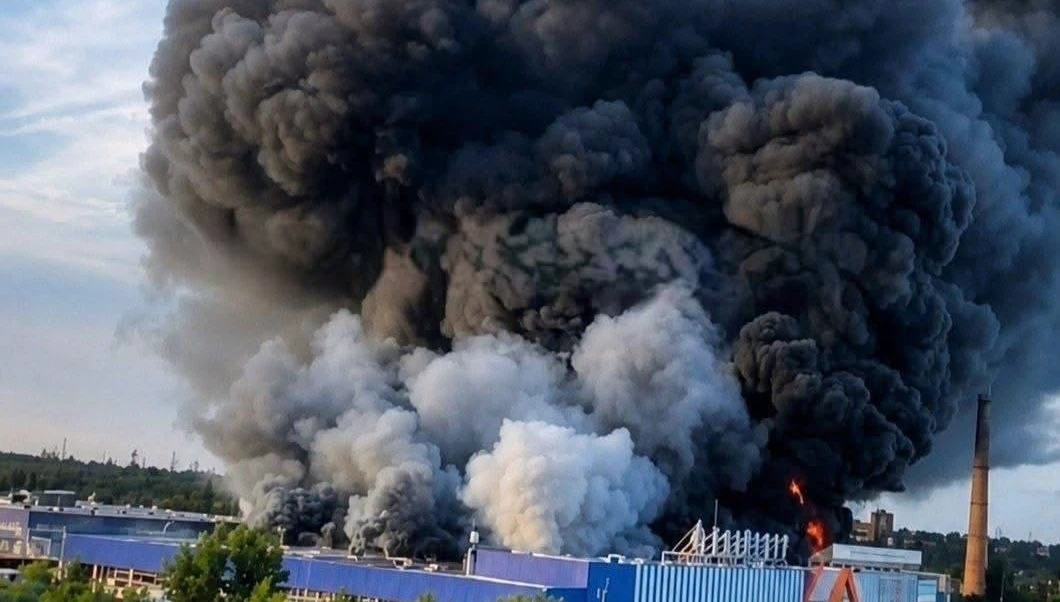
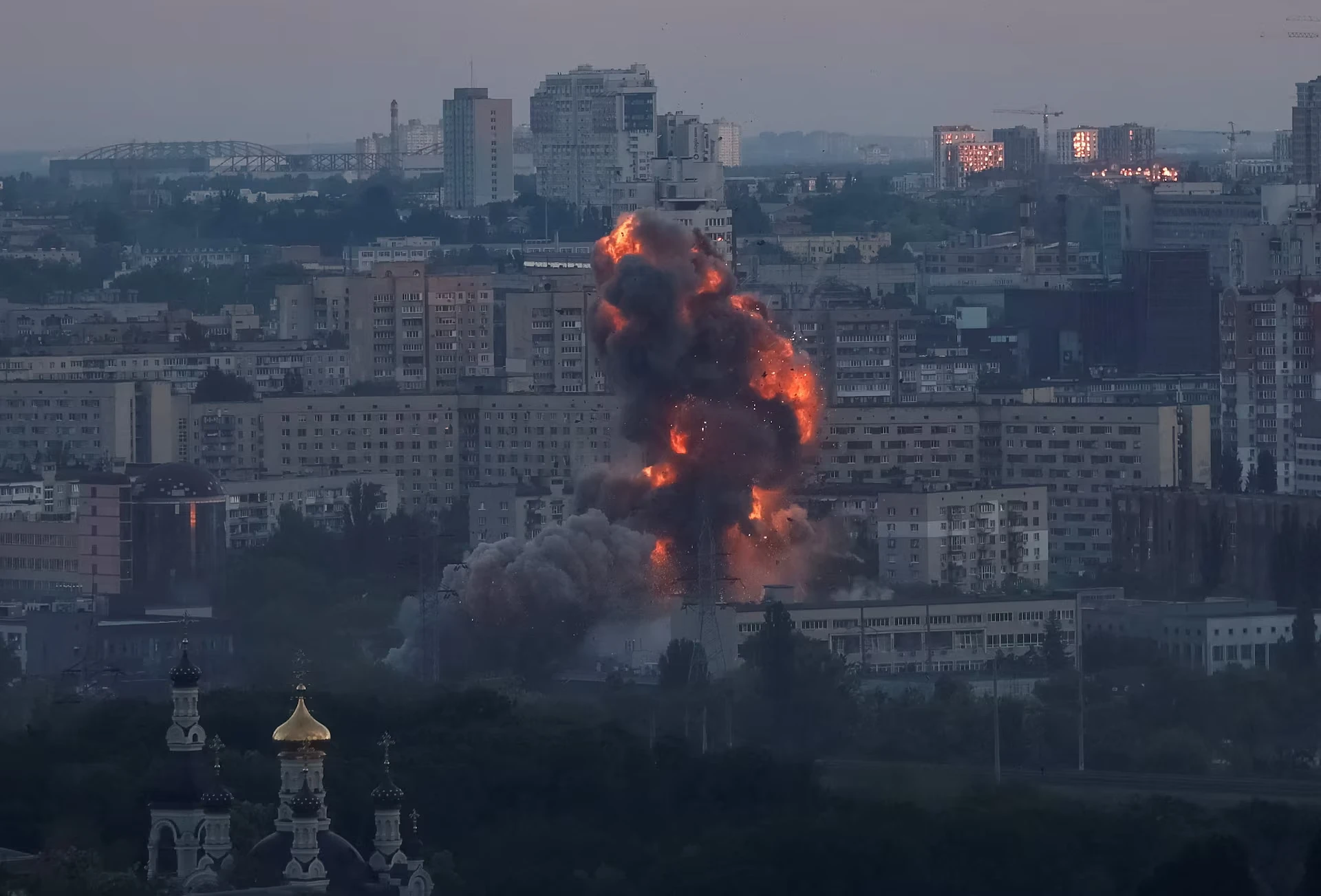 24 травня 2026 року в Києві, Україна, під час російського ракетного та безпілотного удару в рамках російської агресії проти України піднімаються стовпи вогню та диму — Гліб Гаранич
 Вибух освітлює небо над містом під час ракетного та безпілотного удару Росії в рамках російської агресії проти України, Київ, Україна, 24 травня 2026 року — Гліб Гаранич


The most alarming element of the night was the warning that Russia might use an Oreshnik ballistic missile. Ukrainian officials had raised the possibility before the attack, while President Volodymyr Zelenskyy had warned that Russia was preparing a new strike involving the system. Immediate confirmation of its use was not available.
The Oreshnik has become part of Russia’s arsenal of intimidation as much as its arsenal of war. Moscow presents it as a weapon difficult to intercept because of its reported speed and range. Its role is therefore not only military. It is meant to make the next siren feel heavier before it even begins.
Kyiv, however, again exposed the other side of this war. Russia’s strategy runs not only into Ukrainian air defenses, but into the city’s capacity to switch quickly into survival mode. Sirens, shelters, mobile defense groups, emergency crews and medics have become part of the capital’s wartime infrastructure.
Thousands of residents spent the night in metro stations, underground passages, parking garages and apartment corridors. For many Kyivans, this has become a familiar ritual, but never a routine one. Each such night returns fear to ordinary things: sleep, a child’s room, a phone call, the walk to shelter.
The numbers alone cannot capture the damage. When more than 40 locations are hit or damaged, it is not only a map of impacts and debris. It is shattered windows, burned facades, flooded stairwells after firefighting, destroyed workplaces and people returning at dawn not to homes, but to places of loss.


The strike followed a sharp escalation in Russian rhetoric. Moscow had framed its preparations as retaliation for events in the occupied part of Ukraine’s Luhansk region. Ukraine rejected that version and said its target had been a Russian drone command unit, not a civilian site.
This language of “retaliation” has long been part of Russia’s explanation for the war. Yet the pattern points elsewhere: Ukraine’s civilian infrastructure remains a systematic target. Strikes on Kyiv are used not only to destroy, but to pressure society, exhaust resilience and shape the political climate around the war.
Poland’s response underlined that every major attack on Ukraine now carries a regional dimension. Warsaw activated military aviation during the Russian strikes, although no violation of Polish airspace was detected. For NATO’s eastern flank, this is no longer an exceptional scenario, but a recurring risk.
Kyiv entered the morning with fires, blocked streets, rescue operations and a new list of victims. But the larger conclusion goes beyond local destruction. Russia is again trying to impose a war of exhaustion far from the front line, turning the capital’s nights into an extension of the battlefield.
Ukraine’s answer is not measured only in intercepted missiles and downed drones. It is also visible in the endurance of the city, the speed of rescuers, the discipline of civilians and the ability of public services to keep functioning under attack. That is what makes Kyiv not just a target, but a symbol Russia keeps trying — and failing — to break.
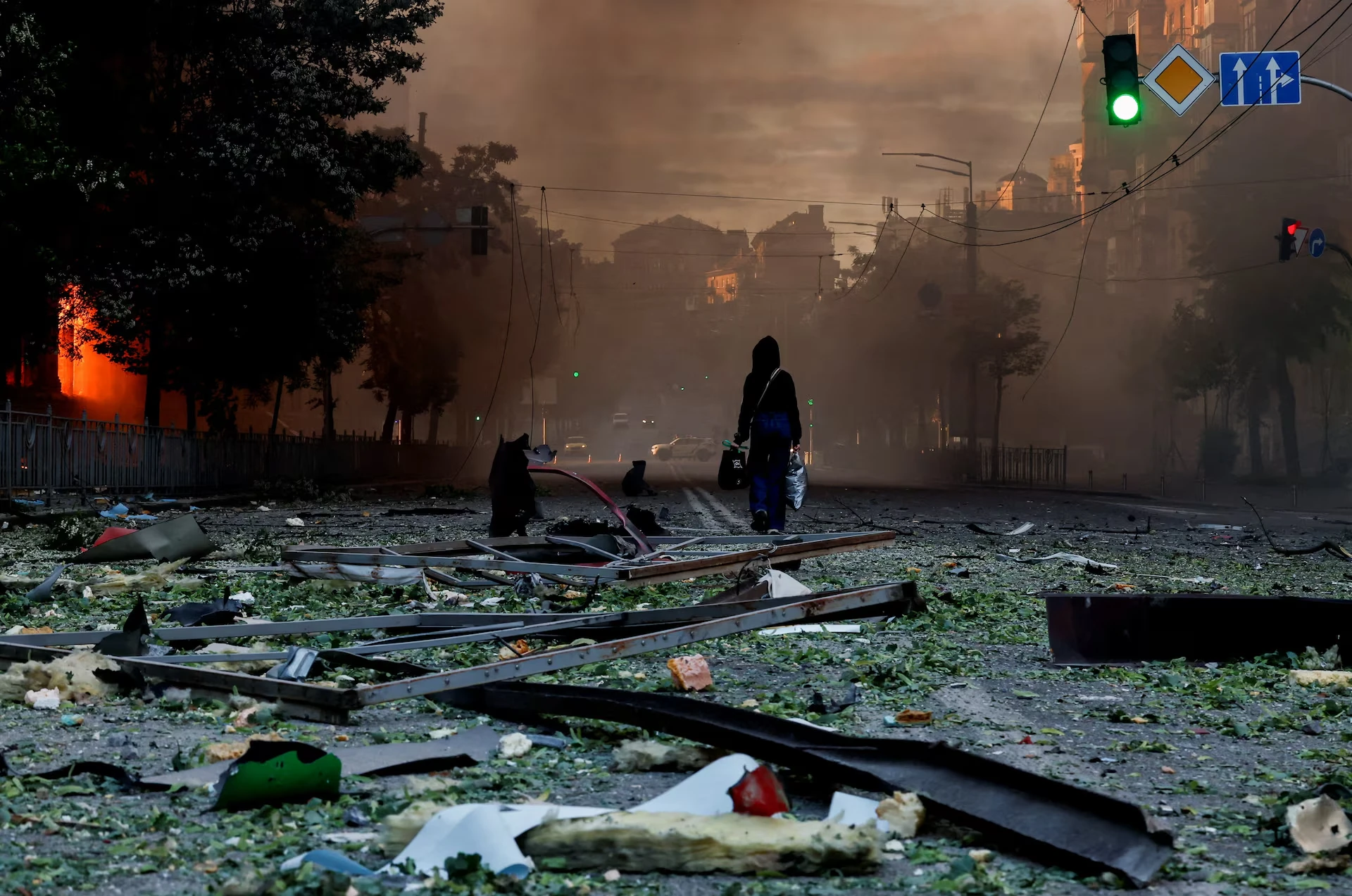 Людина йде вулицею, заваленою уламками, після нічного ракетного та безпілотного удару Росії в рамках російської агресії проти України, Київ, Україна, 24 травня 2026 року — Томас Пітер