






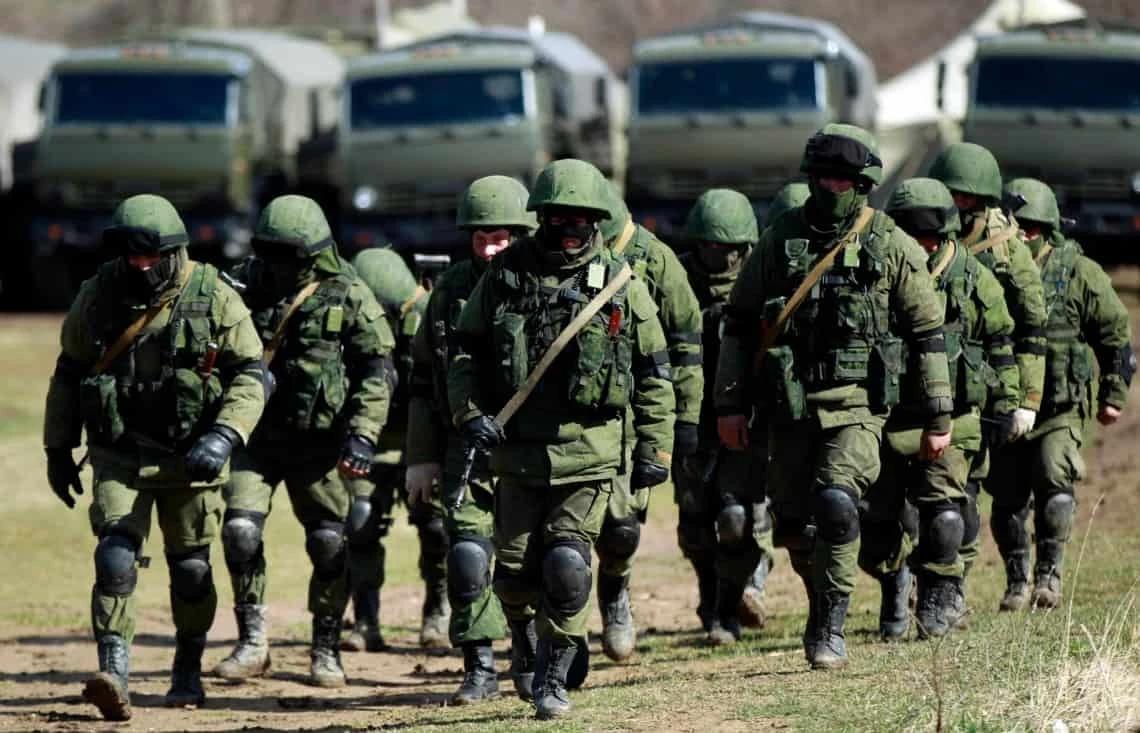














A week before what may become the most dangerous election Viktor Orbán has faced in sixteen years of rule, the Hungarian campaign was suddenly overtaken by a story that fits his political language almost perfectly: a threat to a pipeline, an emergency defense council, troops around critical infrastructure, talk of sovereignty, and the familiar shadow of an external enemy. Serbian authorities said explosives had been found near a gas link to Hungary, and Orbán moved immediately to place the Hungarian section of the route under reinforced protection.
Formally, this is a security issue. Politically, it is far more than that. The pipeline in question is tied to the flow of Russian gas that remains central to Hungary’s energy model. For Budapest, this is not just infrastructure. It is one of the pillars on which Orbán has built his long-running claim to legitimacy: stable supply, relative price control, pragmatic ties with Moscow, and the promise that Hungary can shield itself from the shocks affecting the rest of Europe.
That is why the incident cannot be read as an isolated act or a technical security scare. It erupted at the precise moment when Fidesz entered the final stretch of the campaign under unusual pressure, with Péter Magyar’s opposition challenge threatening to turn the vote into a referendum on Orbán’s entire political era. In such a climate, any story about danger to the country’s energy lifeline instantly becomes part of the electoral script.
In Daycom’s assessment, the deepest significance of the episode lies not only in whether someone actually intended to sabotage the pipeline. What matters more is how such a story functions inside Orbán’s political system. It pushes the campaign back onto his strongest terrain: fear, encirclement, conspiracy against Hungary, the need for hard authority, and the old argument that only the incumbent can keep chaos at bay.
That is what explains the speed and sharpness of the government’s response. The matter was framed not as a localized security concern, but as a challenge to sovereignty itself. In that framing, the pipeline stops being a pipe. It becomes a national symbol, a line between order and threat, stability and rupture, continuity and danger. Once that transformation happens, the political effect begins long before any investigation is completed.
Péter Magyar’s reaction was revealing in a different way. Orbán’s main challenger openly suggested that the incident could prove to be a provocation, even a false-flag operation serving the interests of the ruling camp. There is no public evidence for that claim so far. But the fact that the opposition reached for such language in the decisive final week says much about the level of distrust surrounding the government and the atmosphere in which this election is unfolding.
For Orbán, energy has long ceased to be merely an economic issue. It has become a language of power. Through gas and oil, he has spent years explaining his special place in Europe, his resistance to sanctions, and his unusually close ties with Russia as forms of national realism rather than ideological affinity. Dependence was repackaged as prudence. Vulnerability was rebranded as strategic independence. In that political grammar, any threat to the gas route becomes proof that Hungary is under pressure from forces that do not care about its national interest.
The broader campaign context only sharpens that effect. Orbán has repeatedly tried to portray the opposition as a force that would drag Hungary into other people’s wars, submit the country to foreign pressure, and dismantle the protective order built by his government. Against that backdrop, an alleged threat to a Russian gas artery arriving in the final days before the vote is almost an ideal campaign event. It activates several anxieties at once: war, scarcity, foreign interference, instability, and the need for emergency national cohesion.
The Serbian connection adds another layer. Orbán and Aleksandar Vučić have long built not only a working alliance, but a shared political vocabulary centered on sovereignty, selective distance from Brussels, and pragmatic openness to Moscow. When the Serbian president is the one who reports the threat and the Hungarian prime minister responds with military-style protection of the route, the result is more than bilateral coordination. It becomes a ready-made regional narrative of danger and leadership.
Yet this strategy carries a risk for Orbán as well. The more aggressively a government uses emergency signals in the closing days of a campaign, the more damaging the question of proof becomes afterward. If the threat was real, the public will eventually require a credible and detailed investigation. If the story dissolves into hints, slogans and suggestive timing, it will deepen suspicion that fear has once again been used as an instrument of electoral management.
That is why this story matters well beyond gas. It shows how, in contemporary Central Europe, a pipeline can cease to be an item of infrastructure and become part of political stagecraft. Days before Hungarians vote, the central question is no longer only who placed explosives near the route. The more important question is who benefits from turning that threat into the defining symbol of the campaign’s final week.