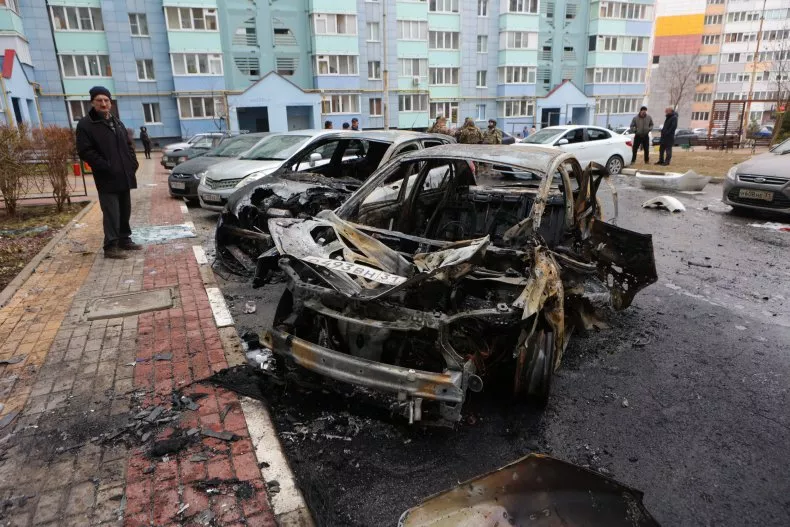
























The war reached one of southern Russia’s most important rear hubs on the night of July 27. Five people were killed in Rostov-on-Don during a drone attack, including a child. Eight others were injured, one of them critically.
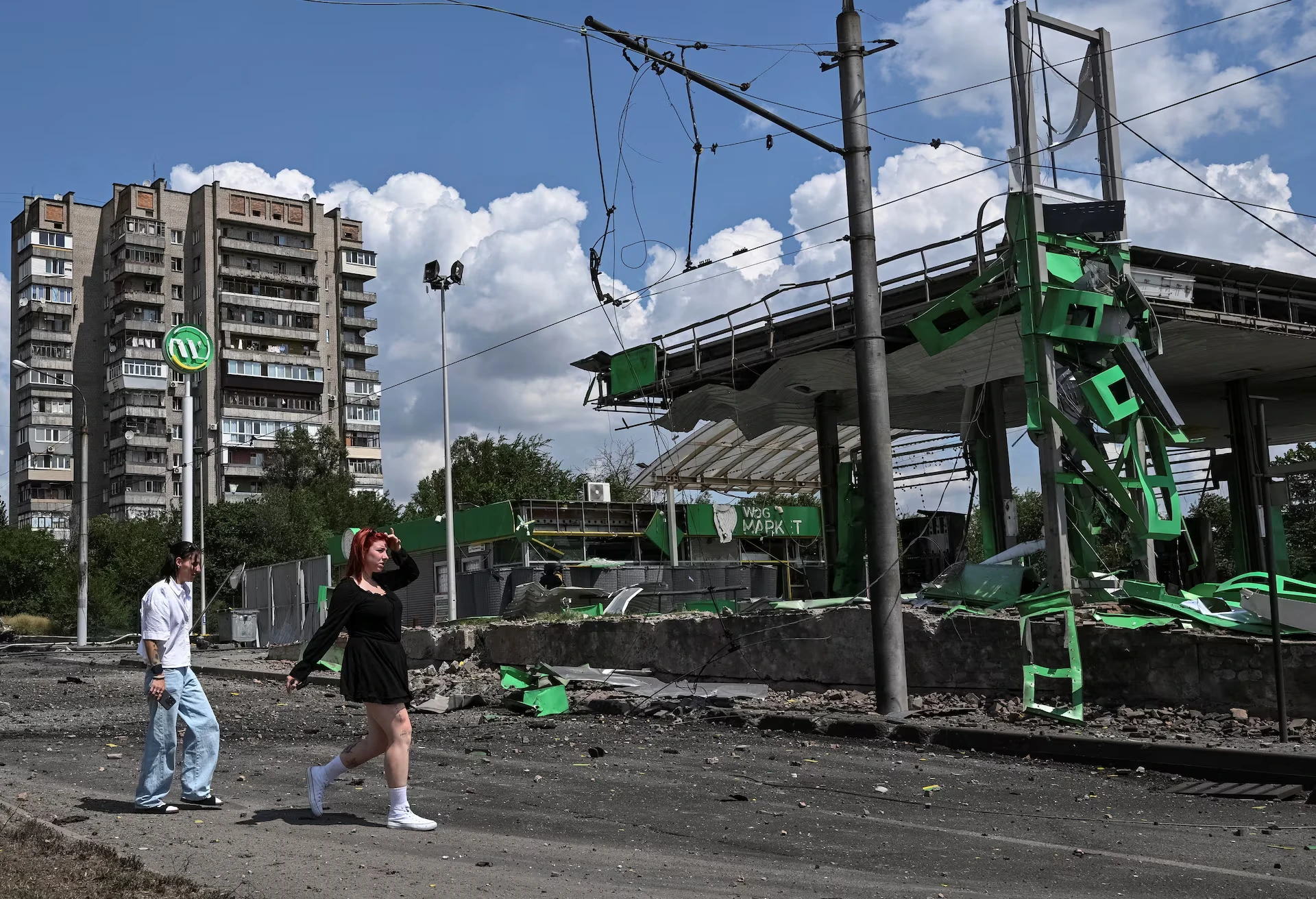
Apartment buildings, warehouses and a shelter for homeless people were damaged. Russian air defenses reported shooting down about 50 drones over the region, yet even that level of interception failed to prevent aircraft or falling debris from reaching urban areas.
Attacks were also reported in Taganrog and several districts of the Rostov region. A production facility was damaged in the port city. Ukraine said its forces had struck an export terminal, as well as oil infrastructure in the Yaroslavl region and Udmurtia.
In Daycom’s assessment, the night exposed the central contradiction of the war’s latest phase. Ukraine is expanding its ability to strike Russian logistics and revenue far from the front, but each operation takes place in an environment where military infrastructure is increasingly intertwined with civilian neighborhoods.
Rostov-on-Don is exceptionally important to Russia’s war machine. Transport routes through the city and region connect central Russia with occupied Ukrainian territory, the ports of the Sea of Azov and military groupings operating along the southern front.
Command facilities, warehouses and repair sites are concentrated across the region, while its railways and highways carry fuel, equipment, ammunition and personnel. Rostov has therefore ceased to be an ordinary rear area, even though it remains a densely populated civilian center.
Taganrog has a similar dual identity. It is a port and industrial city with manufacturing facilities, a grain terminal and access to the Sea of Azov. The same infrastructure can serve commerce, civilian industry and military logistics.
This overlap makes every long-range operation more difficult. Even when the intended target is a warehouse, terminal or industrial facility, a drone may cross populated districts, while air-defense fire creates an additional danger from falling wreckage.
The civilian deaths in Rostov are the gravest consequence of the attack. The military value of targeting a logistical hub does not remove the obligation to assess proportionality, accuracy and the foreseeable risk to people who are not taking part in the war.
The number of casualties alone does not reveal how the damage occurred. The deaths may have resulted from a direct strike, a drone intercepted over the city, debris from an air-defense missile or an explosion near a residential building. Those distinctions are essential to any legal assessment.
In drone warfare, responsibility can become blurred among the attacking aircraft, the defending air-defense system and the design of the urban environment. For the families of those killed, however, the technical mechanism changes nothing. A war once perceived as distant has entered a residential street.
Ukraine’s long-range campaign has a clear strategic rationale. Russia uses rear bases, refineries, ports and transport nodes every day to sustain its invasion. Leaving those assets untouched would preserve a fundamental asymmetry in Moscow’s favor.
Kyiv is trying to transfer part of the cost of the war back onto the territory of the state that began it. Strikes on export terminals and oil facilities are intended to reduce revenue, complicate fuel supplies and force Russia to disperse air-defense systems across an immense area.
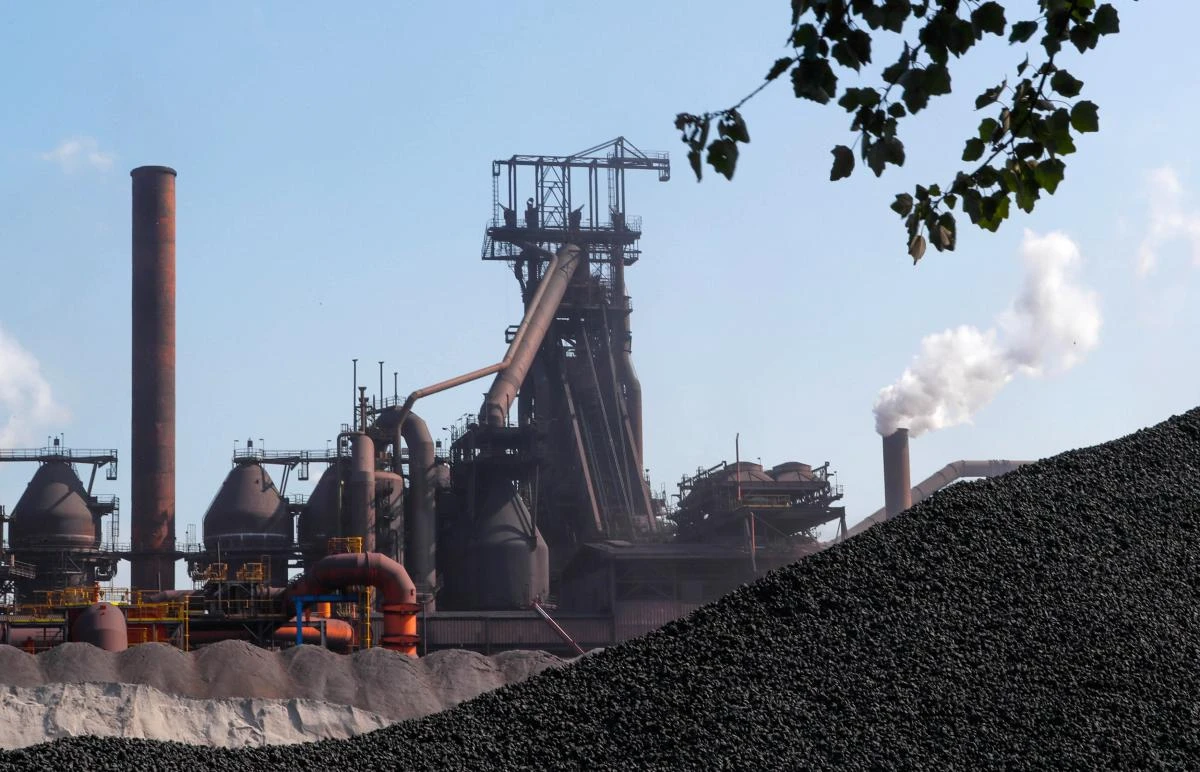
The reported attacks in the Yaroslavl region and Udmurtia are especially significant because of their distance from Ukraine. They demonstrate that industrial facilities deep inside Russia can no longer assume that geography alone guarantees safety.
Moscow must therefore move air-defense systems away from the front, occupied Crimea and border areas to protect refineries, factories and major cities. Every additional defensive layer in the rear reduces coverage somewhere else.
Long-range drones allow Ukraine to wage economic warfare with comparatively inexpensive weapons. A drone may cost far less than the industrial site it can damage and may force Russia to launch a much more expensive interceptor.
That arithmetic works only when attacks remain precise and focused on military infrastructure or assets directly supporting the war. Large-scale civilian casualties can weaken the political effect of an operation and complicate Ukraine’s relations with its partners.
Russia will inevitably use the deaths in Rostov in its information campaign. Moscow will seek to depict Ukraine’s entire long-range strategy as indiscriminate terror while omitting its own systematic attacks on Ukrainian cities and civilian infrastructure.
Ukraine’s strongest response cannot be to deny the tragedy. It lies in establishing the circumstances transparently, choosing targets carefully and demonstrating that operations are intended to reduce Russia’s capacity to wage war rather than punish its population.
Reciprocity is not a sufficient moral or legal justification. Russia’s repeated attacks on Ukrainian residential areas do not release Kyiv from the obligation to distinguish between military targets and civilian surroundings.
That distinction may become one of the defining tests of Ukraine’s drone program. As the number and range of its aircraft increase, intelligence, navigation accuracy, route planning and the ability to abort an attack after conditions change become more important.
The timing of a strike matters as well. Night operations reduce the number of workers at factories and transport facilities, but they increase the risk to residential buildings, where most people are at home. The hour alone cannot guarantee civilian safety.
Protecting civilians in rear cities is now a challenge for both countries. Ukraine has spent years developing warning systems, shelters and emergency response. Russian cities, despite increasingly frequent attacks, often remain less prepared for a sustained aerial threat.
The Kremlin long maintained the illusion that a full-scale war could be fought without serious consequences for most Russians. Drone attacks are gradually destroying that distance. But exposing the costs of war must not turn civilian deaths into an acceptable objective.
Damage to a homeless shelter in Rostov highlights the unequal distribution of wartime risk. The most vulnerable people usually have the least access to protected spaces, private transport and timely warnings.
Such episodes show that modern warfare does not affect only major strategic sites. Its consequences spread through the urban fabric—housing, social institutions, warehouses, roads and the systems on which ordinary life depends.
For Russia, the raid means stretching air defenses even further. The reported interception of around 50 drones suggests a substantial operation, but it also shows how many resources are required to defend a single region for a single night.
If Ukraine can sustain such pressure, Moscow will be forced to choose among protecting cities, oil infrastructure, military bases, ports and industrial plants. Even a country with extensive defenses cannot fully cover a territory of Russia’s scale.
Russia will adapt in response. It will strengthen electronic warfare, organize mobile defense units, disperse production and move important storage sites away from known routes. The long-range campaign is becoming a contest of technology and institutional speed.
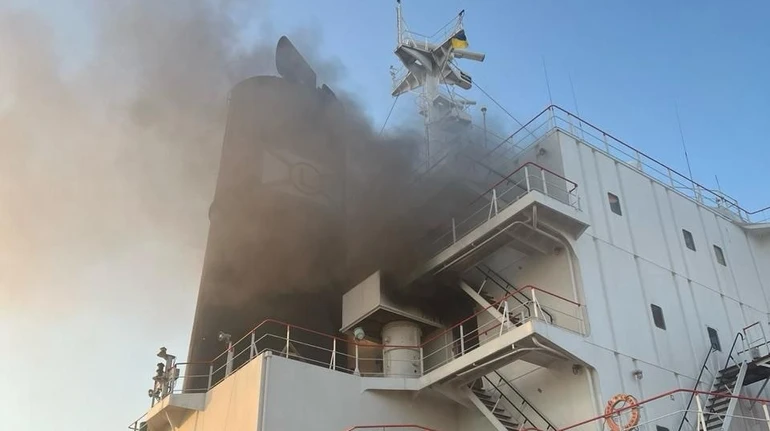
The Sea of Azov and the Black Sea are part of the same pressure system. Ukraine is targeting vessels, fuel logistics, terminals and infrastructure connected to occupied Crimea. Russia, in turn, is intensifying attacks on Ukrainian ports and civilian shipping.
The sea, the oil economy and the urban rear are merging into a single theater of war. A strike on an export terminal in the Rostov region is connected to attacks on vessels just as directly as it is connected to fighting on land: all concern control over supply routes and the revenue that sustains military operations.
Ukraine’s strategy can succeed if it forces Russia to spend more on protection, repairs and relocation than Kyiv spends on the attacks themselves. Its effectiveness, however, will also depend on minimizing civilian harm.
The deaths of five people in Rostov make that requirement concrete. The war is returning to Russian territory not only through a damaged terminal or a halted factory, but through deaths that become part of the political and moral cost of every operation.
Long-range strikes will remain an important Ukrainian instrument as long as Russia uses its rear for weapons production, energy exports and support for the occupying army. Abandoning them would leave that system largely untouched.
Yet the value of the weapon will not be measured by range alone. It will depend on how precisely Ukraine can separate military infrastructure from civilians living nearby or left inadequately protected by the Kremlin.
The attack on Rostov and Taganrog showed that southern Russia is no longer a secure rear. At the same time, the five deaths marked a boundary that any state claiming to fight a defensive war must continue to recognize—even on enemy territory.