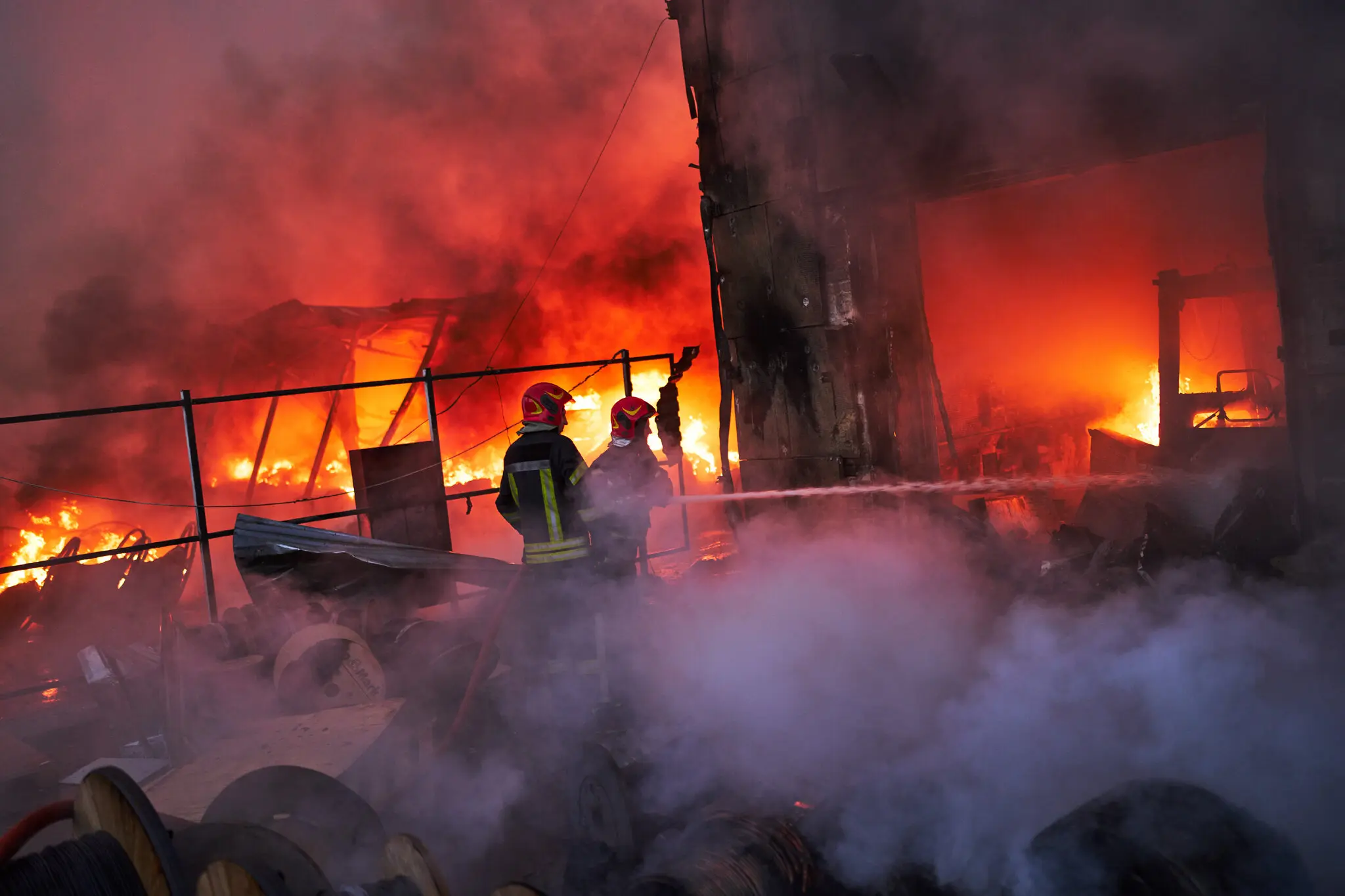







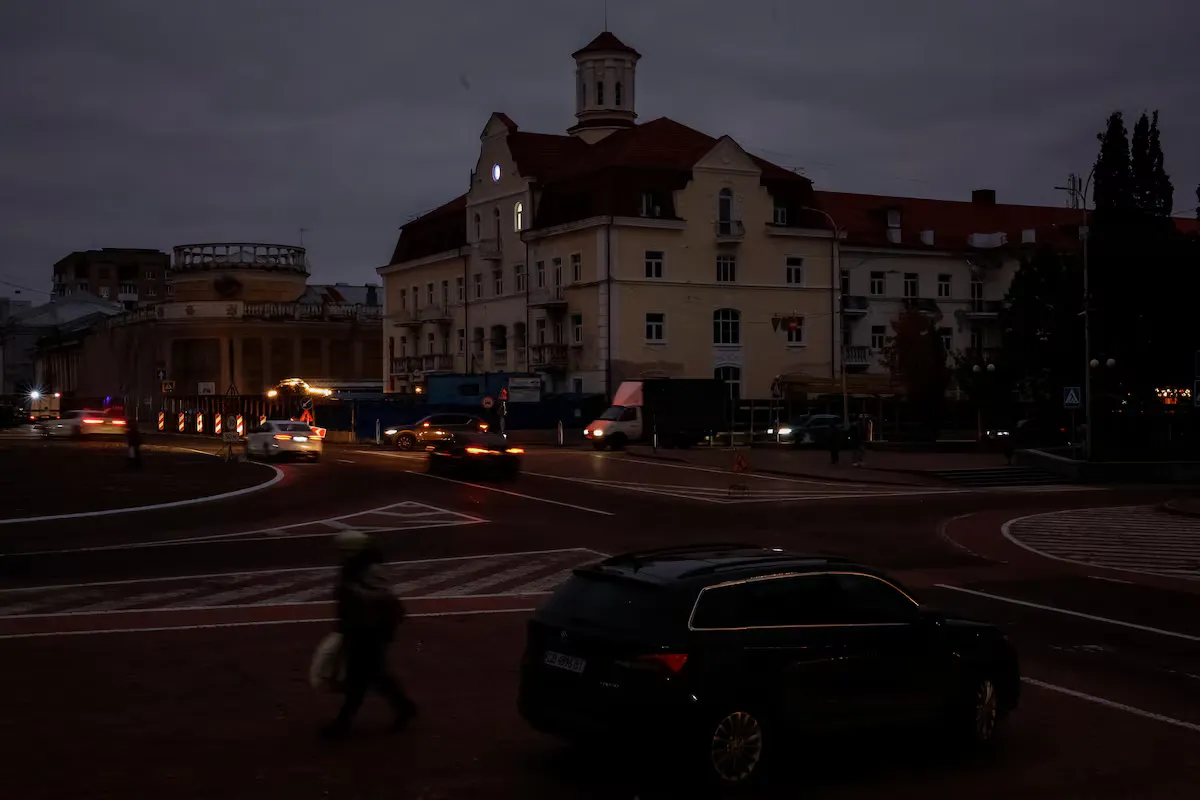













The front line no longer looks like a line. In place of continuous trenches, armored columns and large infantry formations, there are scattered shelters among the ruins, each holding two or three soldiers who may remain there for months. Between them lies a landscape where movement almost automatically means detection.
Above this ground, reconnaissance, strike and bomber drones hum without pause. Some circle high and relay coordinates. Others carry explosives. Still others wait beside roads until sensors detect an approaching vehicle. Darkness no longer guarantees safety, while fog offers only a temporary advantage over the camera.
The result is the kill zone — a strip up to 30 kilometers wide stretching along both sides of a front roughly 1,200 kilometers long. Its boundaries shift with terrain, weather and the quality of local drone units, but the essential rule remains constant: the closer one gets to the enemy, the less room there is for error.
In Daycom’s earlier assessment, this territory is more than a new feature of the Russia-Ukraine war. It represents a fundamental change in the logic of ground combat itself. Armies are no longer fighting only for control of land. They are fighting for the right to move across it.
A Front Where Almost No One Moves
In previous wars, offensives began with concentration. Infantry, artillery, engineers and armored units massed along a relatively narrow sector to create local superiority and break through defensive lines.
Now, such concentration is close to suicidal. A reconnaissance drone can detect a column long before it reaches the attack line. Coordinates are passed to FPV pilots, artillery crews and strike units. Vehicles worth millions can be stopped by machines costing a fraction as much.
Large mechanized maneuvers have not disappeared entirely, but near the contact line they have become exceptional. Burned-out tanks and armored vehicles along roads recall the opening years of the invasion, when armor could still move in larger formations. Today, it hides beneath camouflage netting and metal cages designed to absorb a drone strike.
Even a heavily protected tank must fire sparingly and relocate at once. A muzzle flash, heat signature or distinctive silhouette can expose it within minutes. A machine built to rupture the front increasingly operates as a concealed firing point.
Artillery remains essential, particularly in poor visibility when drones cannot function at full effectiveness. But guns are also dug in, camouflaged and used more selectively. Every shot opens the position to aerial pursuit.
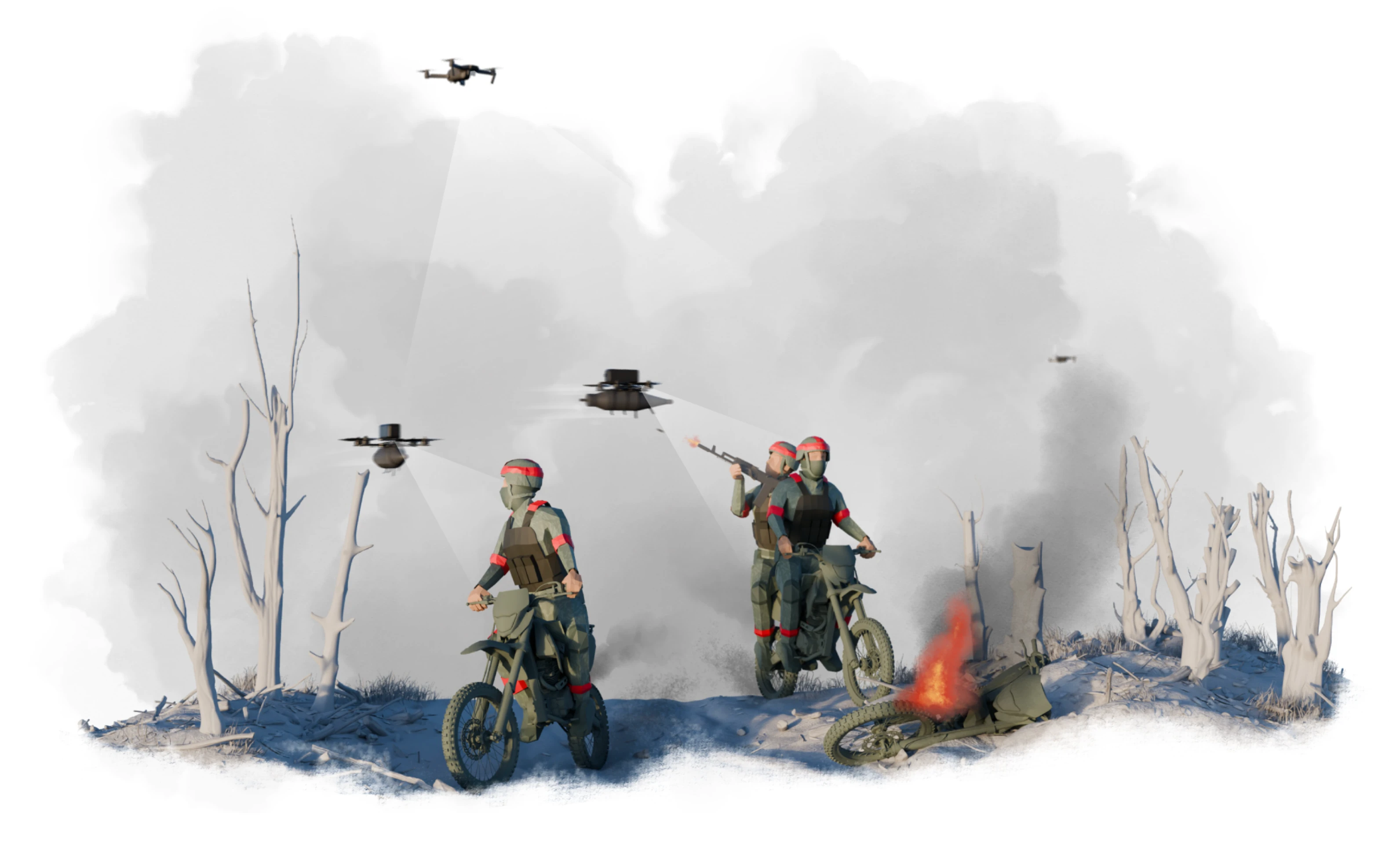 Солдати пересуваються невеликими групами, щоб уникнути виявлення, часто пішки або на мотоциклах. Навіть тоді дрони безжально полюють на них. Втрати вражають. — Ілюстрація
Two Soldiers Instead of a Battalion
Infantry has adapted to battlefield transparency through dispersion. Inside the kill zone, soldiers live in tiny groups — often two or three, sometimes alone. Their shelters do not form a continuous defensive line and may be separated by considerable distances.
They can spend weeks without seeing neighboring units. They cook, sleep, observe and wait underground, emerging only when absolutely necessary. Often their task is not to engage directly, but to detect the enemy and call in drones.
The infantryman has become a sensor inside a wider strike network. His most important weapon may not be a rifle, but a radio, tablet or set of coordinates passed to an operator. Opening fire risks revealing the shelter, which means direct combat can be less desirable than observation.
This method allows a vast front to be held by limited manpower. It also makes the defense porous. Gaps remain between positions, and Russian groups try to infiltrate through them into the Ukrainian rear.
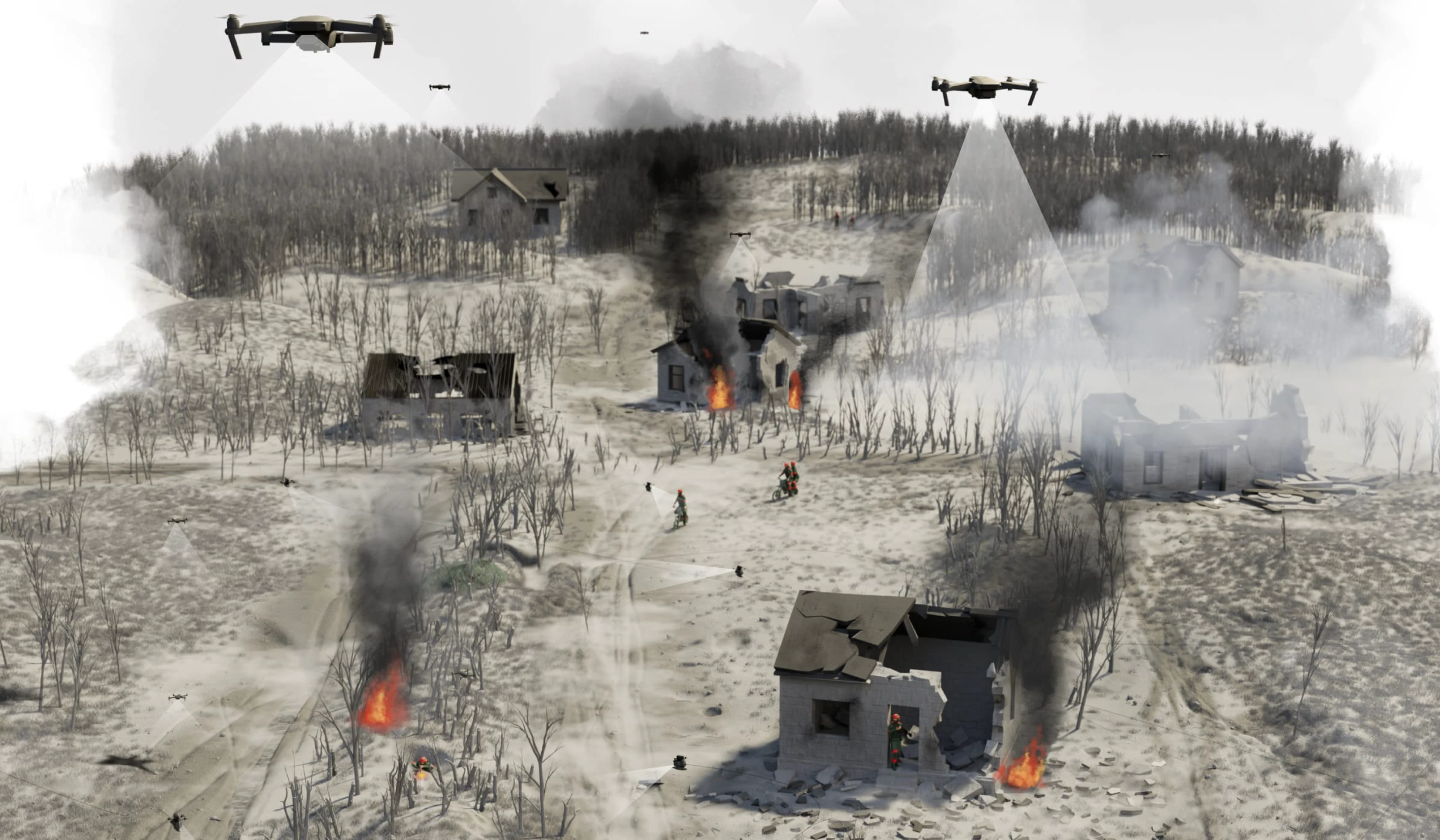 Наша захоплива реконструкція перенесе вас глибоко в зону вогню, смугу землі завширшки близько 30 км (20 миль) місцями, яка перетинає лінію зіткнення. — Ілюстрація
The Creeping Offensive
Russian assault troops have also moved away from large attacks. On many sectors, groups of one, two or three soldiers advance using tree lines, ruins, depressions, fog and rain to pass between Ukrainian positions unnoticed.
Their immediate objective is not always combat. If a group finds an empty basement, dugout or building in the gray zone, it may remain there and wait. Several days later, another soldier arrives, then another. A new position is established without a visible assault.
The territorial gain may be measured in tens of meters. The military cost is measured in the lives of those killed on the way. Yet the accumulation of these microscopic advances gradually changes the map.
This explains one of the war’s central paradoxes. Russia holds advantages in manpower and conventional firepower, yet its progress remains slow. Drone transparency makes every step extraordinarily costly.
Once a drone spots an infantryman, the pursuit may continue until the aircraft strikes, loses signal or is shot down. An abandoned trench offers little protection. The operator can follow the direction of movement and attack from above.
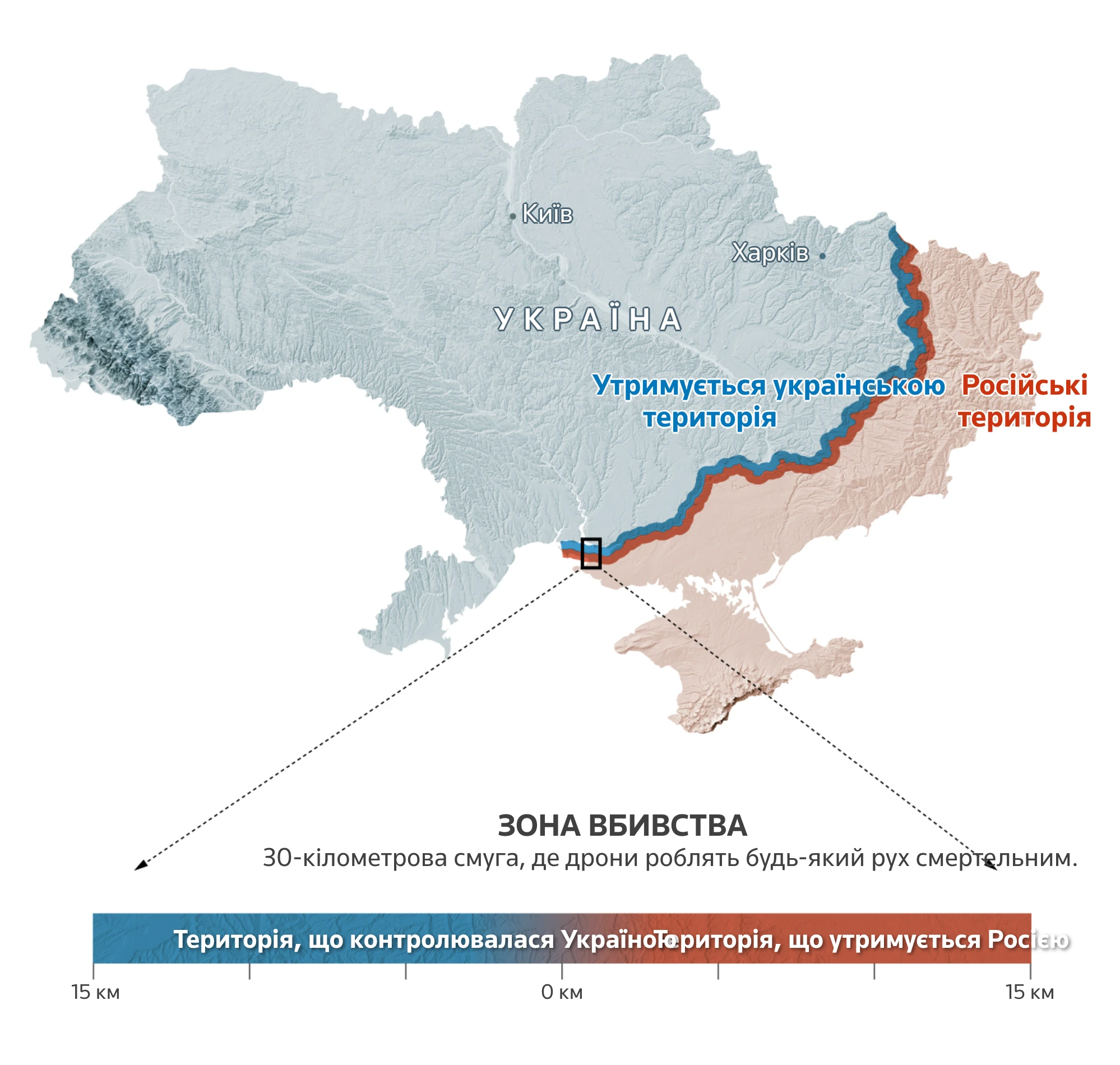 У цьому смертельному коридорі, що звивається вздовж лінії фронту в Україні довжиною 1200 км (750 миль), розгортається жахлива гра в хованки. — Ілюстрація
Motorcycles Against the Sky
Russian forces increasingly use motorcycles, quad bikes and light vehicles for rapid infiltration. They are cheaper and less visible than armored vehicles, and they can cross open terrain quickly.
Speed, however, does not guarantee survival. FPV drones often overtake them, and hundreds of battlefield videos show motorcycles being hunted along roads and tree lines. A rider has almost no protection from blast or shrapnel.
Ukrainian pickup trucks also enter the kill zone only briefly. They carry troops, ammunition, food and water, often using electronic warfare equipment. Drivers move at maximum speed, trying to complete the mission before strike drones arrive.
Every journey becomes an operation of its own. Routes are checked, weather is considered, and dangerous sectors are crossed under jamming or fire support. Even careful preparation cannot eliminate the risk.
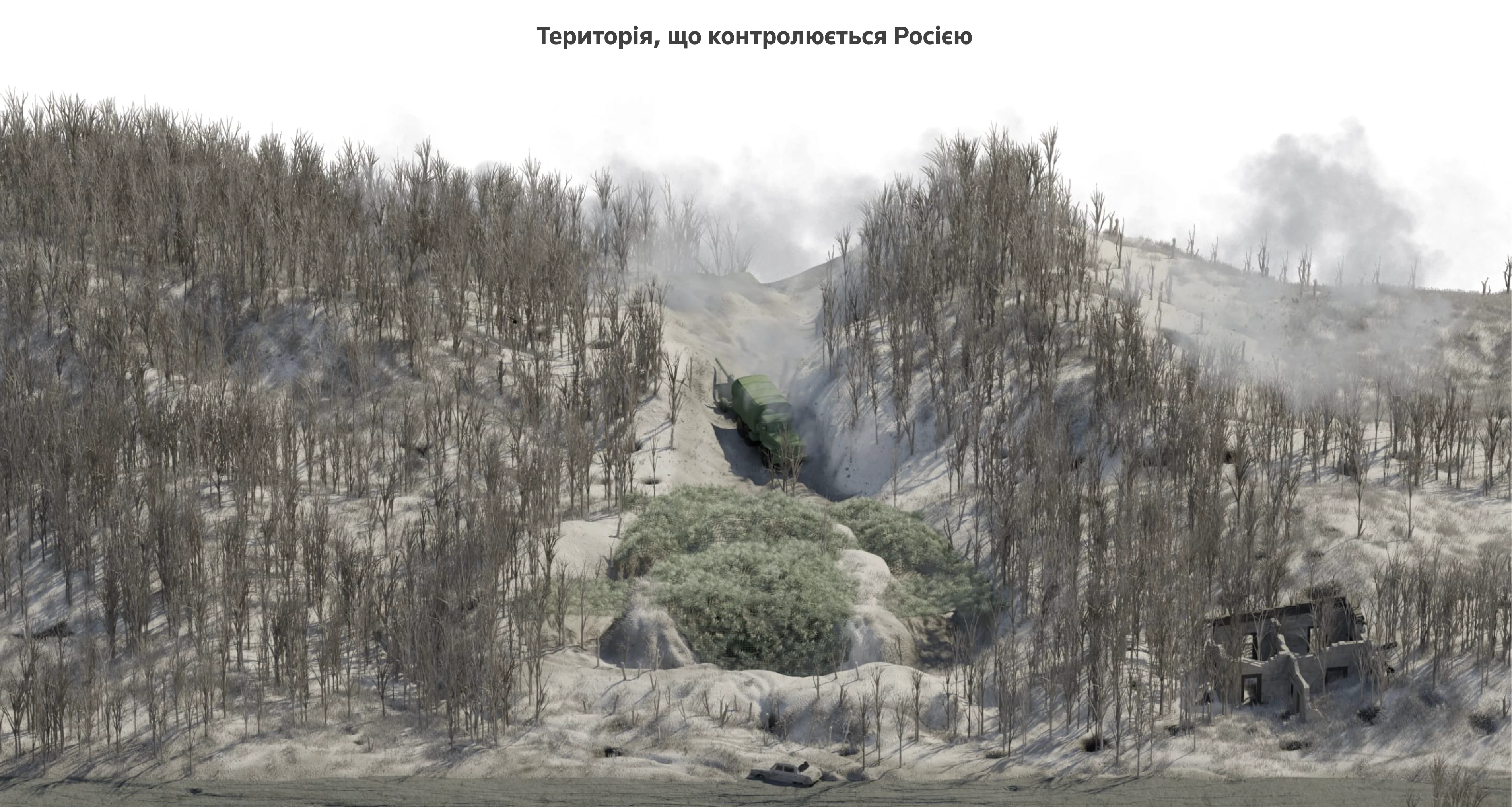 Артилерія окопана та замаскована. Хоча артилерія використовується менш економно, ніж на початку війни, вона все ще служить надійною всепогодною високоточною зброєю. Ворожі безпілотники полюють за цими позиціями. — Ілюстраці
The Fiber-Optic Revolution
For a time, the main defense against FPV drones was electronic warfare. Jammers disrupted the link between aircraft and pilot, causing the drone to lose control.
The answer was the fiber-optic drone.
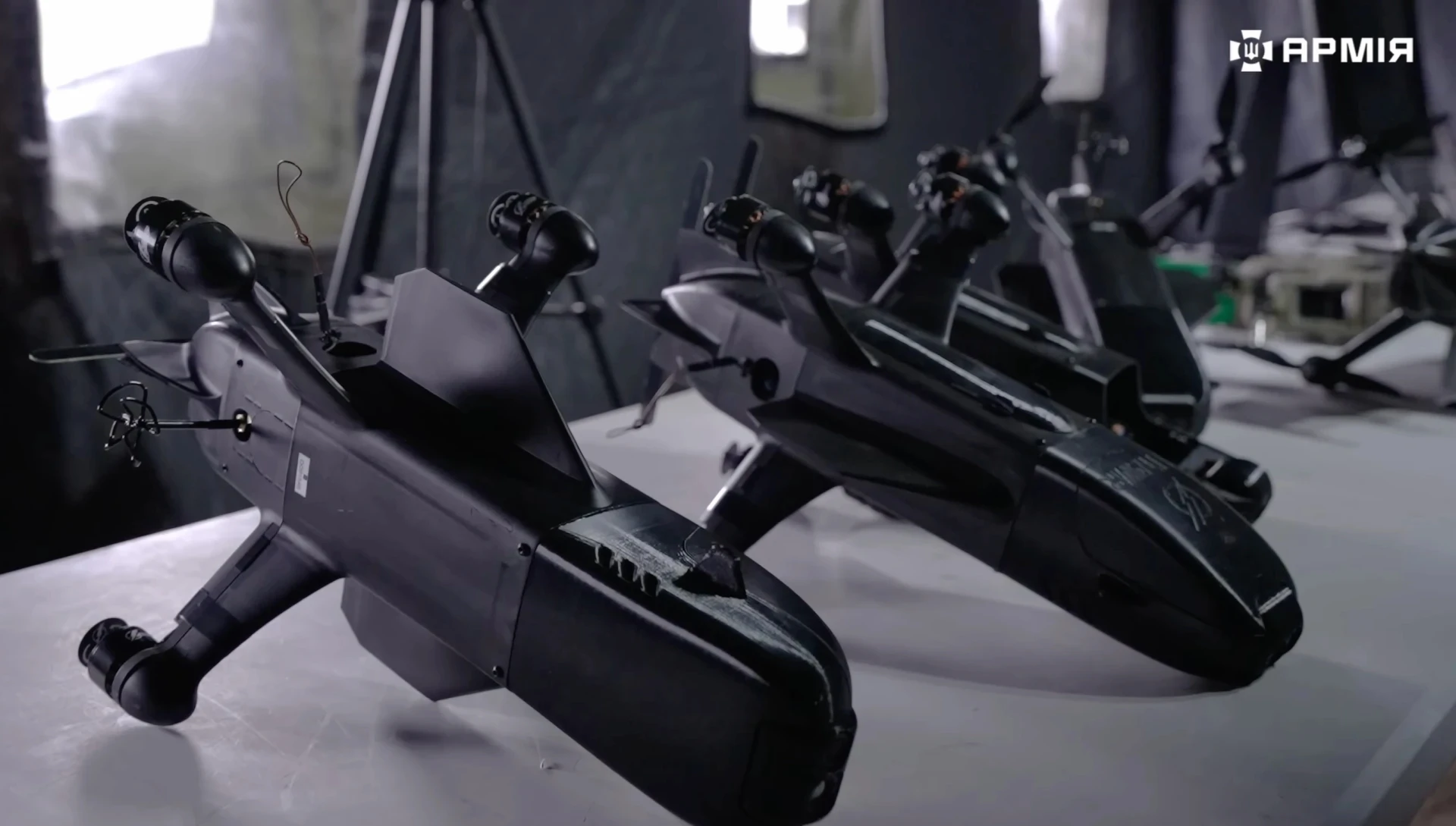
These aircraft remain connected to their operators by an ultra-thin cable that unspools during flight. They do not depend on radio signals and are largely immune to traditional jamming.
Fiber-optic drones can fly 15 kilometers or more, weave through trees, enter buildings and pass through openings in protective structures. They leave long threads across the ground, covering the landscape like spiderwebs.
The technology has altered the balance between attack and defense. A vehicle with powerful jamming is no longer reliably protected. A dugout shielded from radio-controlled aircraft can still be struck by a drone that emits no conventional signal.
The war has become a rapid cycle of technical adaptation. Every new defense produces a new method of defeating it. An advantage may last not years, but only weeks.
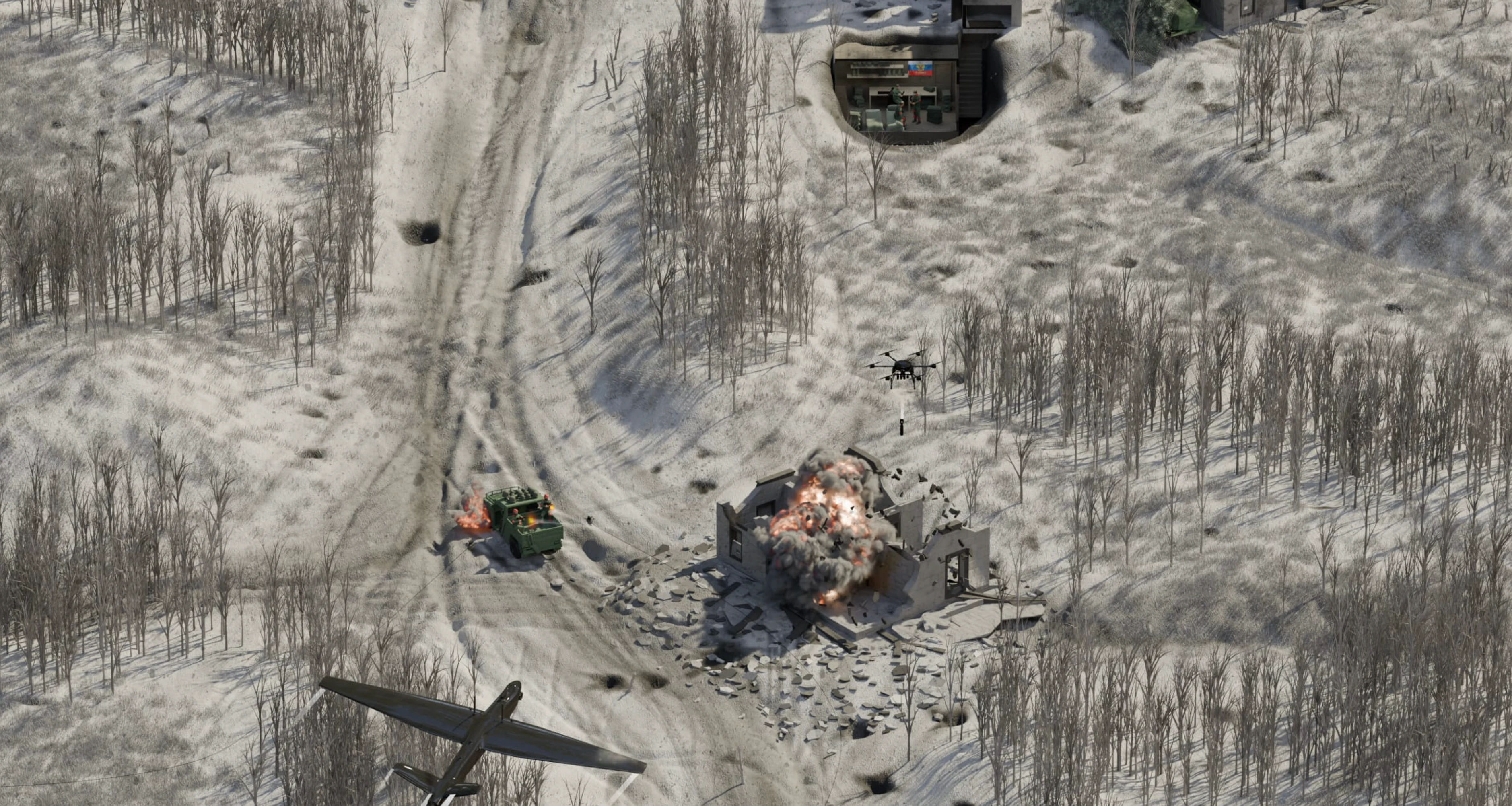 Небо над ними гуде від різних типів ударних дронів, що полюють на здобич. Вони можуть скидати бомби або летіти прямо в ціль і вибухати, як камікадзе. — Ілюстраці
Roads Beneath Nets
Ukraine has covered thousands of kilometers of front-line roads with anti-drone netting. These structures create protective tunnels intended to stop FPV aircraft or force them to explode at a distance.
The nets reduce risk, but they do not make movement safe. Russian drones search for gaps, approach from the side, set the netting on fire or wait near the exit. Fiber-optic systems allow pilots to maneuver carefully inside the protected corridor.
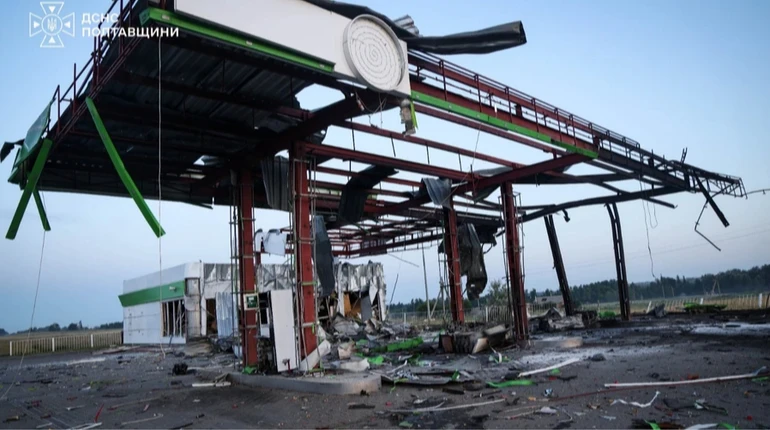
Russian units also use drones to mine supply and evacuation routes. Aircraft drop explosive devices onto roads. Nearby, dormant “sleeper” drones may wait until they detect an approaching vehicle.
Even a rear-area road has therefore become part of the battlefield. What was once considered a relatively safe distance keeps moving farther back. Low-cost winged drones such as the Molniya can reach tens of kilometers, threatening command posts, warehouses and transport hubs well behind the front.
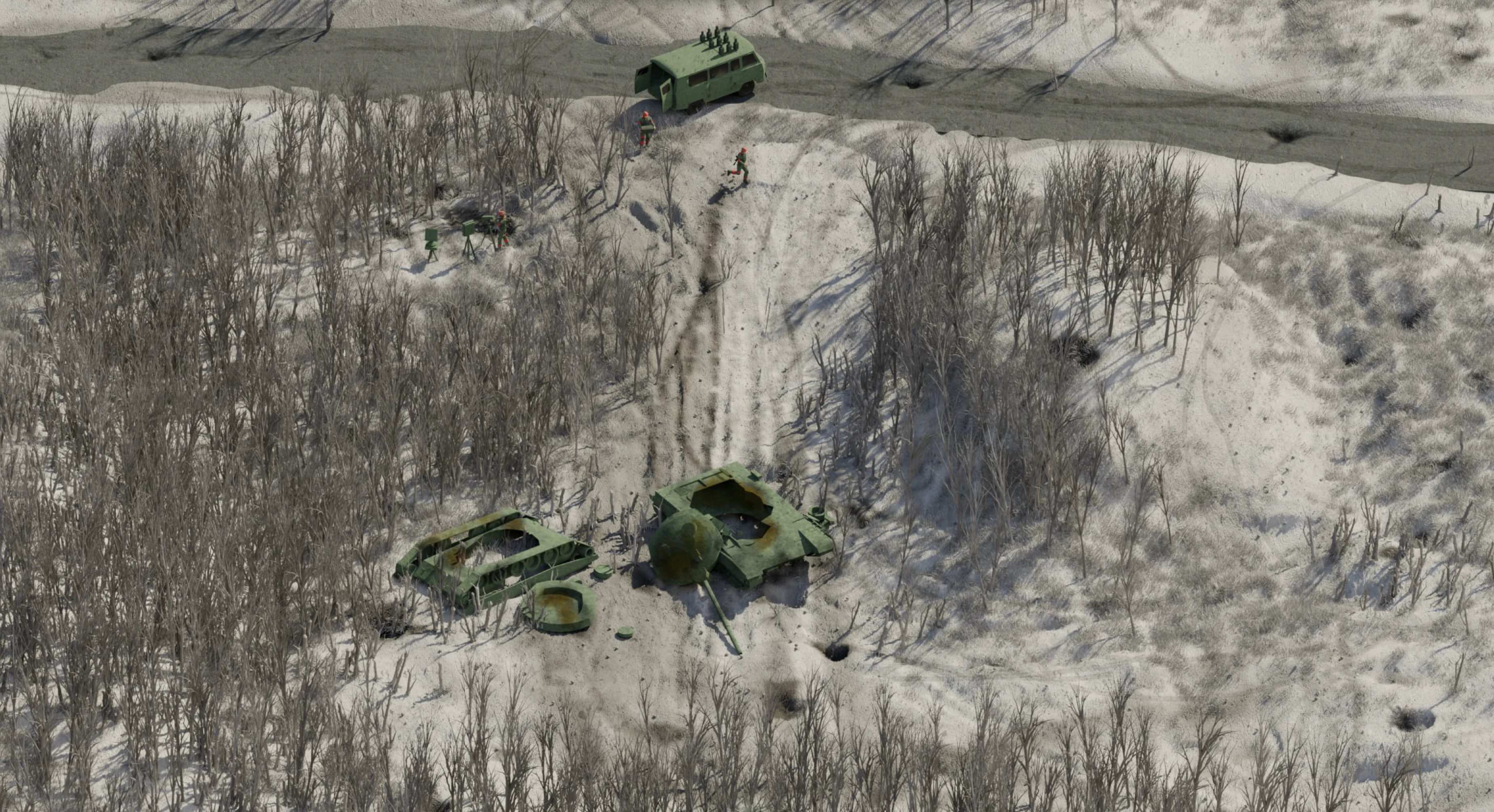 Згорілі танки розкидані по дорогах та коліях у зоні ураження, є реліквіями битв попередніх років війни. Домінування безпілотників зробило традиційну броньовану техніку майже застарілою так близько до лінії зіткнення. — Ілюстраці
Evacuation Measured in Days
The new war reveals its cruelty most clearly in the evacuation of the wounded. In earlier phases of combat, an ambulance could approach relatively close to a position. Now, its appearance attracts drones, and the route itself may already be mined.
A wounded soldier may wait for days. Comrades move him between shelters until a brief window of poor weather or reduced enemy activity appears.
Unmanned ground vehicles are increasingly used. A small robotic platform can reach the position, collect the wounded man and carry him several kilometers to an ambulance.
The robot is not invulnerable. It moves across exposed terrain and can be detected. Its advantage is simply that a machine, rather than several more soldiers, bears the risk.
Evacuation has become a chain of stages. The casualty is first moved from a building, then transported by ground drone, then transferred to a vehicle that leaves the kill zone at speed. Every phase depends on weather, communications and the presence of enemy aircraft.
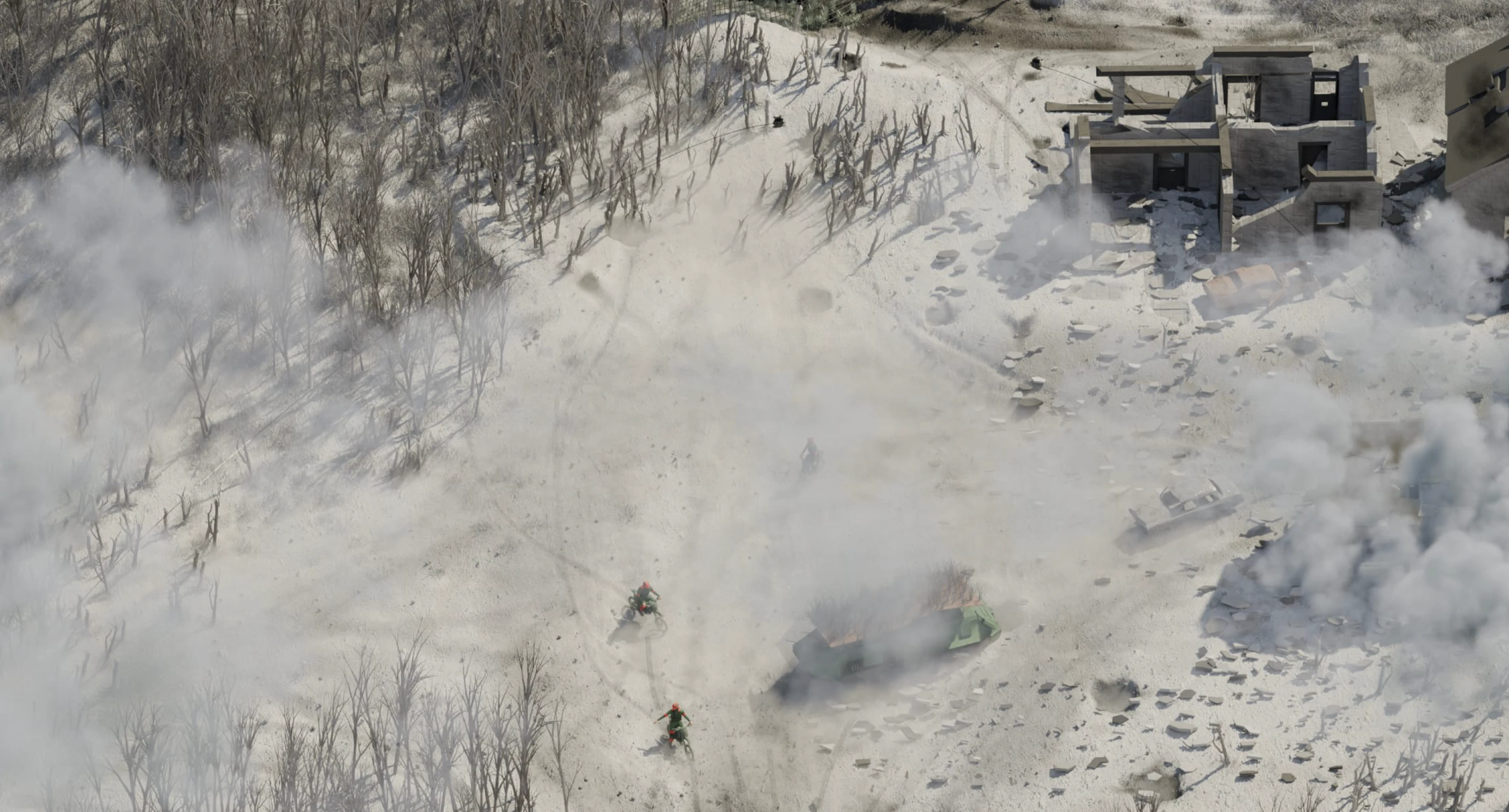 Ближче до території, що утримується ворогом, невеликі російські штурмові групи з двох-трьох солдатів просуваються вперед пішки, на мотоциклах або квадроциклах, часто використовуючи туман або негоду, що знижує ефективність безпілотників. — Ілюстрація
The Burrow as a New Fortress
Front-line deployments are now measured in months rather than days. Some soldiers remain in tiny dugouts for more than 300 days because no safe opportunity for rotation appears.
The shelter must be deep enough to survive strikes and hidden enough to avoid discovery. Inside are food, water, batteries, medicine and ammunition. Electricity, ventilation and dryness become conditions of survival.
Resupply is often carried out by drone. Packages of food, medical supplies and batteries are dropped from the air. Bad weather, enemy interference or a lost route can leave a position without support for days.
People live underground while machines sustain them. This is the central contradiction of modern war: technology performs more and more combat and logistics tasks, yet control of territory still depends on an infantryman in a hole.
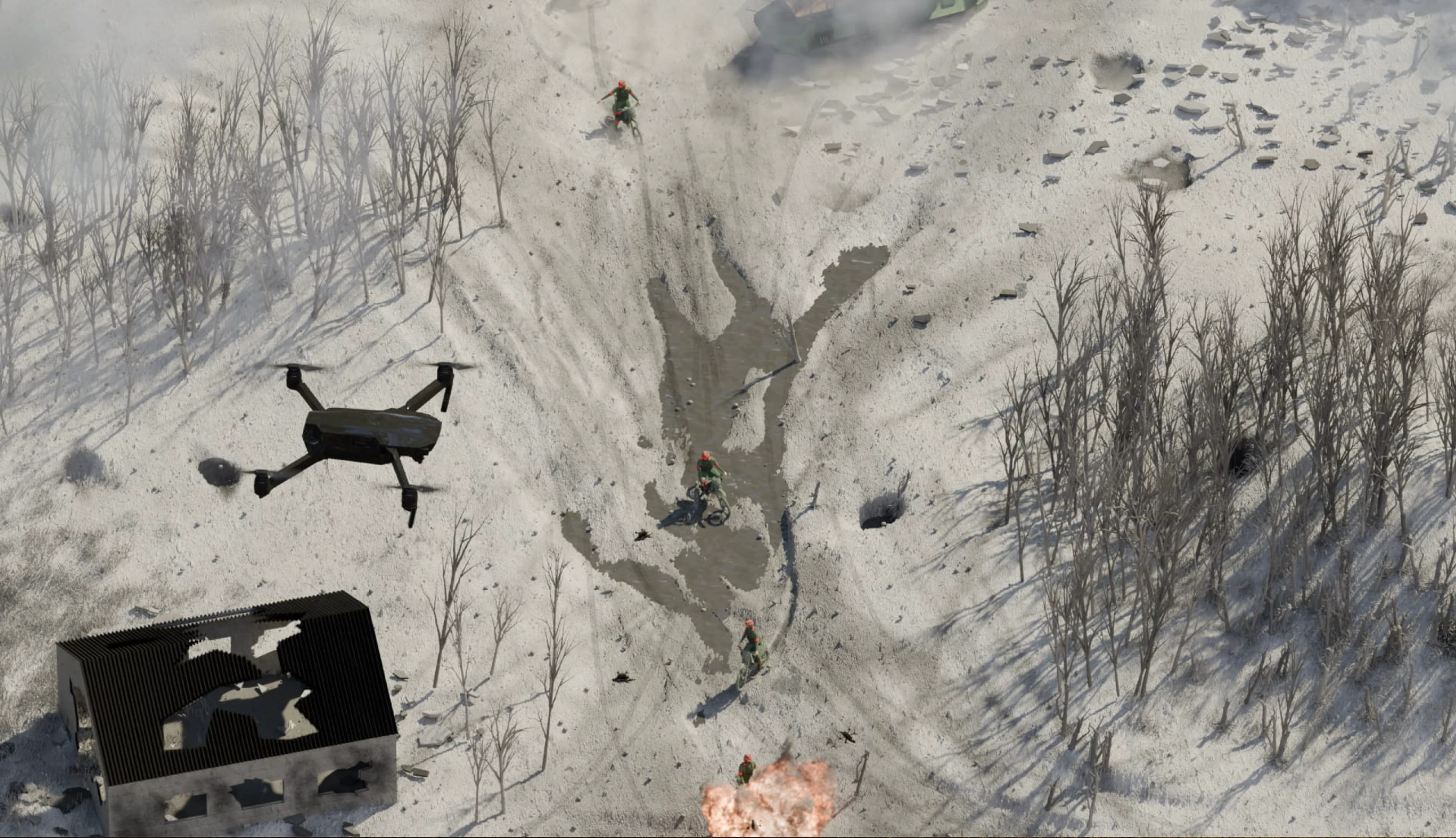 Але небезпека надзвичайна. Дрони випереджають транспортні засоби в зоні ураження, і тисячі відео, опублікованих підрозділами з обох сторін, показують, як полюють і вбивають солдатів пішки або на мотоциклах. — Ілюстрація
A Gray Zone Instead of a Front Line
The idea of a clearly defined contact line is gradually losing meaning. Between confirmed positions of both sides lies a space in which Russian infiltrators, Ukrainian observers, drone teams and ground robots may all be operating at once.
A building marked on a map as Ukrainian may already conceal several Russian soldiers. A tree line believed to be occupied by the enemy may be empty, but remain under constant drone surveillance.
Control has become layered. One side may physically occupy the ground, the other may dominate the air above it, while artillery from both sides can strike any movement detected.
As a result, maps often lag behind reality. Capturing a position does not end when troops enter a dugout. The position must be supplied, concealed, connected to logistics and defended against the inevitable counterattack.
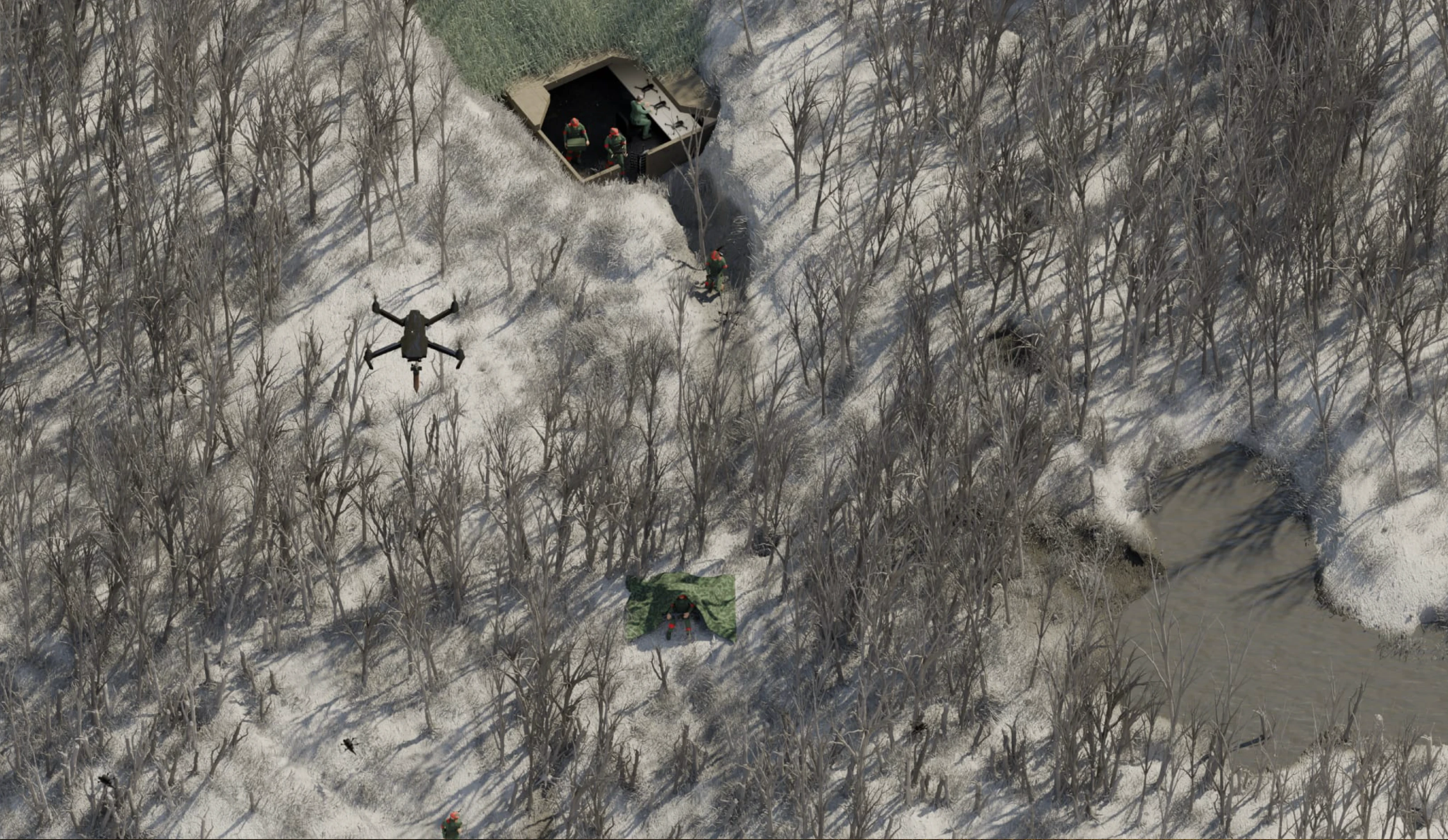 Російські підрозділи безпілотників розкидані по всій зоні ураження. Ці пілотні екіпажі є головними цілями та залишаються під землею. Вони виходять на поверхню лише ненадовго, щоб запустити безпілотники. — Ілюстрація
Drone Pilots as Prime Targets
Drone operators have become some of the most valuable targets on the battlefield. They can destroy infantry, vehicles and artillery across a wide area without entering direct combat.
For that reason, drone crews hide in basements and underground command points. They emerge only briefly to launch aircraft and then return to cover. Antennas, cables and the direction of flight can reveal their location.
Hunting operators has become a distinct form of combat. Reconnaissance searches for launch points, analyzes radio frequencies, tracks vehicles and studies habitual routes. Killing an experienced pilot can have greater effect than destroying dozens of drones.
Human expertise remains the hardest resource to replace. A cheap drone can be assembled in days. A pilot able to operate through jamming, bad weather and difficult terrain requires months of training.
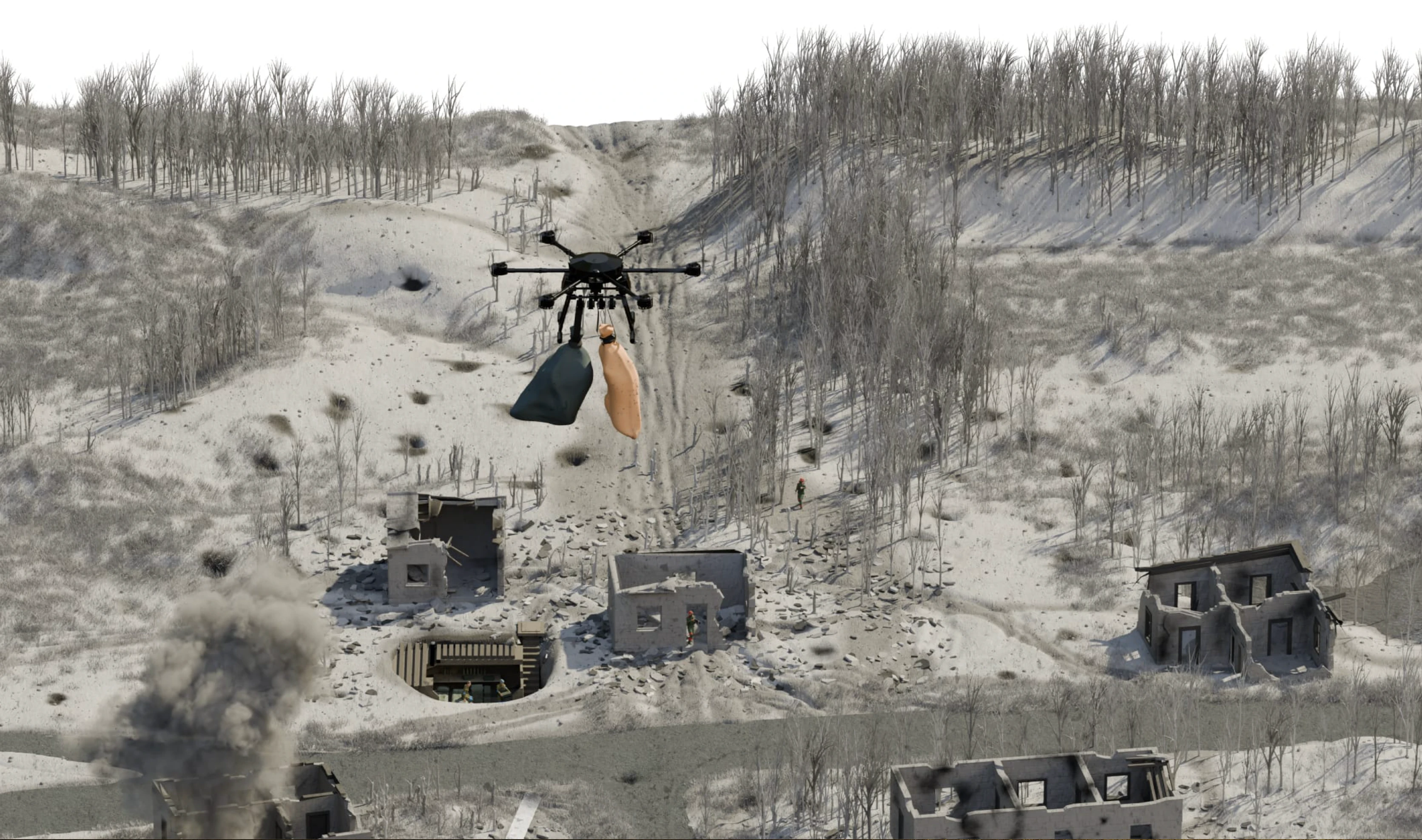 Українські війська, що стежать за окопами, покладаються на безпілотники для отримання постачання. Росія використовує тактику інфільтрації, щоб обійти ворога. Те, що колись було чітко визначеною лінією фронту, тепер є мінливою «сірою зоною». — Ілюстрація
A War of Attrition at the Speed of Technology
Drones now cause a large share of battlefield casualties. The combined number of killed, wounded and missing soldiers on both sides runs into the millions. Unmanned systems did not make war bloodless. They made killing cheaper, more precise and more continuous.
At the same time, they have slowed large offensives. Territory changes hands slowly because any concentration of force is punished. Russia advances through gaps in the defense, but pays heavily in the lives of small assault groups.
Ukraine compensates for manpower shortages with technology, yet its infantry is also being exhausted. Dispersed positions help hold the front, but they isolate soldiers, complicate rotation and increase psychological strain.
The result is a war moving at two opposite speeds. Technology changes rapidly, while the front line barely moves. A new drone can appear within a week, while the struggle for a single settlement lasts for months.
The Future That Has Already Arrived
Ukraine’s kill zone offers a preview of future wars between technologically advanced militaries. The battlefield becomes transparent, large formations become vulnerable, and freedom of movement depends on electronic warfare, camouflage and control of the low-altitude airspace.
The tank does not disappear, but it loses its freedom. Artillery does not become obsolete, but it must hide. Infantry does not give way to robots. It becomes more dependent on them.
The decisive advantage is no longer simply the number of individual platforms. It is the ability to connect sensors, operators, communications, artificial intelligence, firepower and people into one fast network. Victory belongs not to the side with more drones, but to the side that turns observation into action more quickly.
Yet beneath the technological language remains a human being.
He sits in a dark dugout, listens to the buzzing above the entrance, waits for water to arrive and knows that a few seconds in the open may decide everything.
Ukraine’s kill zone is not a war without soldiers. It is a war in which the soldier has become less visible, more isolated and, at the same time, even more essential.
The front has dissolved into a broad belt of ruins, cables, cameras and hidden shelters. Machines can see almost everything, but land is still held by people.
Their first task is no longer to move forward.
It is to survive movement itself.