

















The beating of a Ukrainian man and his partner in Wrocław became more than another criminal case for Poland. It tested the line between legitimate political conflict and ethnic hatred. Donald Tusk responded in the language of national security, arguing that violence against Ukrainians ultimately works against Poland itself.
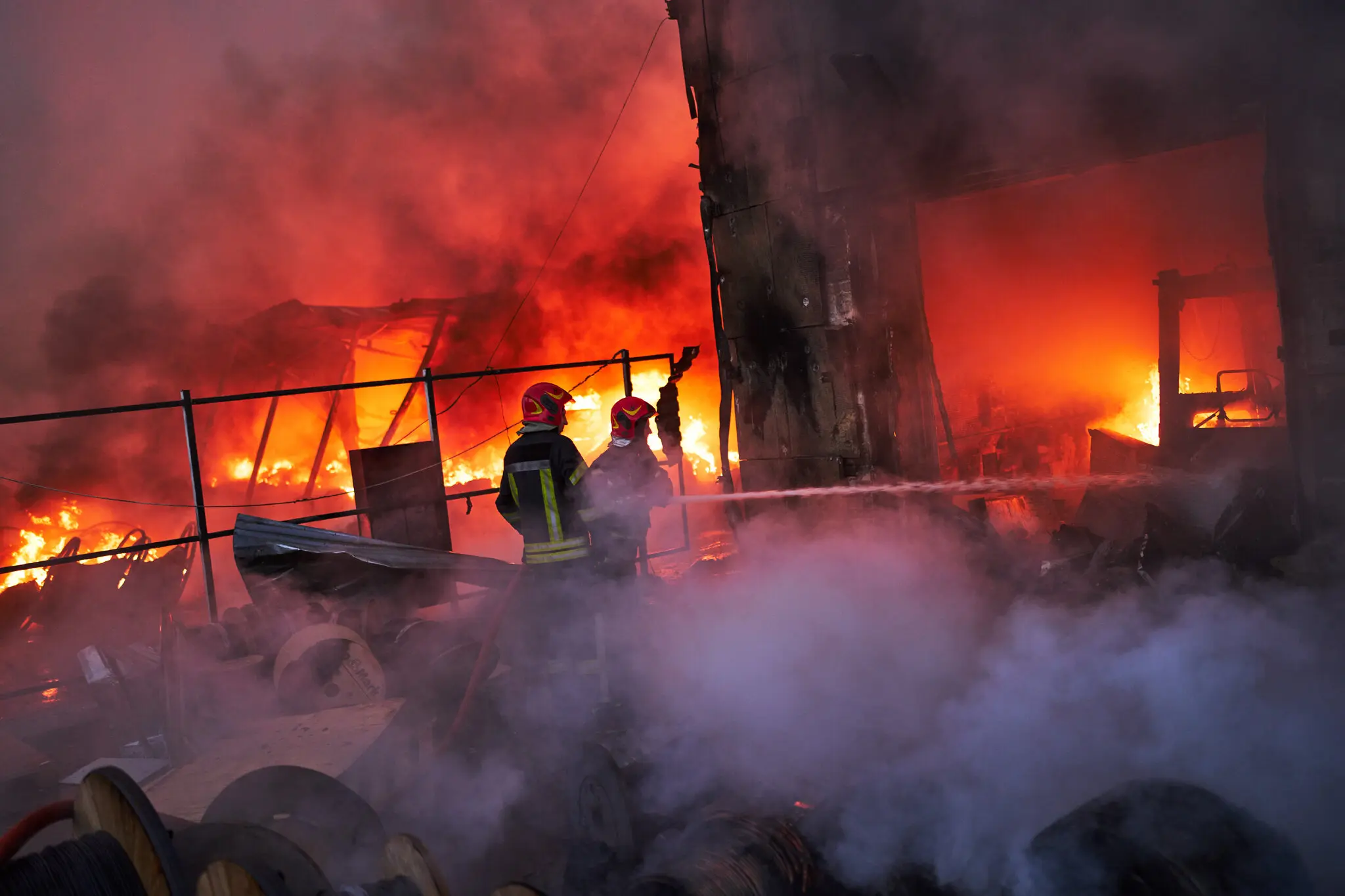
Three men attacked the couple after a dispute in a shop. Two suspects were detained, while police continued searching for the third. The case drew national attention after footage of the assault circulated widely on social media.
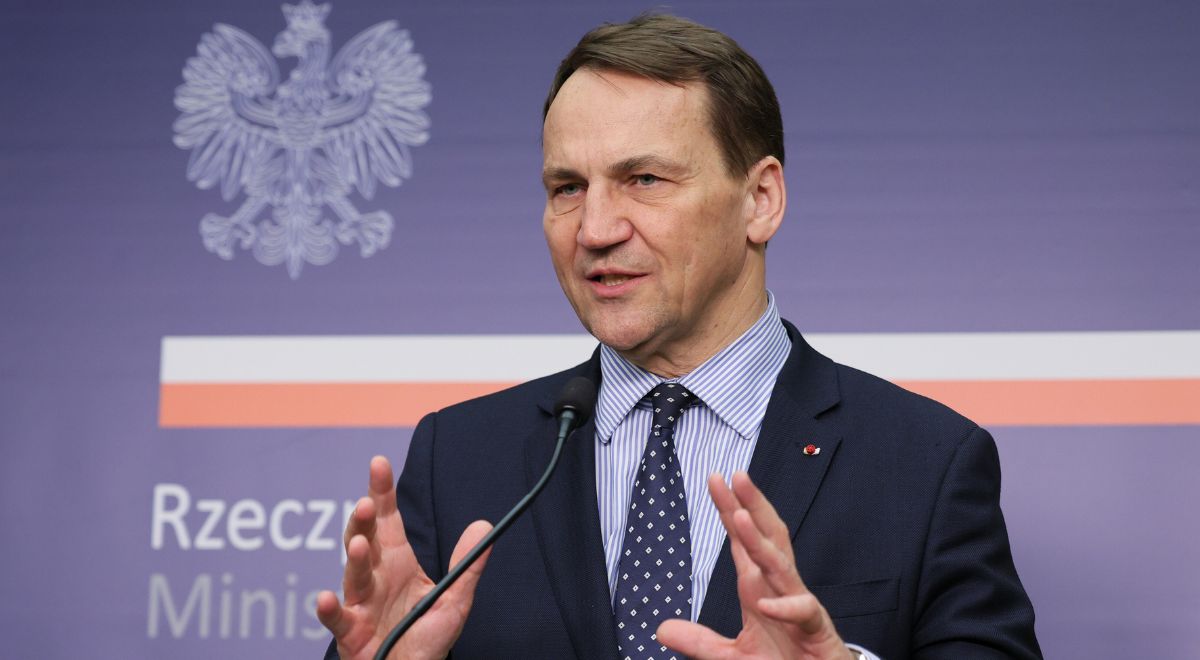
Tusk called for an end to xenophobic violence and promised a forceful response from the state. He argued that humiliation and assault based on language or nationality damage the reputation of a country that became one of Europe’s strongest symbols of solidarity after Russia’s full-scale invasion.
According to Daycom’s earlier analysis, the importance of Tusk’s intervention lies in his attempt to restore a political boundary that has become increasingly blurred. Poland is entitled to difficult disputes with Kyiv, but historical trauma, economic fatigue and party competition cannot turn Ukrainian identity into grounds for violence.
That distinction matters because of the scale of the Ukrainian presence. More than 1.5 million Ukrainians live in Poland. They work, study, rent homes, raise children and are becoming deeply embedded in local communities.
This is no longer a temporary refugee emergency. It is one of the largest social transformations in contemporary Poland. Ukrainians have become a visible part of the labor market, public schools, service industries and the urban economy.
The first months after the 2022 invasion were marked by almost unconditional support. Polish families opened their homes to strangers, volunteers worked at railway stations, and the state expanded access to education, healthcare and employment.
Four years later, emotional solidarity has given way to the harder reality of long-term coexistence. Integration has brought everyday disputes, pressure on housing and a growing belief among some Poles that temporary assistance has become a permanent obligation.
Such concerns do not automatically amount to xenophobia. War fatigue, dissatisfaction with migration policy and criticism of the Ukrainian government are legitimate subjects of democratic debate.
The danger begins when complex problems are replaced by collective blame. An individual becomes responsible for the actions of a state simply because he speaks Ukrainian or was born in Ukraine.
Polish police received 180 reports of hate crimes against Ukrainians in the first half of 2026, about 30 percent more than during the same period a year earlier. The figure does not prove the existence of a nationwide wave of violence, but it reveals a direction the state cannot afford to ignore.
Official statistics also depend on whether victims are willing to report abuse. Migrants may fear bureaucratic consequences, lack confidence in the language or doubt that threats and humiliation will be investigated seriously.
The increase may therefore reflect both a rise in incidents and a greater willingness to report them. Either interpretation requires a systematic response rather than statements issued only after the most visible attacks.
The video from Wrocław was decisive because it stripped away the usual ambiguity of conflicting testimony. The violence became visible, as did the social atmosphere in which the attackers may have expected approval from part of the audience.
At that point, the criminal case became political. Tusk accused his opponents of using rhetoric that can create a sense that such violence is permissible. His criticism was directed at forces that have turned the Ukrainian question into a tool for mobilizing fear and resentment.
That is a political judgment, not an established causal link. Public rhetoric does not make a politician legally responsible for another person’s assault. It does, however, shape which prejudices remain marginal and which gradually enter the acceptable language of political competition.
When Ukrainians are described as a single group that allegedly receives too much, shows too little gratitude or threatens Polish identity, the structure of the debate changes. A person stops being a neighbor, colleague or classmate and becomes a symbol of a larger grievance.
The most dangerous distortion is the merging of three separate issues: the policies of the Ukrainian state, historical memory and the conduct of Ukrainians living in Poland. These subjects may be emotionally connected, but they do not create a single legal or moral responsibility.
Relations between Warsaw and Kyiv are indeed under strain. The most painful dispute concerns the Volhynia massacres and the role of the Ukrainian Insurgent Army. Poland demands recognition of responsibility for the mass killing of Poles and dignified burial for the victims.
Tensions deepened after Ukraine named a military unit after nationalist insurgents from the Second World War era. In Ukraine, they are remembered by many as fighters against Nazi Germany and the Soviet Union. In Poland, they are associated with the murder of civilians.
President Karol Nawrocki stripped Volodymyr Zelensky of Poland’s highest honor, arguing that the glorification of the UPA undermined Polish-Ukrainian reconciliation. At the same time, he maintained Poland’s support for Ukrainian sovereignty and continued to identify Russia as the aggressor.
That position demonstrates that a severe historical dispute does not have to become hostility toward Ukrainians as a people. The Polish state can demand a different policy of remembrance from Kyiv while protecting a Ukrainian child, worker or refugee from abuse on Polish soil.
Ukraine, in turn, should not dismiss Polish trauma by explaining every criticism as Russian manipulation. Volhynia is not an invented information campaign. It is part of Poland’s national and family memory.
Ignoring that reality leaves room for political forces that use history not for reconciliation, but for mobilizing resentment. The answer must be honest work on memory rather than a contest between national myths.
Moscow nevertheless benefits objectively when a historical dispute becomes an ethnic conflict. Poland remains Ukraine’s principal logistical hub, a critical member of NATO’s eastern flank and one of the main centers of support for Ukrainian citizens.
The erosion of trust between the two societies directly weakens their ability to resist Russia. That is what Tusk meant when he said the attackers were acting in the interests of Moscow and radical nationalisms.
He was not necessarily alleging direct control from the Kremlin. The strategic result is what matters: every assault, threat and act of ethnic retaliation fractures an alliance that Russia has failed to break through military pressure.
Calls for unity, however, are not enough. Polish authorities need a law-enforcement response that makes hate crimes more costly for perpetrators.
The rapid detention of suspects in Wrocław was an important signal. The real test will be how prosecutors define the motive, how the courts handle the case and whether the punishment reflects not only the violence itself but its ethnic character.
When the national motive disappears from a case file, an assault becomes ordinary hooliganism and the state loses the ability to identify a broader pattern. Police need trained investigators, interpreters and clear reporting channels for migrants.
Work outside the criminal justice system is equally important. The government must explain clearly which social programs are available to Ukrainians, how much they cost and how much migrants contribute through taxes, labor and consumption.
A lack of transparency creates fertile ground for myths about privilege. At the same time, real integration problems cannot be concealed: overcrowded schools, housing shortages, language barriers and uneven pressure on municipalities do not disappear through moral appeals.
When the state fails to solve practical problems, responsibility is easily transferred to the most visible group. Ukrainians then become a convenient explanation for failures rooted in weak administration, insufficient investment or broader social tension.
Tusk is defending not only Ukrainians but also his own vision of Poland. The country’s international standing rests on a combination of security, European solidarity and the legacy of a movement that defeated authoritarianism without descending into mass violence.
Street attacks undermine that reputation. The opposition faces a different risk: hard-line criticism of migration may win votes, but losing control of the radical fringe turns an electoral theme into a public-order problem.
For Kyiv, the crisis is a reminder that the alliance with Poland cannot be treated as automatic. It requires respect for Polish historical memory, sustained work with local communities and responsibility from Ukrainian institutions for their own public conduct.
The primary duty to protect people inside Poland, however, belongs to the Polish state. A Ukrainian citizen should not have to prove political loyalty, subscribe to the “correct” version of history or perform gratitude in order to avoid being attacked in the street.
That simple principle was at the center of Tusk’s statement. Poland can argue with Ukraine over history, social policy and the future terms of support. But once those disputes begin to legitimize violence based on language or origin, the state starts to lose control of its own rules.
The Wrocław attack does not prove that Polish society has abandoned solidarity. It shows that solidarity can no longer rest only on the emotions of the first months of war.
It now requires institutions, a coherent migration policy, effective policing and a clear boundary that remains intact even during the most bitter political conflict.
Tusk’s appeal will become convincing only if it is followed by court judgments, an honest debate about integration and a refusal by major parties to use ethnicity as a shortcut for mobilizing fear.
By protecting Ukrainians from hate crimes, Poland is not doing Kyiv a favor. It is defending its own legal order, reputation and strategic resilience.
In that sense, the attack on a Ukrainian couple was aimed at more than two people. It struck at the model of the state Poland still aspires to be.