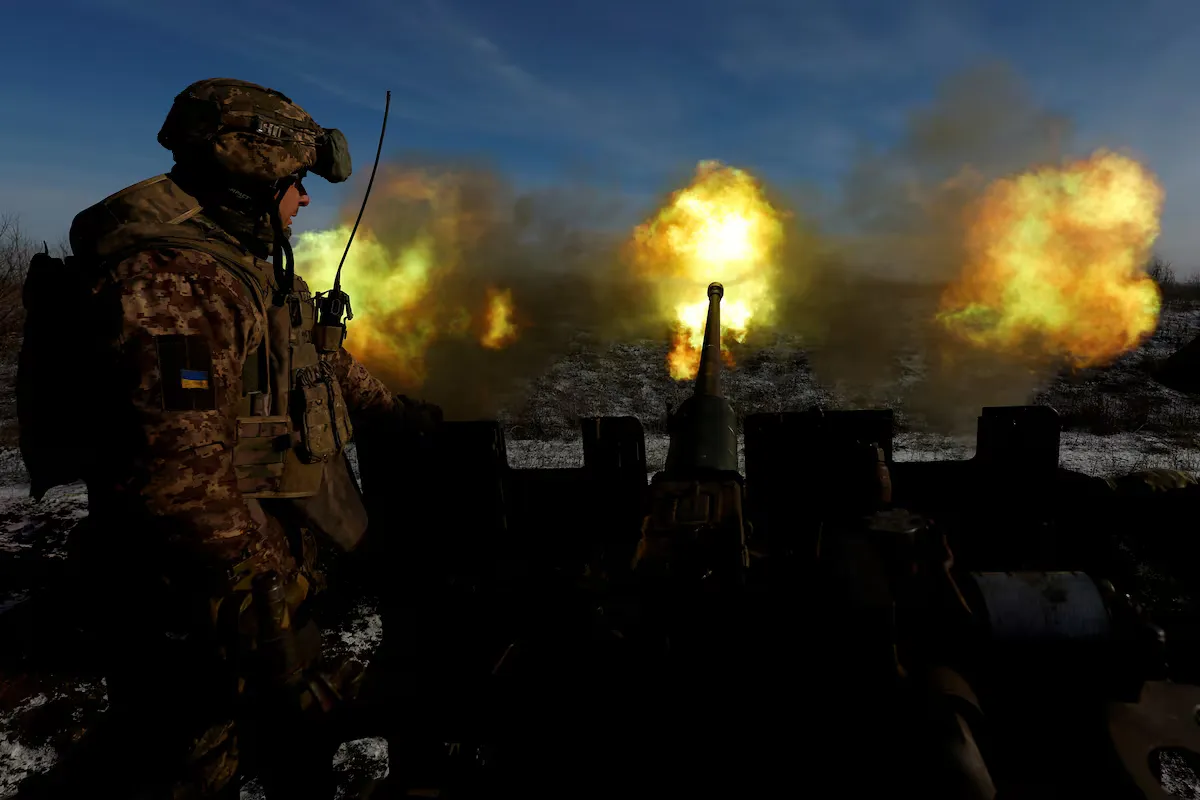


















Ukraine says it has retaken 745 square kilometers of territory since the beginning of the year, one of the clearest signs yet that its recent counterattacks are producing measurable gains in the southeast. This is not a single breakthrough, but a gradual push that has forced Russian troops back along a stretch of front roughly 60 kilometers long.
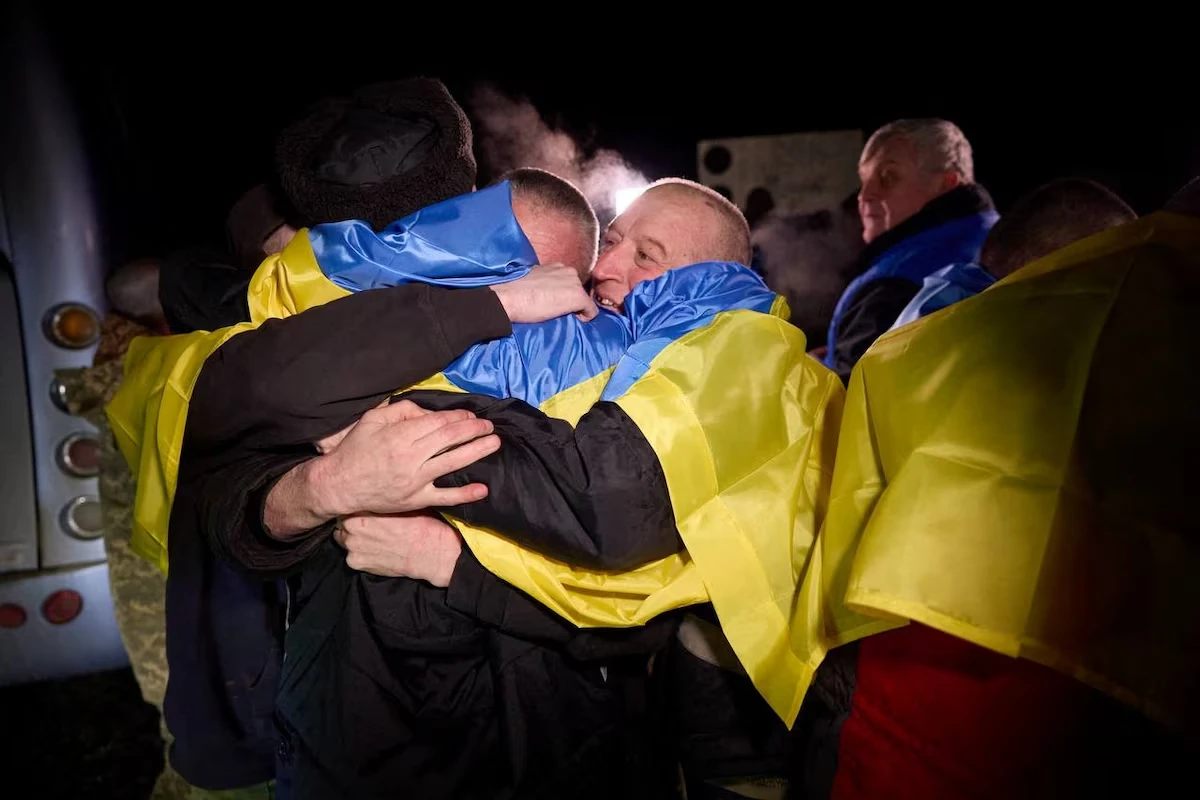
President Volodymyr Zelenskyy said Ukrainian forces had restored control over 26 settlements across the Dnipropetrovsk, Donetsk and Zaporizhzhia regions. He described the operation as having unfolded “exactly as planned,” crediting air-assault units and other formations involved in the fighting.
The figure, however, requires some caution. Parts of the territory Kyiv describes as liberated are still shown on independent battlefield maps as contested or not fully controlled by either side. In a fluid war, an official declaration of control and the ability to securely hold every village, treeline and position do not always arrive at the same moment.
As Daycom has previously noted, the importance of battlefield gains at this stage of the war cannot be measured by square kilometers alone. The larger question is whether a local success can alter the operational picture by forcing Russia to move reserves, abandon logistics routes or revise plans for offensives elsewhere.
That is why the geography of the operation matters almost as much as its size. The area where the Dnipropetrovsk, Donetsk and Zaporizhzhia regions converge sits between several axes of Russian pressure and has broader importance for the stability of Ukraine’s southeastern front.
If Ukrainian forces can both stabilize the line there and continue advancing, Russia is forced to spend reserves on closing gaps and recovering lost positions rather than using those same units to deepen offensives elsewhere.
That distinguishes the current counterattacks from operations designed around a major breakthrough. Ukraine appears to be relying more heavily on a sequence of limited strikes, exploiting weak points in Russian positions while avoiding the concentration of large forces on a single axis.
That approach fits the battlefield of 2026. Large concentrations of armor are quickly detected by drones and exposed to artillery, FPV systems and air-delivered weapons. The cost of attempting a massed breakthrough has therefore risen sharply.
Smaller assault groups, supported by drones and precision strikes, can alter the line more gradually without presenting the enemy with a large, obvious target. It is a slower method, but one better suited to a battlefield under near-continuous surveillance.
The word “precision,” which Kyiv has used to describe the operation, therefore means more than accurate munitions. It also describes the use of resources: where to attack, how many troops to commit, which positions are worth holding and where not to spend lives on a frontal assault.
Ukraine is also increasing pressure far beyond the immediate front. Strikes against Russian logistics, energy infrastructure, depots and transport nodes are intended to weaken Moscow’s ability to sustain offensive operations.
This is where long-range strikes and ground warfare intersect. A destroyed rail junction, fuel depot or command post does not retake territory by itself. But it can create a temporary window of weakness that ground forces can exploit.
The reported 745 square kilometers therefore matter chiefly as evidence that Ukraine is again trying to impose pressure points of its own rather than merely responding to Russian advances.
For a prolonged period, the operational initiative across much of the front belonged to Moscow. Russian forces advanced slowly but persistently, using advantages in manpower, glide bombs, artillery and drones.
This year, the pace of those advances has slowed across many sectors. That does not mean the Russian offensive has ended. Russian troops are still pressing toward important cities in the Donetsk region and continue searching for opportunities to create new tactical breakthroughs.
Even a slowdown, however, matters strategically. Russia’s model of warfare has depended heavily on sustained pressure and the gradual accumulation of territorial gains. If the front begins moving in both directions, Moscow loses part of the advantage created by a consistently offensive tempo.
For Ukraine, territorial recovery also carries a political dimension. Moscow continues to demand that Kyiv relinquish the remaining parts of the Donetsk region that Russian forces do not control. Ukraine has rejected that demand.
Under those conditions, every successful counterattack changes not only the map but also the logic surrounding any future negotiations. If Russia can no longer expand the occupied zone without interruption, the argument that further Ukrainian territorial losses are inevitable becomes less convincing.
Still, 745 square kilometers do not amount to a strategic reversal by themselves. The front stretches for roughly 1,200 kilometers, and Russia retains substantial forces, resources and the capacity to continue offensive operations.
Just as important is whether Ukraine can hold the territory it has regained. Taking ground can sometimes be easier than building a durable defense under sustained artillery fire, glide-bomb attacks and constant drone pressure.
That is where the line between tactical success and operational impact is drawn. If Russian forces quickly retake the positions, the significance of the campaign will remain limited. If Kyiv consolidates them and continues to apply pressure, the effect on the wider front will grow.
One of the most important tests will be whether Moscow is forced to shift units from other sectors. In a war of attrition, reserves can be as valuable as territory. A formation sent south to contain a Ukrainian counterattack cannot simultaneously be used to advance in the Donbas.
In that sense, the operation may ultimately matter more than its acreage suggests. Its effect will be measured not only by the number of villages on the map, but by how many Russian decisions have to change because Ukraine has created a new problem.
Kyiv appears to be seeking precisely that kind of initiative: not a single sweeping counteroffensive, but a series of limited operations, long-range strikes and repeated attempts to identify and exploit weaker parts of the line.
It is a more restrained model of warfare than the large campaigns of earlier years. It does not promise rapid movement on the map, but it may be better suited to a battlefield where major troop concentrations are visible long before an assault begins.
The key question after Ukraine’s claim of retaking 745 square kilometers, then, is not simply whether the map has changed. On at least part of the front, it has.
The more consequential question is whether the tempo of the war has changed with it — from a pattern of steady Russian advance to one in which Moscow must again look over its shoulder and defend ground it had only recently considered securely held.