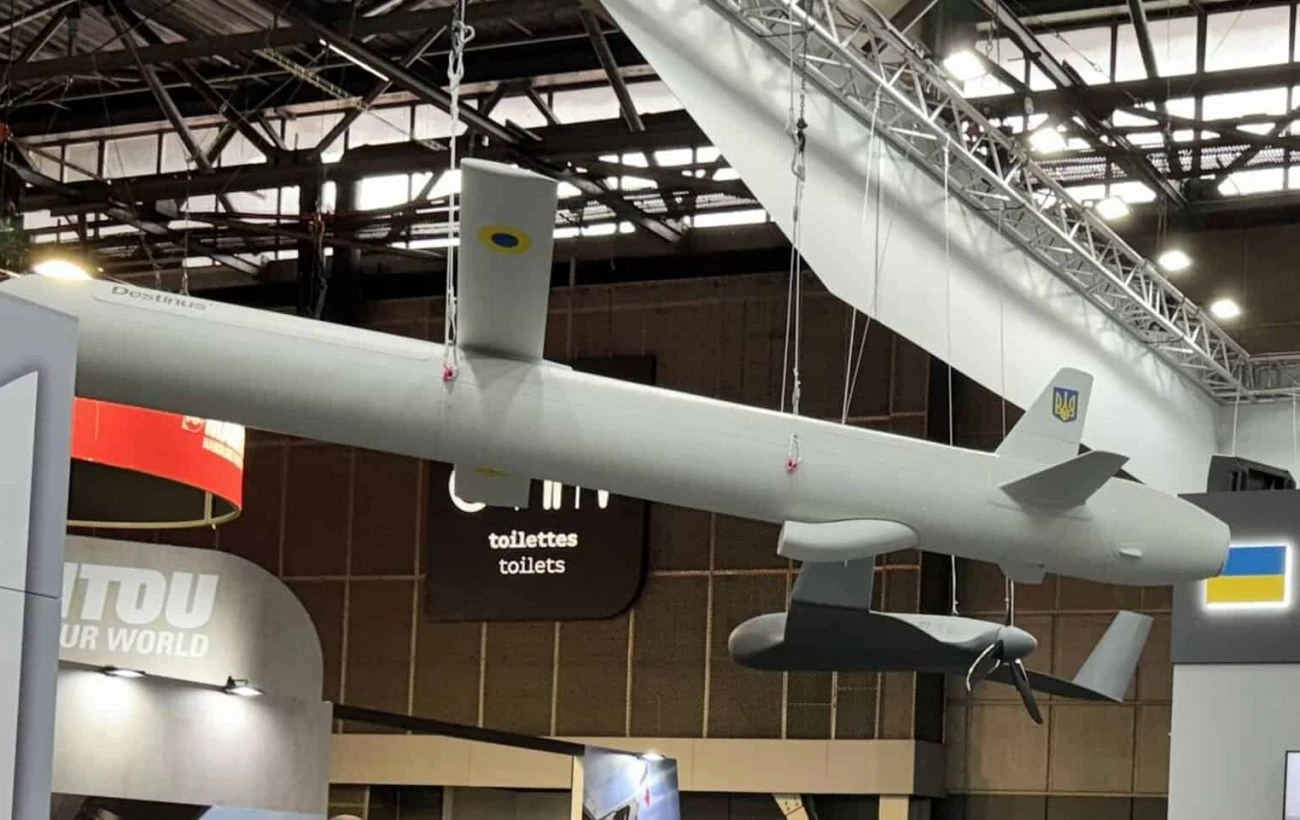





















Ukraine has begun assembling its own missile-defense system from technologies developed across Europe. At the center of the Freyja project is the Ukrainian FP7.X missile, which must now be integrated with foreign radars, a guidance package and a command-and-control center.
Thirteen defense companies have already joined the program, and the number of industrial partners could eventually rise to around twenty. Fire Point aims to conduct the first successful interception of a ballistic missile by mid-2027 and keep the cost of each interceptor below €1 million.
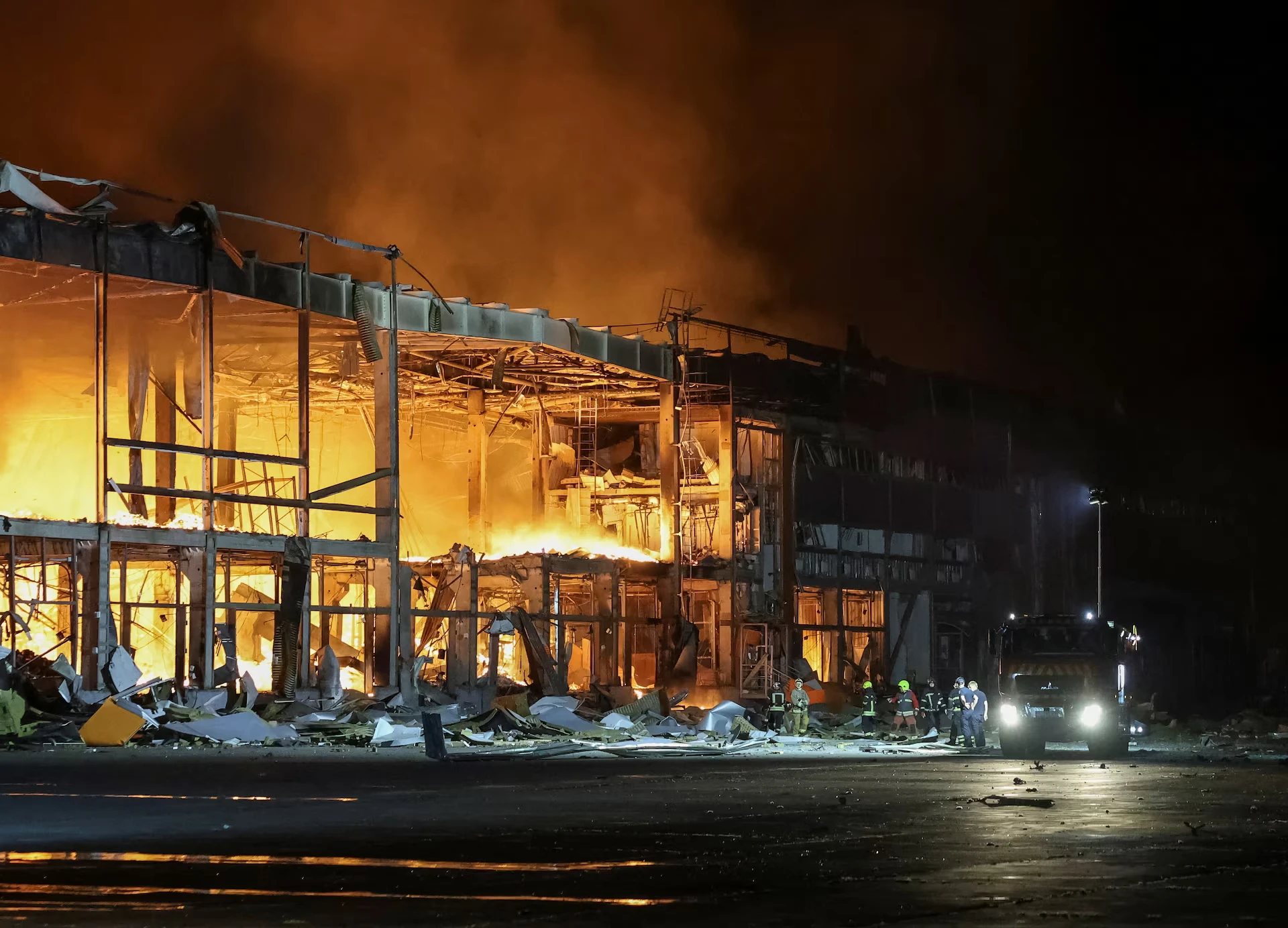
The urgency comes directly from the battlefield. Ukraine relies heavily on American-made Patriot systems to destroy missiles traveling at several times the speed of sound. Yet interceptor stocks are limited, production queues are long and global demand continues to rise.
Daycom’s assessment is that Freyja matters not because it can quickly replace Patriot, but because it could end a dangerous monopoly. A country regularly attacked with Iskanders, Kinzhals and North Korean KN-23 missiles cannot base its defense on one scarce weapon supplied from abroad.
Fire Point is contributing the FP7.X, a faster version of its FP7 ballistic missile. The challenge is to transform an offensive weapon into a guided interceptor capable of receiving radar data, refining the target’s position and meeting it at extreme speed.
That is far more difficult than launching a missile at fixed coordinates. A ballistic target leaves defenders only minutes to detect the threat, calculate its trajectory, authorize a launch and guide the interceptor. Even a brief delay in the flow of data can turn a near-perfect solution into a complete miss.
The hardest stage is therefore not building the missile itself, but integrating every part of the system. A surveillance radar must identify the threat, a tracking radar must calculate its path, the command center must decide when to fire, and the seeker must keep the target locked during the final approach.
Norway’s Kongsberg is working on the command center that will connect these elements. Fire Point is also in discussions with Germany’s Diehl Defence, which manufactures IRIS-T missiles and sophisticated guidance technology for modern air-defense systems.
The wider European initiative includes companies such as Eurosam, Leonardo, Thales and Saab. Their participation gives Ukraine access not only to individual components, but also to decades of expertise in radar technology, sensors, electronics and automated battle management.
Freyja is being designed around an open architecture. Individual components could be replaced without redesigning the entire system. A radar made by one company could be exchanged for another, reducing dependence on a single manufacturer or country.
That flexibility has both military and political value. If one supplier cannot expand production, faces export restrictions or changes its priorities, another component can be substituted. Ukraine is trying to avoid replacing one strategic dependency with a new European version of the same problem.
The target cost of less than €1 million per interceptor would make the missile roughly four to six times cheaper than a Patriot round. The comparison remains imperfect: the final price will depend on performance, production scale, reliability and the cost of the entire ground-based system.
Yet the economics of missile defense have become a battlefield in their own right. Russia combines expensive ballistic weapons with mass attacks by cheaper drones, forcing Ukraine to expend limited interceptors. A defense that consistently costs more than the attack can be exhausted even when it performs well.
Freyja is intended to improve that equation. A cheaper missile would not eliminate scarcity, but it could support larger stockpiles, allow several interceptors to be fired at one target and extend protection to more cities, industrial sites and military bases.
Each launcher is expected to carry four to six missiles. This matters because missile defense is an exercise in probability rather than a single perfect shot. If the first interceptor misses, the next rounds must reduce the remaining risk of penetration to an acceptable level.
To keep the probability of six consecutive misses below 5 percent, each individual interceptor would need a success rate of roughly 40 percent. That figure may appear modest, but for the first version of a new anti-ballistic missile it would represent a substantial engineering achievement.
Fire Point has already conducted at least five tests. The company defines its minimum viable product as the first confirmed destruction of a ballistic target. Until that point, members of the consortium are expected to finance research and integration from their own resources.
The greatest risk lies between a successful launch and a successful interception. A missile that flies correctly is not necessarily capable of striking a fast, maneuvering target under combat conditions. Freyja will have to operate amid electronic warfare, false signals, saturated radar networks and layered attacks.
Fire Point is attempting to compress a program that could take twenty or thirty years in peacetime into a few years of war. Existing European components and constant access to battlefield data make such acceleration possible, but they also increase the danger of technical failure.
Ukraine followed a similar path with drones. Systems that might have remained prototypes for years in a traditional defense industry reached frontline units within months. Soldiers identified their weaknesses, manufacturers revised the design and new versions entered production.
The consequences of failure are far greater in missile defense. A defective drone usually means the loss of the aircraft. A failed interceptor can mean a ballistic missile striking a power station, apartment building or defense plant. Speed cannot fully replace testing and certification.
At the same time, Fire Point is developing an offensive version of the FP7. It has completed around fifteen test launches and is moving through certification by Ukraine’s Defense Ministry. The company expects its first combat deployment in early autumn.
A much larger FP9 could be ready later in the season. Its claimed range would place Moscow within reach. Together with the FP5 Flamingo cruise missile, these projects form a broader Ukrainian missile family extending from long-range strike weapons to ballistic interception.
The FP7 draws partly on engineering concepts used in Soviet S-300 and S-400 systems, but the design has been substantially reworked. Fire Point estimates that only about 20 percent of the architecture remains similar to the original models.
This is not simply an attempt to reproduce an old Soviet missile. It is the use of an available engineering tradition as a starting point, followed by adaptation to modern electronics, new components and the requirements of Ukraine’s war.
The company is also developing its own turbojet engine for the Flamingo. Earlier missiles relied on secondhand engines, but those stocks are becoming increasingly difficult to find. The first ten Ukrainian prototypes are intended to move production from scavenged components toward a stable industrial line.
Freyja’s success will depend on more than the missile. European partners must agree on data-transfer standards, intellectual property, export rules and manufacturing quotas. In peacetime, such negotiations can take years. Ukraine needs a functioning system before another cycle of Russian attacks.
The project is strategically important for Europe as well. The war has shown that existing air-defense production is insufficient for a prolonged, high-intensity conflict. The continent possesses sophisticated systems but cannot always manufacture enough missiles quickly enough.
Ukraine’s model offers a different approach: divide production among several companies, use technologies that already exist and assemble them into a modular weapon. If it works, Europe will gain not only another interceptor, but an alternative method of developing defense systems.
Freyja will not close Ukraine’s skies in 2026, nor will it remove the need for Patriot. Even after a successful test, the system will require serial production, trained crews, a radar network and proof that it can function reliably under sustained combat pressure.
Its deeper significance lies elsewhere. Ukraine is moving from asking allies for a finished missile shield to building one jointly with Europe. That path is more complicated, but it is the only one capable of turning temporary military assistance into a durable defensive capability.
If the FP7.X catches and destroys its first ballistic target in 2027, the event will mean more than a successful missile test. Ukraine will have shown that it can build anti-ballistic defenses during a war, while Europe will have demonstrated that it can combine fragmented technologies faster than Russia can expand the means of attack.