






















For Ukrainian farmer Serhiy Rybalko, the war has already redrawn the map of his business once. After Russia’s 2022 invasion, he lost two-thirds of his farmland in the south. Now the problem is different: the harvest is good, storage is nearly full, buyers are scarce, and Black Sea exports have slowed to a fraction of their normal volume.
The timing could hardly be worse. Ukraine’s wheat harvest is at its peak, while the corn campaign is due to begin next month. The country expects to collect roughly 60 million metric tons of grain this year, close to the 2025 level. Without functioning export routes, however, a strong harvest is becoming a financial burden rather than an advantage.
Ukraine’s grain exports fell 75 percent year on year during the first two weeks of August. Before the latest wave of Russian attacks, the country was shipping about 4 million to 5 million tons of agricultural products a month through the Black Sea. For an economy in which farming generates close to 60 percent of export revenues, that disruption is no longer a sectoral problem.
As Daycom has previously assessed, the deeper danger lies beyond lost foreign-currency earnings. The blockade is hitting three parts of the agricultural cycle at once: exports are shrinking, domestic prices are collapsing, and farmers are losing the working capital needed to plant the next crop. The third effect may prove the most damaging.
The paradox is stark. Global grain prices rise when traders fear shortages, while Ukrainian farm-gate prices fall because crops cannot leave the country. Grain accumulates inside Ukraine, local supply overwhelms domestic demand, and producers are forced to accept lower prices even as international markets move in the opposite direction.
For several crops, domestic prices have already slipped below production costs. Profits increasingly depend on whether a farmer can secure access to export channels. For businesses carrying loans, land leases, payroll obligations and fuel bills, the loss of that access quickly becomes a liquidity crisis.
Rybalko needs about 20 million hryvnias a month during harvest season to service debt, pay workers and purchase diesel. He borrowed heavily to rebuild his business after 2022. Now he has been forced to sell part of his early wheat at a steep discount simply to raise enough cash to keep machinery running for several more days.
That is the central vulnerability of Ukraine’s farm economy: grain in a silo is not money in a bank account. Until crops are sold, farmers cannot finance soil preparation, seed, fertilizer, fuel or wages. Within months, today’s export shock could become a reduction in acreage planted for the 2027 harvest.
Ukraine has faced this kind of disruption before. In 2022, the closure of Black Sea ports triggered fears of a global food crisis and eventually produced an internationally brokered grain-export arrangement. After Russia left that deal in 2023, Kyiv established its own maritime corridor along the western Black Sea coast through waters near Romania and Bulgaria.
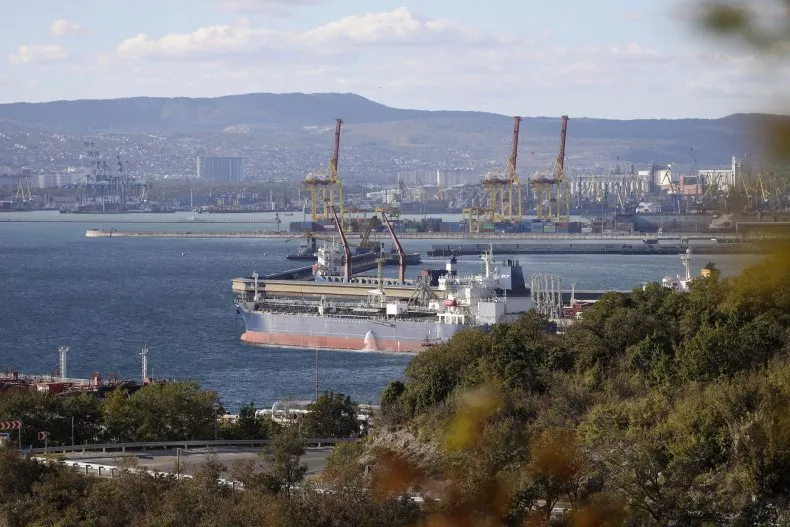
The difference now is the intensity of the attacks. In July and early August, Russian forces carried out more than 70 strikes on Ukrainian Black Sea port infrastructure and 62 attacks on vessels. The maritime route that Ukraine had painstakingly restored despite the war is once again under sustained pressure.
Moscow says it targets military infrastructure, logistics networks and vessels involved in transporting weapons. For Ukraine’s economy, the practical result is unchanged: insurance costs rise, shipping becomes riskier, vessel traffic slows, and exports fall precisely when farmers most urgently need to move the new harvest.
Replacing the Black Sea will be harder this time than it was four years ago. At the beginning of the full-scale invasion, some agricultural trade shifted to railways, truck crossings and Danube ports. Each of those alternatives is now constrained in ways that did not exist to the same degree in 2022.
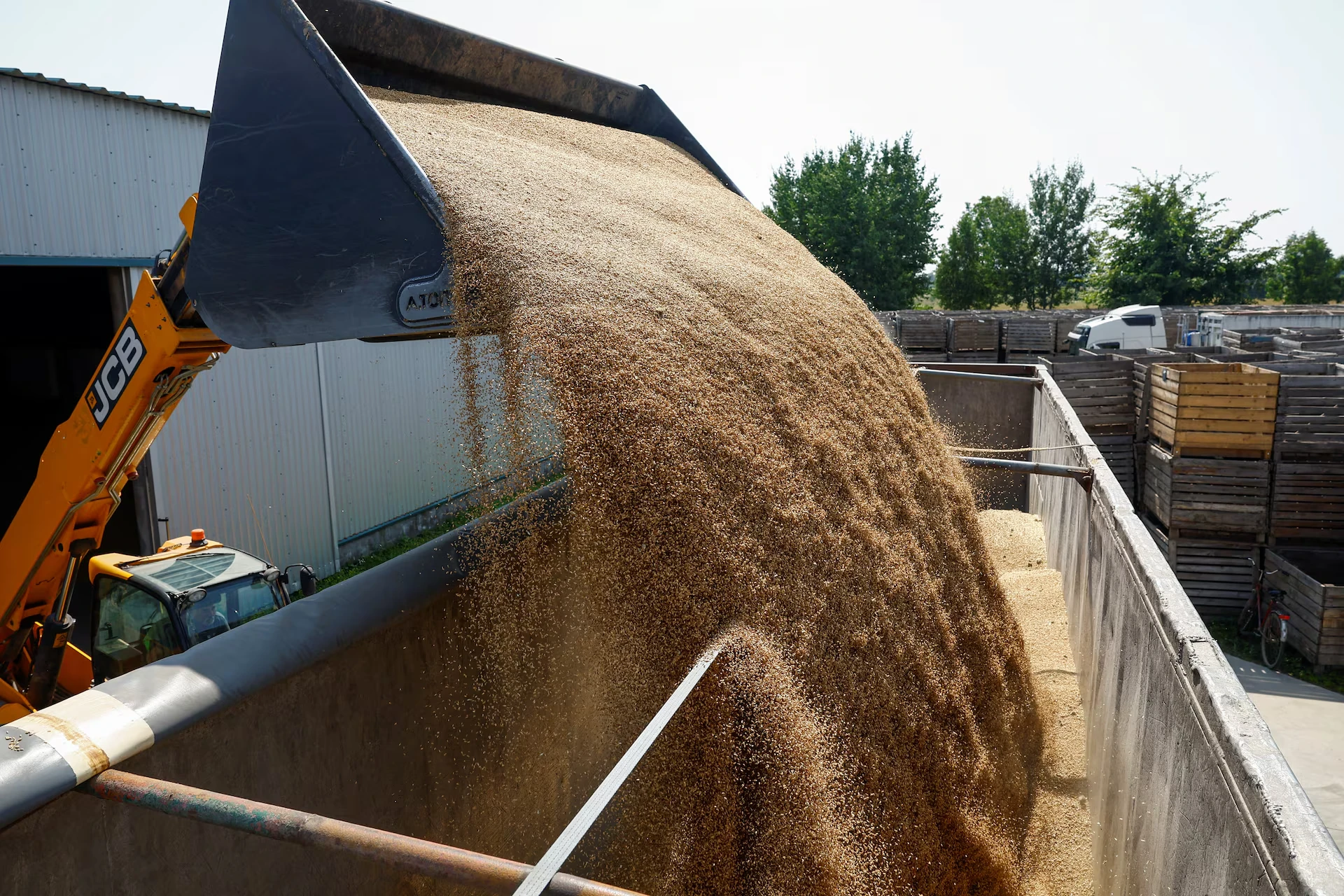
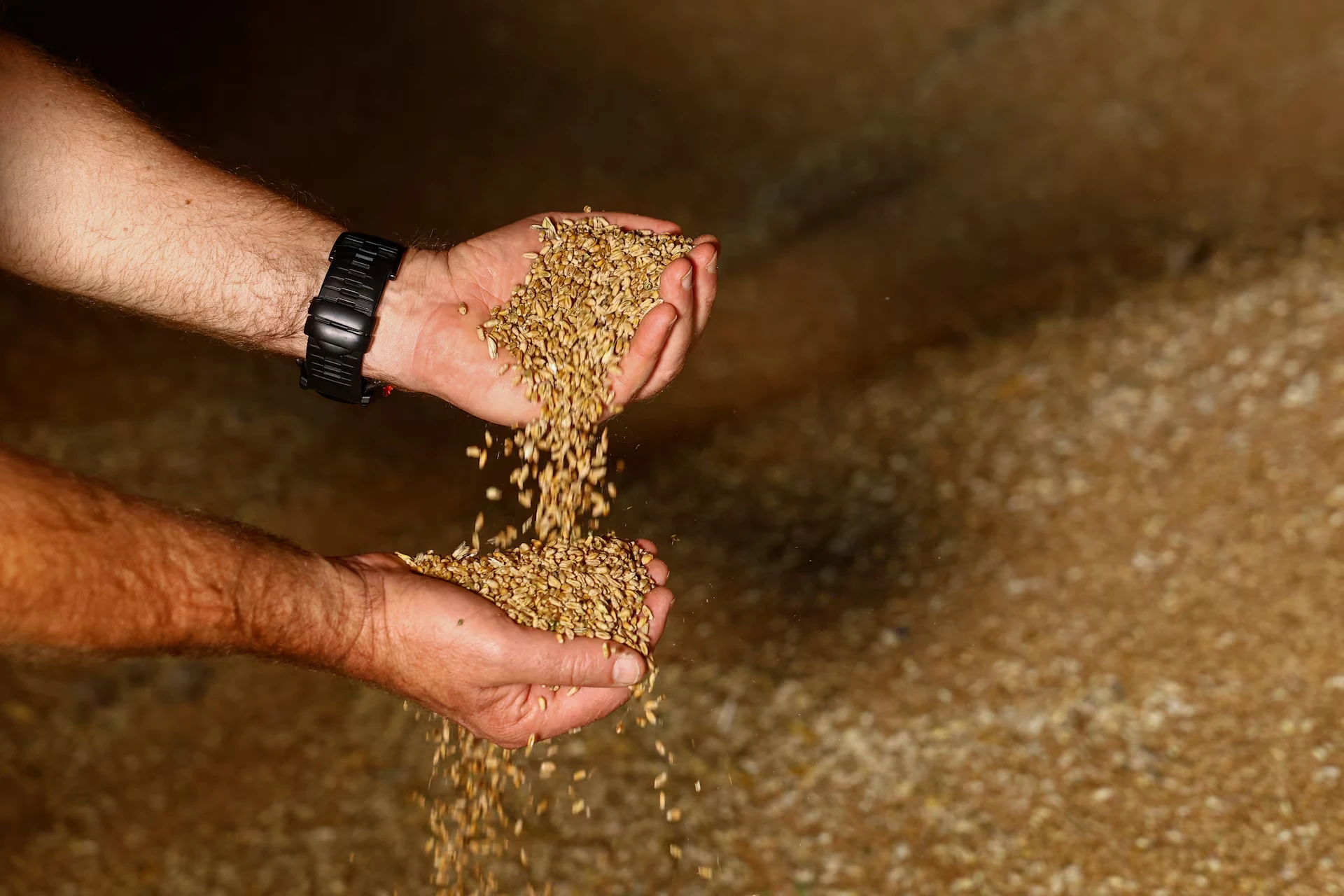 Український фермер Сергій Рибалко показує зерна пшениці всередині сховища на тлі нападу Росії на Україну, Житомирська область, Україна, 7 серпня 2026 року — Валентин Огіренко
Relations with Poland have been strained by protests from farmers concerned about competition from cheaper Ukrainian produce. The European Union has tightened trade conditions. Low water levels are limiting capacity on the Danube, while Russian attacks on railway infrastructure add another layer of risk to overland transport.
Ukraine is therefore confronting more than a blockade of one route. Several alternatives are narrowing simultaneously. That is why the current disruption could prove as economically severe as the first Black Sea crisis, despite four years of experience in rerouting exports around Russian pressure.
Storage is becoming another problem. Ukraine could face a shortfall of as much as 11 million tons in available grain capacity. Officials have asked international partners to provide specialized sealed bags that allow crops to be stored temporarily on farms.
Such measures can buy time, but they do not solve the economics of the harvest. Properly dried grain can remain in storage for years. Loans, wages and diesel bills cannot. For many farmers, the immediate shortage is not warehouse space but cash.
Ukraine could lose about $2.5 billion in foreign-currency revenues during the remainder of the year because of the blockade. Agricultural producers may face roughly another $3 billion in losses from more expensive logistics and depressed domestic prices.
For a wartime economy, the damage works in two directions. Lower agricultural exports weaken foreign-currency inflows and the trade balance while increasing pressure on public finances. At the same time, the government must provide cheaper credit and emergency support to prevent farms from shutting down.
Kyiv has already expanded state-backed lending programs, eased some borrowing requirements and reduced interest rates on working-capital loans. But cheap credit cannot resolve the core problem if a producer has no confidence that the crop can eventually be sold for enough to cover its costs.
The consequences extend far beyond Ukraine. The country accounts for roughly 6 percent of global wheat supplies and around 11 percent of corn exports. Countries in Africa and the Middle East remain particularly exposed to disruptions in Black Sea grain, where supply shocks can translate quickly into food inflation and shortages.
This year, several risks are converging at once: the war in Ukraine, instability across the Middle East, extreme heat and more expensive shipping. In such an environment, even a regional disruption in Black Sea trade can have global price effects, especially in countries where food absorbs a large share of household spending.
Ukraine’s agricultural sector has already absorbed enormous wartime losses. Since 2022, the damage has exceeded $90 billion, while cultivated land has shrunk by nearly a quarter because of occupation, mines, shelling and the loss of irrigation.
The new danger is an economic trap layered on top of that physical destruction. A harvest can be better than last year’s and still leave the farmer worse off. In the Kharkiv region, producers describe almost twice as much wheat being harvested while prices are roughly half of what they were a year earlier.
In the short term, Ukraine needs either to restore meaningful Black Sea exports or secure viable land-based alternatives. Strategically, however, the issue is broader. The agricultural sector must survive not only this harvest but also generate enough cash to plant the next one.
If farmers cut winter wheat, rapeseed and other crops this autumn, the blockade will return in a second form in 2027 — through lower production. What begins as a logistics crisis can therefore become a supply crisis a year later.
Ukraine’s full grain elevators are consequently not a sign of abundance. They are a warning. A harvest that cannot leave the country becomes a financial problem; a financial problem becomes a threat to planting; and a failed planting season becomes a food-security risk far beyond Ukraine’s borders.