

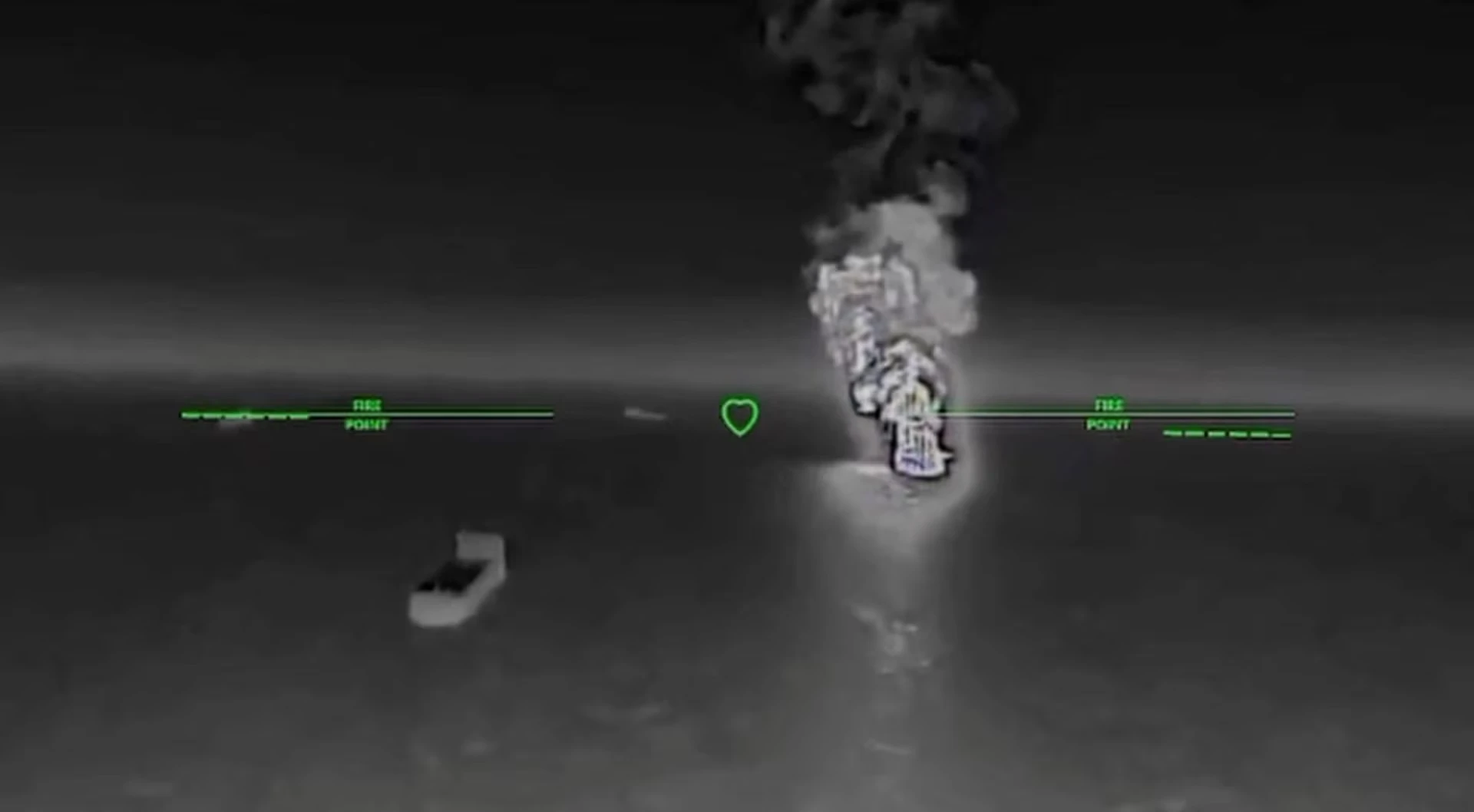
















Ukraine’s long-range strike campaign has entered a new phase. A confirmed strike on an oil refining facility in Russia’s Tyumen region, more than 2,000 kilometers from the Ukrainian border, was not just another attack on Russian energy infrastructure. It showed that distance, long treated by the Kremlin as part of its security, no longer works as a guarantee of protection.
Tyumen is not a border region, not occupied Crimea, not Belgorod, and not oil infrastructure near Russia’s European heartland. It is western Siberia — a deep industrial rear where the Russian state has grown used to seeing resources, logistics and refining as systems far removed from war. A Ukrainian drone strike there carries strategic meaning first of all.
The Tyumen refinery is one of the more modern and complex facilities in Russia’s refining sector. Its nominal capacity is estimated at about 8 million metric tons of crude a year, with actual processing of roughly 6 million tons. It produces hundreds of thousands of tons of gasoline and millions of tons of diesel, meaning it serves not symbolism, but the real fuel system.
According to Daycom’s assessment, the strike on the Tyumen region matters not only because of possible physical damage to the plant. Its deeper significance is that Ukraine is demonstrating an ability to move the war into parts of Russia that until now seemed too distant for regular threat. This changes not the front line, but the map of Russian vulnerability.
Volodymyr Zelensky confirmed that Ukrainian forces had reached the Tyumen region, including an oil refining facility, and called the operation effective. Separately, he announced the use of upgraded long-range drones capable of operating at distances of more than 3,000 kilometers. If that capability becomes serial and sustainable, Russia will face an entirely different kind of war in its rear.
A range of 3,000 kilometers means that not only refineries in European Russia are exposed. It opens a broader set of military-industrial, fuel, logistics and command targets that previously could feel relatively safe. This does not guarantee the success of every strike, but it forces Moscow to stretch defense across a vast space.
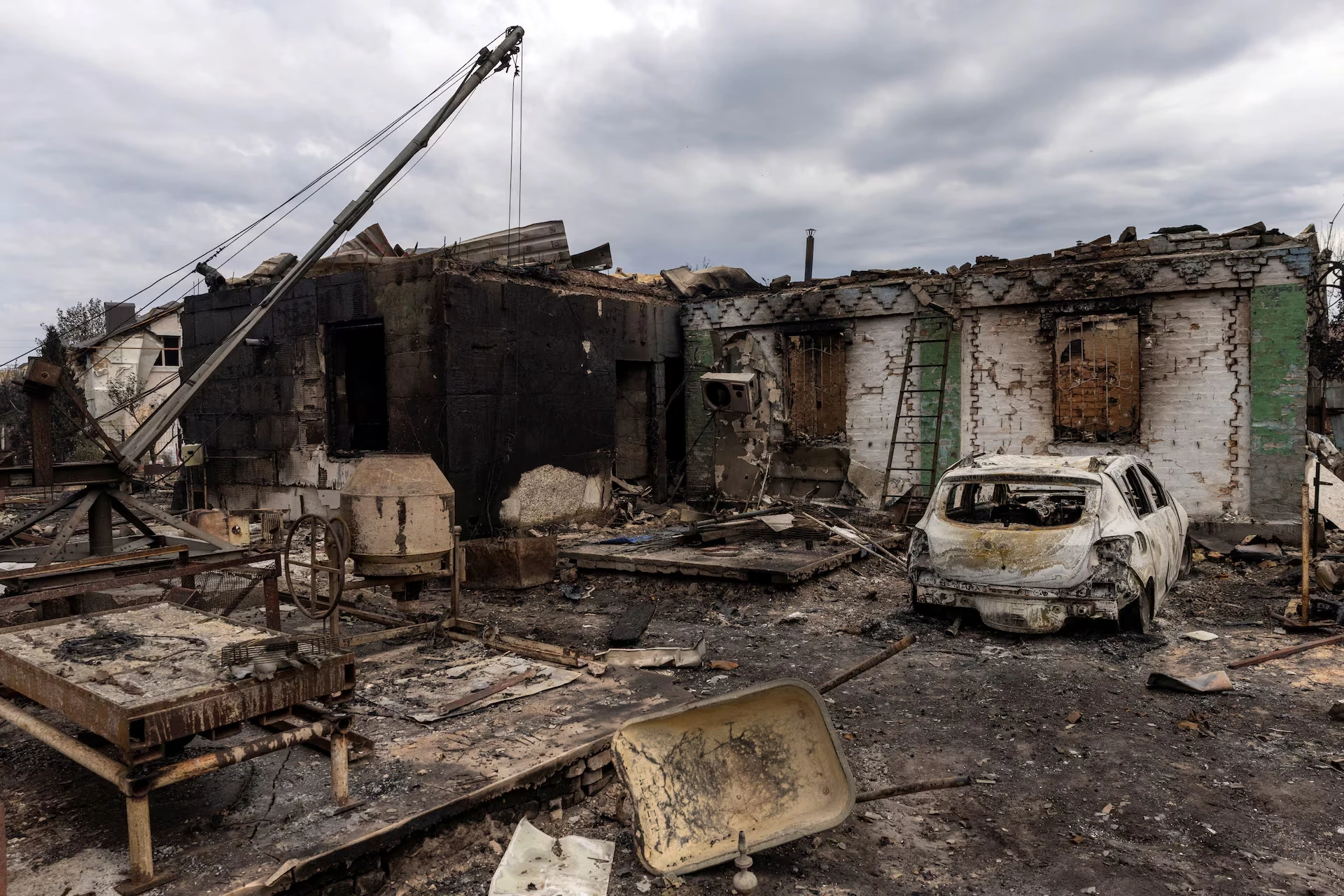
Russian officials said the attack had been repelled, that there was allegedly no damage, and that personnel had been evacuated. Yet even that version confirms the essential point: a facility in Siberia now has to live by the rules of war. Evacuation, air defense, alarms, shutdown risks and additional safety protocols are all costs, even if tanks and processing units remain intact.
Ukraine’s long-range strike strategy is increasingly focused on the oil sector. The logic is clear: Russia’s war is funded not only by budget decisions, but by an energy machine that provides hard-currency income, fuel for the army, logistics, production and internal stability. A strike on a refinery is a strike on the system that turns crude oil into the movement of war.
Ukrainian drones had already struck facilities in the Moscow region, the Volga area, southern Russia and other industrial zones. Tyumen expands that logic. If Moscow, Tatarstan or Nizhny Novgorod could still be placed within an imagined zone of reachable depth, western Siberia forces a different conversation about the scale of Ukraine’s technological evolution.
Drones have become Ukraine’s answer to its shortage of classic long-range missiles. Kyiv has not had enough ballistic systems, has depended on limited partner supplies and has faced political restrictions on the use of Western weapons against Russian territory. Its own long-range unmanned systems have reduced part of that dependence and given Ukraine an autonomous instrument of coercion.
Their advantage is not only range. They are cheaper than missiles, can be launched in large numbers, force Russia to spend costly air-defense resources and disperse protection. Even when most are intercepted, a small breakthrough rate can start a fire, halt a processing unit, disrupt repair cycles or force an enterprise to operate under restrictions.
Still, drones are not magic weapons. They carry smaller warheads, are vulnerable to electronic warfare, and depend on route, weather, guidance and accuracy. Their effect is often cumulative rather than instantly decisive. That is why the central question is not one strike on Tyumen, but whether Ukraine can maintain the tempo of such operations.
If long-range drones become a regular instrument, Russia will have to rethink the entire logic of rear defense. It is impossible to protect Moscow, refineries, oil depots, military factories, airfields, warehouses, rail hubs and Siberian facilities with equal density. Russia’s vast territory, long considered an advantage, is beginning to turn into a defensive burden.
There is also a psychological dimension. Russian propaganda has spent years selling citizens an image of the war as distant, controlled and victorious. When drones reach Siberia, that image weakens. Even without major destruction, people see that the state cannot keep the war entirely outside. It returns as sirens, evacuations, fires and closed industrial perimeters.
For the Kremlin, this is especially painful because energy is not simply a sector of the economy. It is the foundation of Russia’s state model: exports, the budget, regional elites, military fuel, social payments, ruble stability and control over the domestic market. When Ukraine strikes refineries, it is not attacking abstract industry, but the financial and logistical nervous system of the war.
At the same time, a strike on Tyumen does not mean Russian refining will collapse immediately. Such a system has reserves, repair teams, inventories, alternative routes and the ability to shift some load between facilities. But every new distant strike adds uncertainty, raises insurance, logistics and security costs, and reduces the sense of impunity.
Ukraine is creating a new norm: Russian depth is no longer a politically neutral space. It can become a zone of military risk if it sustains aggression. That is an important message not only to the military, but also to refinery managers, governors, owners of logistics chains and the federal center that allocates resources between the front and the rear.
In this sense, Tyumen is not an endpoint, but a warning. If Ukrainian drones can indeed operate at distances beyond 3,000 kilometers, Russia’s next questions will not only be what was hit, but what must now be protected, how much that protection will cost, and which facilities can no longer be considered beyond reach.
For Ukraine, such operations serve another function: they compensate for the slow pace of diplomacy. When negotiations stall and Russian missiles and drones continue to strike Ukrainian cities, long-range attacks create a different kind of argument for Moscow. They do not replace diplomacy, but they change the price of refusing it.
The risk of escalation remains. Russia may answer with new strikes on Ukrainian energy infrastructure, cities and civilian systems. But that threat exists regardless of Ukraine’s actions: Moscow already uses missile terror as its main instrument of coercion. The question is not whether Ukraine provokes Russia, but whether it can make the aggressor pay for continuing the war.
That is why the strike on the Tyumen region matters more than a single night operation. It demonstrates the technological maturity of Ukraine’s drone program, a new geography of reach and a gradual shift from defense toward systematic pressure on Russia’s war economy.
Ukraine does not have the luxury of waiting for the war to become too costly for the Kremlin on its own. It is trying to make it costly — through refineries, logistics, fuel, fear in the rear and the constant expansion of the risk zone. Tyumen has become a marker of that strategy: if Russia wants to fight a war of attrition, its own rear can no longer remain outside the attrition.