




















The U.S. military has used sea drones not for reconnaissance, rescue or testing, but for an attack. Three unmanned boats struck an Iranian naval facility at Bandar Abbas, a base important for submarine and ship maintenance. It was a small episode in a larger war, but its implications reach far beyond Iran.
The strike was another sign that the drone revolution is no longer a peripheral technology. Drones have already transformed the air war in Ukraine, but the same logic is now moving rapidly to sea. Where large ships, crews, missiles and expensive platforms once dominated, a new type of force is emerging: cheaper, more flexible, more dangerous for the enemy and less politically costly for the attacker.
U.S. forces described the operation as the first combat use of sea drones by the American military. Video of the strike showed a drone approaching a pier before an explosion sent flames, smoke and sparks into the air. Formally, the goal was to reduce Iran’s ability to attack commercial shipping in the Strait of Hormuz. In practice, it was also a test of a new weapon in real war.
According to Daycom’s assessment, the significance of the attack lies not only in the target hit, but in the American military’s adoption of a practice Ukraine had demonstrated most vividly. The sea drone is no longer an exotic instrument of the weaker side. It is becoming part of the arsenal of a state with aircraft carriers, cruisers, submarines and the most powerful navy in the world.
This is a fundamental shift. Ukraine began using naval drones at scale in the Black Sea not from a position of advantage, but from a shortage of traditional naval power. At the start of the full-scale war, Russia had far stronger warship capabilities, but Ukrainian unmanned boats gradually changed the behavior of the Black Sea Fleet itself. They attacked ships, bases and ports, and forced Moscow to move some assets away from occupied Crimea.
For Kyiv, the naval drone became an instrument of asymmetry: a cheaper machine against an expensive ship, remote risk against a crew, mass production against complex naval infrastructure. Ukraine showed that a fleet can not only be built over decades, but can also be partly neutralized by technology that bypasses the old logic of sea power.
Now the United States is applying that logic in the Persian Gulf. But the American case is different. Washington is not a poor player without a fleet; it has an abundance of traditional strike options. That is why the sea drone attack on Bandar Abbas raises an important question: if the United States could have used missiles or aircraft, why use unmanned boats?
The answer is not only cost. Sea drones allow militaries to test penetration, approach to target, sensor performance, autonomous or semi-autonomous control, coordination with intelligence and the ability to strike where the use of a large crewed vessel would be too risky. They are not a replacement for the entire fleet, but a new layer of offensive naval warfare.
An unmanned boat can get closer than a crewed ship. Its loss does not create the political trauma that dead sailors would. It can be part of a swarm, distract defenses, force the enemy to open fire, reveal protective systems or strike at bottlenecks in a port. In the war over Hormuz, such bottlenecks carry enormous importance.
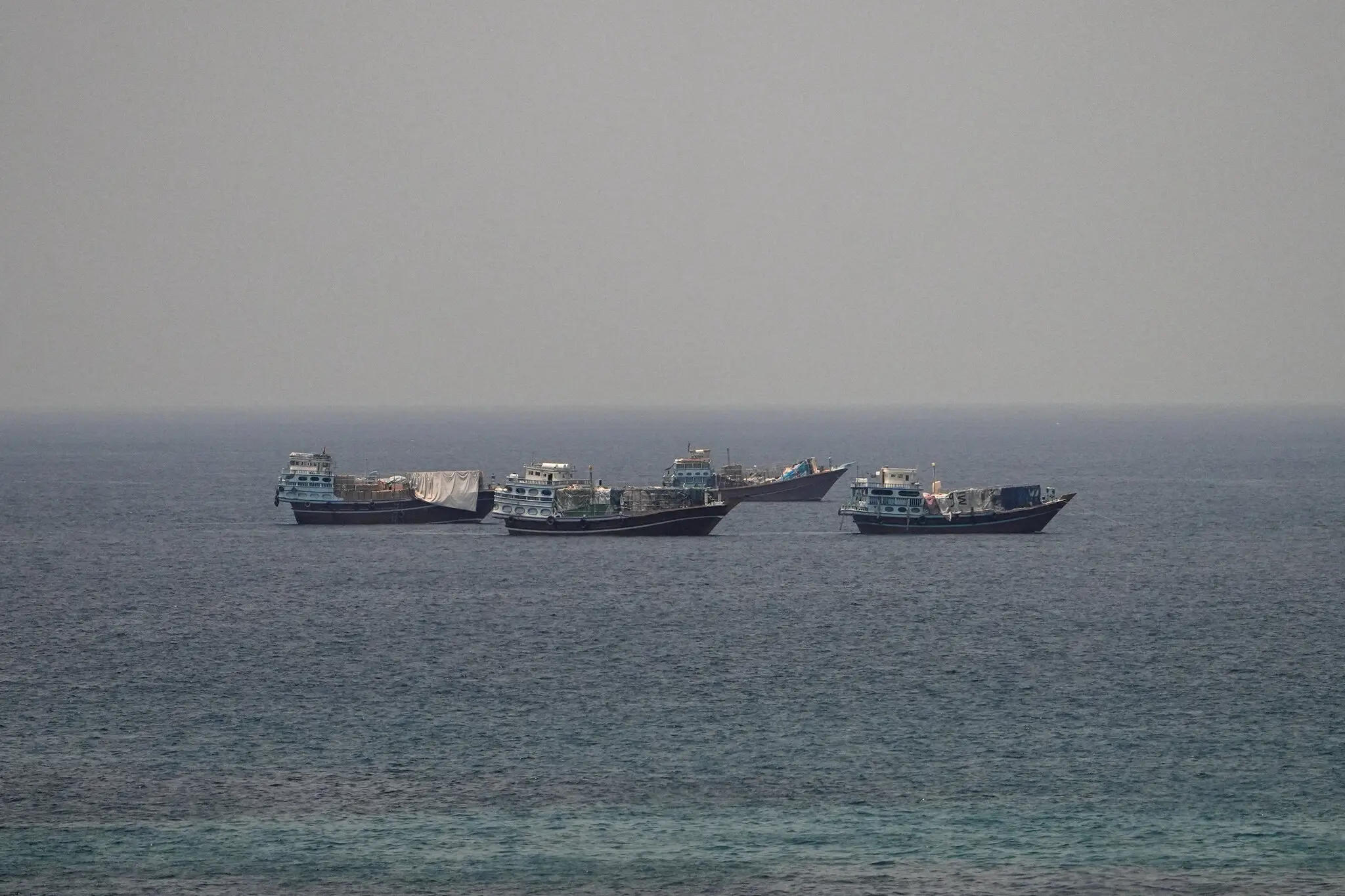
Bandar Abbas was not a random target. It is one of Iran’s key port and naval centers near the Strait of Hormuz. If Iran threatens shipping with boats, missiles, drones and coastal infrastructure, a strike on a repair or maintenance facility has tactical and symbolic meaning. The United States is showing that threats to ships can be pushed back toward Iranian piers.
Still, the effect of such an attack should not be overstated. Three sea drones do not decide control over Hormuz. They do not remove Iran’s geography, destroy its entire missile arsenal or guarantee safe passage for tankers. But they do show that Washington is ready to open new technical channels of pressure rather than rely only on aircraft and missiles.
That demonstration may matter in the long term. Navies around the world have spent decades building around large platforms: carrier groups, destroyers, frigates and submarines. Their power is obvious, but their vulnerability is also growing. Cheap drones, sensors, anti-ship missiles and autonomous systems make every large vessel an increasingly expensive risk.
Sea drones do not make aircraft carriers obsolete, but they force navies to rethink what surrounds them. The future fleet is likely to be not only a fleet of large ships, but also of unmanned surface systems, underwater robots, autonomous sensors and expendable strike platforms. Human beings will remain at the center of decision-making, but not necessarily aboard every weapon.
This also changes the economics of war. A conventional warship costs years of construction, billions of dollars, hundreds of sailors and immense political capital. A sea drone can be far cheaper, faster to produce and more flexible in use. If it is lost, it is not a naval catastrophe. If it breaks through, the enemy’s losses may be disproportionately greater.
That was the Ukrainian lesson. Russia had ships, but was forced to protect them from machines that did not fit the old hierarchy of naval warfare. Now that lesson is being used not only by countries compensating for weakness. It is being studied by those with superiority, because unmanned systems can make that superiority more adaptable.
For Iran, this is a dangerous signal. Tehran has long built its Persian Gulf strategy around saturating the space with small boats, missiles, drones, mines and coastal systems. That was its asymmetric answer to American sea power. Now the United States is showing that it can use asymmetry against asymmetry.
There is a certain irony in this. Iran spent years investing in cheaper tools meant to deter more expensive American assets. But if Washington begins to introduce sea drones, unmanned sensors and autonomous boats at scale into Gulf operations, Iran’s advantage in “small tools” will lose part of its uniqueness. The space in which Tehran felt inventive will become competitive.
For commercial shipping, the effect is double-edged. On the one hand, new American capabilities may help deter Iranian attacks and strike more precisely at facilities threatening maritime routes. On the other, the arrival of sea drones as active combat weapons makes Hormuz even more complex. Ships, missiles and aircraft are no longer the only actors there; autonomous surface craft are joining the environment.
In a narrow strait, such technological density increases the risk of error. Unmanned boats can be difficult to distinguish from civilian small craft, rescue vessels or decoys. Sides may attack faster than they fully understand the situation. The more autonomous systems enter the water, the more important identification rules, communications channels and escalation control become.
But war rarely waits for rules to mature. The technology is already on the battlefield, while law and doctrine are trying to catch up. That was true of aerial drones in Ukraine, and it is now true of sea drones in Hormuz. At first they look like a novelty, then a tactical advantage, and eventually an inseparable part of war.
The American Corsair used in the attack is part of that transition. The 24-foot unmanned boat can travel at speeds of up to 35 knots, carry up to 1,000 pounds of payload and cover more than 1,000 nautical miles. The same type of craft had already been used to rescue the crew of a U.S. Apache helicopter near Hormuz. Now it has moved from rescue to strike.
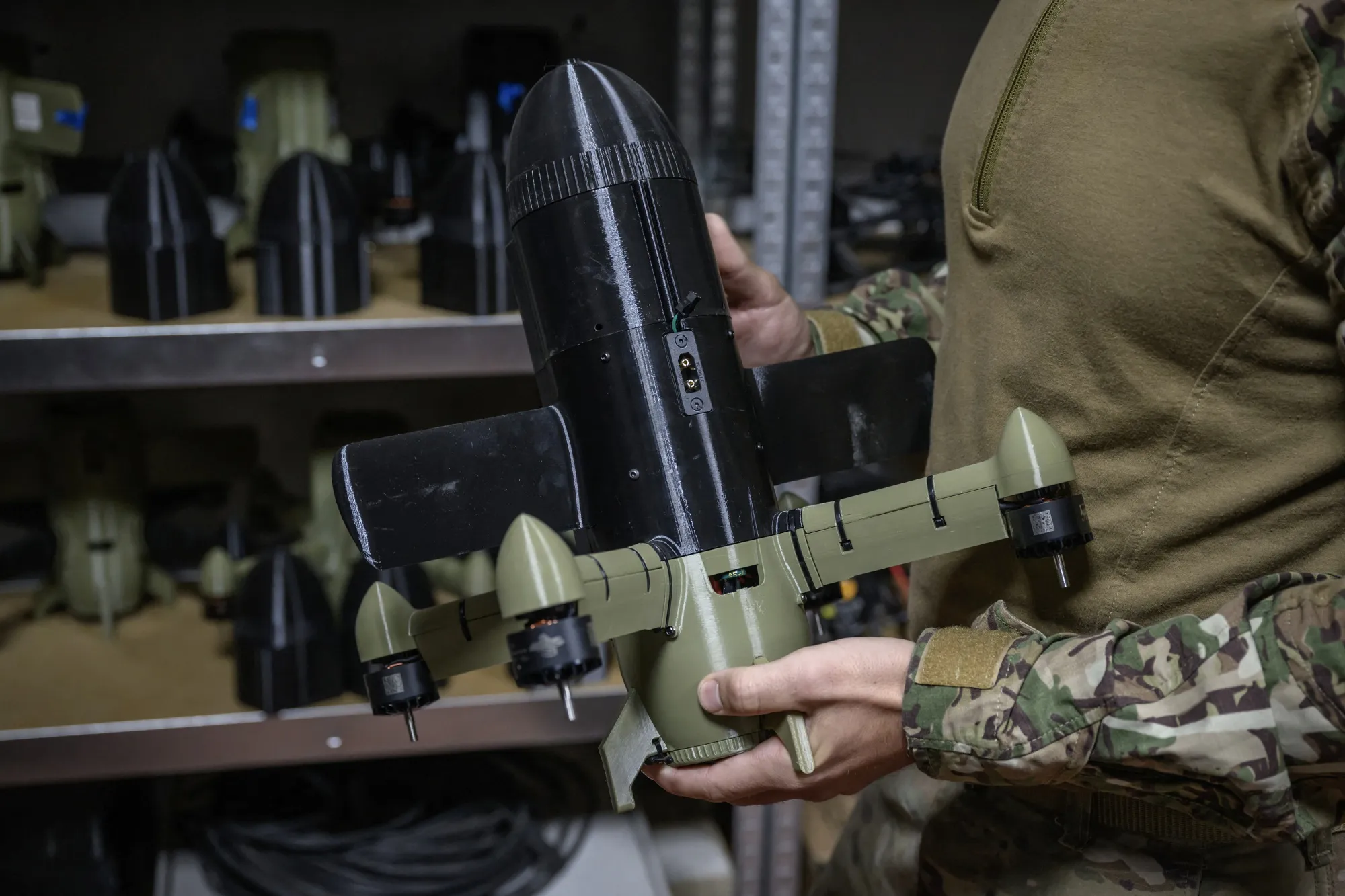
That multifunctionality is the future of unmanned systems. The same class of platform can carry cargo, conduct reconnaissance, evacuate people, act as a decoy, carry explosives or deploy sensors. Its value lies not only in the hull, but in the architecture: software, communications, autonomy, modularity and the ability to reconfigure the platform quickly for a mission.
For the Pentagon, this is also an institutional test. The American military system is traditionally strong in large programs, but often slow in operationally adopting new technologies. The combat use of sea drones in the Persian Gulf shows that command structures are trying to accelerate the move from experiment to practice. The war with Iran has become not only a crisis, but a proving ground.
That does not mean all questions are settled. Autonomous systems require secure communications, resistance to jamming, precise target recognition, cyber protection and reliable integration with other forces. The enemy learns quickly: electronic warfare, traps, decoys, anti-drone barriers and fast interceptor boats will become part of the response.
The Ukrainian experience confirms this. Every successful sea drone strike produces a new defense. Every new defense requires a new version of the drone. War becomes a cycle of adaptation, in which the advantage belongs not to whoever builds one perfect platform, but to whoever updates design, tactics and software faster.
In the Persian Gulf, that cycle may be even faster. The space is narrow, the targets are expensive, the political cost of error is high and the actors have significant technical resources. If sea drones become a regular tool, Iran and the United States will quickly build new defenses against them. Hormuz could become a laboratory of unmanned naval warfare, just as Ukraine became a laboratory for aerial and naval drones.
For the world, this means future crises around ports, straits and maritime corridors will look different. A large fleet is no longer always necessary to create a threat. A crew does not always have to be risked to conduct a strike. A major operation does not have to be declared to damage a naval facility. A small autonomous platform, data and the willingness to cross a line may be enough.
That is why the attack on Bandar Abbas matters more than one explosion near a pier. It shows that the United States has adopted the language of war first dictated by weaker and more flexible players. The sea drone is no longer an exception, but a sign of a new standard. In this war, great powers are not only launching missiles from afar; they are sending unmanned machines into the heart of enemy infrastructure.
This gives Washington more options, but also creates more uncertainty. If the United States normalizes such strikes, other states will do the same. China, Russia, Iran, Turkey, European countries and non-state actors will study the operation closely. Each will see not only American power, but an accessible model for future naval attack.
The first American combat strike by sea drones is therefore not only an episode in the war with Iran. It is the moment unmanned naval warfare enters the practice of a great power. After Ukraine, it became clear that drones could change the balance at sea. After Bandar Abbas, it became clear that even the world’s strongest navy no longer treats this weapon as secondary.