


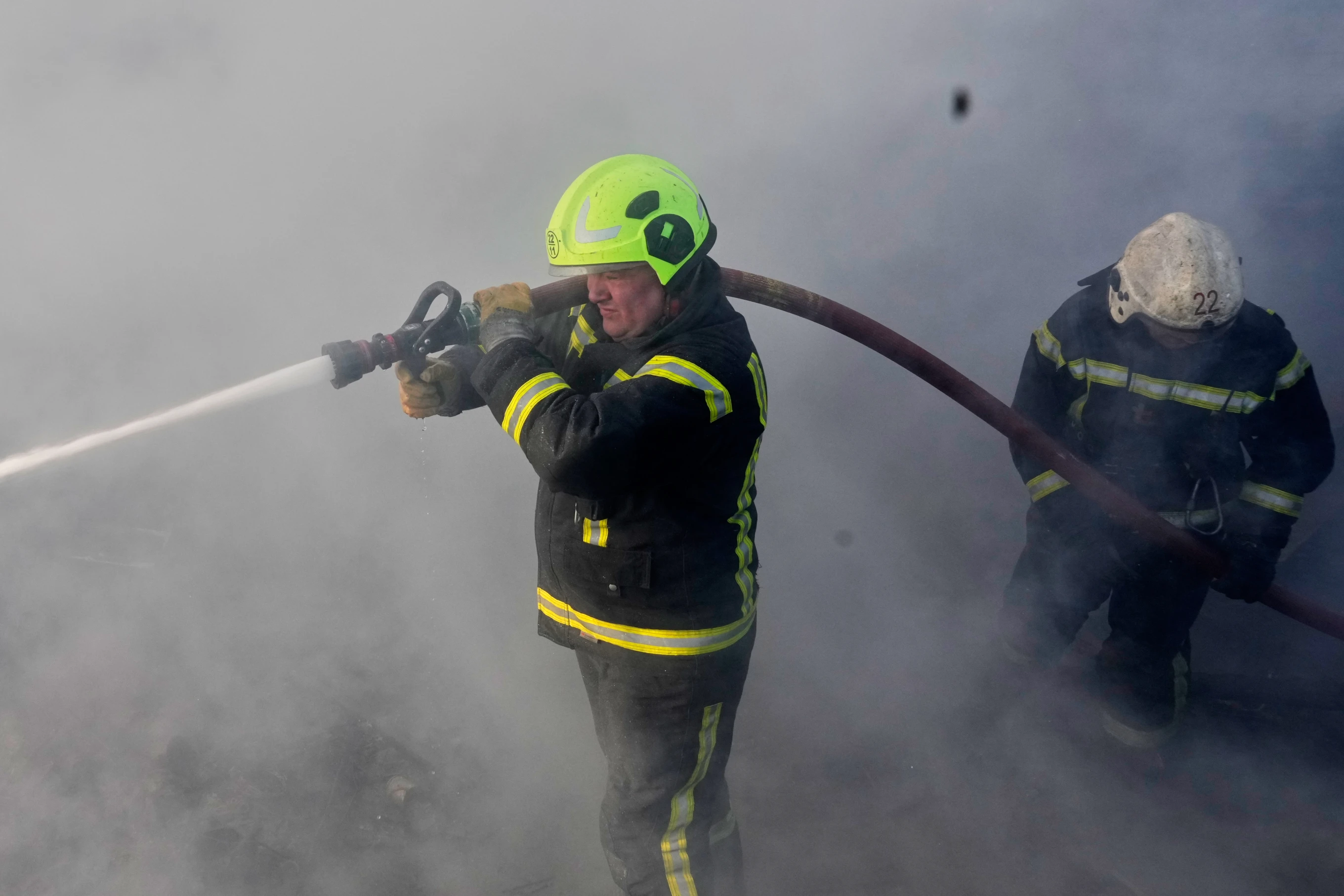


















Russia’s latest overnight assault on Ukraine once again exposed the central logic of this war: Moscow is pressing not only the front line, but also the urban rear, civilian infrastructure, and the basic sense of everyday security. The death of a civilian in Mykolaivka in the Donetsk region, along with dozens of wounded across multiple regions, was not incidental fallout from combat. It was part of a broader strategy of exhaustion, in which life far from the trenches becomes a military and political target in its own right.
In that strategy, geography matters as much as scale. When eastern, northern, and southern Ukraine come under attack at the same time — including port infrastructure in Odesa — the Kremlin is demonstrating its ability to stretch Ukraine’s response system across the full breadth of the country. That deepens pressure on local authorities, emergency services, energy networks, logistics, and ultimately on the political endurance of the state itself.
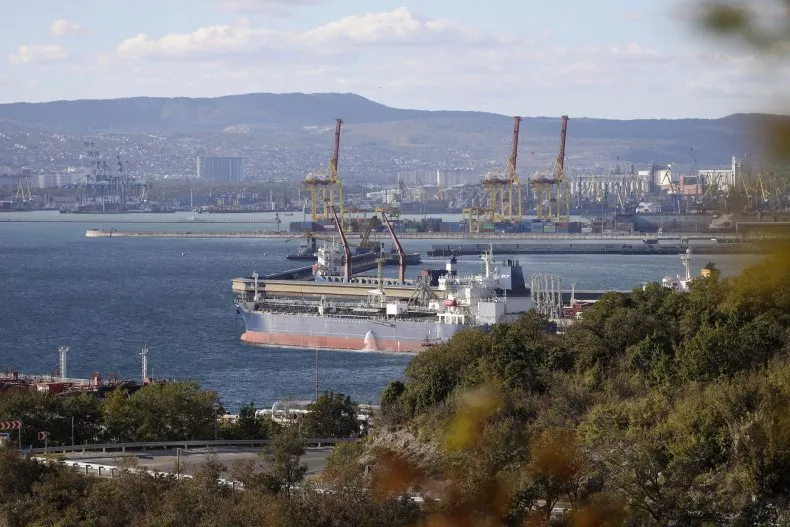
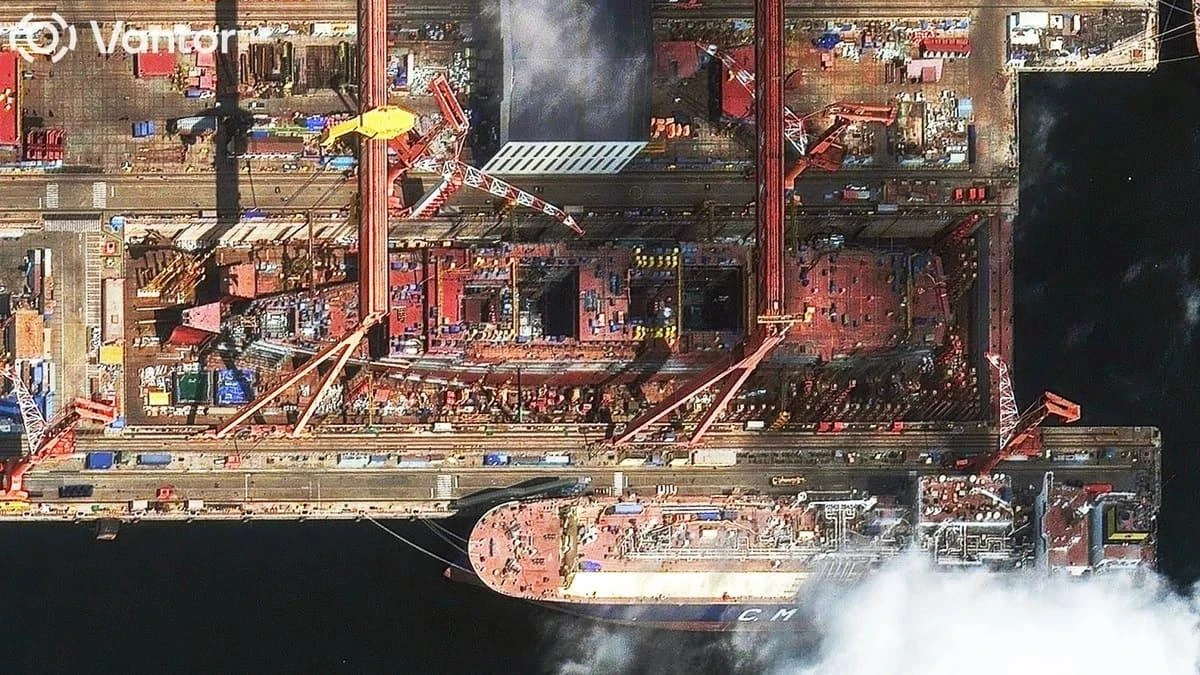
But the night also underscored another trend: Ukraine is responding not only through defense, but through increasingly focused strikes on the economic foundations of Russia’s war machine. Attacks on industrial areas in the Samara region, along with reported hits on refineries in Novokuibyshevsk and Syzran, the oil terminal in Vysotsk, and a facility in the Krasnodar region, suggest that Kyiv is systematically trying to complicate Russia’s fuel cycle. As Daycom noted in earlier analysis, oil remains for Russia not merely an export commodity, but the bloodstream of its budget, logistics, and war effort.
That strategy is becoming more legible. If Russia is trying to break Ukraine through mass aerial terror, Ukraine is trying to raise the cost of war for Russia itself by striking refining, storage, and export infrastructure. This is not a symmetrical response in the classic military sense. It is a rational response in a war of resources. To destroy, or even temporarily disrupt, refinery operations is to hit revenues, domestic fuel supply, and the resilience of export flows all at once.
The international context makes this even sharper. Attention to Ukraine’s strikes on Russian oil facilities has grown since Washington extended a temporary sanctions waiver for part of Russia’s oil trade. In practical terms, that means a 30-day license under which U.S. sanctions do not apply to shipments of Russian oil loaded onto tankers by Friday, extending an earlier waiver issued in March. For Kyiv, such a mechanism looks like a dangerous compromise: additional oil revenue can be converted into more missiles, more drones, and more pressure on Ukrainian cities.
That is why attacks on Russian oil infrastructure now look less like isolated episodes and more like an attempt to narrow, by force, the financial margin Russia still enjoys through external markets. Ukraine is effectively signaling to its allies that if the sanctions regime contains loopholes, some of the gap will be closed through military means. There is strategic calculation in that message, but also political frustration. Kyiv is reminding its partners that oil is not an abstract indicator for Russia. It is a direct resource for prolonging the war.
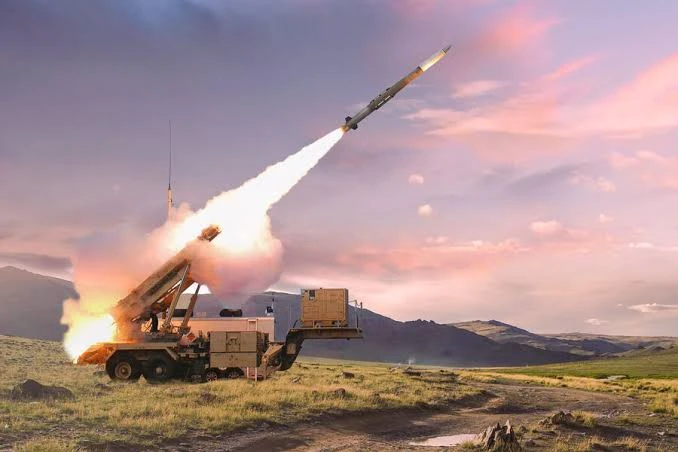
Against this backdrop, the issue of Ukraine’s air defenses becomes even more urgent. After one of the heaviest aerial attacks in recent weeks, in which at least 16 people were killed and more than 100 wounded, the protection of the skies has returned to the center of the agenda. Ukraine has built up a serious domestic arms industry, especially in drones and missiles, but it still cannot replace systems such as the U.S.-made Patriot when it comes to intercepting complex threats and shielding major cities and critical infrastructure.
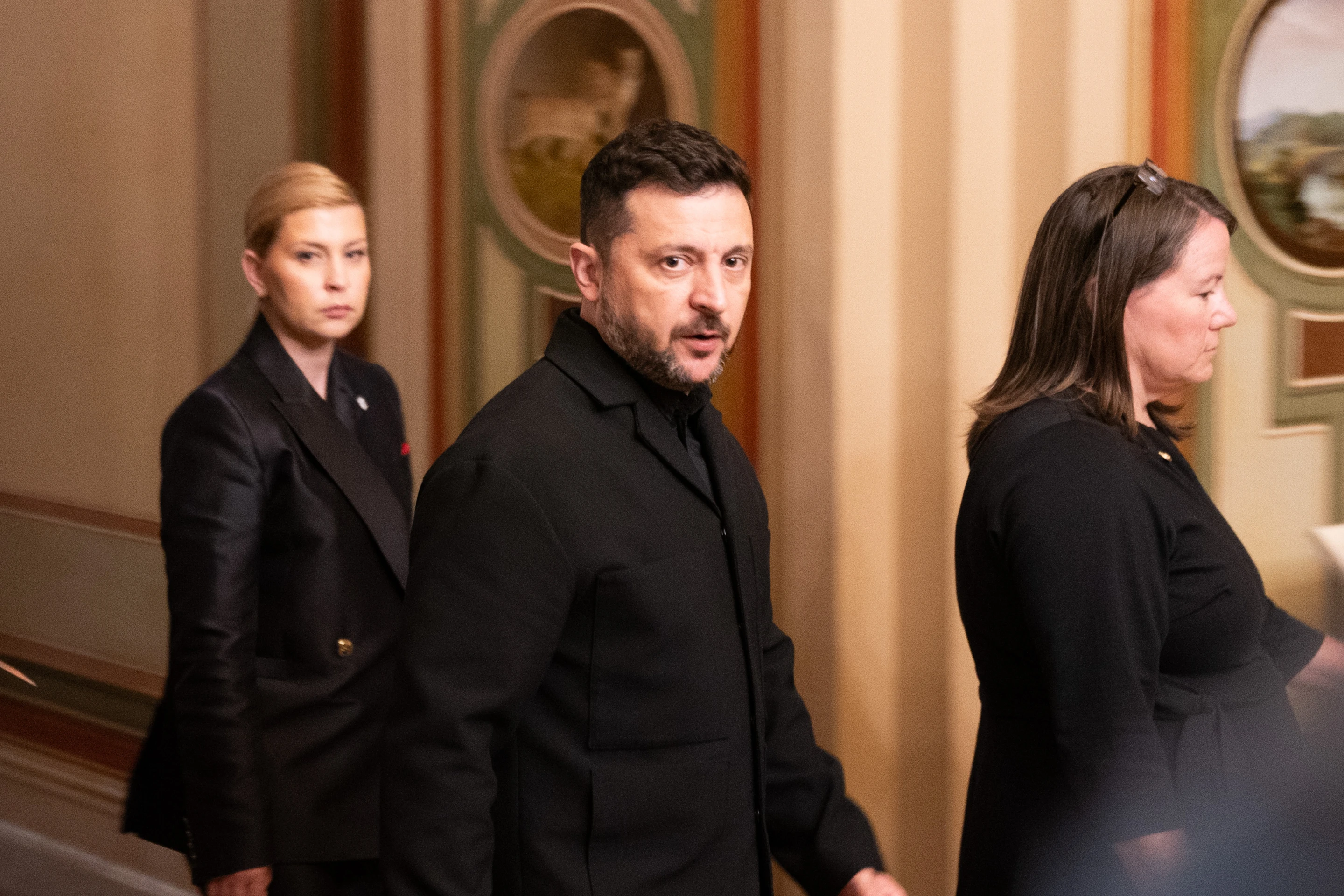
Volodymyr Zelenskyy’s visits to Germany, Norway, and Italy, as well as Ukrainian diplomatic talks with NATO, underline a basic reality: in this kind of war, air defense is no longer just a military asset. It has become a condition for the functioning of the economy, transport, exports, schools, and the basic governability of the country. The more intense Russian air attacks become, the less room remains for diplomatic formulas that are not backed by real reinforcement on the ground.
At the same time, Russia is trying to project its own image of control over the rear. Its Defense Ministry said that 258 Ukrainian drones were destroyed overnight over 16 Russian regions, as well as over Crimea and the Black and Azov seas. Such figures serve not only a military function, but a propagandistic one as well: they are meant to show that even as Ukraine expands the reach of its strikes, Russia’s internal defensive system remains intact. Yet the sheer scale of those interceptions points to another conclusion — Ukrainian pressure on Russia’s depth is no longer episodic. It is becoming regular and systemic.
Taken together, these developments describe a new phase of the war, in which the front is no longer the only arena of decisive pressure. Russia is trying to wear Ukraine down through the sky, through fear, and through the destruction of urban life. Ukraine is responding with strikes on refining, logistics, and industrial nodes — that is, on Russia’s capacity to finance and sustain a long war. In that configuration, every night bombardment and every refinery fire belong not to separate incidents, but to the same larger contest over the pace of attrition.
The central conclusion is that this war looks less and less like a linear clash of armies and more and more like a competition between two systems of endurance. The side that preserves energy, logistics, financing, air defense, and social resilience for longer will hold the strategic advantage. That is why attacks on Ukrainian cities and attacks on Russian oil infrastructure should not be read separately, but as two sides of the same war of exhaustion.