





















The war in the Middle East has entered its second month without any visible path to stabilization. Diplomatic channels still exist on paper, but the real pace of events is now being set by missiles, drones, airstrikes and a steadily widening battlefield stretching from Iran to Lebanon, Israel, Yemen and the Gulf.
The regional meeting in Islamabad was supposed to restore at least some political control over that trajectory. Instead, it underscored the opposite reality. Pakistan gathered ministers from Saudi Arabia, Turkey and Egypt and said it would host direct or indirect U.S.-Iran talks, yet neither Washington nor Tehran fully committed, and the three principal belligerents were not meaningfully seated at the same table.
That matters because mediation is now lagging behind escalation, not shaping it. Iranian parliamentary speaker Mohammad Bagher Qalibaf openly warned that American ground troops would be “set on fire” if they entered the conflict, while Pakistani diplomacy moved forward only as strikes, threats and counterthreats continued to accumulate around it.
In Daycom’s assessment, this is the defining shift of the current phase. The crisis is no longer best understood as a limited exchange of force between adversaries who still control the pace of confrontation. It increasingly resembles a regional war of exhaustion in which diplomacy survives alongside escalation, but no longer governs it.
Tehran remains one of the central pressure points. Associated Press reporting says Israeli airstrikes on the Iranian capital intensified over the weekend, targeting weapons facilities, including nuclear-related sites, while Iranian officials and allied media continued to frame the campaign as an effort to break the state’s ability to project deterrence from the capital outward.
The strategic weight of those attacks rises sharply when nuclear-linked facilities come into view. The International Atomic Energy Agency has said the Khondab Heavy Water Research Reactor, which was under construction, was hit and was not operational, adding that no radiological consequence was expected because no nuclear material was present there. Even without an immediate radiation risk, strikes on infrastructure tied to Iran’s nuclear program raise the political and security stakes of the war far beyond the battlefield itself.
At the same time, the Lebanon front is no longer peripheral. AP reports describe intensified fighting in southern Lebanon, large-scale displacement and mounting evidence that Israel’s campaign is moving beyond short-term border management toward a broader territorial and security logic. In recent days, Israeli strikes killed journalists and paramedics, while Lebanese health authorities said healthcare worker deaths had climbed further.
That is what makes the Lebanese theater so dangerous. A border war can sometimes be contained by geography. A conflict framed around security zones, prolonged military presence and the destruction of access routes is much harder to reverse. The humanitarian cost is not incidental anymore; it is becoming one of the central facts of the war.
Jerusalem offered another sign that the conflict is now penetrating spaces once treated as politically sensitive even in wartime. On Palm Sunday, Israeli police barred senior Catholic leaders from entering the Church of the Holy Sepulchre, citing wartime security concerns. The move drew outrage from church officials and criticism from foreign governments, turning what might once have been a local security decision into an international diplomatic incident.
When war begins to disrupt holy sites, journalists, medics, city life and diplomatic rituals at the same time, it stops looking like a chain of isolated military episodes. It becomes a broader regime of regional instability, one that alters the texture of everyday life as much as it reshapes military calculations. In that environment, even symbolic incidents carry strategic consequences.
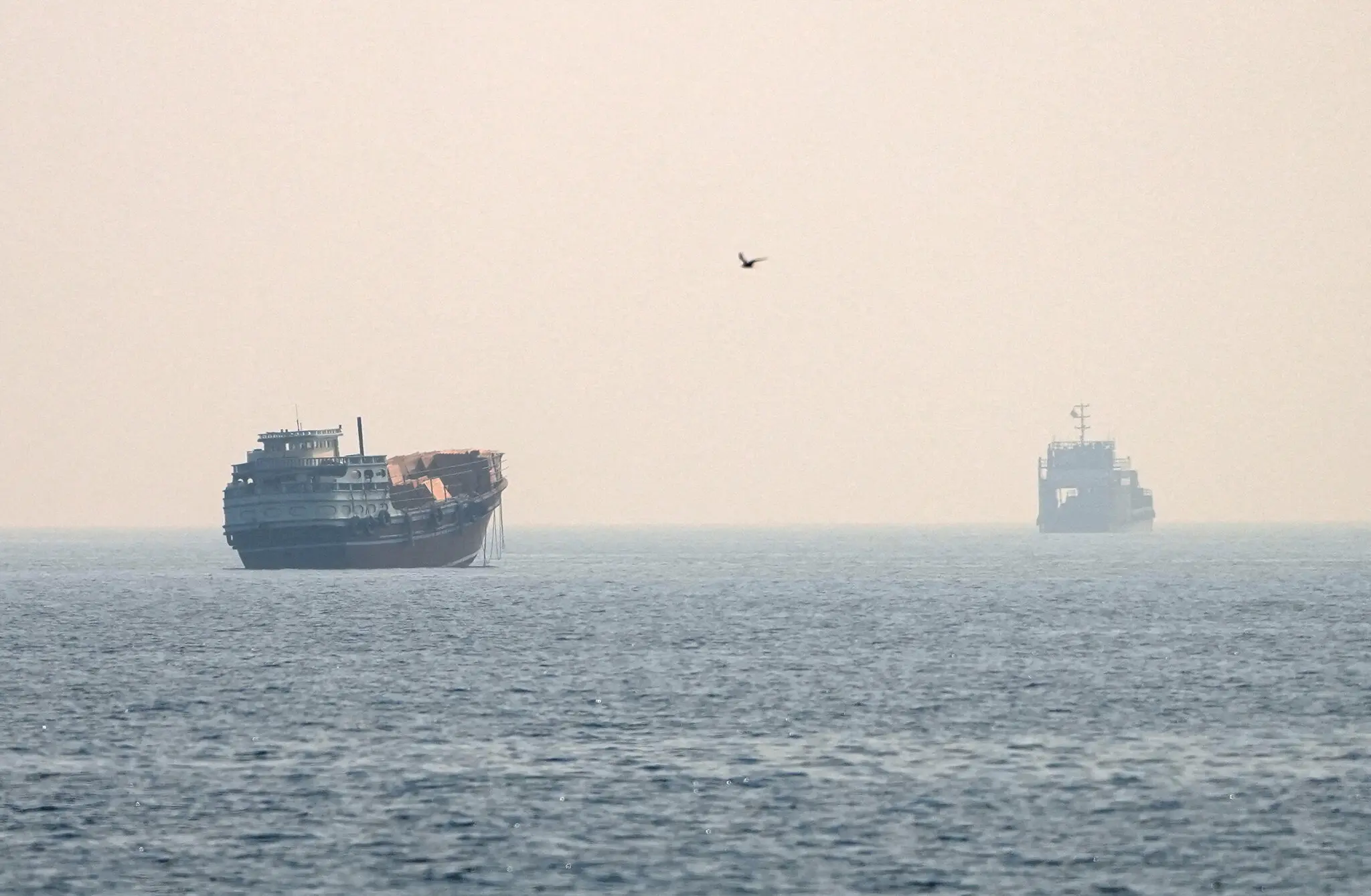
The Gulf is the other critical node in this conflict. AP reports say global concern over the Strait of Hormuz and the Bab el-Mandeb has deepened as the war drags on, with the Houthis entering the fight directly by firing missiles at Israel for the first time since this war began. That development matters not only militarily, but economically: once Yemen is fully drawn back into the confrontation, shipping risk widens from the Gulf to the Red Sea.
Markets have already started to price in that danger. AP reported that Brent crude climbed above $105 a barrel as disruptions tied to the war and pressure around Hormuz intensified, while the International Energy Agency warned that the conflict posed a “major, major threat” to the global economy. At that point, the war stops being a regional security story alone and becomes an inflation, trade and supply-chain story for the rest of the world.
For Washington, this means the war cannot remain an abstract foreign-policy file for long. The longer it lasts, the more directly it feeds back into U.S. politics through fuel prices, inflation expectations, military risk and the question of whether pressure can stay airborne or eventually drifts toward deeper ground involvement. That is why peace signals and harsher military scenarios are now being advanced at the same time.
Tehran, for its part, is reading diplomacy through the lens of force. Iranian rhetoric, as reflected in statements carried by AP, suggests that any ceasefire proposal is viewed less as a neutral peace effort than as an attempt to secure at the negotiating table what the United States and Israel could not secure quickly through bombardment. In that frame, even a pause would be unstable: not a settlement, but an interval before the next round of bargaining under fire.
The most dangerous feature of the current phase is how quickly multifront war is becoming normalized. Iran, Israel, Lebanon, Yemen, Jerusalem, the Gulf, energy routes and nuclear-linked infrastructure are no longer separate headlines. They are now one connected crisis system, and every new front makes de-escalation harder, miscalculation costlier and diplomacy thinner.
That is why hopes for a near-term diplomatic reversal remain weak. Talks without the principal combatants have not slowed the bombardment, and calls for restraint have not reduced the number of active fronts. The Middle East is entering a moment in which the core risk is no longer simply that the war will last. It is that the war will begin to rewrite the political rules of the region faster than governments can still pretend to manage it.