





















On March 26, the U.S. State Department announced $25 million in new assistance for the identification, return, and rehabilitation of Ukrainian children. Formally, this is a humanitarian measure. Politically, however, it is much more than that: Washington is once again moving the issue of Ukrainian children back to the center of the international agenda.
According to the State Department, the funds will support programs that help identify the whereabouts of children who were forcibly transferred from their homes, while also assisting the Ukrainian government and local partners in caring for those who have already been returned. In other words, the package is not limited to search efforts; it also covers post-return support.
What matters here is not only the size of the funding, but its structure. The United States is effectively acknowledging that the return of Ukrainian children is not a one-time rescue mission, but a long chain of actions: data collection, identity verification, legal support, safe routing, medical and psychological care, and then reintegration.
In Deykom’s assessment, the new $25 million is significant above all because it attempts to bring the entire process into a single framework — from identifying a child to returning that child to a safe environment. Until now, the gap between search efforts, legal work, and long-term rehabilitation has remained one of the weakest points in both the Ukrainian and international response architecture.
The scale of the problem remains immense. Ukraine’s state platform “Children of War” records tens of thousands of cases related to the deportation and forced transfer of children. At the same time, the number of those who have actually been returned is dramatically smaller. That means this is not a symbolic humanitarian issue, but one of the largest and most painful dimensions of the war.
It is also important to understand that Ukrainian and international institutions use different accounting methods. Ukrainian authorities compile operational data based on reports, police investigations, prosecutors’ work, social services, and local administrations. International bodies, by contrast, usually work only with cases that have already been independently verified and are suitable for external documentation.
That difference in numbers does not change the substance. Both Ukraine and international observers are describing the same reality: Russia systematically removed Ukrainian children, separated them from families, changed their environment, and in some cases severed them from their national and cultural identity. This is no longer a byproduct of war. It is a distinct practice of coercion and assimilation.
The legal framework around this issue has long been established. In 2023, the International Criminal Court issued arrest warrants for Vladimir Putin and Maria Lvova-Belova specifically in connection with the unlawful deportation and transfer of children from occupied Ukrainian territory. This remains one of the clearest lines of legal responsibility identified by international justice in the war.
That is why U.S. support in this area is not only humanitarian, but institutional. Identifying children, collecting evidence, tracing routes, rebuilding links with relatives, and supporting families create a foundation not only for rescuing individual children, but also for future cases involving Russian war crimes and crimes against children.
In practical terms, the return of Ukrainian children is far more complicated than a single political agreement. First, authorities have to establish where a child is. Then they must verify identity, locate legal guardians, reconstruct documents, build a communications channel, arrange a route, and guarantee the safety of transfer. Only after that does the longest phase begin — rehabilitation and the return to normal life.
This is precisely where the new U.S. funding may have real impact. In most such cases, the problem is not one specific step, but failures at the intersection of several systems. Even when a child is found, the absence of documents, family access, transport, medical support, or psychological care can delay return for weeks or months.
For Washington, the decision also matters in a broader diplomatic sense. The United States is already involved in international frameworks tied to the return of Ukrainian children, while the Bring Kids Back UA initiative has become one of the most visible humanitarian tracks in Ukrainian foreign policy. The new $25 million signals that this issue is not disappearing into the background even amid multiple global crises.
At the same time, the package underlines the limits of financial assistance. Money can strengthen identification, documentation, the return of Ukrainian children, and child rehabilitation. But money alone cannot force Russia to disclose information, open databases, confirm a child’s whereabouts, or abandon the practice of concealed transfers. That requires separate political and diplomatic pressure.
Russia’s refusal to cooperate remains the central bottleneck. Ukraine and its partners may improve tracking systems, fund legal aid, and expand humanitarian channels, but without at least minimal access to information, progress will remain slow. In that sense, the issue of children is not only humanitarian but increasingly tied to sanctions and political leverage: the cost of non-cooperation for Moscow has to rise.
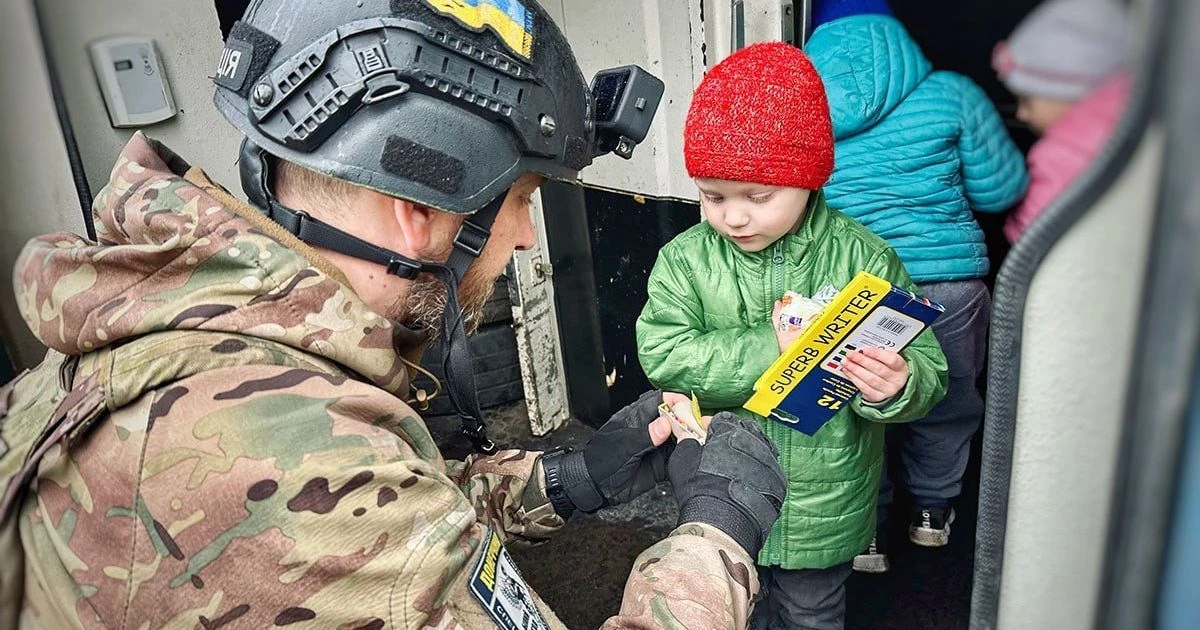
There is another essential aspect. The State Department speaks not only about return, but also about care and rehabilitation. That is a crucial distinction. A returned child does not “close the case” at the moment of crossing the border. After return come months, and sometimes years, of difficult work: rebuilding trust, overcoming trauma, adapting to school, restoring documents, and reconnecting with family.
For Ukrainian communities, this means additional pressure on social services, psychologists, doctors, teachers, and local administrations. U.S. support matters here because it recognizes that child rehabilitation is just as critical as child recovery. Without it, the state achieves only the physical transfer of a child back, not a full and meaningful return.
Politically, the package can also be read as a signal. Amid debates in the United States about foreign policy priorities, Washington is demonstrating that the issue of Ukrainian children remains important in both moral and legal terms. That matters especially at a moment when international attention is often fragmented across several wars and crises at once.
In strategic terms, the new funds may give Ukraine two concrete advantages. First, they can increase the number of cases in which the deportation of children moves from the category of testimony and suspicion into the category of verified, procedurally usable cases. Second, they can strengthen Kyiv’s negotiating position when the issue of children is again raised as a separate humanitarian condition in international talks.
Still, no one should expect an immediate breakthrough simply because a new tranche has been announced. If Russia does not change its behavior, even a well-funded system will hit clear limits. But if the money is quickly directed toward databases, family support, international coordination, legal mechanisms, and rehabilitation, it may turn fragmented efforts into a more durable model of state response.
The main conclusion is that $25 million is not a complete answer to the problem. It is an investment in the infrastructure of fighting for every child. The return of Ukrainian children, child deportation, Russian war crimes, humanitarian support, and international justice are becoming increasingly intertwined. And the longer Moscow blocks a real return process, the more important sustained external support becomes for Ukraine.