








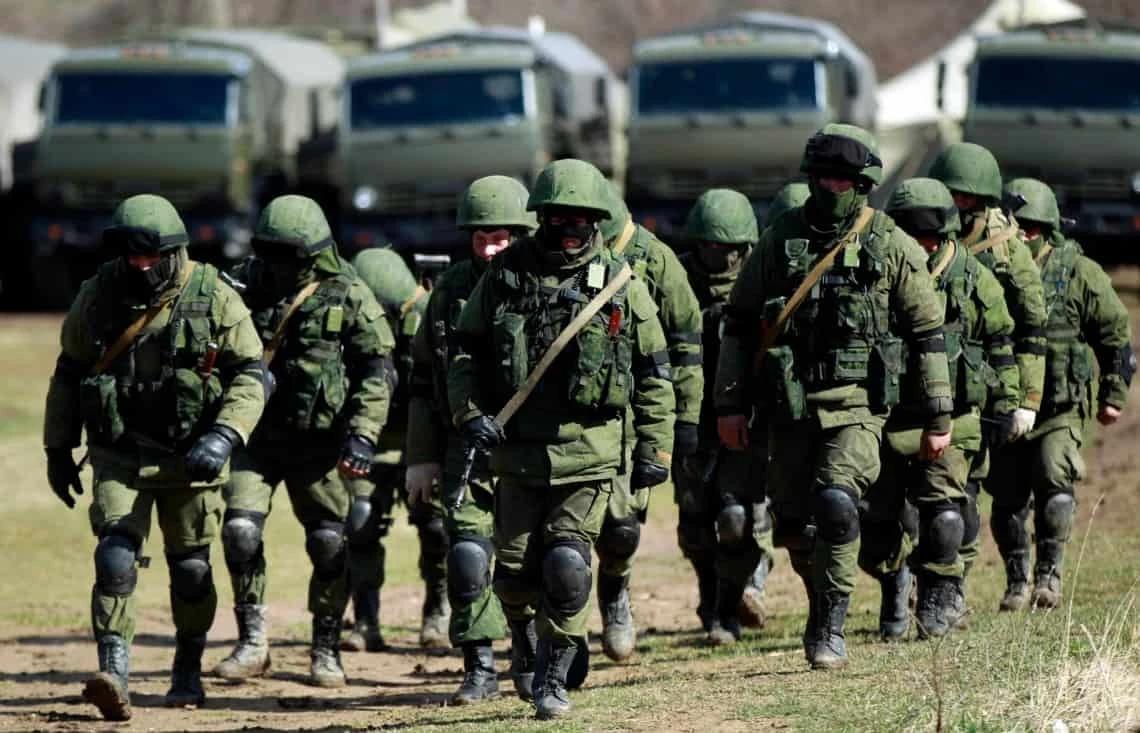















Every society has a moment of unusual clarity, when history has not yet divided people into those who carry the burden and those who are carried by it. For Ukraine, that moment came in the first months of the full-scale war. The danger was so immediate, so unmistakable, that for many men private choice nearly fused with public duty.
Not because fear had disappeared. But because meaning still seemed more honest than fear. People can endure extraordinary hardship when they believe sacrifice has dignity, and that risk is not being distributed in a humiliatingly selective way. Solidarity, in those early months, rested not only on patriotism, but on a felt sense of moral symmetry.
History, however, almost never pauses at the point of uplift. After the first surge comes exhaustion; after exhaustion comes reckoning; after reckoning comes doubt. A society may forgive much to reality in its first hour of danger. Over time, it begins to ask a sharper question: is reality dealing with everyone equally?
As Daycom’s earlier analysis suggested, this is precisely where Salem’s shadow begins to appear. It does not arrive at the moment of greatest danger, but at the moment when danger begins to feel unevenly distributed. Fear alone does not create a witch hunt. What creates it is the sense that suffering has become selective, and that humiliation is being accepted as a permissible method in service of a larger aim.
Old Salem taught a simple and terrible lesson: the fire begins not when someone is already being led to punishment, but when a community quietly agrees that one category of people may be understood less, heard less, and protected less. In the modern world, that fire is rarely literal. It is colder than that. It is administrative. It burns in the habit of seeing not a face, but a function.

That is the source of Ukraine’s present anxiety. It cannot be reduced to a question of courage, discipline, or willingness to endure hardship. At its center lies something else: whether the common burden still feels truly common. A person can accept a severe duty more easily when he believes that duty is not hiding exceptions for some and concealed payment for others.
Once that belief begins to weaken, more than mood begins to change. The moral optics of society change with it. A man in the city no longer feels simply like one citizen among others. He increasingly feels like the bearer of a debt imposed in advance, a figure seen not in his fullness — with biography, work, family, fatigue, and a right to dignity — but as an answer to a shortage.
This is how the modern logic of a witch hunt begins. Not with a sentence. Not even with coercion. But with a gaze that starts moving ahead of the person. With the moment when suspicion travels faster than understanding, and category faster than character. When society no longer wants to ask the painful question — why does the shared burden no longer feel shared? — and instead asks the easier, harsher one: who has not yet been reached?
At that point, collective powerlessness hardens into suspicion. Suspicion, in turn, hardens into silently approved roughness. For a weary society, it is always tempting to simplify the moral picture. It is much easier to see in a person not the complexity of his situation, but only a sign. Not an inner drama, but an outer category. Not a fellow citizen, but material for a quick solution.
That is how the psychological landscape of the city begins to change. The street ceases to be merely common space and becomes a space of possible interruption. A person counts not only errands and hours, but routes, crossings, pauses, places where it is better not to linger. Visibility itself begins to feel dangerous. Presence begins to feel as though it might be used against you.
 Ілюстрація — для газети Дейком
What is most dangerous is that this mechanism almost always disguises itself as necessity. That is why it is so difficult to recognize in time. A society tells itself that this is only temporary severity, only a forced deviation from the norm, only rough but historically unavoidable means. But the human psyche hears the truth earlier than official language does. It senses with great precision when order has stopped protecting and started searching.
And once that happens, it is not only trust in procedure that begins to erode. The very feeling of a shared future begins to fracture. Wherever a person no longer feels himself to be a bearer of rights, he gradually ceases to feel himself a full participant in common meaning. A quiet internal rupture opens between society and those whom it still calls its own while forcing them to live as though they were only conditionally included.
That is why the central question now is not only about the strength of the state, and not only about the scale of danger. It is a different question: can Ukraine hold on to the idea that justice is not a postwar luxury, but a wartime necessity? Because people may hold the line of defense, but only justice can hold the line between defense and inward decay.
If that idea holds, Salem’s shadow may pass nearby without covering the country entirely. Ukraine has already shown that it can resist not only external force, but also the internal temptation of limitless expediency. That is its chance. Not sinlessness, but the ability to recognize the moment when efficiency begins to consume the moral basis of the struggle itself.
If that idea fails, the fire will not be metaphorical at all. It will appear in another form: men will increasingly feel not like part of a shared future, but like raw material for it; law will increasingly be experienced not as a framework, but as an instrument of suddenness; and society, while preserving the correct patriotic language, will slowly lose mutual faith.

History offers Ukraine no clean exit. It offers a choice between two forms of survival. The first is rough, quick, outwardly effective: listen less, distinguish less, seize more, doubt less. The second is far more difficult: defend the country in such a way that people do not lose the feeling that the country is still defending them as well.
The first form may produce a short administrative result. Only the second can produce a future. A witch hunt always begins where a living person is replaced by a function. Where a tired society agrees to see not a citizen, but a sign. Not a face, but a category. Not a person, but an answer to someone else’s deficit.
That is why the ending of this trilogy cannot be written as prophecy. It can only be written as warning. Ukraine was once the country of voluntary resolve. Now it is becoming a country of moral trial. What comes next will determine whether it becomes a society that managed to carry strength through justice — or a society that allowed fatigue to melt solidarity into a witch hunt.
Salem’s shadow has not yet become fate. But it has already become the question.