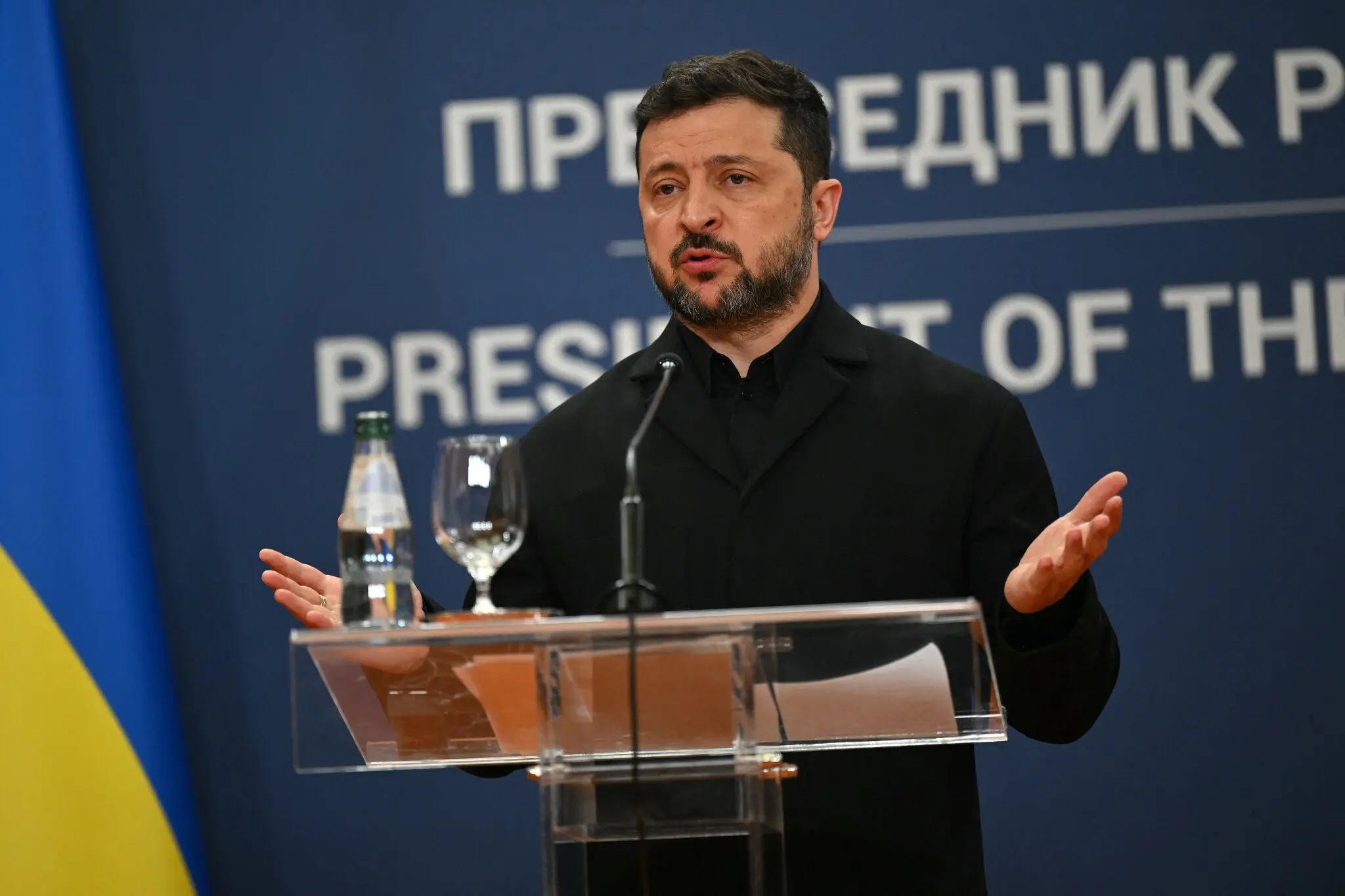


















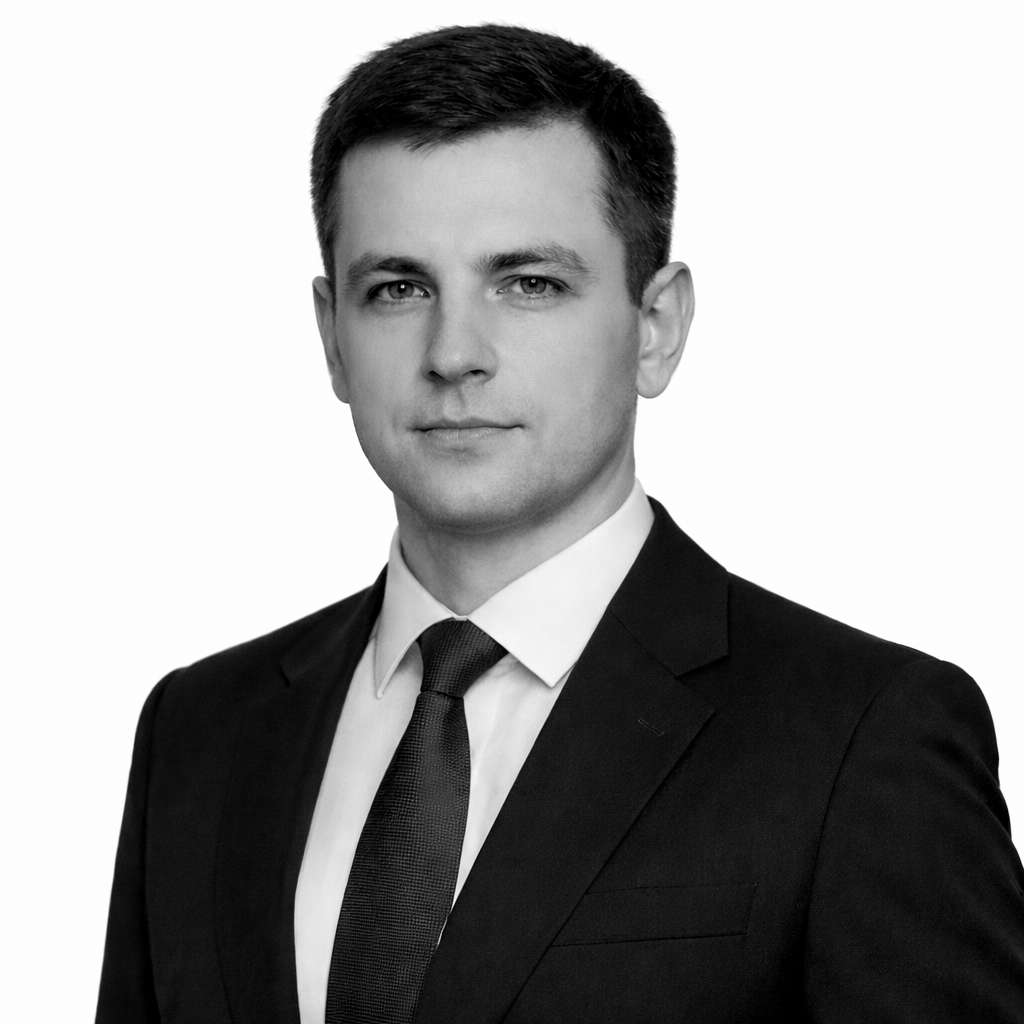

President Volodymyr Zelensky dismissed Oleksandr Syrskyi as commander in chief of Ukraine’s armed forces and appointed Joint Forces commander Mykhailo Drapatyi to replace him. The decision capped several days of public protests, open conflict within the defense establishment and a growing crisis of trust.
Only days earlier, Zelensky had effectively sided with Syrskyi by removing Defense Minister Mykhailo Fedorov. Their disagreement could no longer be presented as an ordinary institutional dispute: the two camps represented fundamentally different ideas about how Ukraine should fight a prolonged war.
Fedorov embodied technological acceleration — the mass deployment of drones, battlefield robotics, procurement reform and an effort to turn innovation from a collection of successful projects into the organizing principle of the military. Syrskyi was increasingly associated with centralized command and attritional ground warfare.
According to Daycom’s earlier analysis, the dismissal was more than a concession to protesters or a resolution of a personal feud. Zelensky acknowledged that a dispute over military strategy had become a crisis of public legitimacy capable of weakening the armed forces more rapidly than any single personnel mistake.
Thousands of Ukrainians took to the streets after Fedorov’s removal. Veterans, serving soldiers and public figures joined the criticism, while demonstrators demanded not only the minister’s return but Syrskyi’s departure. Even after the change in command, protest organizers did not immediately abandon plans for further rallies.
In a country under martial law and unable to hold elections, mass demonstrations have become one of the few mechanisms through which society can directly pressure the government. The same mechanism had previously forced the administration to reverse decisions perceived as threatening Ukraine’s anti-corruption institutions.
Public influence over the selection of military commanders, however, creates a dangerous precedent. An army cannot be run according to approval ratings, slogans or the popularity of individual officials. Yet a closed command hierarchy cannot simply disregard a collapse of confidence among the people fighting and sustaining the war.
That balance became Zelensky’s central dilemma. Keeping Syrskyi risked deepening the split, alienating soldiers and turning Fedorov’s dismissal into a symbol of the old system defeating reform. Removing him, by contrast, risks creating the impression that strategic appointments can be determined by street pressure.
The president chose the option that reduced the immediate danger. Open conflict between the Defense Ministry, General Staff and frontline commanders could have damaged coordination, mobilization and morale. Under sustained Russian pressure and amid a severe personnel shortage, such an internal battle would have been especially destructive.
Drapatyi emerged as the most plausible compromise. He belongs to a younger generation of Ukrainian generals, has extensive frontline experience and is regarded as an officer who supports tactical innovation, direct accountability and closer communication between headquarters and combat units.
His appointment also signaled a victory for the reformist camp associated with Fedorov. Drapatyi publicly backed the former minister during his dispute with Syrskyi, arguing that silence did not protect the army but merely allowed mistakes to accumulate. Fedorov later described the appointment as a new source of hope.
Drapatyi does not inherit a clean slate. He takes command of a system facing several overlapping crises. He must hold the front, continue the transition to a corps-based structure, accelerate the supply of weapons and drones, strengthen air defense and help develop a more credible approach to mobilization.
The central demand is not abstract modernization, but the closing of the gap between technological advantage and everyday battlefield practice. Ukraine has built a formidable drone industry, yet on some parts of the front innovation still depends heavily on individual commanders, private fundraising and volunteer networks.
Making unmanned systems a foundation of the armed forces requires far more than buying new equipment. It demands faster procurement cycles, rapid testing, secure data networks, the integration of intelligence with strike capabilities and commanders willing to abandon procedures designed for an earlier era.
This transformation lay at the heart of the dispute. For Fedorov’s supporters, technology offered a way to compensate for manpower shortages and reduce casualties. For the traditional military hierarchy, drones remained only one tool in a war where territory is ultimately held by infantry and decisions must move through a strict chain of command.
Both positions contain part of the truth. Drones do not eliminate the need for soldiers, fortifications, logistics or discipline. But an army that consumes manpower according to the logic of a previous generation risks losing to an opponent that scales automation faster and adapts more efficiently.
Syrskyi leaves office with a complicated legacy. He played a major role in the defense of Kyiv, the Kharkiv counteroffensive and other decisive campaigns. Yet his reputation became increasingly shaped by disputes over high casualties, rigid command practices and the slow pace of institutional reform.
By publicly thanking him for his service, Zelensky sought to avoid humiliating a general who had led the armed forces for more than two years. That mattered for more than appearances. A theatrical punishment of the commander in chief could have demoralized the officer corps and made a necessary transition look like a political purge.
The personnel change does not resolve the question that triggered the crisis: what role Fedorov will now play. Zelensky has offered him another government position connected to technology, but protesters have demanded his return specifically to the Defense Ministry.
For the president, that means Syrskyi’s dismissal may only postpone the political reckoning. If Fedorov remains outside the defense system, his supporters may view Drapatyi’s appointment as a partial concession. If he returns, Zelensky will have to explain why the crisis began with his removal in the first place.
Behind the personnel drama lies a more serious problem: the exhaustion of the model of national unity created in 2022. At the beginning of the full-scale invasion, society was prepared to suspend most political disagreements in the name of survival. After years of war, automatic trust has largely disappeared.
Ukrainians increasingly demand answers about mobilization, casualties, procurement, command decisions and responsibility. That does not necessarily indicate a weakening of the will to resist. On the contrary, society wants reassurance that the state is using scarce human and material resources intelligently.
The worst response would be to dismiss all criticism as a threat to unity. Russia will undoubtedly exploit Ukraine’s internal divisions. But allowing mistakes to accumulate under the pretext that public debate helps the enemy would be even more dangerous.
Drapatyi’s appointment gives Zelensky an opportunity to rebuild the relationship between political leadership and military command, but it guarantees nothing. The new commander must prove that technological warfare is not merely an attractive slogan, but a method capable of changing operations, preserving lives and producing measurable battlefield advantages.
The dismissal is therefore a warning to Ukraine’s entire political system. In a long war, national resilience does not depend on the absence of disagreement. It depends on whether institutions can respond to disagreement without collapsing. Zelensky has restored part of the lost balance, but the real test will not be quieter streets. It will be change at the front.