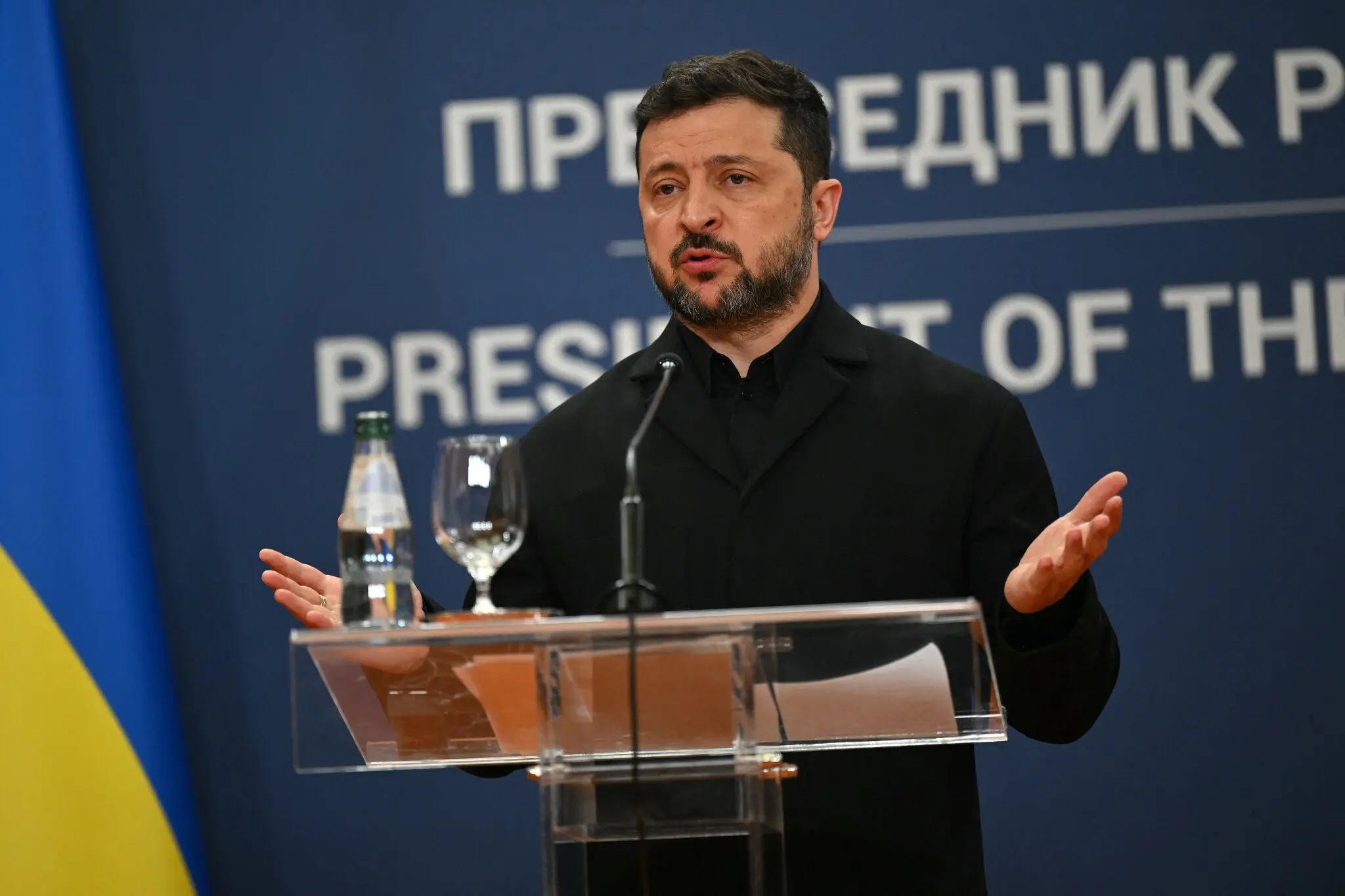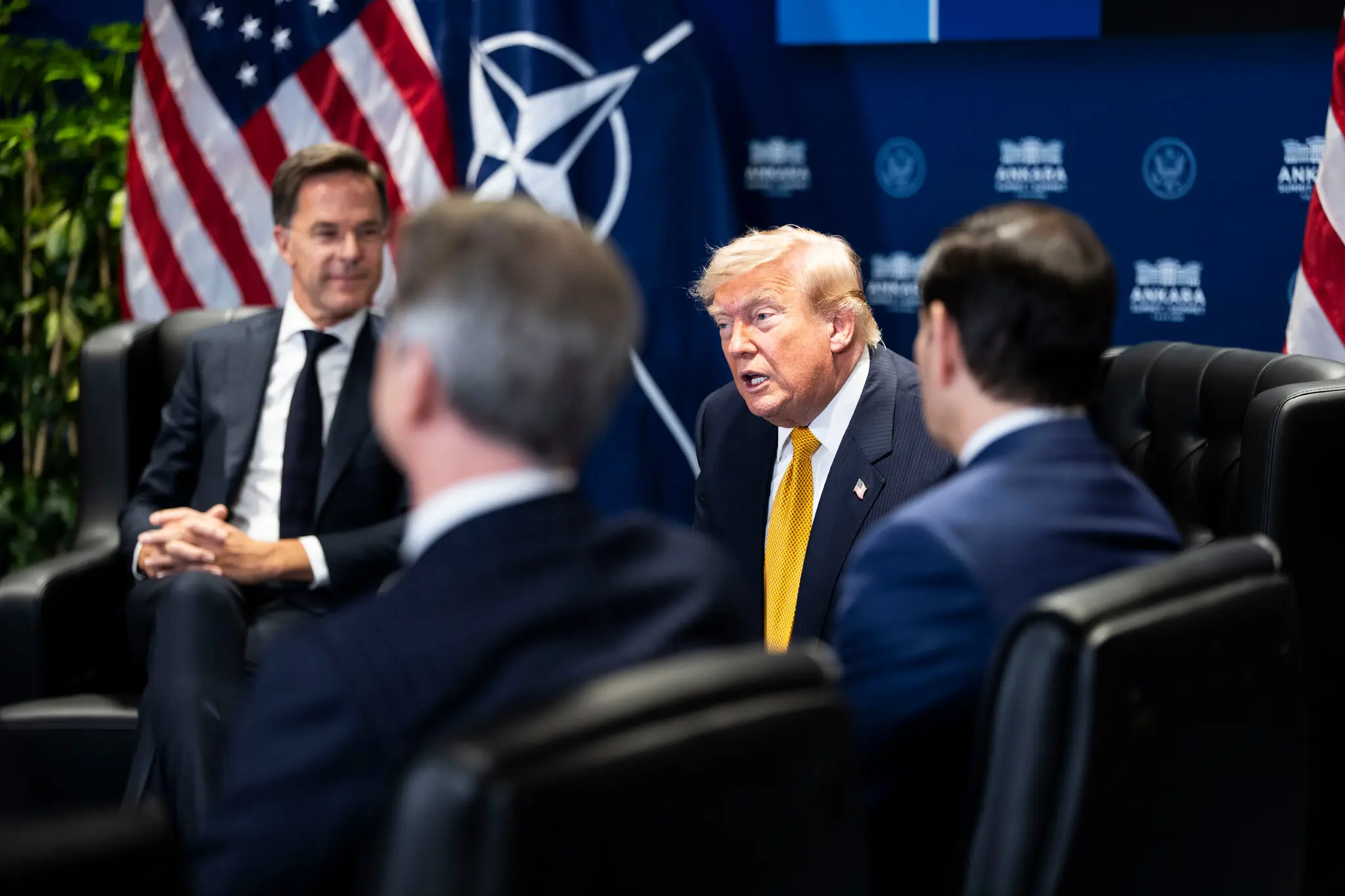





















Volodymyr Zelensky is arriving in Washington as the United States Senate approaches a decision that could significantly raise the economic cost of Russia’s war. All 100 members of the chamber have been invited to an evening meeting with the Ukrainian president.
The formal reason for the visit is the funeral of Republican Senator Lindsey Graham. Yet the political significance extends far beyond the ceremony: one of the central issues will be the sanctions legislation Graham had championed for nearly a year.
Voting could begin while Zelensky is in the American capital. The bill is intended to reduce Russia’s energy revenues, intensify pressure on financial institutions and make it more difficult for countries and companies to help Moscow circumvent existing restrictions.
According to Daycom’s earlier analysis, the meeting with the full Senate gives Zelensky a rare opportunity to address both American parties at once. His task is not merely to seek support for Ukraine, but to turn the political emotion surrounding Graham’s death into legislative action.
The bill already has more than 60 co-sponsors, enough to overcome the procedural obstruction that often blocks major legislation in the Senate. But the votes alone do not guarantee passage: Senate leaders must still find room in a crowded schedule and settle the final language.
After clearing the Senate, the measure would need approval from the House of Representatives before reaching Donald Trump’s desk. The president has indicated that he may support the initiative as part of Graham’s political legacy, but he has not given it unconditional backing.
The original version proposed a sweeping 500 percent tariff on goods from countries purchasing Russian energy. The mechanism was so severe that it risked provoking a major trade confrontation with some of the world’s largest economies.
The revised bill lowers the maximum tariff to 100 percent. The measures would target the largest purchasers of Russian oil and gas, as well as countries most actively helping Moscow evade energy sanctions.
The list would be reviewed every 180 days, turning it into a continuing instrument of pressure. A country could reduce its exposure by cutting dependence on Russian resources or demonstrating that it was making substantial changes to its import structure.
Limited exemptions are expected for some gas buyers. They could apply when a country accounts for only a small share of Russian gas exports and is taking meaningful steps to reduce those purchases.
China and India remain the most consequential potential targets. Since the beginning of the full-scale invasion, they have become crucial markets for Russian oil, buying enormous volumes even as Moscow offers substantial discounts.
The economic logic is to transfer the risk from Russia to its customers. Washington wants governments and companies to choose between access to the American market and continued participation in the financing of Russia’s energy sector.
This is a much more aggressive approach than freezing the assets of selected officials. Secondary tariffs could reshape international trade by raising the cost of cooperation with Moscow even for states that have never joined Western sanctions.
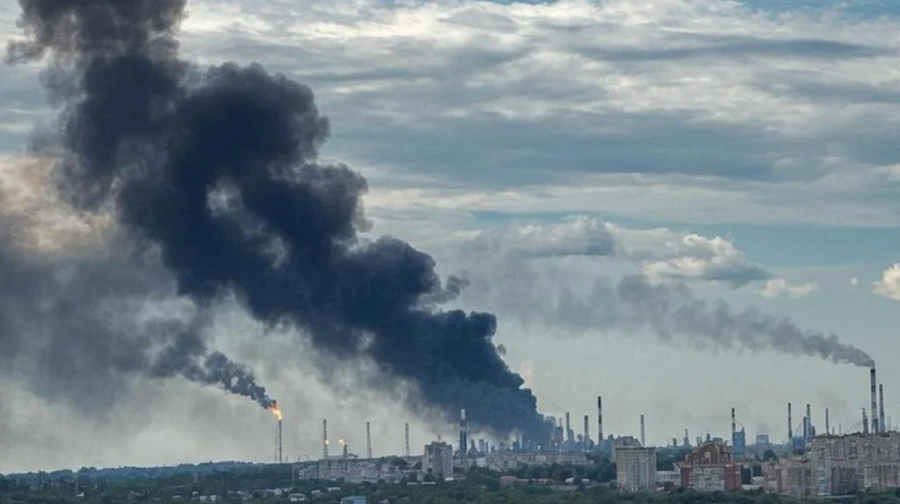
For Ukraine, the appeal is clear. Oil and gas remain among the Kremlin’s most important revenue sources, helping finance the military, missile production, imported components and the administration of occupied Ukrainian territory.
Previous restrictions complicated Russian exports but did not stop them. Moscow assembled a shadow fleet, expanded the use of intermediaries, concealed the origin of cargoes and redirected payments through financial channels less dependent on the dollar.
The new legislation would specifically target vessels, companies and foreign intermediaries involved in sanctions evasion. The consequences could reach beyond Russian operators to insurers, shippers, traders and payment networks supporting Moscow’s exports.
The bill also provides for mandatory sanctions against Vladimir Putin, senior Russian political and military officials, oligarchs, state-owned enterprises and companies supporting the country’s defense-industrial complex.
In the financial sector, the measures could affect Russia’s central bank, Sberbank and Gazprombank. In energy, they could extend to major Arctic projects, including Yamal LNG and the Arctic LNG developments.
The legislation is therefore aimed not only at current oil income, but also at Russia’s future capacity to expand production and exports. Arctic projects depend on advanced technology, international financing and complex logistics that sanctions can make more expensive.
For Moscow, the most damaging outcome would be pressure applied across several levels at once. Restrictions on banks disrupt payments, sanctions on tankers complicate transportation, and tariffs on buyers reduce demand for Russian commodities.
Implementation, however, would depend heavily on the U.S. president. The legislation allows the White House to suspend some sanctions or tariffs if the president certifies that doing so serves American national interests.
That provision has alarmed some lawmakers. They support stronger pressure on Russia but do not want to give Trump overly broad tariff powers that could be used in negotiations with China, India or other countries.
The debate is therefore not only about Ukraine. The Senate is also determining the limits of presidential authority in trade and foreign policy, where tariffs have increasingly become a universal instrument of coercion.
The White House may view such flexibility as an advantage. The threat of 100 percent duties could give Trump leverage in bilateral negotiations: a country reduces purchases of Russian oil, and Washington postpones or waives the penalties.
Critics see the opposite danger. If exemptions are granted selectively, the law will lose predictability, and powerful states may secure special treatment without ending their economic support for Russia.
Zelensky must therefore persuade senators not only to begin voting but also to preserve the mechanism’s effectiveness. A measure that is too rigid may fail to pass Congress; one that is too flexible may become little more than a political declaration.
Meeting the entire Senate allows the Ukrainian president to speak separately to Republicans aligned with Trump and Democrats concerned about the expansion of presidential power.
For Republicans, the central argument is that economic pressure may push Moscow toward negotiations without increasing direct American military involvement. For Democrats, the case rests on creating a controlled, transparent and legally binding system of support for Ukraine.
Graham’s legacy gives the vote additional significance. Shortly before his death, he had visited Kyiv and continued pressing his colleagues to treat Russia’s energy revenues as the central vulnerability of the Kremlin’s war economy.
His death has created a rare moment of bipartisan concentration. A bill that had remained stalled for nearly a year is now being viewed not only as a foreign-policy instrument, but also as the completion of a major final initiative by an influential Republican senator.
That symbolic momentum will not last indefinitely. After the summer recess, Congress will return to budget disputes and domestic political battles, and the sanctions measure could once again become trapped between the administration’s priorities and lawmakers’ electoral calculations.
Zelensky’s presence therefore has a practical purpose. He is not coming merely to ask for general expressions of solidarity. He is seeking to push the Senate toward action during a brief political window in which the votes, the legislative calendar and the memory of the bill’s chief sponsor have aligned.
Even passage would not guarantee an immediate collapse in Russian revenues. Markets adapt, trade routes change, and China and India possess enough political and economic weight to resist American pressure.
Yet the danger of losing access to the U.S. market could alter the calculations of banks, insurers and major corporations. Governments that continue buying Russian oil may demand deeper discounts, reduce volumes or shift transactions into more expensive and hazardous channels.
For the Kremlin, the likely consequence would not necessarily be the end of exports, but a decline in profitability. In a war of attrition, the gap between a barrel sold and the revenue ultimately received has strategic importance: the larger the discount and the higher the transport cost, the less money remains for the military.
Zelensky’s Senate meeting is therefore part of a broader struggle over the structure of American pressure. Ukraine wants to move beyond cycles of statements and isolated aid packages toward a durable system aimed at the financial foundation of Russia’s war.
The central question is not whether senators will remember Lindsey Graham with warm words. It is whether they will turn his final major bill into an instrument capable of making the largest buyers of Russian energy pay a real price for sustaining the Kremlin.