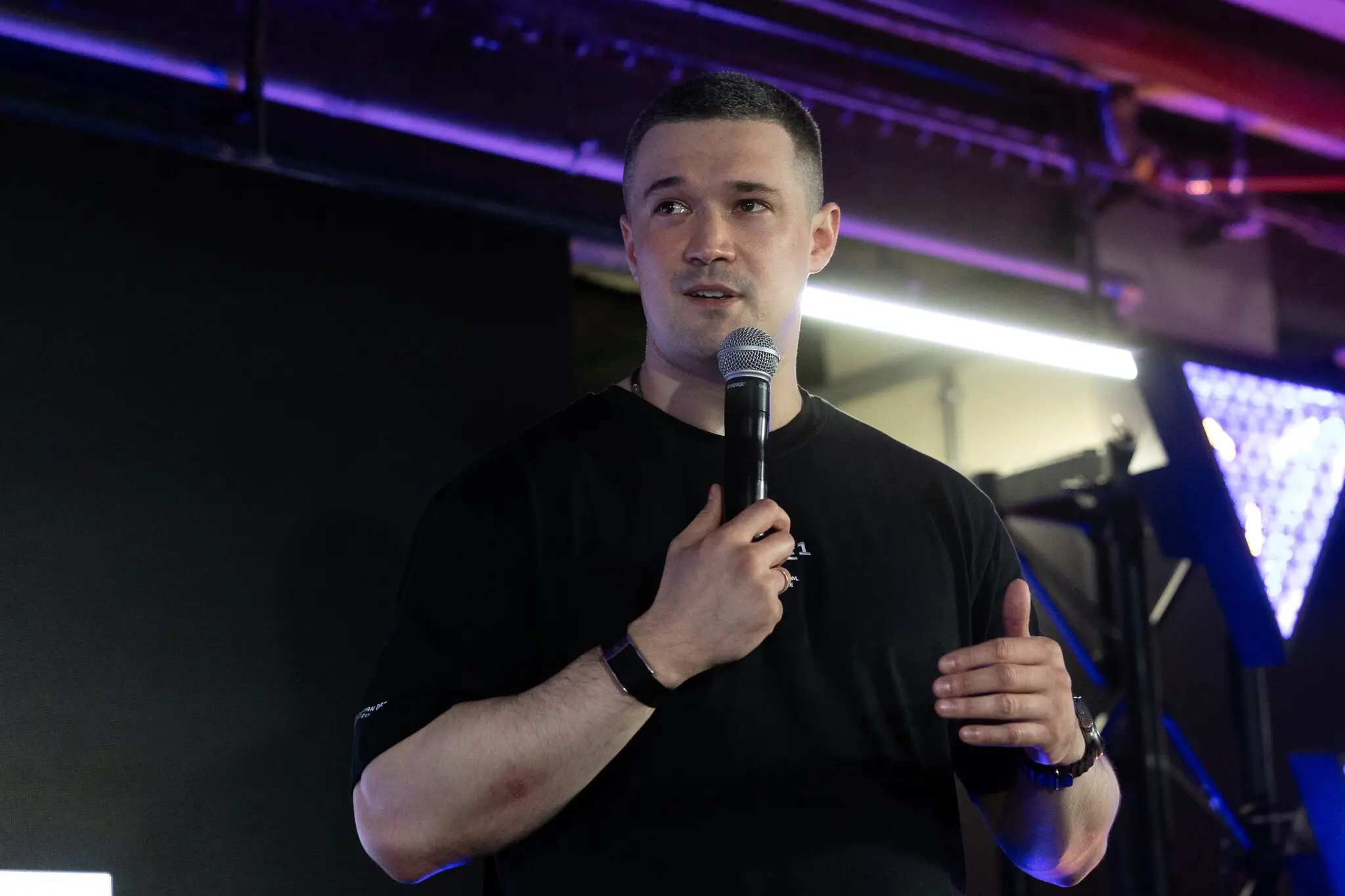













Volodymyr Zelenskyy has tried to contain a political fire that began with his own decision to remove Mykhailo Fedorov. After protests in Kyiv and other Ukrainian cities, the president turned to a new figure for the Defense Ministry: Yevhenii Khmara, a security official linked to some of Ukraine’s most effective strikes inside Russia.
The choice has an obvious logic. Zelenskyy is not bringing Fedorov back, but he is also not handing the ministry to a figure of old military inertia. Khmara has experience in technological combat operations, and the units associated with him have played a role in long-range attacks on Russia’s oil infrastructure, logistics and defense industry.
In this move, the president is trying to do the hardest thing: preserve the course toward drone warfare without the man who became its most visible political symbol. But the personnel maneuver does not erase the deeper problem. Fedorov’s dismissal has already turned into a public argument over who controls the future of Ukraine’s army.
According to Daycom’s assessment, the Fedorov crisis has become the first major collision between society’s belief in innovative warfare and the president’s need to keep the system manageable. Ukraine is not merely arguing over a minister. It is arguing over speed, power, losses, procurement and the limits of generals’ influence.
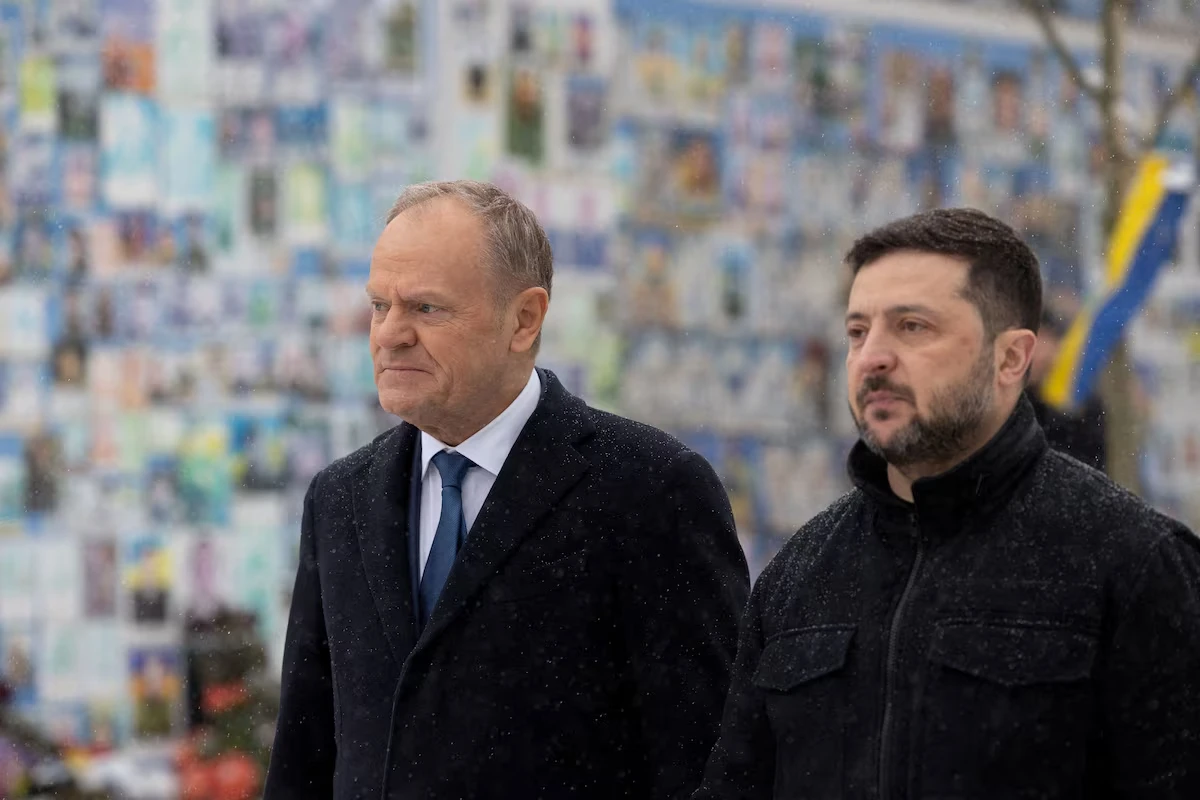
The protests outside the president’s office were rare for a country living under full-scale war. People chanted “Shame,” carried signs asking “For what?” and warned that Russians would be celebrating. This was not a routine party demonstration. It was a reaction to the feeling that Ukraine might be taking a strategic step backward.
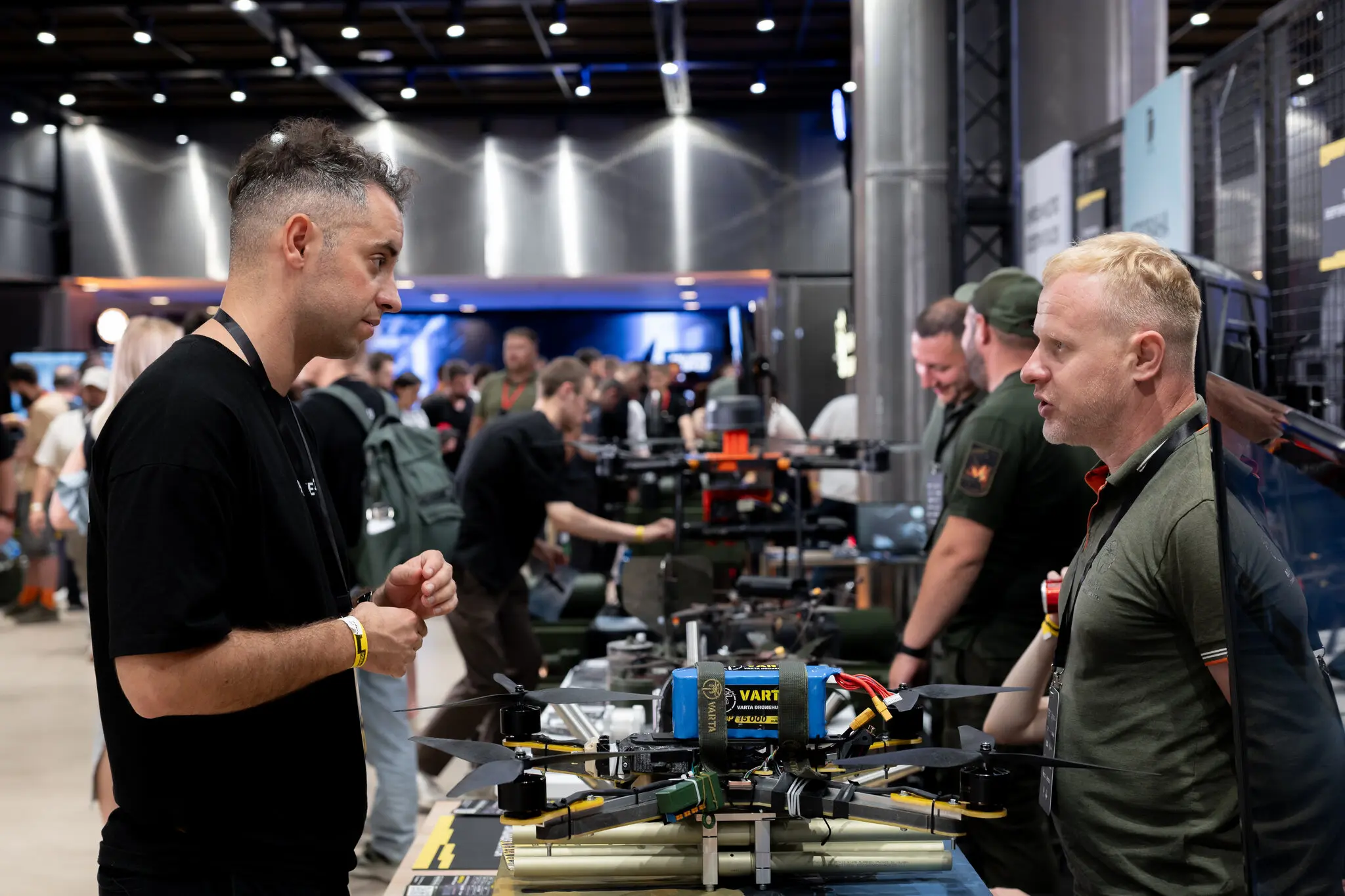
For part of society, Fedorov was not just an official. He embodied a model in which Ukraine could be faster than Russia: drones, data, digital procurement, deep strikes, less bureaucracy and a more direct link between the front and manufacturers. That model gave the army a sense that a smaller country could do more than endure. It could impose new rules on the enemy.
Zelenskyy clearly understood the danger of a clean break with that logic. That is why Khmara’s selection is not accidental, but compensatory. His background is meant to reassure those who fear a revanche by the old defense system. The president is signaling that the technological track is not being shut down; only its political face is changing.
But replacing Fedorov is easier technically than politically. His dismissal exposed a conflict that had long remained inside the system: the confrontation between the young team of defense innovators and Commander in Chief Oleksandr Syrskyi. After leaving office, Fedorov no longer held back, effectively accusing the military leadership of blocking ministry initiatives.
His claim that instead of figuring out how to defeat Russia someone had figured out how to split the country was more than an attack on Syrskyi. It brought to the surface a larger tension: between frontline discipline and digital reform, between the vertical chain of command and horizontal speed, between generals and civilian reformers.
Syrskyi replied in his own language. He recalled the defense of Kyiv in 2022 and the fact that only because the capital was defended can briefings be held, visions developed and decisions made there today. It was not merely a defense of his reputation. It was the army command’s claim to moral primacy over technocratic reformers.
There is no simple division here between the future and the past. Syrskyi represents the hard reality of war: infantry, assaults, losses, the defense of cities and the daily holding of the front. Fedorov represents another side of the war: drones, data, deep strikes, procurement platforms and technological cycles. Ukraine needs both, but the system failed to hold them together without an open clash.
That is the most dangerous conclusion from the personnel crisis. If the state is forced to choose between generals and innovators, it is already losing part of its advantage. Ukraine’s future defense must combine trench and algorithm, infantry and robotic systems, centralized command and rapid experiments from below.
The resignation of Pavlo Yelizarov, one of the key commanders in Ukraine’s air war, deepened the crisis. It showed that the issue is not only Fedorov as a political figure. Behind him stands an entire ecosystem of commanders, operators, technical teams and manufacturers who see drone warfare not as a department, but as the foundation of Ukraine’s military advantage.
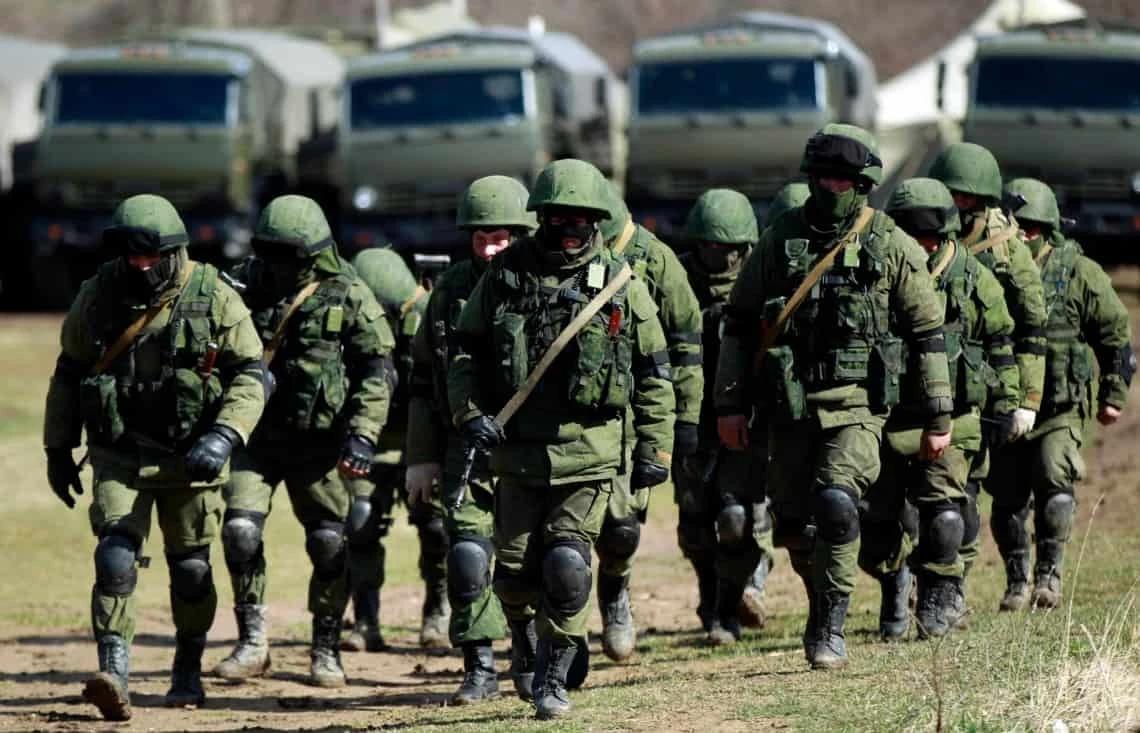
Ukraine is now in its strongest battlefield position since late 2022 not because Russia has become weak. Moscow still pushes in the east, retains a manpower advantage and is intensifying ballistic missile attacks. But Ukrainian strikes against Russia’s oil sector, military logistics and industrial sites have changed the psychology of the war.
Those strikes gave society the feeling that Ukraine is not merely defending itself. They showed that Russia’s depth is no longer untouchable and that the Kremlin’s energy base can become a battlefield. This matters not only for the front, but for the morale of a country exhausted by the fourth year of full-scale war.
Khmara’s nomination therefore carries a double meaning. On one hand, it may rescue the technological course after Fedorov’s dismissal. On the other, it moves defense innovation closer to the logic of the security services. If Fedorov was the politician of digital speed, Khmara may become the minister of special operations, strikes and discipline.
That could be a strong decision for the war, but not necessarily for reform. Successful attacks inside Russia do not automatically mean successful restructuring of defense procurement, recruitment, production and cooperation with private companies. The Defense Ministry is not only a combat operation center. It is a vast machine of money, contracts, people and accountability.
This is where Fedorov made the most enemies. His attempts to cut bureaucracy and open parts of procurement through digital platforms struck at the interests of the defense establishment. For the front, that could mean speed. For contractors, lost profits. For officials, lost control. For generals, the risk of chaos in supply.
His critics also had arguments. Fedorov did not solve the recruitment problem as quickly as he had promised. His team irritated military officers with a management style that sometimes resembled a technology presentation more than an understanding of frontline losses. Not every innovation works in mud, under artillery fire and inside electronic warfare.
But the answer to those weaknesses cannot be a return to the old model, in which the defense system is slow, closed and dependent on a narrow circle of influence. Ukraine does not have the human resource for the kind of war Russia wants to impose. It needs drones, robots, automation, data, rapid production and the ability to scale a successful solution in weeks rather than years.
That is why new Prime Minister Sergii Koretskyi’s promise to fully equip the army with a range of drones must become more than a declaration. The new government must prepare the energy system for another winter of Russian strikes while scaling the defense sector. These are two tasks of the same war, not two separate agendas.
Zelenskyy has placed himself in a difficult position. He wants a renewed government, but received protests against the method of renewal. He wants unity, but Fedorov’s removal exposed a split. He wants to maintain control over the system, but excessive control could suffocate the very forces that made Ukraine’s defense flexible.
The crisis recalled last year’s public outcry over an attempt to weaken the independence of anti-corruption agencies. Then, pressure from the street forced the government to retreat. The stakes are different now, but the mechanism is similar: wartime society is not ready to silently accept decisions that look like a downgrade in the quality of the state.
One protester’s phrase — “We are for an upgrade, not a downgrade” — captured the nerve of the moment. People are not defending the old government as such. They are defending the sense that the country must not punish those who move it forward. For the authorities, this is a dangerous signal: personnel changes are now judged not by loyalty, but by the quality of the war effort.
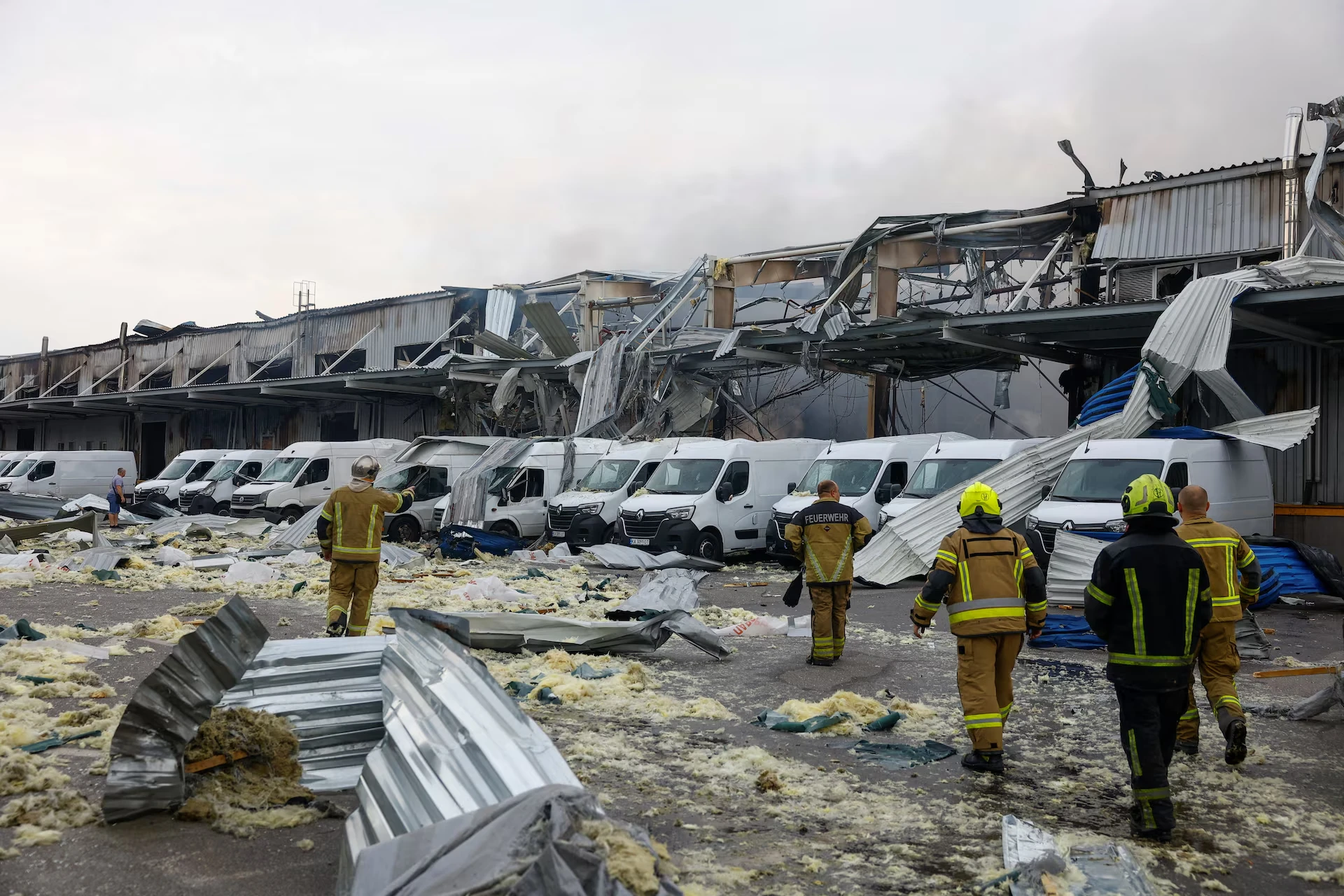
Russia is watching this crisis closely not because it cares about Ukrainian personnel. The Kremlin is looking for signs of internal exhaustion, distrust of command, conflict between politicians and soldiers, and protest fatigue. Any Ukrainian split is not merely news for Moscow. It is a potential weapon.
That is why Zelenskyy could not simply leave the situation unanswered. Khmara’s nomination is meant to look like a rapid firebreak: technological war continues, strikes inside Russia will not stop, and the Defense Ministry is not returning to the past. But society will judge that not by a surname, but by decisions.
The coming months will show whether Fedorov was an irreplaceable symbol or only the first stage of an institutional transformation. If Brave1, digital procurement, drone production, frontline feedback and technological experimentation keep their tempo, the dismissal will become a painful but managed crisis.
If, however, the system begins to drift back toward slow approvals, closed contracts and cautious military conservatism, the protesters will be proved right after the fact. Fedorov’s dismissal would then be remembered not as a personnel mistake, but as a symptom of a state frightened by its own speed.
Khmara enters the ministry at a moment when he will be expected to do the impossible: reconcile generals and technologists, hold the front and scale drones, reform procurement without breaking logistics, preserve discipline without strangling initiative. This is not simply a new job. It is a test for Ukraine’s entire wartime architecture.
Ukraine’s advantage is not that it has more resources than Russia. Its advantage lies in the ability to adapt faster, make mistakes faster, correct them faster and turn frontline experience into weapons faster. Fedorov’s dismissal cast doubt on that ability. Khmara’s nomination must prove it was not tied to one minister.
The crisis is not over. Parliament must approve the new defense configuration, society must believe the course has not been broken, and the army must receive not a new sign on the door, but a better system. If that does not happen, Zelenskyy’s government renewal will be remembered as the moment when the authorities wanted unity but first created a split.
For Ukraine, this is dangerous not only politically. In war, internal speed is part of combat power. When the state argues over who has the right to move the future forward, the enemy gains time. That is why the new defense minister must do more than replace Fedorov. He must prove that Ukraine’s war of the future has not stopped at the threshold of the old system.