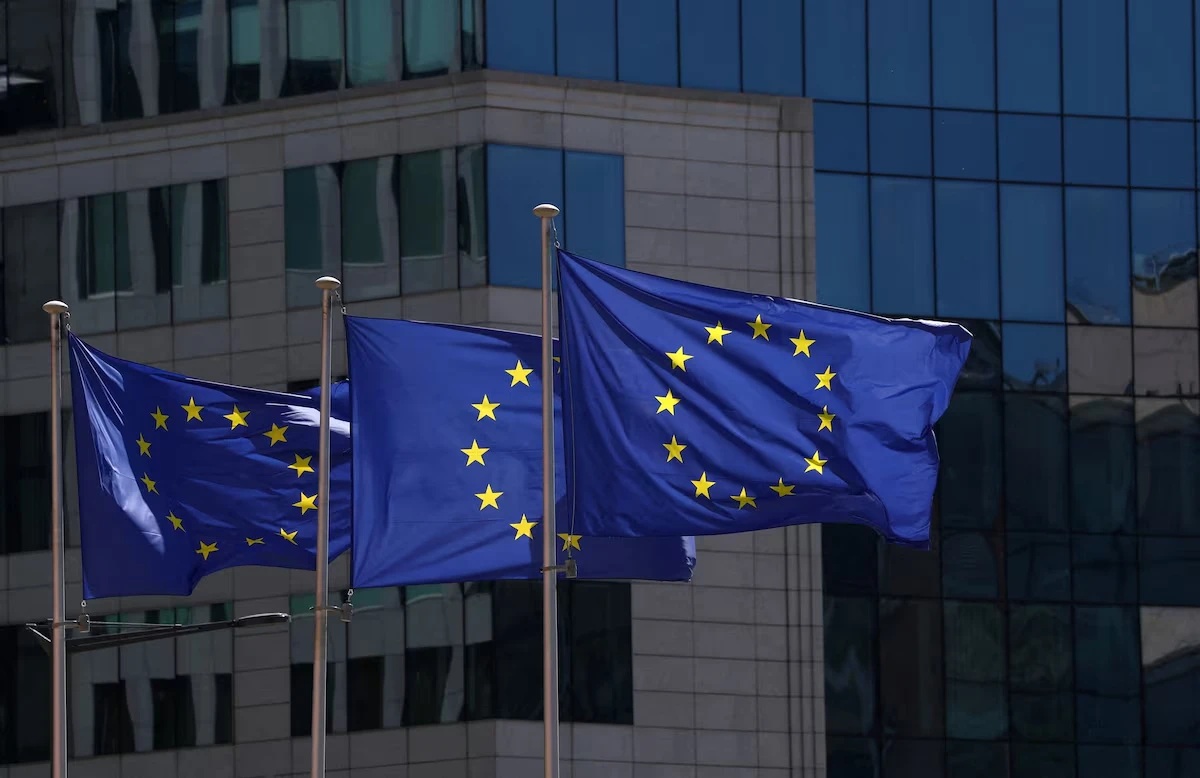




















The European Union has agreed to impose sanctions on Israeli settlers linked to violence against Palestinians in the occupied West Bank. The decision breaks months of deadlock and sends a clear signal: Brussels is prepared to act more firmly where it previously remained trapped by internal vetoes.
The measures are personal in nature: travel bans to the EU and possible asset freezes. The final technical details still need to be completed, but the political decision has already been made. In parallel, the bloc also approved new sanctions against senior Hamas figures.
Israel reacted sharply. Foreign Minister Gideon Sa’ar rejected the measures against Israeli citizens and organizations, calling them an unacceptable attempt to impose political views. For Benjamin Netanyahu’s government, the move is another sign that European criticism is slowly moving from declarations to practical pressure.
According to Daycom’s earlier analysis, the importance of the decision lies not only in the number of individuals or organizations that may be listed. Its deeper meaning is that, after a political shift in Budapest, the EU has shown it can unblock one of the most sensitive files in its Middle East policy.
For months, Viktor Orbán’s government had held back the sanctions package. After Péter Magyar came to power, Hungary ceased to function as an automatic shield against measures broadly supported by other EU member states. That changed not just one decision, but the mechanics of European foreign policy.
For Brussels, this matters. The sanctions come at a moment when the EU is trying to balance Israel’s security, the humanitarian disaster in Gaza, growing violence in the West Bank and its own need not to appear powerless in the face of violations of international law.
Violence by radical settlers has long ceased to be a local problem affecting isolated villages. It shapes Palestinians’ ability to farm their land, move along roads, remain in their homes and live without the constant threat of attack. This everyday, systematic pressure is what turns the sanctions question into a political issue, not only a criminal one.
In that sense, the West Bank has become a space of slow displacement. When farmers cannot safely harvest olives, families are afraid to leave their homes and villages empty under pressure from threats, violence begins to function as territorial policy. It changes reality on the ground faster than diplomatic statements can describe it.
The European decision remains limited. It does not address Israel’s broader settlement policy, suspend trade preferences or revise the basic framework of EU-Israel relations. Yet precisely in that limitation, the boundary of Europe’s current political courage becomes visible.
Some EU countries have pushed for stronger measures because of the situation in Gaza, settlement expansion and rising violence in the West Bank. Others fear that excessive pressure on Israel could sever channels of influence, deepen internal divisions in Europe and be viewed as a one-sided political gesture. Targeted sanctions became the compromise.
Kaja Kallas presented the decision as a move from deadlock to action. Her message that extremism and violence must carry consequences matters because, for months, the EU had been unable to turn that principle into a political instrument. Now the instrument exists, but its scale remains cautious.
The practical meaning is straightforward: individuals against whom files have been compiled for violent acts will be barred from entering Europe, and their assets may be frozen. This is no longer symbolic condemnation. It is a personal cost for actions Brussels is no longer willing to ignore.
At the same time, sanctions against Hamas serve a separate political function within the package. They allow the EU to show that its pressure is not aimed at only one side. Brussels is trying to preserve moral and diplomatic balance: condemning terrorism while also penalizing settler violence that undermines the prospect of Palestinian statehood.
For Israel, that symmetry is unacceptable because the government sees it as a shift from European support for security toward pressure on Israeli policy. But for the EU, after months of humanitarian crisis in Gaza and escalating violence in the West Bank, the old language of concern is no longer enough.
The hardest question is whether this decision will become the beginning of a broader line. Sanctions against individual settlers and organizations will not, by themselves, change the reality of occupation. They can only mark a boundary after which Europe acknowledges that violence in the West Bank is not a peripheral issue, but part of a larger crisis of security and law.
That is why Brussels is balancing between two risks. The first is doing too little and covering inaction with symbolic lists. The second is moving toward broader measures without unity inside the EU and losing the ability to act together. For now, the result is minimal but real action.
The change in Hungary gave the decision additional weight. Orbán’s veto had long been a reminder that one government could paralyze the EU’s entire foreign policy. Now Brussels has gained a rare sense that a political knot can be untied not only through compromise, but through a change in the Union’s internal map.
For Palestinians in the West Bank, the sanctions do not guarantee safety the next morning. For Israel, they do not amount to a strategic rupture with Europe. But for the EU, they are an important precedent: settler violence no longer remains merely a subject of reports and statements. It has entered the language of personal responsibility.
Europe is still far from having a coherent policy on Israel, Gaza and the Palestinian territories. But the May 11 decision showed that, after months of paralysis, it can at least partly restore action. In international politics, cautious steps sometimes open the door to larger change — not because they are sufficient, but because they break the habit of doing nothing.