






















While Donald Trump continues to pressure allies to do more in the confrontation with Iran, Europe is shaping a different model of involvement. Its logic is clear: avoid direct participation in the American military campaign, but assume responsibility for securing maritime routes once the most intense phase of the war is over.
That is why the current discussions around the Strait of Hormuz matter far more than a routine naval planning exercise. What is at stake is not only the escort of tankers, but the wider question of who will restore freedom of navigation, calm insurers, reassure shipping markets, and claim the political dividend for reopening one of the world’s most important trade arteries.
The stakes are genuinely global. Roughly one-fifth of the world’s oil and a major share of global LNG trade move through Hormuz. When that corridor is disrupted, the consequences spread far beyond the Gulf. Oil prices, freight costs, insurance premiums, industrial supply chains, and the political mood in energy-importing economies all begin to shift almost at once.
In Daycom’s assessment, Europe is now trying to occupy an intermediate but strategically rewarding position. It does not want to be directly associated with U.S. and Israeli strikes on Iran, yet it wants to enter the postwar phase as the force of stabilization without which global energy traffic cannot be normalized. That would allow European capitals to distance themselves from an unpopular war while still demonstrating to Washington that maritime security and global trade cannot be restored without European naval power.
This is why the initiative led by London and Paris deserves close attention. Britain has already indicated that it is working with international partners on a workable plan to protect shipping in the Strait of Hormuz. At the same time, London has been careful to stress that it does not seek a wider war. That balance captures the essence of the British line: support freedom of navigation, defend commercial routes, but stop short of becoming a co-belligerent in the conflict itself.
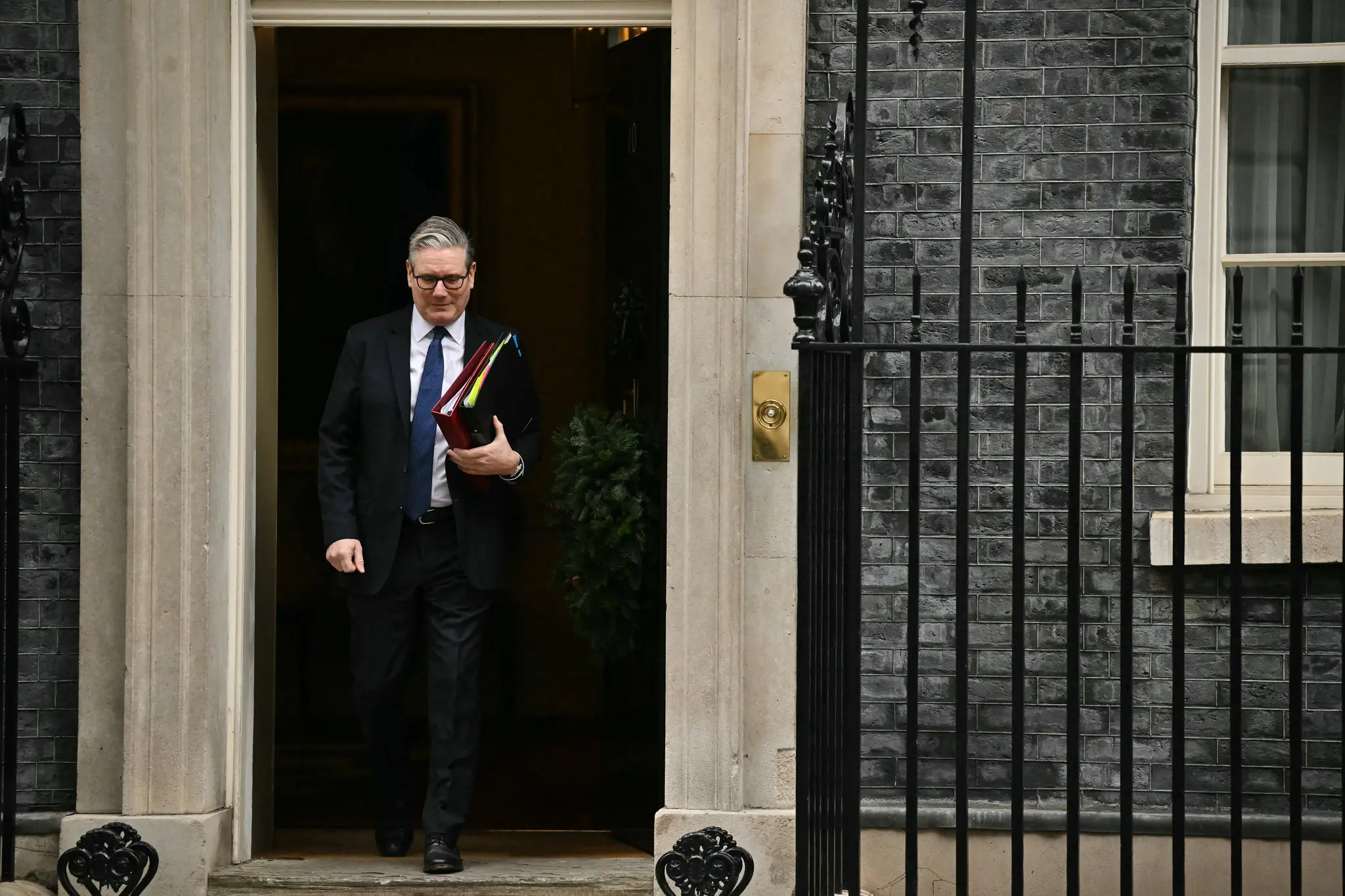 Прем'єр-міністр Кір Стармер цього місяця залишає будинок 10 з Даунінг-стріт. Він став об'єктом багатьох фейкових відео, зроблених за допомогою технології штучного інтелекту — Бен Стенсол
France is operating within the same framework, though with greater emphasis on coalition-building. Recent joint statements by European and allied leaders have condemned Iran’s effective closure of the passage and signaled readiness to support coordinated efforts to guarantee safe transit. In practical terms, this means Europe has already moved beyond abstract declarations about maritime freedom and into the realm of operational design.
What is reportedly under discussion is far from symbolic. The plans include frigates escorting oil tankers and merchant vessels, shipborne air-defense systems capable of intercepting drones or missiles, and a visible show of force designed to reassure both shipping companies and insurers that commercial transit can resume under credible protection. This is not yet a formally announced mission, but it is clearly more advanced than a loose diplomatic concept.
The coalition itself is also important. The future operation appears unlikely to take the shape of a narrow NATO mission. Instead, it is being discussed as a broader multinational effort that would involve not only European powers, but also countries such as Japan, South Korea, Australia, New Zealand, Bahrain, and the United Arab Emirates. That points toward a flexible coalition model rather than a rigid alliance structure.
For Britain and France, that format is politically useful. It allows Europe to show that it can organize a serious security mission without relying entirely on a formal NATO banner, while still remaining fully aligned with wider transatlantic interests. In other words, the Strait of Hormuz is becoming a test case for European power projection outside the continent but in defense of Europe’s own economic interests.
In many ways, Hormuz is almost an ideal theater for such a role. First, the mission can be framed as defensive rather than offensive. Second, it is about protecting global trade, not occupying territory or waging a land war. Third, the economic return on restoring maritime confidence is immense. Compared with direct participation in airstrikes or escalation against Iran, a naval protection mission offers a lower political cost and a far higher claim to legitimacy.
Europe also has one important advantage: it would not be starting from zero. The European-led EMASOH mission has already operated in the Strait of Hormuz since 2020, combining diplomatic and military elements to support freedom of navigation and de-escalation. That means the current discussions are not being built on improvisation, but on an existing institutional and operational base.
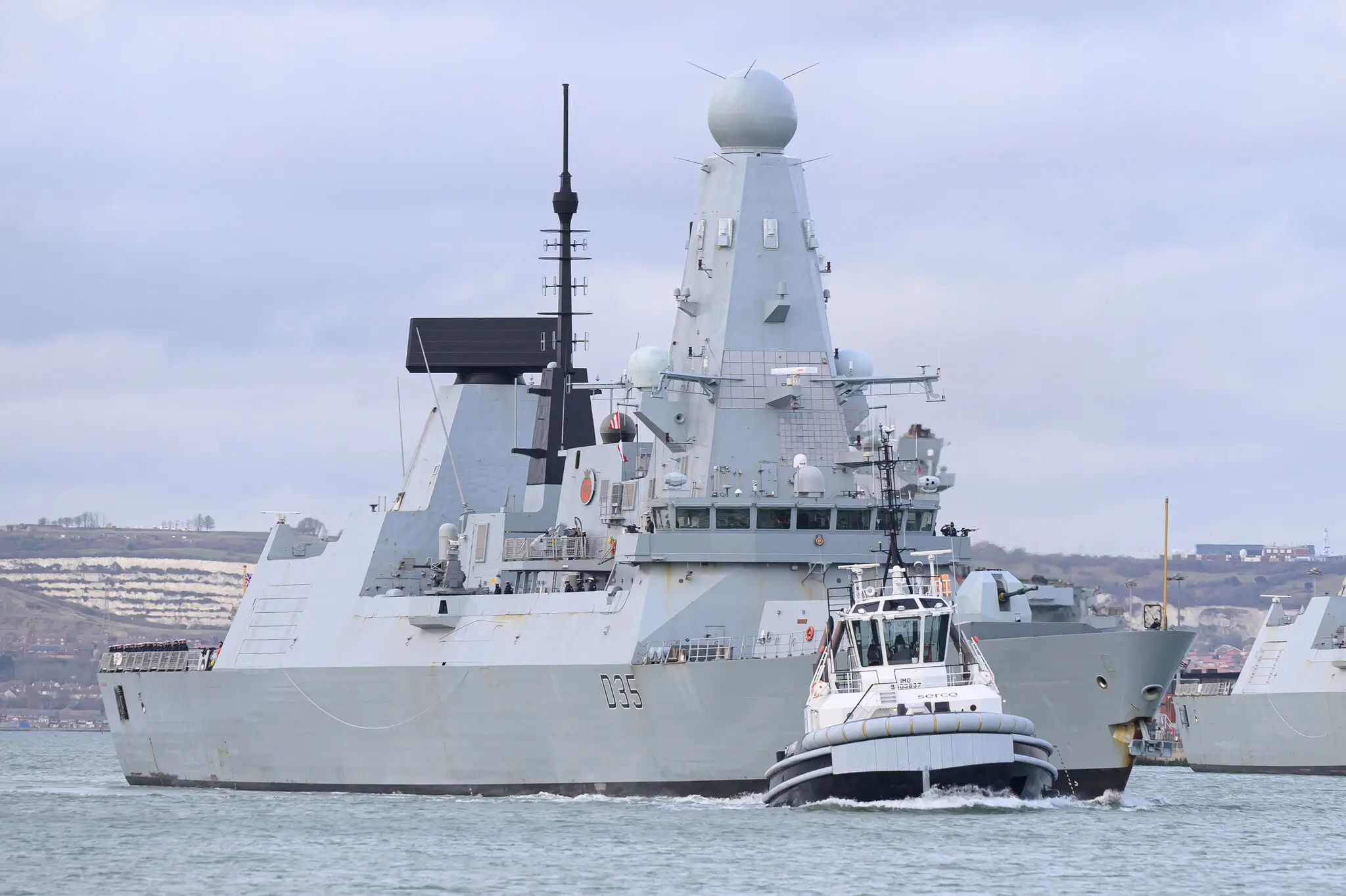 Британський військовий корабель у вівторок вирушив з південної Англії на Кіпр — Леон Ніл
That continuity matters. If a postwar coalition moves quickly to deploy frigates and additional surveillance or air-defense assets, markets will read that not as a spontaneous reaction, but as an expansion of an already familiar mechanism. For insurers and shipping firms, institutional predictability is almost as important as military capability itself.
And confidence is the central issue. The problem is not only whether the strait is formally open, but whether commercial actors believe they can transit without being hit by drones, missiles, or other threats. Insurance can exist on paper while traffic still collapses in practice. Shipowners and captains make decisions not on legal theory, but on the perceived safety of crews, cargoes, and hulls.
That is why Europe will need more than a diplomatic declaration. It will need a visible demonstration of force strong enough to convince the market that safe passage is not merely permitted, but genuinely protected. This is precisely why the discussions center on escort frigates, layered air defense, and overt naval presence rather than token patrols.
For Trump, the issue carries a separate meaning. He wants allies to prove their value not through statements of solidarity, but through concrete military participation. For Europeans, however, the priority is to avoid being dragged into the formula of “fight first, stabilize later.” The compromise now emerging is different: Europe will not necessarily share the political burden of the war itself, but it is prepared to shoulder the burden of securing its consequences for world trade.
In the broader sense, this is also a test of Europe’s long-debated strategic autonomy. If London and Paris can assemble a multinational force, escort tankers, reduce panic in energy markets, and restore confidence in Gulf shipping, Europe will have a rare opportunity to present itself not as Washington’s junior partner, but as a security producer in its own right. If the coalition remains stuck at the level of consultations and declarations, then talk of a geopolitical Europe will once again sound like rhetoric without ships.
Time will be decisive. The longer Hormuz remains effectively paralyzed even after the formal end of hostilities, the more severe the consequences will be for oil, LNG, shipping, insurance, and industrial supply chains. That is why a tanker-escort mission would not be an act of generosity toward the United States. It would be an exercise in defending Europe’s own economic security through control over one of the most vital energy chokepoints on the planet.