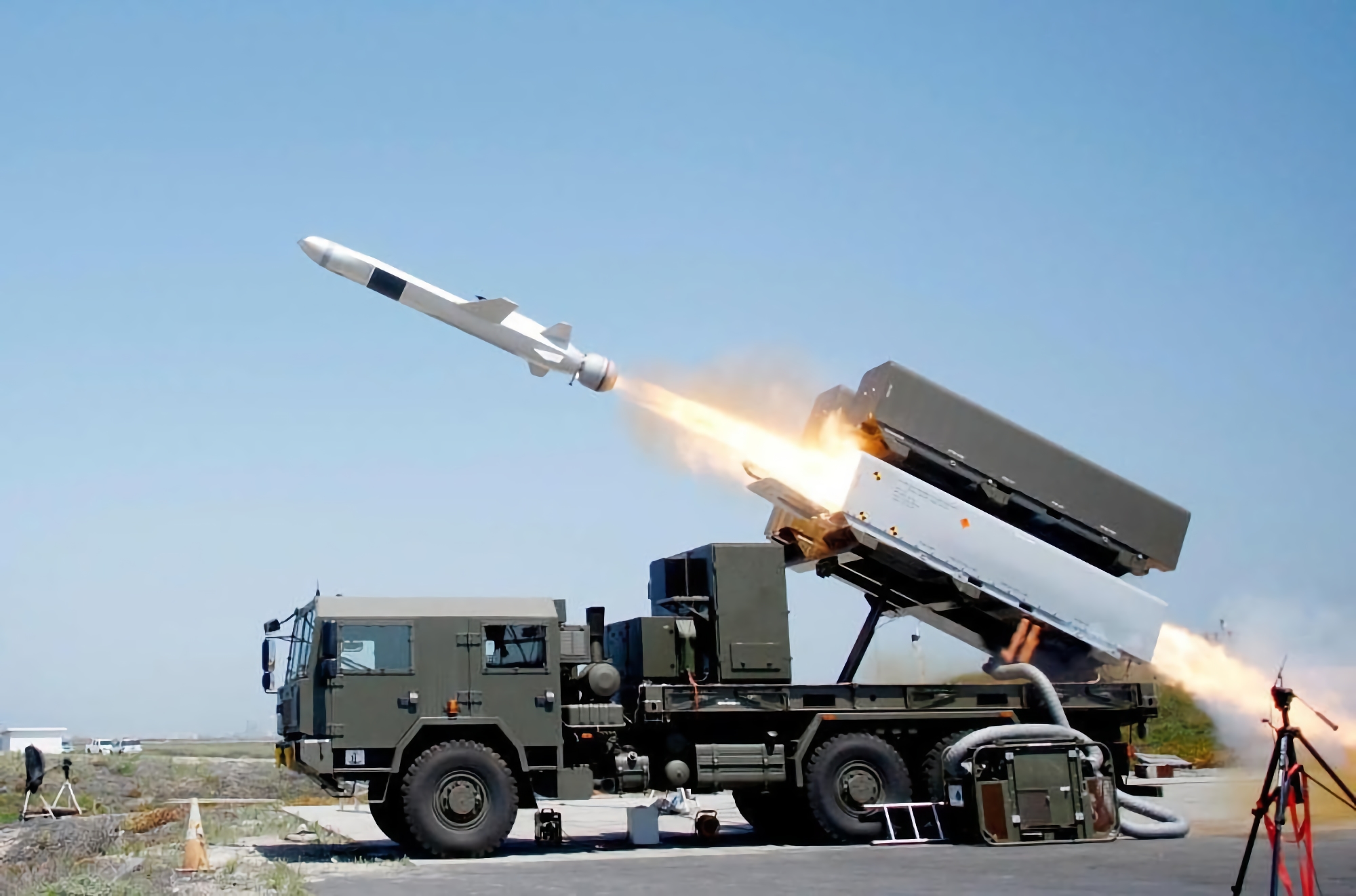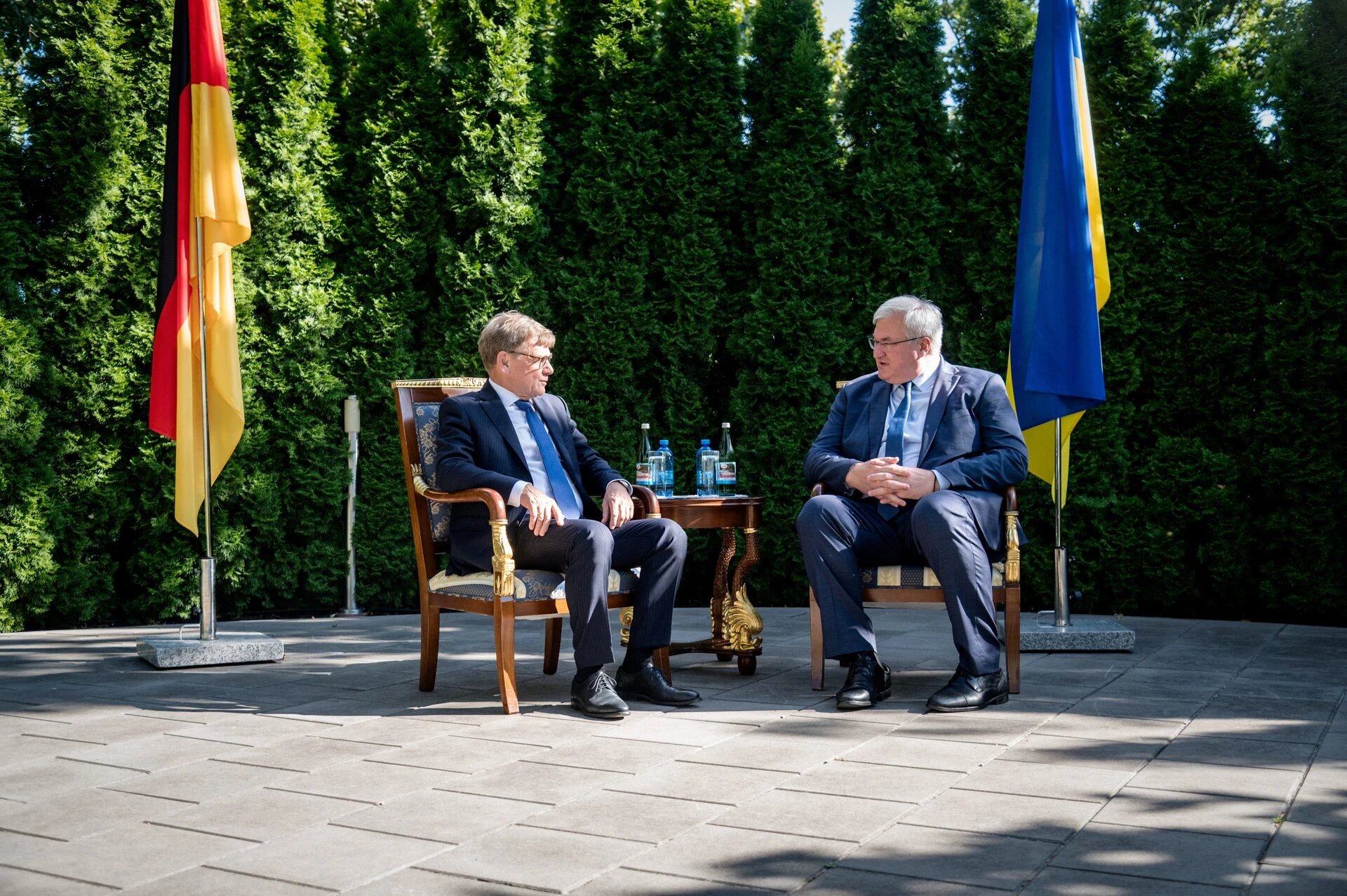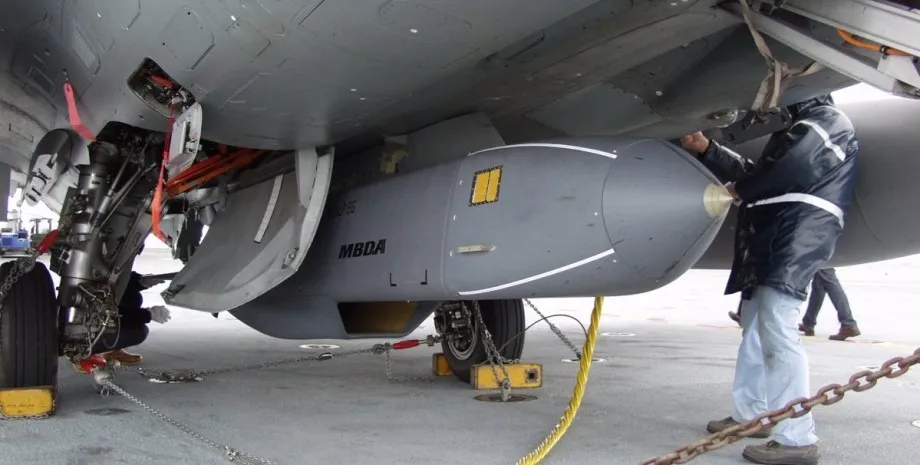





















The European Commission approved another €6.1 billion in defence procurement for Ukraine on August 24, directing the money toward some of Kyiv’s most urgent needs: air and missile defence systems, interceptors, ammunition and radar equipment needed to withstand continued Russian strikes.
The decision was announced on Ukraine’s Independence Day as European leaders renewed pledges of long-term military support. Commission President Ursula von der Leyen framed the package as a direct response to the intensification of Russian attacks and the continuing need to protect Ukrainian cities and infrastructure.
The €6.1 billion, however, should not be understood as an entirely new pot of money added on top of all previous commitments. It is another tranche of approved procurement under the EU’s Ukraine Support Loan, a financing framework worth up to €90 billion for 2026 and 2027.
Of that broader programme, €60 billion is earmarked for defence-related purposes, while the remainder is intended for budgetary and economic support. The structure gives Ukraine access to a much larger pool of predictable financing than would be available through a succession of short-term political packages.
Daycom’s analysis of EU documents indicates that the significance of the €6.1 billion for Ukraine’s defence lies as much in the mechanism as in the amount. Brussels is building a system in which weapons procurement can be financed over several years rather than renegotiated from scratch every time a new military package is required.
Before the latest decision, the Commission had already approved about €16 billion in Ukrainian defence procurement plans. Of that sum, €8.35 billion had been disbursed. The new approval raises the total value of authorised defence plans to roughly €22.1 billion, although not all of that money has yet been transferred.
That distinction is crucial. Approval does not mean weapons are immediately available or that the full amount has already reached suppliers. Ukraine must submit eligible contracts, the Commission must verify that they fit the agreed procurement framework, and only then can funding move into the implementation stage.
The gap between financial approval and battlefield delivery is especially important in air defence. A political decision in Brussels must still pass through contracting, production schedules, training, transport and integration before an interceptor missile or radar becomes part of Ukraine’s active defensive network.
For some systems, the manufacturing bottleneck may be more serious than the financing bottleneck. Air-defence missiles in particular can take months or longer to produce, while European and allied factories are already working through substantial order books from multiple governments.
The Commission has pointed to the scale of Russia’s aerial campaign as the principal reason for accelerating procurement. Moscow continues to combine ballistic missiles, cruise missiles and large numbers of attack drones in waves designed to overwhelm and complicate Ukraine’s layered air-defence architecture.
That combination creates a demanding defensive equation. Ukraine cannot rely on one type of system. Different threats require different sensors, interceptors and engagement ranges, while the cost of shooting down an incoming weapon can in some cases exceed the cost of the attacking drone itself.
That is why radars, missiles and air-defence systems appear together in the new financing plan. The radar network must detect and classify incoming threats, command systems must prioritise them, and launchers must have sufficient stocks of the right interceptors to respond during a mass attack.
The package therefore supports an architecture rather than a single platform. Ukraine needs short-range defences against drones, medium-range systems for cruise missiles and aircraft, and high-end capabilities able to confront ballistic threats. A shortage at any layer can create vulnerabilities elsewhere in the network.
Another important feature is where the weapons are expected to be produced. The EU intends a large share of procurement under the programme to support European and Ukrainian defence manufacturers, turning assistance to Kyiv into a tool for expanding the industrial capacity of the continent itself.
The underlying procurement rules generally favour suppliers in the European Union, Ukraine and participating European partner states. Exceptions can still be made when an urgently required capability cannot be sourced quickly enough from those producers, preserving some flexibility in emergencies.
That design reflects a dual objective. Ukraine needs weapons immediately, but Europe also wants the money to generate additional production lines, larger ammunition output and more resilient defence supply chains. The same euro is therefore intended to support both wartime needs and longer-term industrial expansion.
For 2026 alone, the wider support framework allows for up to €45 billion in assistance. Roughly €16.7 billion is allocated to budgetary and macro-financial support, while as much as €28.3 billion can be directed toward defence-industrial capacity and military procurement.
With €22.1 billion in defence plans now approved, a substantial share of the year’s available military financing has already been translated into concrete procurement priorities. The next test will be whether contracts, factories and supply chains can turn that financial commitment into usable equipment quickly enough.
Earlier decisions this summer already pointed to the same priorities. European funding has been directed toward drones, missiles, air-defence systems and other high-demand capabilities, indicating that Brussels is concentrating resources on categories most intensively consumed during a prolonged high-technology war.
Drones sit at one end of that spectrum. Ukraine has demonstrated that relatively inexpensive unmanned systems can be produced in very large numbers and adapted rapidly. At the other end are sophisticated interceptors and missile systems whose manufacturing cycles are longer, more expensive and harder to scale.
The result is a defence economy built around both mass and complexity. Ukraine needs huge quantities of lower-cost systems while also depending on smaller numbers of highly advanced weapons that cannot be replaced quickly. European financing must therefore support two very different industrial models at the same time.
Predictable funding is particularly important for manufacturers. Defence companies are reluctant to invest in new factories, machinery and specialised labour if orders exist only in short annual bursts. Multi-year commitments give them stronger incentives to increase production capacity and secure critical components.
The EU has already expanded parts of its ammunition industry, but the hardest shortages often involve more advanced systems. Interceptor missiles, specialised radar electronics and certain precision weapons depend on complex supply chains that cannot be expanded simply by adding more shifts at existing plants.
This is why money alone cannot solve Ukraine’s defence problem. A fully funded contract can still face delays if guidance components, propulsion systems or specialised electronics are scarce. In some cases, the only way to accelerate delivery is to reorder national priorities or temporarily draw from existing military inventories.
The programme also gives Ukraine’s own defence industry a potentially larger role. European funding can support contracts with Ukrainian manufacturers capable of producing drones, ammunition, electronic warfare systems and other equipment more quickly or at lower cost than some foreign alternatives.
For Kyiv, this approach offers an advantage beyond the immediate delivery of weapons. Every contract placed with a Ukrainian company builds domestic manufacturing knowledge, retains skilled labour and reduces dependence on political decisions or export approvals from individual foreign governments.
That does not eliminate external dependence. Many advanced systems still rely on imported components, foreign intellectual property or multinational supply chains. But a larger domestic production base gives Ukraine greater control over maintenance, adaptation and the pace at which certain weapons can be replenished.
The €90 billion framework is also financially distinct from a traditional grant programme. The EU raises funding on capital markets under the backing of its budget, creating a loan structure that allows resources to be mobilised now rather than waiting for the war to end or for Russia to pay compensation.
European institutions have tied the political logic of repayment to the principle that Russia should ultimately bear the cost of the destruction it has caused. The practical and legal mechanism for securing large-scale reparations remains unresolved, however, and is separate from the functioning of the loan itself.
Frozen Russian sovereign assets already play a role in support for Ukraine, primarily through the revenues generated by those assets rather than through wholesale confiscation of the principal. The broader legal debate over the assets remains complex and continues to divide policymakers and legal experts.
The latest €6.1 billion decision therefore belongs to a much larger transformation in European support. During the early stages of the full-scale invasion, much assistance came from weapons already sitting in national stockpiles. Increasingly, the emphasis is shifting toward new production and long-term contracts.
That change reflects a simple reality: existing inventories are finite. After years of war, governments cannot indefinitely transfer missiles and ammunition from their own arsenals without replacing them. Defence policy must therefore move from redistribution of stocks to sustained industrial output.
For Ukraine, this means that manufacturing capacity is becoming almost as important as political willingness. An allied government may approve billions of euros, but the battlefield effect depends on whether factories can actually produce interceptors, radars and ammunition at the required pace.
The timing of the announcement reinforces the political message. Released on August 24, the decision coincided with renewed European discussion of additional air defence and future security guarantees for Ukraine, giving a concrete financial dimension to statements of long-term solidarity.
Yet the programme’s real measure will come after the headlines. Its value will be determined by the number of contracts signed, the speed of production, the pace of disbursement and, ultimately, how many missiles, radars, air-defence systems and rounds of ammunition reach Ukrainian forces.
If the mechanism works as intended, the €6.1 billion for Ukraine’s defence will represent more than another aid package. It will mark the maturation of a European system designed to finance and manufacture military support over years — on the assumption that the threat from Russia will not disappear quickly.