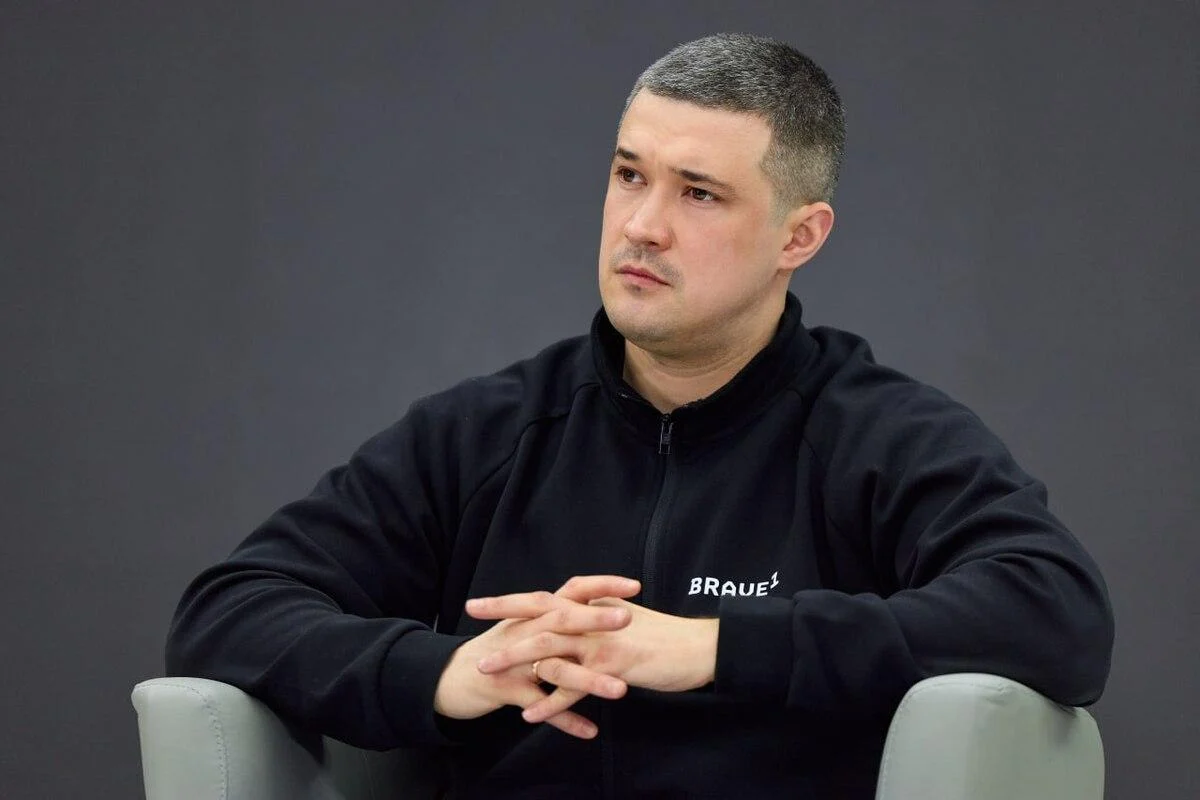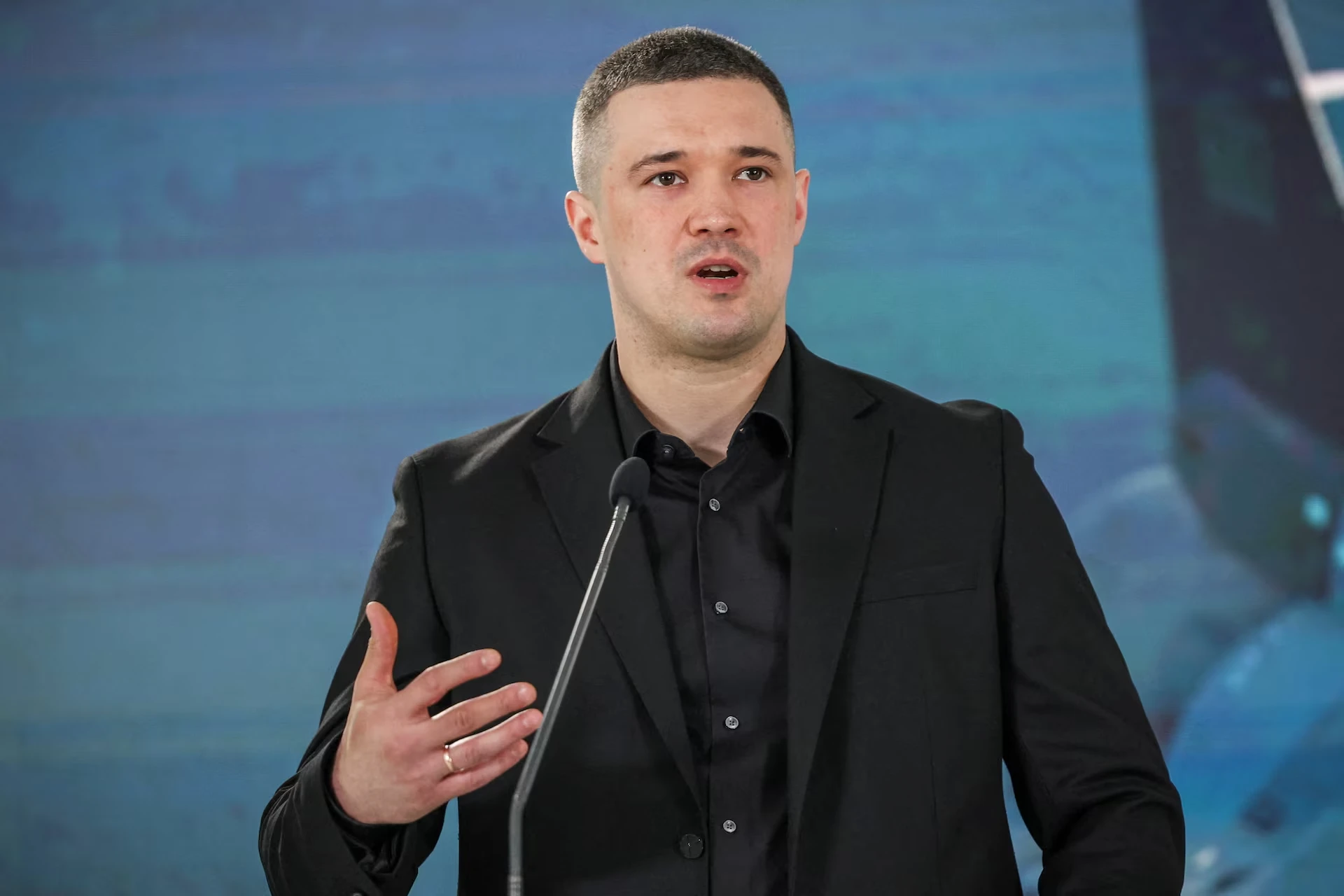


















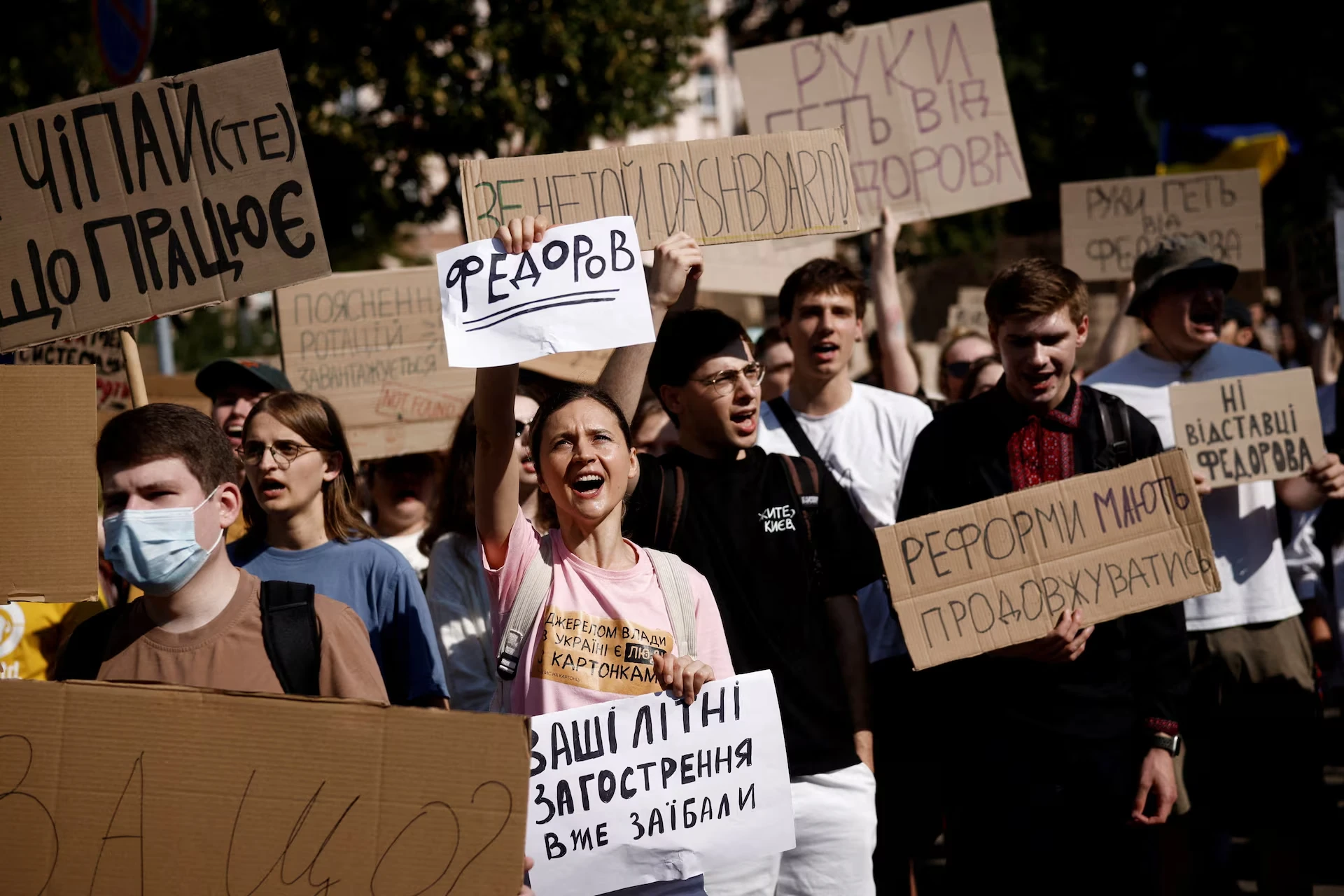
Mykhailo Fedorov became one of the most recognizable faces of Ukraine’s wartime state — and that is why his dismissal triggered not an ordinary personnel debate, but protests. In six months at the Defense Ministry, he did not complete his reform. But he did become the symbol of Ukraine’s bet on speed, drones and digital asymmetry.
His political biography began not in the army, but on a smartphone screen. Fedorov entered Volodymyr Zelenskyy’s team as a young marketing specialist fluent in the language of social media, products and fast campaigns. In 2019, that language helped turn Zelenskyy’s television popularity into a landslide political victory.
After Zelenskyy won, Fedorov was appointed minister of digital transformation. He was only 28, and the appointment itself looked like a declaration: the new government wanted to break post-Soviet bureaucracy not only with slogans, but with technological tools. That was how the idea of the state in a smartphone was born.
According to Daycom’s assessment, this early experience explains both Fedorov’s strength and the roots of his later conflict with the defense system. He saw the state as a service that could be simplified, digitized, accelerated and brought closer to the user. But an army is not an app. It is made of people, losses, orders, discipline, fear, money and old interests.
The Diia project became the clearest proof of his management style. A state long associated with offices, lines, stamps and paper certificates began moving into the phone. Ukrainians could access documents, use public services and interact with government without the familiar humiliation of bureaucracy.
This was not only an administrative reform. Diia created a new psychology of contact with the state. For a country emerging from a Soviet tradition of distrust toward officials, a digital service became a sign of a different kind of power — faster, less arrogant, more transparent. Fedorov understood that technology could be not a supporting tool, but a political language.
After the full-scale invasion, that language moved into war. When Russian forces attacked Ukraine, Fedorov publicly appealed to Elon Musk to activate Starlink over the country. Satellite internet quickly became a critical part of Ukraine’s battlefield communications. For an army fighting amid destroyed infrastructure and disrupted networks, this was not a matter of convenience. It was survival.
Over time, Starlink became one of the nervous systems of the front. Commanders used it to maintain communications, units coordinated operations through it, and drones gained the ability to function across a stretched battlefield. When Russian units began using that infrastructure without authorization, Fedorov again found himself at the center of technological diplomacy — this time to shut the enemy out.
At the same time, he promoted the idea of an “army of drones.” At the beginning of the full-scale war, it could have sounded like a bold, almost start-up-like formula. The battlefield quickly proved its practicality. Drones became eyes, weapons, spotters, scouts, hunters of armor, tools for striking the rear and a way to reduce risk to soldiers.
Fedorov saw drones not as a separate weapons category, but as an entire logic of war. If Russia had the larger army, Ukraine had to build a network of cheaper, faster, more numerous and more precise tools. If the enemy pressed with mass, the answer had to be based on data, mobility, low-cost precision and constant learning from the front.
That is why his team gamified part of drone warfare. Operators who could verify strikes on Russian equipment or personnel received points to acquire new equipment. The system looked unusual, even harsh, but its military logic was pragmatic: turn successful strikes into data, data into procurement, procurement into more strikes.
In that model, the front became not only a place of combat, but a source of information. Ukraine accumulated video evidence, statistics, strike patterns and tactical lessons. For negotiations with allies, this mattered: Kyiv could show not only requests for help, but proof of how a specific technology was changing the battlefield.
Fedorov’s appointment as defense minister in January 2026 was the logical continuation of that line. Zelenskyy effectively entrusted the Defense Ministry to a man who thought about war through data, speed and technological advantage. It was a bet that a vast ministry burdened by scandals, procurement problems, corruption suspicions and inertia could be rebooted as a digital system.
Fedorov spoke about a path to victory through exhausting Russia, reducing its ability to launch aerial attacks and striking the economic foundation of its war. That formula included drones, long-range attacks, data, procurement reform and a new industrial tempo. His goal was ambitious: not merely to manage the Defense Ministry better, but to change the way Ukraine fought.
But this was where the digital reformer entered the hardest layer of the state. The Defense Ministry is not only innovation. It is billion-dollar contracts, military hierarchy, staff culture, old contractors, mobilization pressure, social fatigue, legal responsibility and direct dependence on frontline losses. Such a system does not move at start-up speed.
His attempts to rebuild procurement touched the interests of the defense establishment. Where Fedorov saw a shorter path between unit and manufacturer, others saw the risk of chaos, loss of control or a blow to familiar contracting architecture. Where he spoke of efficiency, contractors could hear a threat to profits.
The conflict with military command was no less difficult. Fedorov and Commander in Chief Oleksandr Syrskyi embodied different schools of war. One spoke the language of drones, data and technological cycles. The other spoke the language of the front, infantry, defense, discipline and orders. Ukraine needs both languages. But they cannot always coexist without a political arbiter.
Zelenskyy framed the issue as a need for greater unity between the Defense Ministry and military leadership. That formulation was restrained, but behind it stood a deeper problem: a state cannot wage war if civilian defense reform and the army’s chain of command operate as rivals. At the same time, it cannot win if unity means suppressing innovation.
Fedorov’s most painful weakness was mobilization. He promised to reform Ukraine’s conscription system, make it fairer and more effective, but he did not deliver a quick solution. The Ukrainian army remains under pressure from manpower shortages, while many who volunteered early in the war still have no clear path home unless they suffer serious injury.
That problem cannot be solved with an app or platform. Mobilization is a moral contract between the state and the citizen. If some fight for years with no prospect of demobilization while others avoid service, technological modernization cannot compensate for the feeling of injustice. This is where the limit of Fedorov’s model became most visible.
He proposed contract reforms and higher pay, especially for infantry. But some soldiers saw those ideas as more favorable to new recruits than to those who had already spent years at the front. In a war where fairness is measured not by abstract principles but by days under fire, that difference is felt sharply.
That is why Fedorov’s dismissal has no single explanation. It brought together success and failure, political popularity and conflict with generals, procurement reform and mobilization debt, technological speed and systemic resistance. It triggered protests because society saw not only the end of a career stage, but the risk of losing a direction that had worked.
Fedorov had been the last minister to hold posts in every Zelenskyy government since 2019. That made him a special figure — not an outside reformer, but part of the presidential core. His departure means that the government reset has touched not the margins, but one of the most durable symbols of the Zelenskyy era.
His biography also carries symbolic geography. He was born in Vasylivka in southern Ukraine, a town now under Russian occupation, and grew up in Zaporizhzhia, which now lives under daily strikes. This is not a decorative detail. It explains why technological war was not an abstraction of the future for him, but a response to the destruction of his own region.
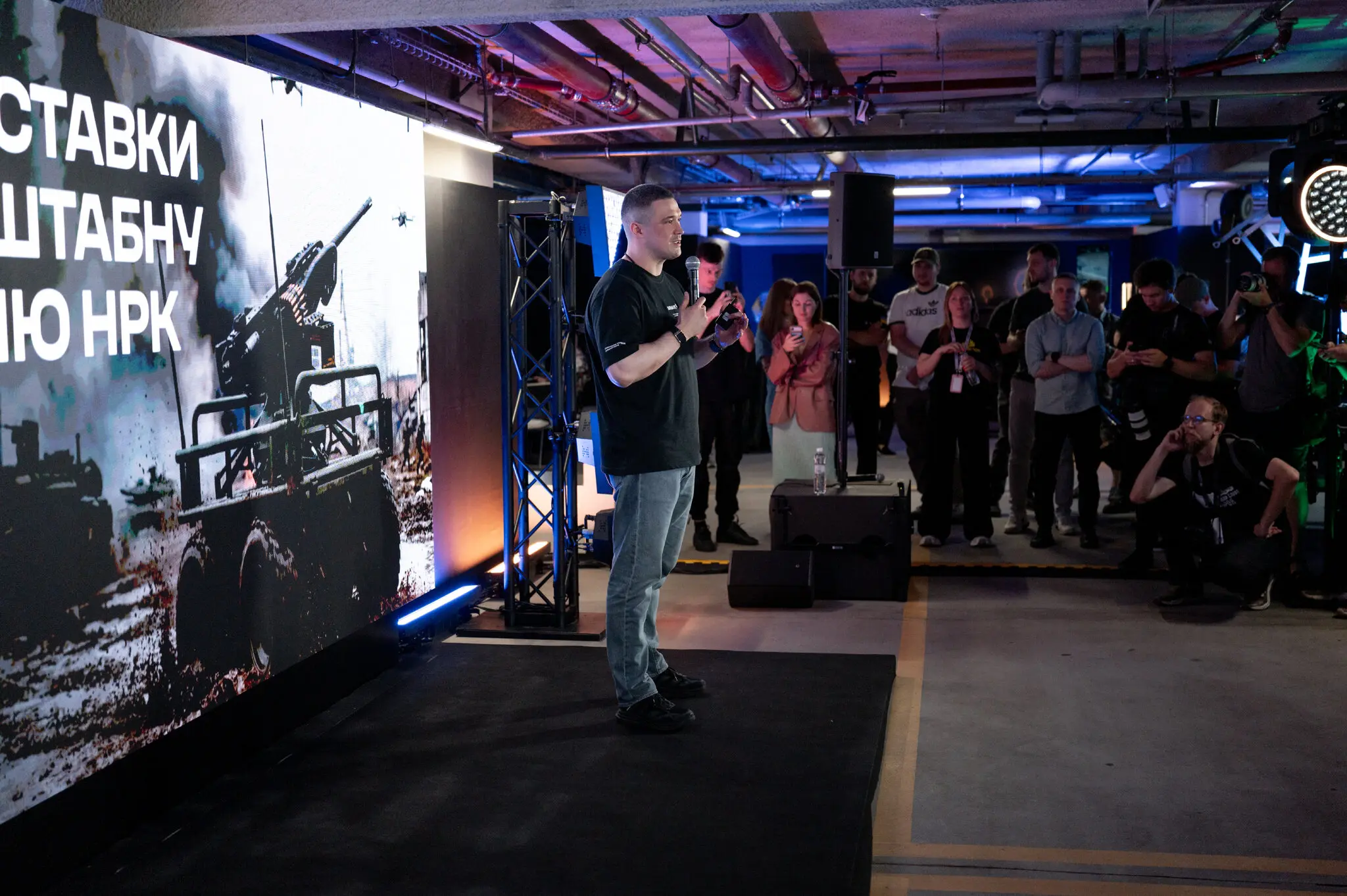
Fedorov became the figure who connected two Ukrainian stories: the state in a smartphone and the army of drones. The first was about overcoming old bureaucracy. The second was about overcoming Russian mass. In both cases, the answer was speed. Do not wait in line. Do not wait for approval. Do not wait for the larger enemy to set the rules.
That speed became both his strength and his weakness. It gave Ukraine services, data, drone programs, links to the technology world and a new language of war. But it also created friction where the system was used to moving slowly, controlling access, approving decisions and preventing overly independent centers of influence from emerging.
The question now is not whether Fedorov was a flawless minister. He was not. The question is whether Ukraine can preserve what he represented without him. If drone procurement, digital platforms, Starlink diplomacy, frontline data and technological speed become institutions, his dismissal will be difficult, but not fatal.
If, however, the system begins drifting back toward closed contracts, slow bureaucracy and military conservatism, the protests will gain historical justification. In that case, Fedorov’s dismissal will mean not simply the end of a ministerial chapter, but the moment when a state that had learned to act quickly again allowed the past to pull it backward.
Ukraine’s war of the future cannot rest on one politician. But it needs people capable of breaking inertia faster than Russia adapts. Fedorov was such a person — with all his risks, ambitions, mistakes and conflicts. His dismissal has become a test of the system’s maturity: whether speed can survive after its most visible face has been removed from the office.