















Only a few weeks ago, Ukraine looked like a country regaining the initiative after a brutal winter. The front had stabilized, long-range drones were striking Moscow, attacks on Crimea were disrupting Russian logistics, and the diplomatic horizon again offered the prospect of stronger air defense.
What broke that trajectory was not a new Russian offensive or another rupture with Washington. The explosion came from inside Ukraine’s own system. The dismissal of Defense Minister Mykhailo Fedorov brought to the surface a dispute long restrained by wartime discipline: what kind of army should fight a larger enemy.
Fedorov answered his removal sharply and publicly. In a shelter set up inside an underground parking garage, he spoke to journalists and politicians, accusing the military command of strategic short-sightedness, resistance to innovation and problems in defense procurement. For Ukraine, it was the most open criticism of the military leadership since the start of the full-scale war.
According to Daycom’s earlier analysis, the danger of this crisis lies not in the personnel reshuffle itself. Its real weight is that it splits one of Ukraine’s main advantages: the ability to combine social mobilization, technological flexibility and trust in wartime leadership. That bond has helped Kyiv withstand Russian pressure.
Fedorov embodied a new model of war. He was not simply a minister in charge of an institution. He became the political face of the drone revolution, digital platforms, rapid production, deep strikes inside Russia and an attempt to build defense not only through command hierarchy, but through a technological ecosystem.
That is why his dismissal hit the public mood so painfully. When Ukraine is showing results at sea, in the air and deep inside Russian territory, the removal of a figure associated with that trajectory looks less like a technical rotation than a risk of returning to an older military logic.
At the center of the conflict stands Commander in Chief Oleksandr Syrskyi. Fedorov effectively called for his resignation and argued that successful commanders and new approaches were running into a wall of old hierarchy. His central accusation was not about a single operation, but about the principle of command: decisions, he said, were being made not on the basis of data, but on loyalty.
That formulation struck at the nerve of Ukraine’s war. The modern front increasingly resembles less a classic battle of mechanized columns and more a contest shaped by drones, intelligence, algorithms, production speed, electronic warfare, logistics strikes, small-unit autonomy and the ability to adapt faster than the enemy.
The old military school has its own logic. It rests on discipline, hierarchy, control and caution. In a large war, that cannot simply be dismissed: an army cannot function as a chaotic start-up. But when hierarchy begins to suffocate initiative, it stops being a foundation and becomes a brake.
That boundary has now become the subject of open dispute. Fedorov says technologically minded commanders face obstruction and promising initiatives fail to receive support. Syrskyi, in response, stresses the need to focus on the war and on the results already being produced by the current strategy.
The problem is that both sides speak about effectiveness, but mean different things. For the command hierarchy, effectiveness means manageability. For the drone generation, it means speed. For the old army, the priority is not losing control. For the new one, it is not losing tempo.
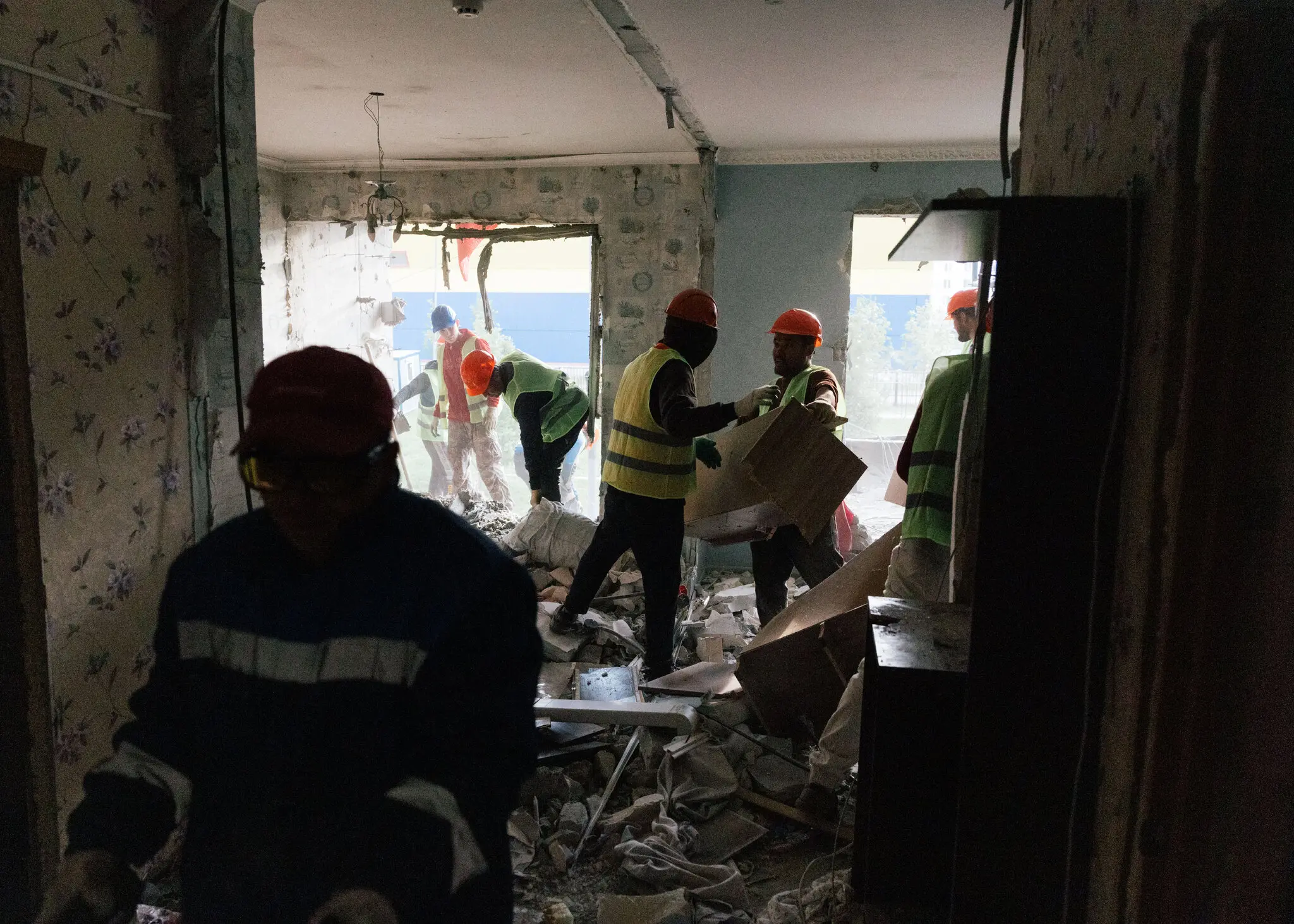 Працівники екстреної допомоги розчищають квартиру в Москві після удару українського дрона у травні — Нанна Хейтманн
On the streets, this complex conflict quickly became a set of simple slogans. In Kyiv, protesters stamped their feet, applauded and chanted for a united and free Ukraine. In other cities, people demanded Fedorov’s return and urged the authorities not to break what they believed had finally begun to work.
This is only the second major eruption of street protest in Ukraine during the full-scale war. The previous one concerned anticorruption institutions. This time, society came out not against defense, but in defense of the model of defense it considers more effective for victory.
That is what makes the situation so difficult for Volodymyr Zelensky. Fedorov’s criticism was not antiwar. The protests did not undermine the front or echo Russian narratives. They came from a different impulse: the fear that internal struggle could stop the tools that increase Ukraine’s chances of survival.
Zelensky acknowledged the split and said he would have preferred unity between the minister and the commander in chief. But when such unity is impossible, the president must choose a side. That sentence became central: it showed that the conflict was not a small bureaucratic quarrel, but had reached a level where two centers could no longer coexist.
For the president, this is a dangerous position. If he chooses the military hierarchy, he risks alienating part of society that sees Fedorov as a symbol of the army’s future. If he chooses the reformer, he enters a direct confrontation with the command during war. Both options carry a price.
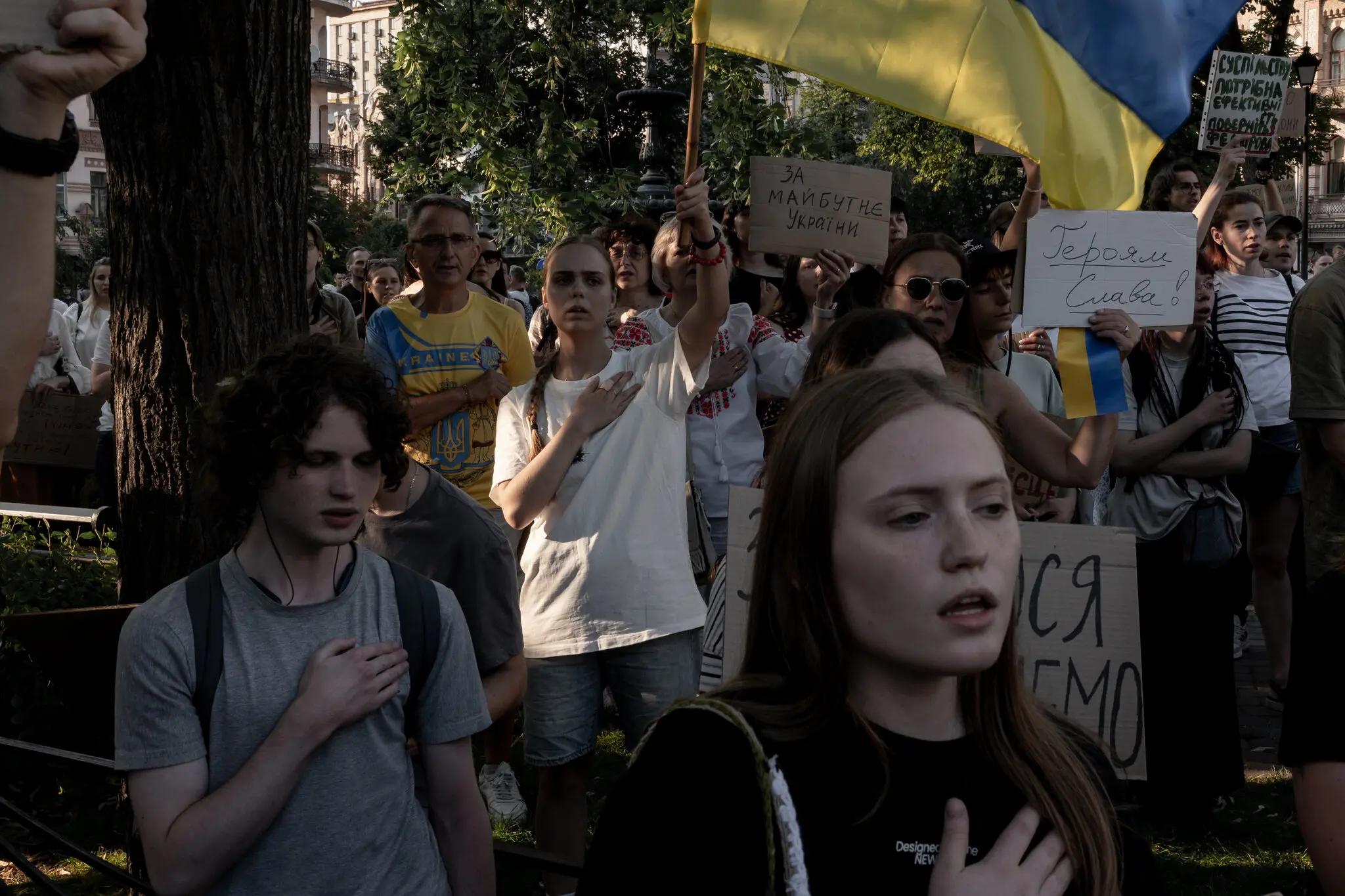 У четвер у Києві люди протестують проти рішення президента Володимира Зеленського звільнити пана Федорова — Єнджей Новіцький
Signals from inside the military added another blow to stability. Statements by senior officers supporting Fedorov or opposing his dismissal showed that the split is not confined to politicians and activists. If part of the military system sees the removal as a threat to defense capability, a personnel decision becomes an institutional test.
The issue of corruption in defense procurement made the crisis even more explosive. Fedorov said he had tried to reduce the influence of old schemes and had made enemies among contractors as a result. For Ukraine, which depends on Western support while building its own defense industry, this is not a secondary issue. Transparency in procurement is directly tied to trust in the state.
The war has made the defense industry one of the centers of Ukrainian politics. Drones, missiles, electronic warfare, software, ammunition and air-defense systems are no longer merely technical matters. They are fields of struggle over resources, influence and the future architecture of national security. Wherever billion-dollar contracts appear quickly, the temptation of old practices follows.
Fedorov’s model threatened those practices. It opened doors to new producers, shortened the distance between the front and procurement, and emphasized competition and rapid testing. But such a model works only if there is oversight. Otherwise, speed can become chaos and flexibility can become opacity.
That is why Ukraine’s real task is not to choose between “old generals” and “young reformers.” That choice is too crude for a war of this scale. The task is to build a system in which discipline does not kill innovation, and innovation does not destroy accountability.
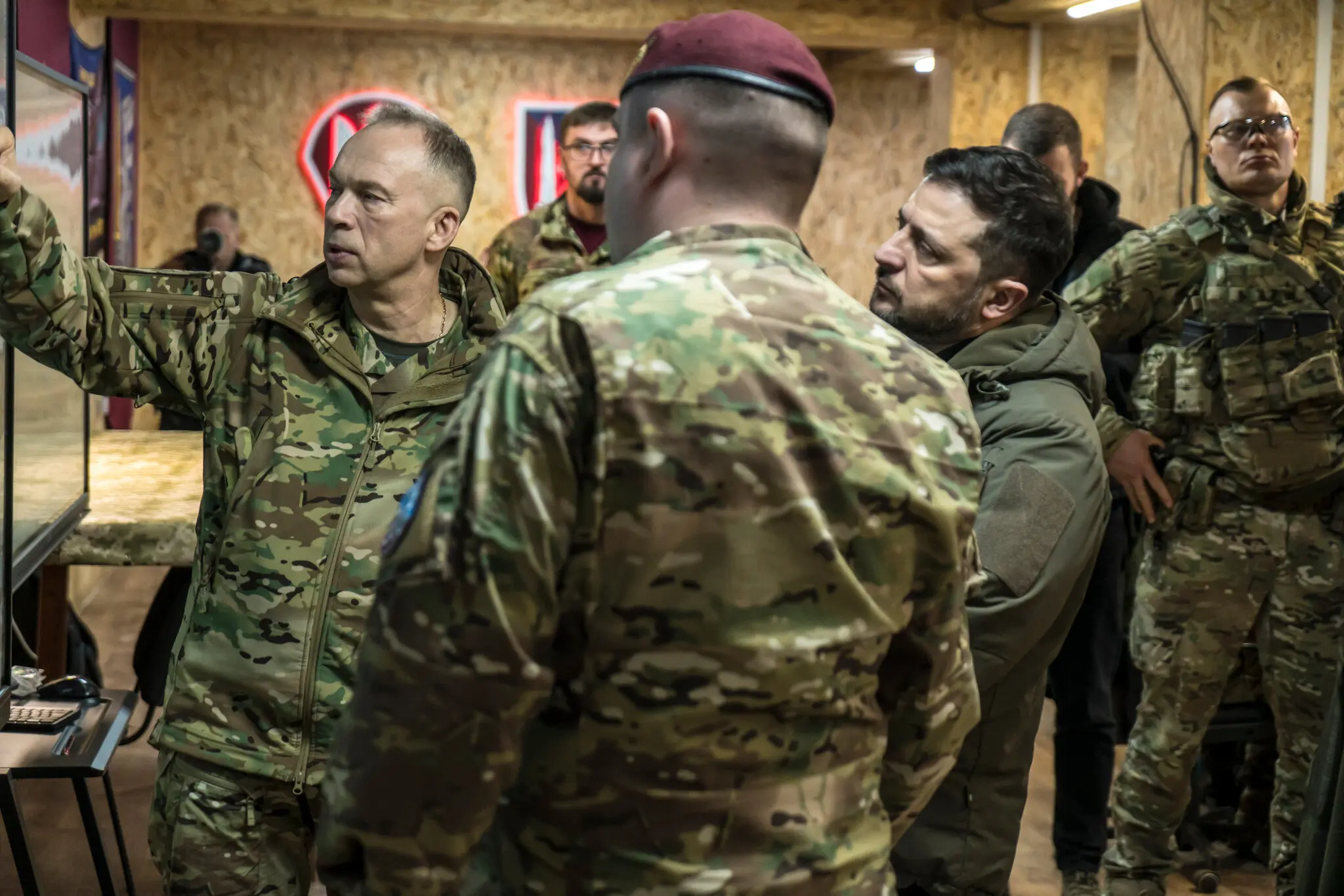 Генерал Олександр Сирський, ліворуч, з президентом Володимиром Зеленським у Донецькій області України у березні — Брендан Гоффман
Russia is watching this crisis closely. For the Kremlin, Ukraine’s internal divisions are always an opportunity. But that does not mean every public dispute automatically serves Moscow. Wartime democracy has the right to argue, as long as those arguments do not destroy the state’s capacity to act. Sometimes public pressure prevents a mistake that silence would have allowed to become fatal.
The greatest risk now is the loss of tempo. Ukraine has begun pressing Russia in places where Moscow did not feel vulnerable: Crimea, the sea, oil refineries and the air above its own capital. If internal struggle slows the drone campaign, defense production or command reform, the strategic window may narrow.
Parliament’s delay in appointing a new defense minister showed that Zelensky’s decision is not passing without resistance. A temporary arrangement at the Defense Ministry only underlines the instability of the moment. A country fighting a war of attrition cannot afford prolonged uncertainty in one of its most important institutions.
Ukraine really had been on an upswing. But success often makes hidden conflicts visible. When a strategy begins to work, different groups inside the system compete for the right to define it, reshape it or stop it. That struggle has now moved into the open — into a parking garage, into public squares, into parliament and into command offices.
This crisis does not have to end in defeat. It can become a moment of correction if the authorities explain their decisions honestly, preserve effective reforms, protect defense procurement from corruption and give the new military culture a real place in the system. But that requires a mature response, not silence.
Ukraine cannot defeat Russia only with more soldiers or more armored vehicles. Its chance lies in speed, precision, technological boldness, public trust and the ability to fix mistakes before they become disasters. Fedorov’s dismissal has tested all of those elements at once.
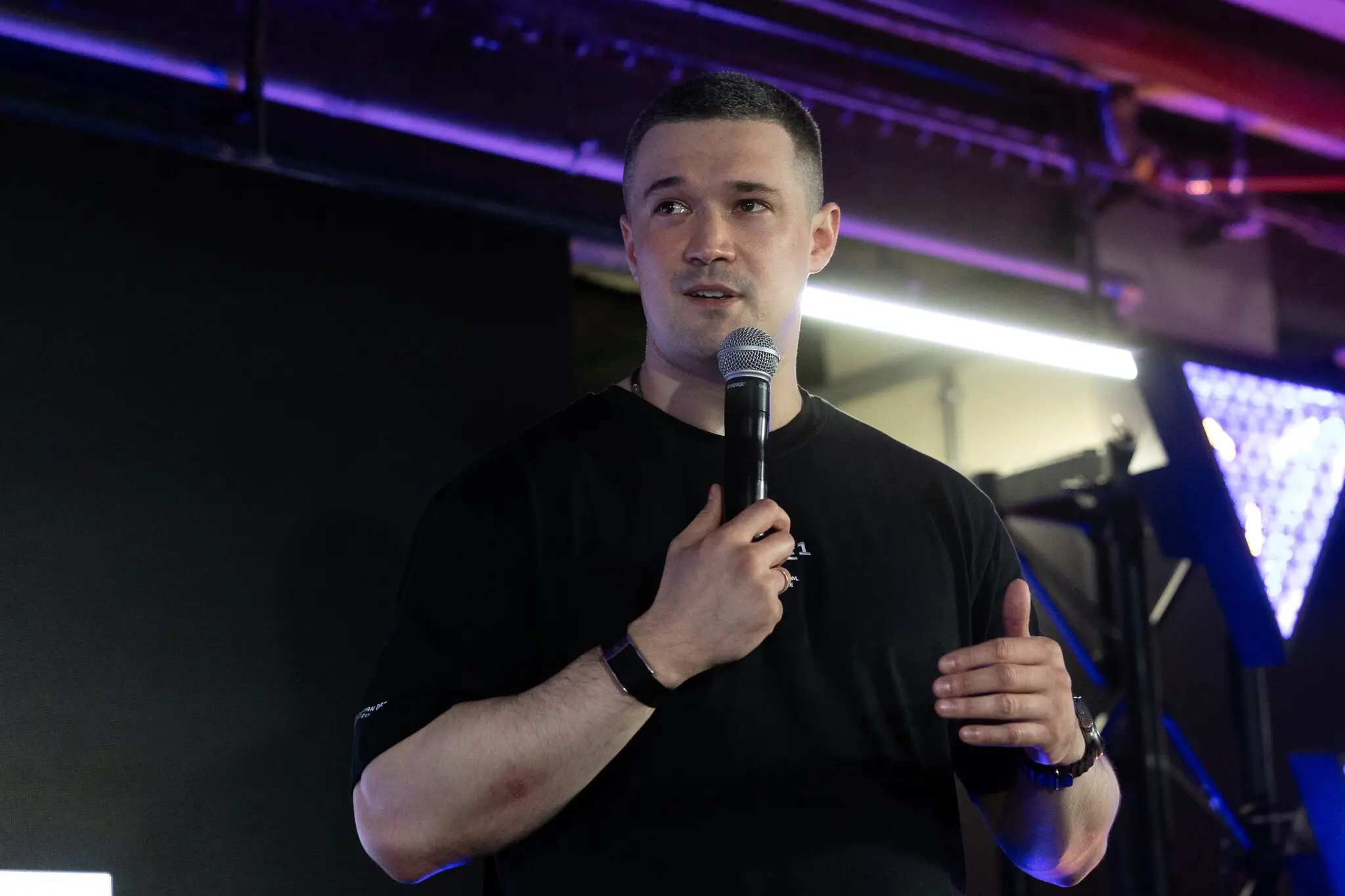
The main question now is not who wins the personal conflict. It is whether Ukraine preserves the model of war that produced its recent successes. If it does, the internal explosion can be survived. If not, Russia may gain what it could not quickly win on the battlefield: Ukrainian fatigue with its own effectiveness.