
















Germany has long been accustomed to seeing the American military presence on its territory not only as a security guarantee, but as an infrastructure of mutual dependence. Bases, hospitals, logistics hubs and command chains have made the Federal Republic the central U.S. foothold in Europe for decades.
That is why Berlin initially appeared not to believe that Donald Trump would truly move to reduce the American contingent. His public threats were read as part of a familiar political style: a sharp post, a personal grievance, a demand for concessions, and then a negotiation.
This time, however, the negotiation quickly became a decision. The Pentagon announced plans to withdraw about 5,000 troops from Germany in the coming months. Formally, the move was framed as part of a broader review of America’s global military posture, but the political context was unmistakable.
Daycom’s assessment is that Berlin’s error was not in judging the military scale of the decision, but in misreading the psychology of the moment. For Trump, criticism from an ally during the war with Iran was not diplomatic disagreement. It was visible disloyalty, and it required a visible punishment.
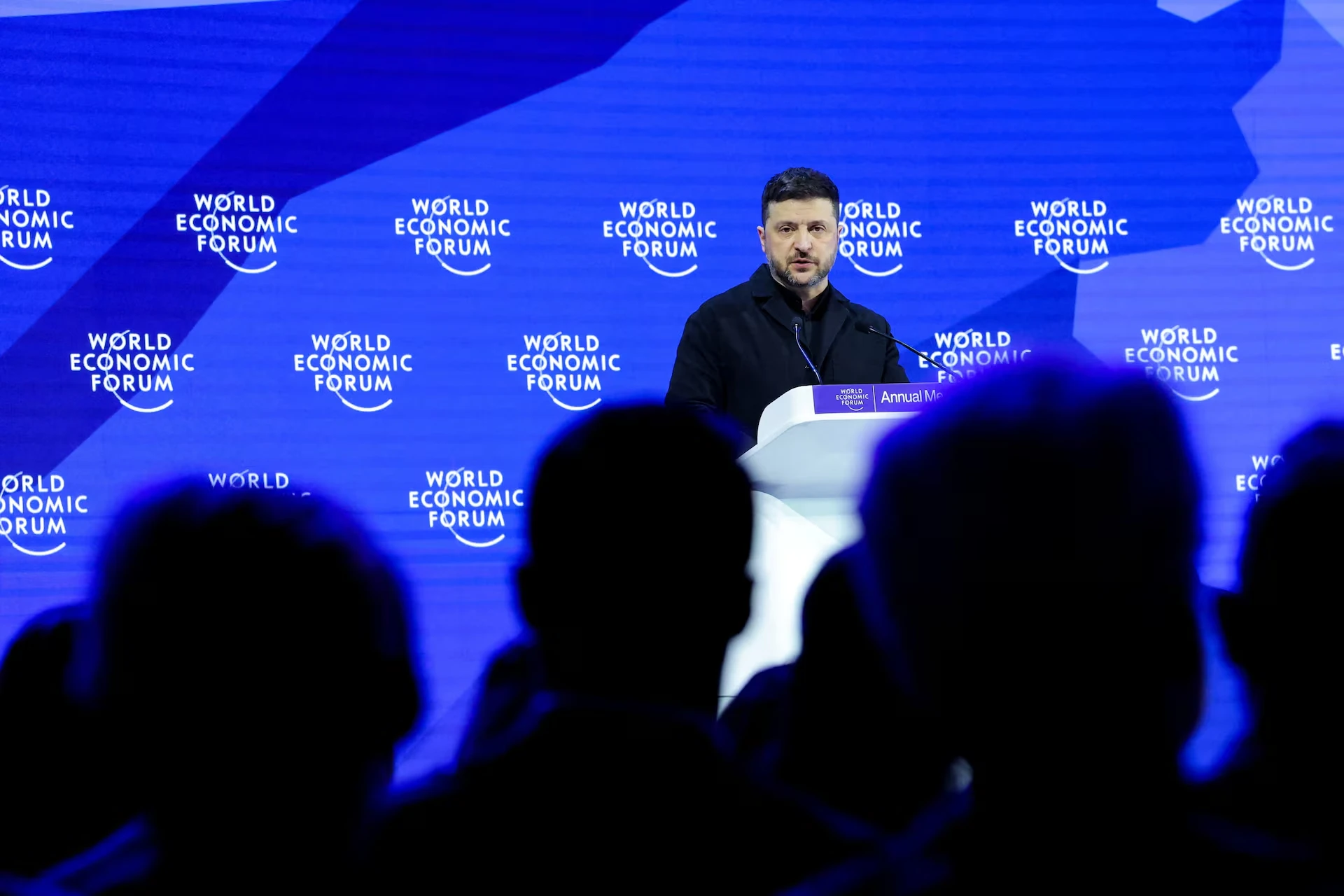
Chancellor Friedrich Merz had recently told German students that the United States had no strategy for ending the war and that Iranian negotiators had humiliated America. In Berlin, this may have sounded like domestic political candor. In Washington, it landed as an attack at the very moment the president was demanding support.
Trump had been pressing Europeans for weeks to take a more active role in the Iran campaign. What irritated him was not only allied restraint, but also doubts about the success of American strategy. Germany, trying to balance support for the United States with constitutional limits, became an easy target.
Berlin believed it had strong reasons to remain calm. Germany had not closed American bases, continued to allow its territory to be used for military logistics and remained a key hub for treating wounded Americans. It seemed unlikely that Washington would weaken a system it also needed.
That confidence was not baseless. The American presence in Germany is not symbolic friendship. It is a practical mechanism of power. Through it, the United States projects military force into Europe, the Middle East and Africa. Politically, withdrawing part of the force is easier than rebuilding the architecture behind it.
That is why the response from German Defense Minister Boris Pistorius was measured. He called the step foreseeable and stressed that American troops in Europe serve the interests of both sides. Berlin’s main signal was clear: Germany does not want escalation, but it will not ask for forgiveness.
Still, the calm tone does not hide the deeper problem. If the U.S. troop presence can become a tool of personal pressure by an American president against an ally, it is no longer only a security guarantee. It becomes a lever of political discipline.
For Germany, that is especially sensitive after Russia’s full-scale invasion of Ukraine. Since 2022, the American footprint in Europe has grown, and Germany has become one of NATO’s key rear platforms. Now part of that increase may be rolled back, bringing troop levels closer to the prewar period.
On paper, this is not a catastrophe. The withdrawal of 5,000 troops does not destroy Europe’s defense and does not mean an immediate American exit from Germany. But the political signal is stronger than the arithmetic. Washington is showing that allied infrastructure is no longer shielded from the impulses of the White House.
That is why concern was heard even among Republicans in Congress. For part of the American establishment, reducing the forward presence in Europe while Russia’s war against Ukraine continues sends the wrong signal to the Kremlin. Germany is not only an ally in this equation. It is part of the deterrence of Moscow.
Merz now finds himself in a difficult trap. On one side, he had built a personal channel with Trump and assured Germans that the U.S. military presence would remain. On the other, he could not appear to silently endorse a war with Iran that lacks a clear strategy and international mandate.
Germany’s position on Iran was cautious: participation in securing shipping routes, including with minesweepers, would be possible only under a durable cease-fire and with international approval. For Berlin, that is a legal necessity. For Trump, it looks like another refusal to help.
The clash exposed a deeper divide in political cultures. Germany thinks in procedures, coalitions, parliamentary limits and international law. Trump thinks in loyalty, speed, personal prestige and visible gestures of support. What Berlin sees as caution, he reads as evasion.
Vice Chancellor Lars Klingbeil only intensified the tension when he publicly rejected Trump’s advice and pointed to the chaos created by the war. His words matched the mood of part of German society, but in Washington’s conflict logic they reinforced the image of Berlin as an ungrateful ally.
For Europe, the episode carries a broader meaning. The problem is no longer one Pentagon decision or one dispute over Iran. The problem is that U.S. guarantees are becoming increasingly dependent on Washington’s domestic politics, the president’s mood and allies’ willingness to adapt to his demands.
Germany has spent years saying that Europe must take greater responsibility for its own defense. That phrase is now ceasing to be diplomatic language. If the American presence can be reduced in response to political criticism, Europe will have to plan security not as an extension of U.S. power, but as its own system.
At the same time, Berlin has no interest in an open rupture. The German military is not yet ready to replace American capabilities, and Europe does not have enough unity to build a full alternative quickly. The response from Merz and Pistorius will therefore remain restrained: no panic, but faster rearmament.
This is the central lesson for Berlin. Trump does not necessarily seek to destroy the trans-Atlantic alliance outright. But he is ready to turn it into a tool of bargaining, punishment and displays of strength. An alliance that once looked like a structure increasingly behaves like a negotiating position.
Germany underestimated not the number of troops, but the change in rules. The American presence on its soil is no longer an automatic political constant. It has become conditional, conflict-sensitive and usable as leverage. For a country that built its security for decades on the predictability of the United States, that may matter more than the withdrawal of 5,000 soldiers itself.