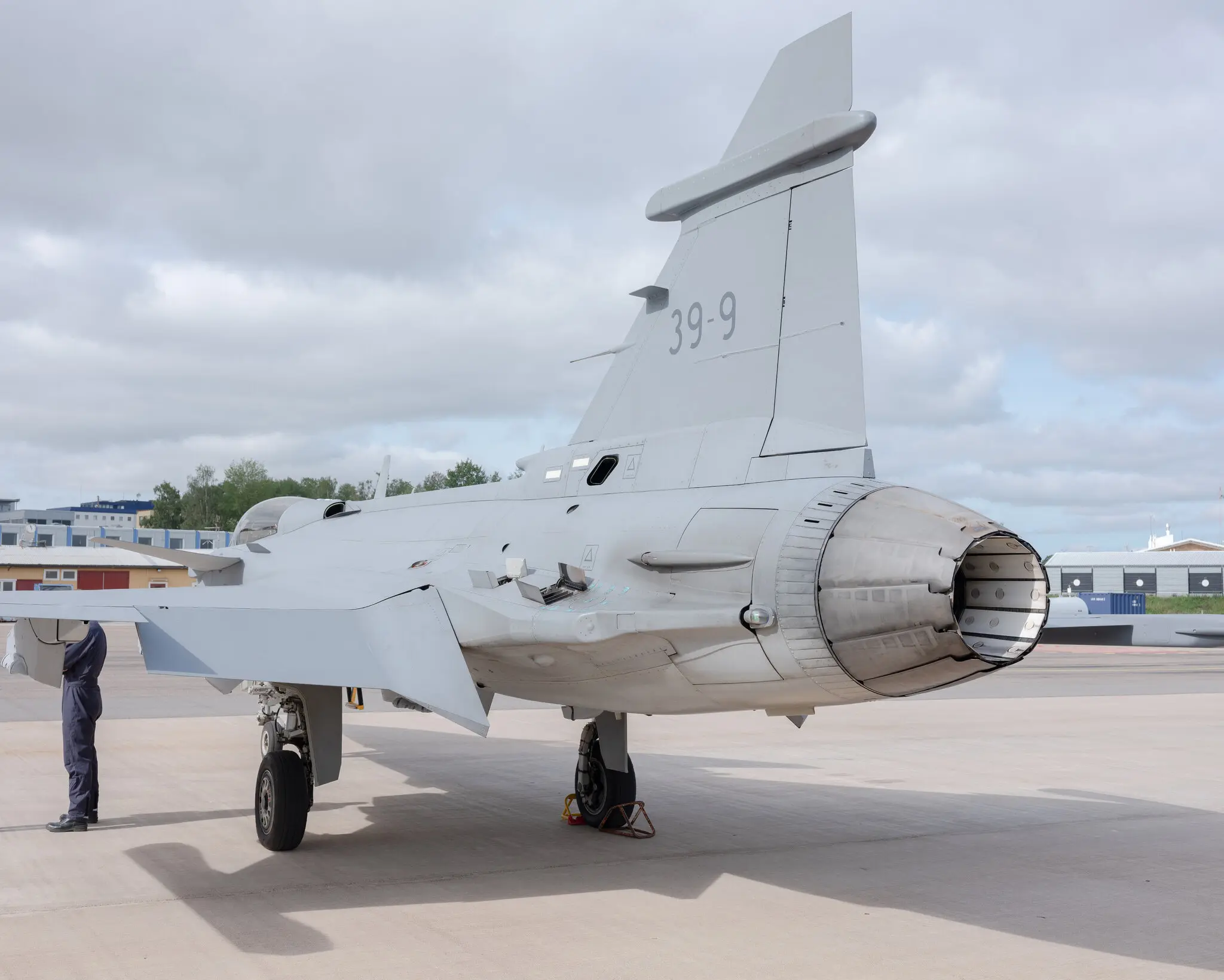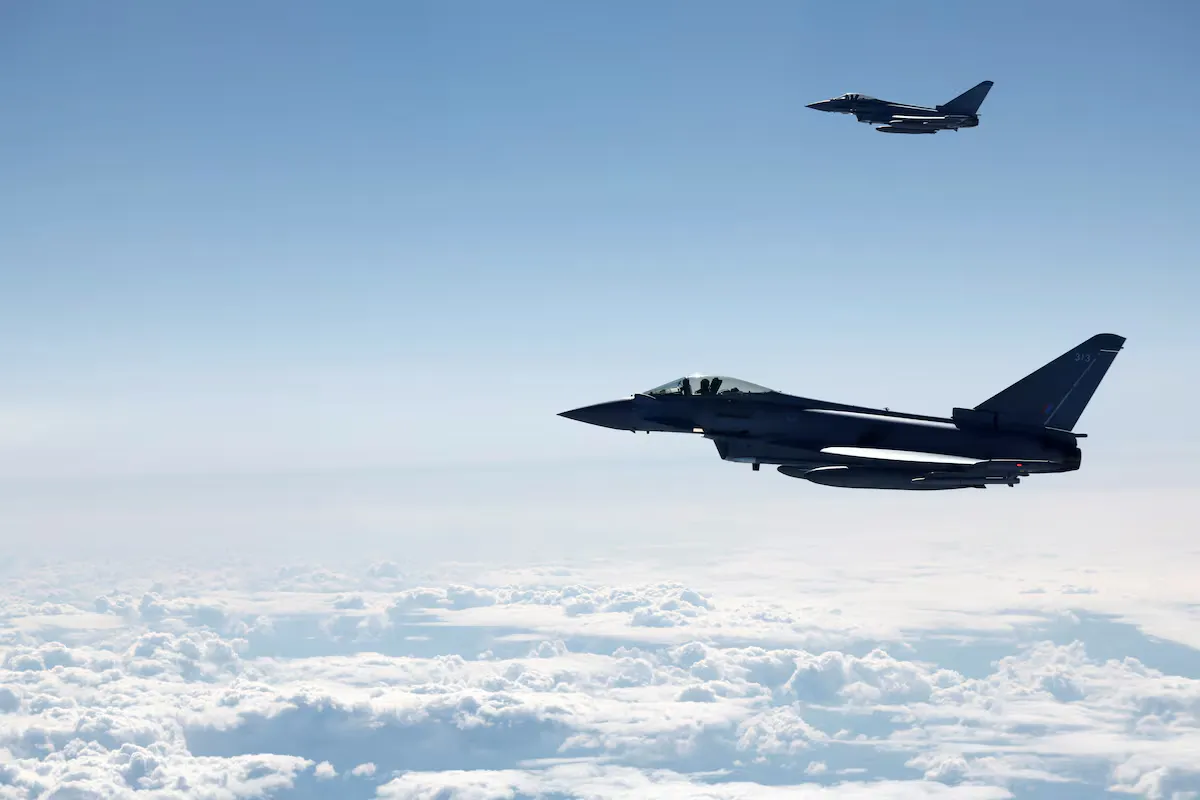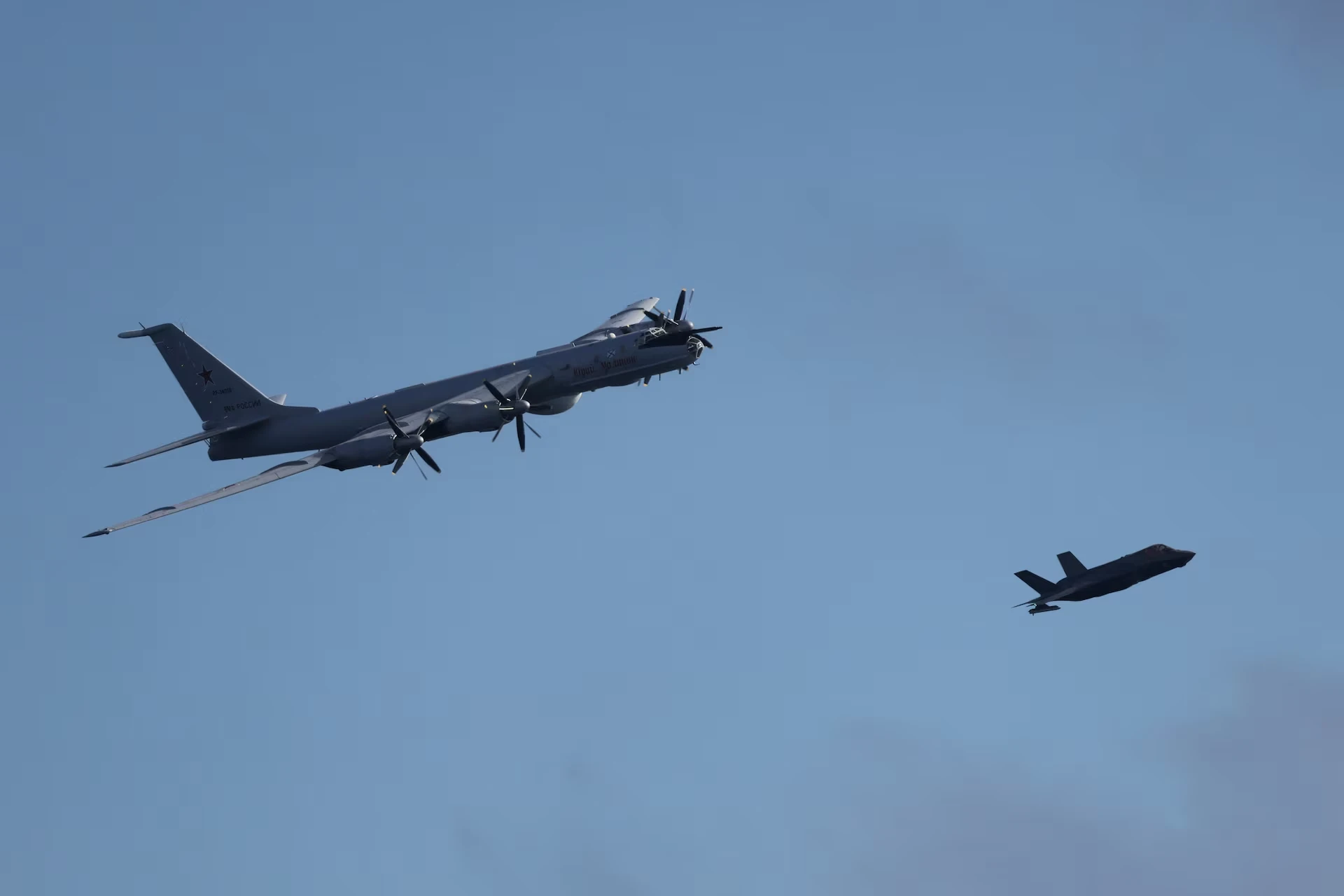




















Ukraine’s air war is approaching a moment that could reshape its architecture. After years of waiting for Western aircraft, Kyiv is turning to Sweden’s Gripen — a fighter designed precisely for the scenario in which a smaller country must fight Russia from dispersed, damaged and vulnerable bases.
Ukraine plans to buy 20 new Gripen E fighters through a major European loan package and is set to receive 16 older aircraft from Sweden. Over time, the agreement could grow to a far larger scale — up to 150 jets — if the war and the needs of Ukraine’s Air Force require such rearmament.
For President Volodymyr Zelensky, the deal marks a “new page” for Ukraine. This is not merely another aircraft type entering the arsenal. It points to a future model of air defense: cheaper to operate, more flexible on the ground and better suited to a war in which major air bases have long been priority targets for Russian missiles.
According to Daycom’s assessment, the Gripen’s main strength is not that it will magically change the balance in the sky. Its significance lies elsewhere: it fits the reality of Ukraine’s war better than many Western platforms, because survival depends not on the most spectacular system, but on one that can be serviced quickly, hidden, moved and sent back into the air.
The Gripen does not have the stealth capabilities of the F-35 and does not claim to be the most powerful fighter of its generation. It was built around a different logic: operating from roads, temporary strips and dispersed sites, in cold weather, under enemy pressure and with a small ground crew.
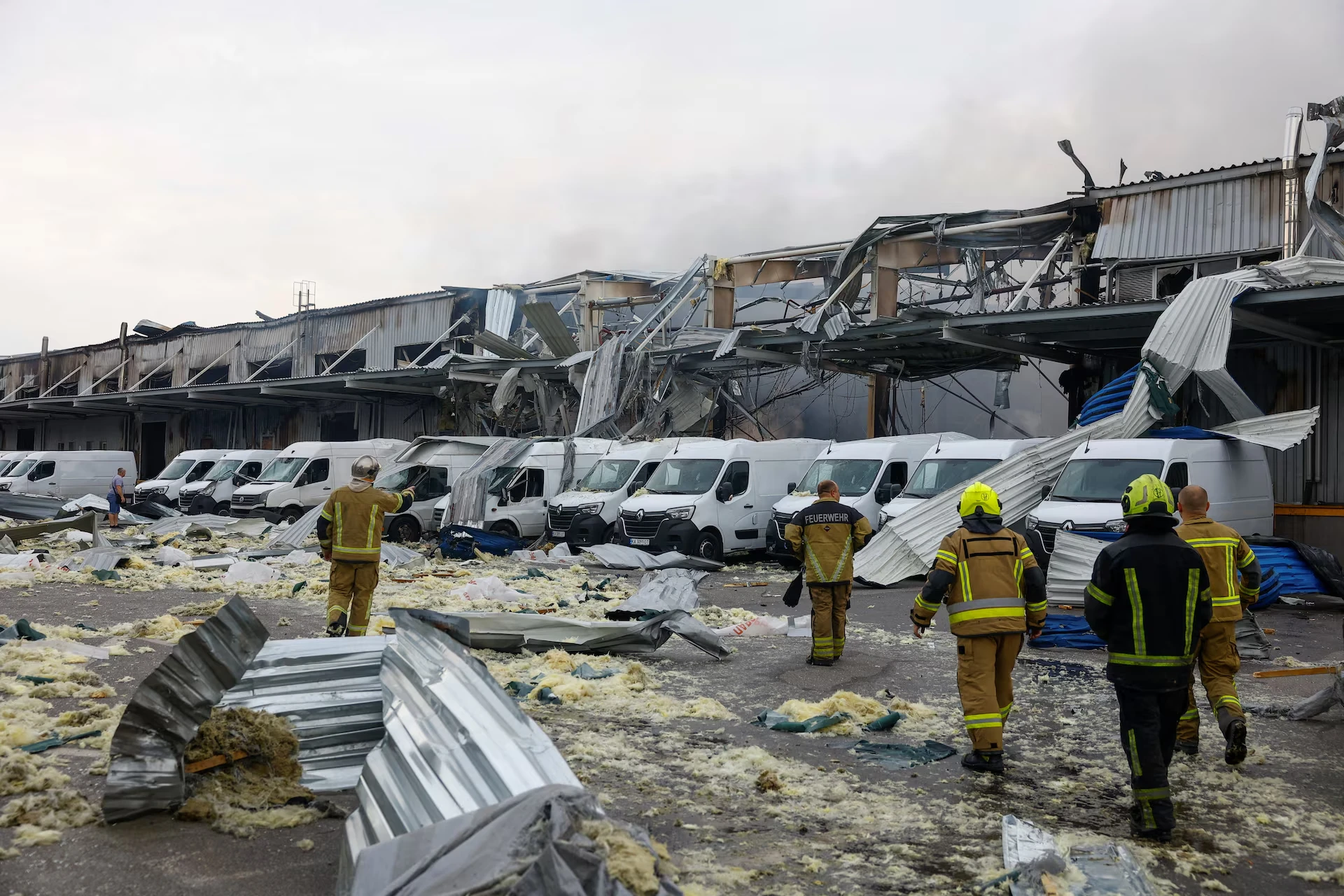
For Ukraine, that matters deeply. Its aviation cannot rely on calm, intact, NATO-standard air bases. Russia strikes airfields, fuel depots, repair sites, radars and command posts. In such a war, an aircraft must be not only a combat machine, but part of a survival system.

The Swedish concept of dispersed aviation fits Ukrainian conditions almost perfectly. Gripens can take off from and land on straight sections of highway, refuel and rearm quickly, and leave a site before the enemy can strike it again.
In this sense, the Gripen is an aircraft for the war after the first missile. Not for a parade display on a clean concrete runway, but for a situation in which a base has been damaged, equipment must be scattered, and pilots and technicians have to work in field conditions under the threat of drones and ballistic missiles.
Ukrainian military planners particularly value the speed of maintenance. A small team can refuel, rearm and prepare a Gripen for another sortie in minutes. In a long war, that is not a detail but a combat advantage: an aircraft that returns to the sky faster creates more pressure on the enemy.
Operating costs also matter. If an hour of flying a Gripen costs substantially less than with heavier and more complex Western aircraft, Ukraine gains not only a new fighter, but a more realistic model for sustained use. In a war of attrition, a cheaper hour in the sky can be almost as important as missile range.
The Gripen’s strongest combat argument may be its Meteor air-to-air missiles. They could force Russian aircraft to operate farther from the front, directly affecting one of Ukraine’s most painful problems — glide bombs, which Russia uses to destroy positions, cities and fortifications near the line of contact.
If Russian aviation is pushed farther back, its ability to drop guided bombs from safer distances will shrink. That will not stop Russian air pressure entirely, but it could make it less accurate, less intense and more costly for Moscow.
This is where the Gripen can give Ukraine not absolute air superiority, but an important layer of denial against Russian air freedom. The point is not to immediately clear the sky of Russian aircraft. The point is to force them to operate more cautiously, at greater distance and under greater risk.
The limits are obvious. Russia’s ground-based air defense remains dense and dangerous. S-300 and S-400 systems, radars, fighters and long-range missiles will not disappear because Gripens arrive. Without stealth and with a lighter payload than heavier platforms, the Swedish fighter will not become a universal solution.
But Ukraine does not need a single silver bullet. It needs a complex air system: F-16s, Gripens, drones, air defense, long-range missiles, intelligence, mobile radars, repair capacity and protected logistics. Gripen may become one of the best-adapted elements of that mosaic.
For Sweden, this is also a moment of truth. Gripen has long had a reputation as a smart, practical and reliable aircraft for small and medium-sized states, but it has never faced a full test in a major war against a technologically advanced enemy. Ukraine will be the place where theory meets reality.
That test will also be difficult for the manufacturer. Saab already has a substantial order book, and production capacity is limited. A complex combat aircraft cannot be rapidly stamped out like shells or drones. If Ukraine’s order expands, Sweden will have to increase output, bring in partners and think seriously about repair capacity closer to Ukraine.
Possible local cooperation with Ukraine on repairs, maintenance, spare parts and, eventually, production would have strategic importance. Ukraine cannot depend only on distant factories. It needs an aviation ecosystem capable of restoring aircraft during the war, not after it.
For Sweden’s defense industry, the Ukrainian contract could become a breakthrough. Saab’s shares have surged since Russia’s full-scale invasion, and successful Gripen use in Ukraine could open new markets. Canada and other countries will watch not the brochure specifications, but the aircraft’s combat endurance.
Yet commercial success here is inseparable from military risk. If Gripen performs well, it will become a symbol of Swedish defense thinking. If losses are heavy or the effect proves limited, critics will quickly recall its weaknesses. Ukraine will be the most honest proving ground, because Russia’s war does not forgive marketing exaggeration.
For Kyiv, something else matters more: Gripen could help Ukraine move from merely keeping its aviation alive to gradually renewing it. Old Soviet aircraft have done enormous work, but their service life, weapons and compatibility with Western systems have limits. Ukraine needs a fleet that is not a temporary bridge, but the foundation of its future Air Force.
That foundation cannot be built in a single year. Pilots must train, technicians must rebuild procedures, depots must receive spare parts, and headquarters must integrate the new aircraft with air defense and drones. In war, integration is often harder than delivery itself.
But if Gripen enters Ukrainian skies in time, it may change not the entire war, but several critical rhythms: reduce Russian aviation’s freedom near the front, strengthen the defense of cities, make Ukrainian aircraft less vulnerable to strikes on bases and give Kyiv another argument in negotiations.
That is why the Swedish fighter matters now not as another symbol of Western aid, but as an answer to a very specific question: how to fight Russia in the air when airfields are under attack, missiles are expensive, the war is long and every sortie must count.
Gripen was built for a country that always imagined a Russian threat nearby. Now it is going to a country that lives under that threat every day. And there, it will become clear whether Sweden’s bet on simplicity, dispersal, fast maintenance and technological restraint was not a compromise, but an advantage.