



















Hungarians are voting in an election that long ago ceased to be a purely national event. On paper, this is a contest for power in a country of fewer than ten million people. In reality, it is a test of whether one of Europe’s most durable populist systems can survive the moment when fatigue with it has become a political fact.
For Viktor Orbán, this is not just another campaign. After sixteen uninterrupted years in office, he enters election day not as the unquestioned master of the field, but as a leader whose advantage is no longer treated as automatic. That alone is enough to make the moment tense not only in Budapest, but across Brussels and beyond.
What matters most is not only the name of his challenger, but the nature of the challenge itself. Péter Magyar did not arrive from some distant ideological camp. He emerged from Orbán’s own political world and turned public anger over corruption, economic stagnation and the decay of state services into a conservative-coded alternative that even many former government voters can recognize as legitimate. According to Daycom’s earlier analysis, that is precisely what makes him more dangerous to the system than previous opposition coalitions: he does not frighten the electorate with unfamiliarity, he tempts it with familiarity.
Orbán spent years winning with a formula that looked almost impossible to break. At home, he sold order, protection and stability. Abroad, he sold sovereign defiance against the liberal consensus of Brussels. His rule rested not only on charisma, but on rewritten conditions: a disciplined media sphere, an electoral structure shaped to favor the incumbent and a political machine designed to reproduce majorities even under pressure.
That is why these elections are so difficult for his opponents even in a hostile atmosphere for the government. Public mood can shift faster than the mechanics of power. In Hungary, it is not enough simply to win more enthusiasm in the air of a campaign. One must fight through a system patiently built to preserve advantage even when support begins to erode. That is what gives this vote its double character: it is both an election and a stress test of the state architecture Orbán created.
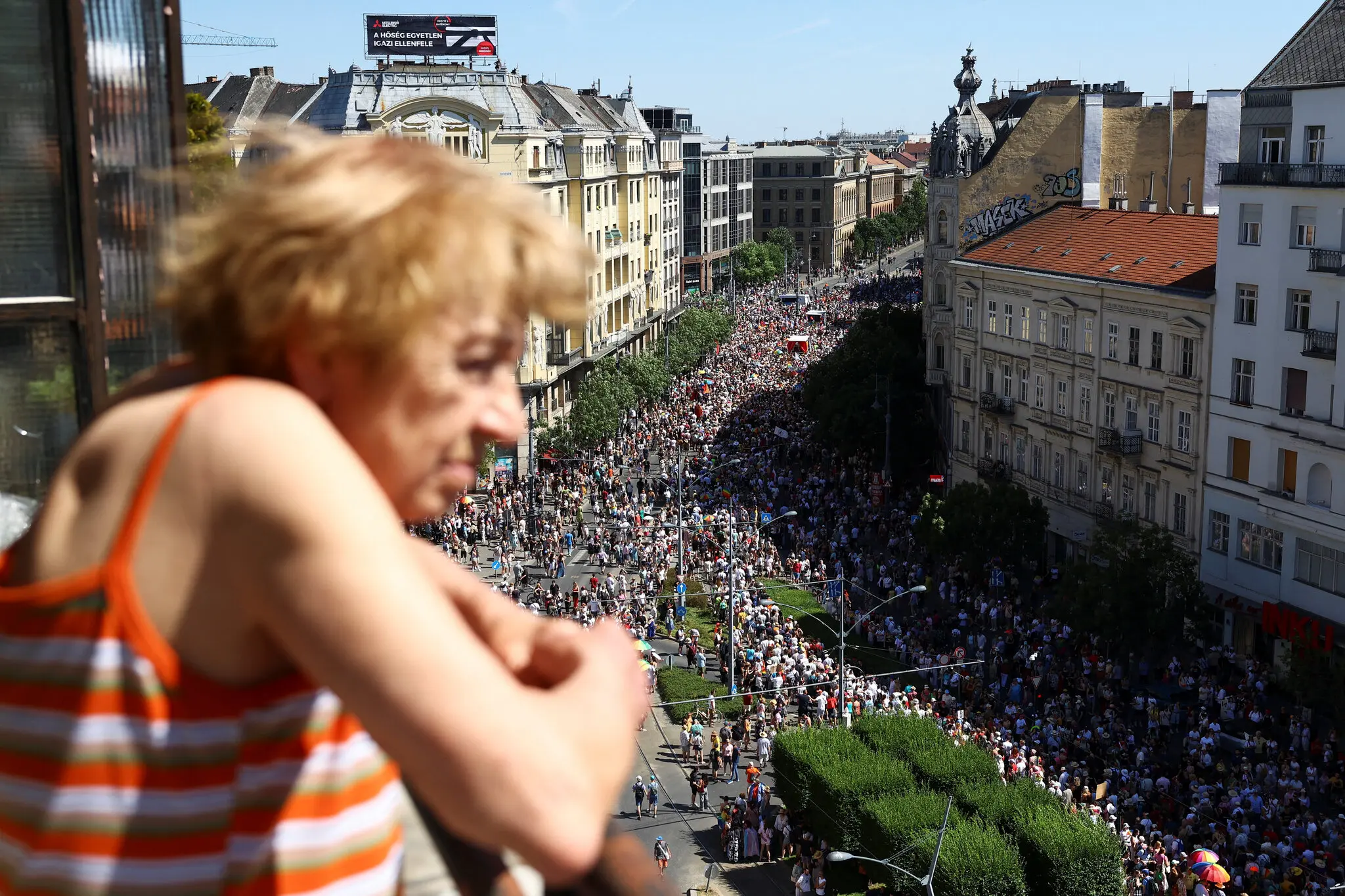
The record turnout is therefore significant far beyond the arithmetic of participation. When a country votes in numbers that suggest urgency rather than habit, it signals more than mobilization. It signals that the electorate no longer regards the result as prewritten. A political order built on inevitability becomes more fragile the moment voters begin to feel that history can move again.
Yet the real meaning of this election lies beyond the question of who forms the next government. Orbán has become something larger than a Hungarian prime minister. For much of the global right, he is an ideological brand, proof that it is possible to weaken liberal institutions, fight Brussels, discipline the media and still preserve electoral legitimacy from within the European Union. Support from Donald Trump and the demonstrative embrace of the MAGA world only underline that Budapest is also a stage in a wider cultural and political struggle across the West.
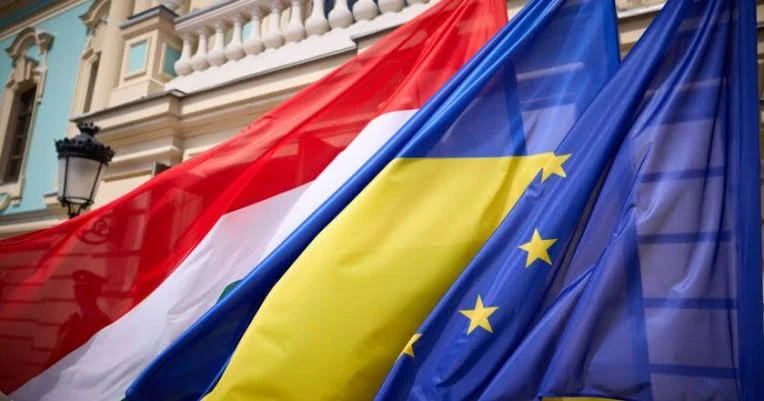
From the European point of view, the stakes are just as high. Orbán has not merely quarreled with the European Union; he has repeatedly slowed, blocked or distorted decisions central to the bloc, especially on Ukraine and Russia. In many European capitals, his course is no longer seen as the eccentric posture of a difficult small member state, but as a structural problem for the Union itself. That is why the prospect of his defeat is read in some quarters not only as a Hungarian transition, but as a chance to loosen one of the knots that has complicated European cohesion for years.
Magyar’s strength, however, does not come from offering a grand new ideology. It comes from returning politics to the ground. His campaign is built around hospitals, transport, prices, corruption and lost European funds. That matters because it interrupts Orbán’s greatest skill: the ability to turn every election into a plebiscite on fear, identity and external danger. If society begins voting not for symbolic protection but for the condition of the state itself, the gravitational pull of Orbánism weakens.
Even so, the resilience of the governing system should not be underestimated. Orbán remains deeply rooted in smaller towns and rural Hungary, among older voters and among those who still see him as a guarantor of predictability in a disordered world. That base has carried him through scandals, economic frustration and international isolation before. It has allowed him to translate almost every crisis into the language of national defense.
That is why this election is not merely a duel between Orbán and Magyar. It is a referendum on whether Hungary can imagine itself after Orbán. Whether a country that has lived for sixteen years under one political gravity can picture another center of power. And whether the European Union can see, in the middle of the continent, a different Hungary: less confrontational, less dependent on veto politics and less invested in converting domestic control into permanent conflict with the wider European project.
If power changes hands in Budapest, the result will strike not only one leader, but an entire political model that long seemed close to unbreakable. If Orbán survives again, he will once more prove that illiberal democracy can do more than endure. It can reproduce itself through elections even when the country is visibly tiring of it. That is the real meaning of this day. Hungary is deciding not only who governs next, but how long an era can continue once the myth of its inevitability begins to crack.