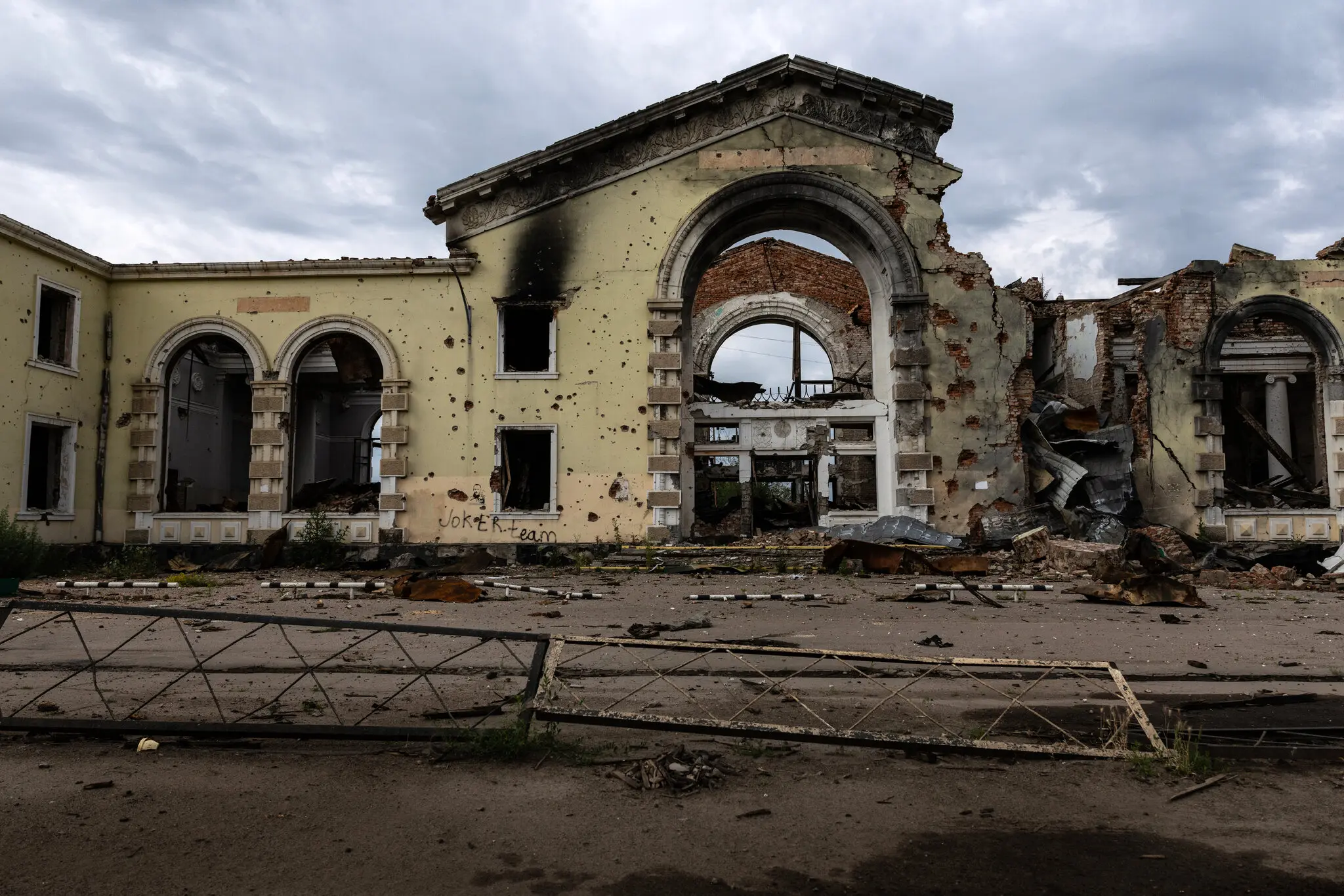



















For years, conferences on Ukraine’s recovery spoke mainly in the language of destruction: the cost of rebuilding roads, power plants, hospitals and apartment blocks damaged or erased by Russia. In Gdańsk, the conversation shifted. Ukraine was presented not only as a country in need of support, but as a market worth entering before competitors arrive.
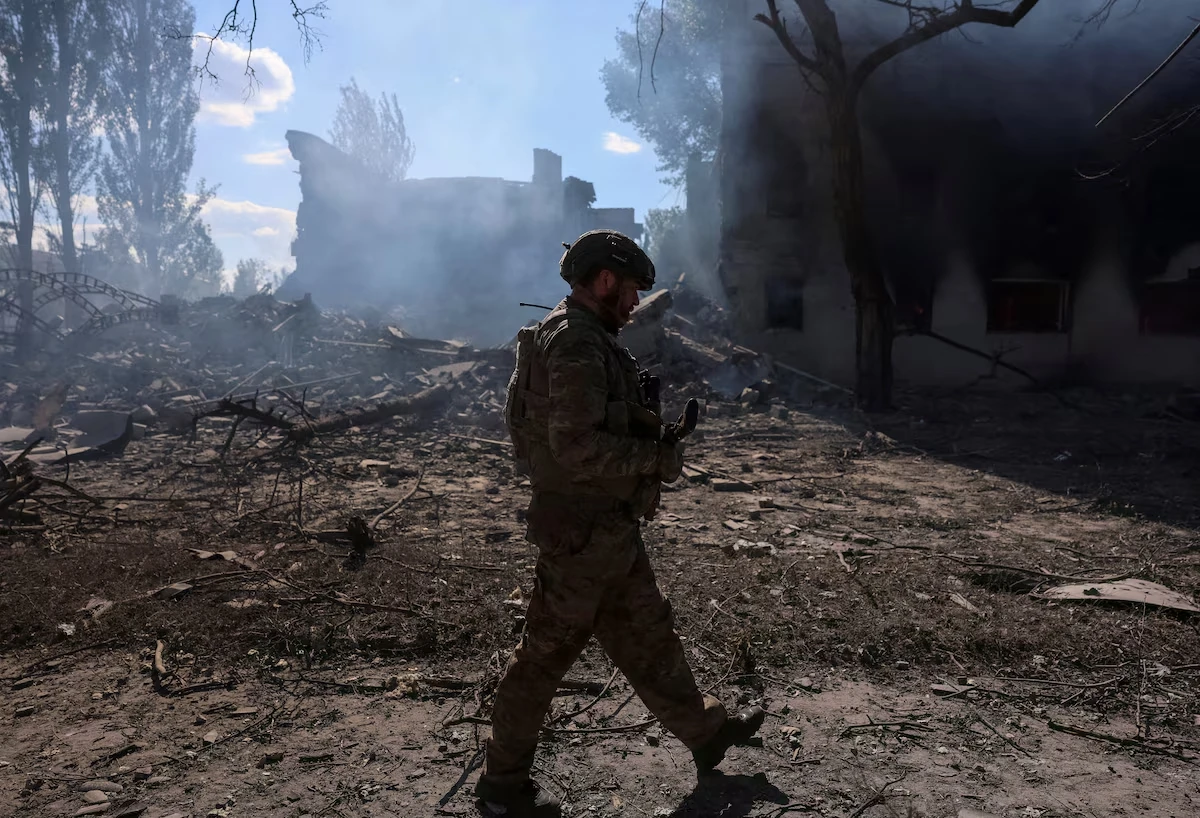
The change does not mean the war is close to ending. Russian missiles still strike Ukrainian cities, difficult battles continue in the Donbas, and the possibility of renewed escalation remains part of every serious business calculation. Investors are nevertheless beginning to identify which companies, assets and sectors could expand first if the front stabilises.
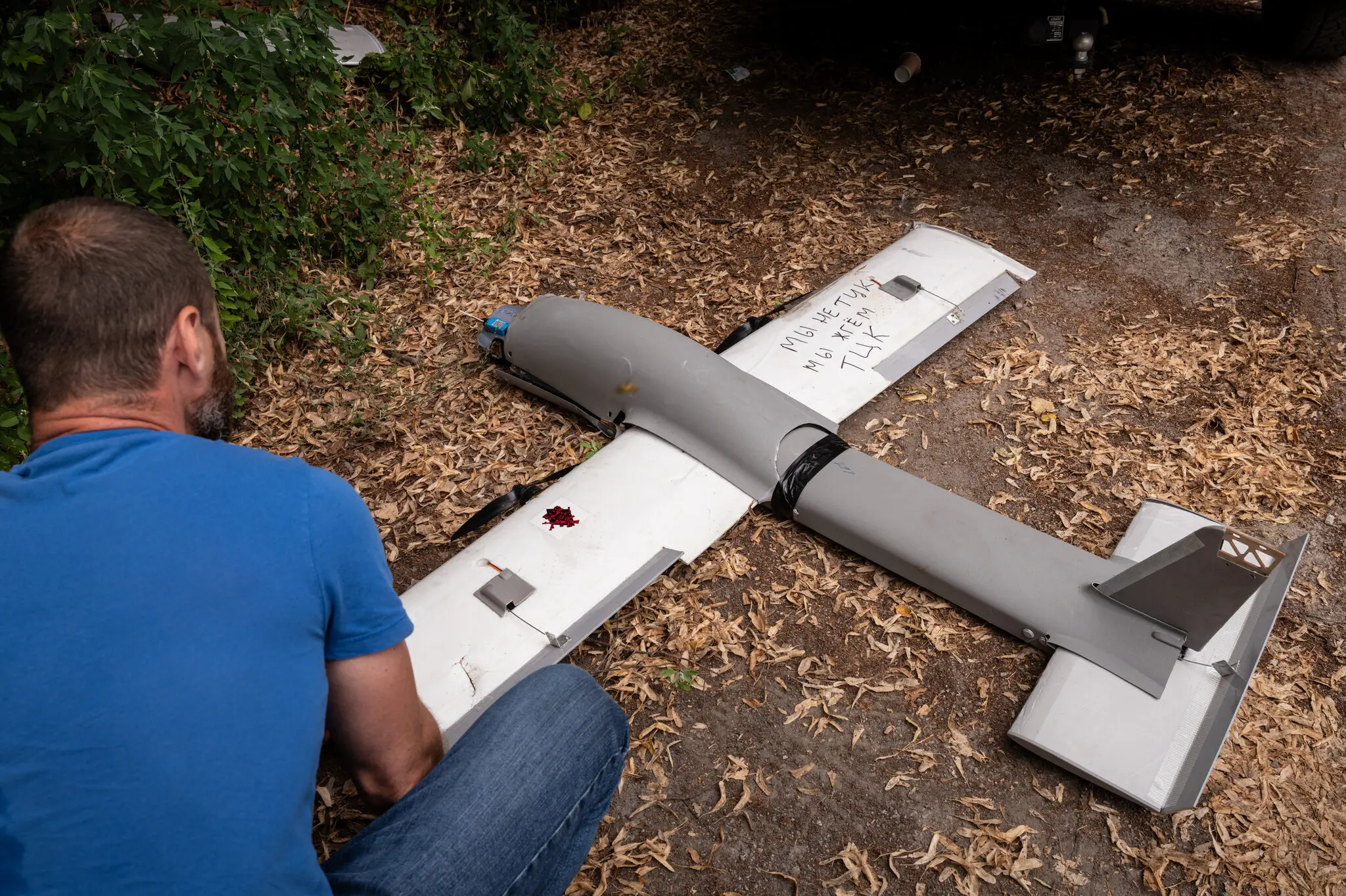
Their willingness to accept risk reflects a more optimistic view of Ukraine’s military prospects. Russia has failed to achieve its broadest objectives, its advances have largely slowed, and Ukrainian long-range drones are increasingly disrupting logistics, oil refining and supply routes serving occupied Crimea.
Daycom’s assessment is that the conference’s most important result was not the nominal value of its agreements, but the change in investors’ time horizon. Private capital is beginning to treat Ukraine not as a distant postwar project, but as an economy in which future market positions are already being established.
Around 7,500 participants attended the gathering in Gdańsk. The event produced 160 agreements representing roughly $11 billion in private investment and financial assistance. Those figures do not amount to an immediate transfer of capital, but they show reconstruction moving gradually from political declarations to specific lending, insurance and investment structures.
The new investment logic is straightforward: assets are cheaper while risk remains high. Once the war ends or the security environment improves, competition will intensify, valuations will rise and the most attractive positions in property, energy, logistics and industry may already be occupied.
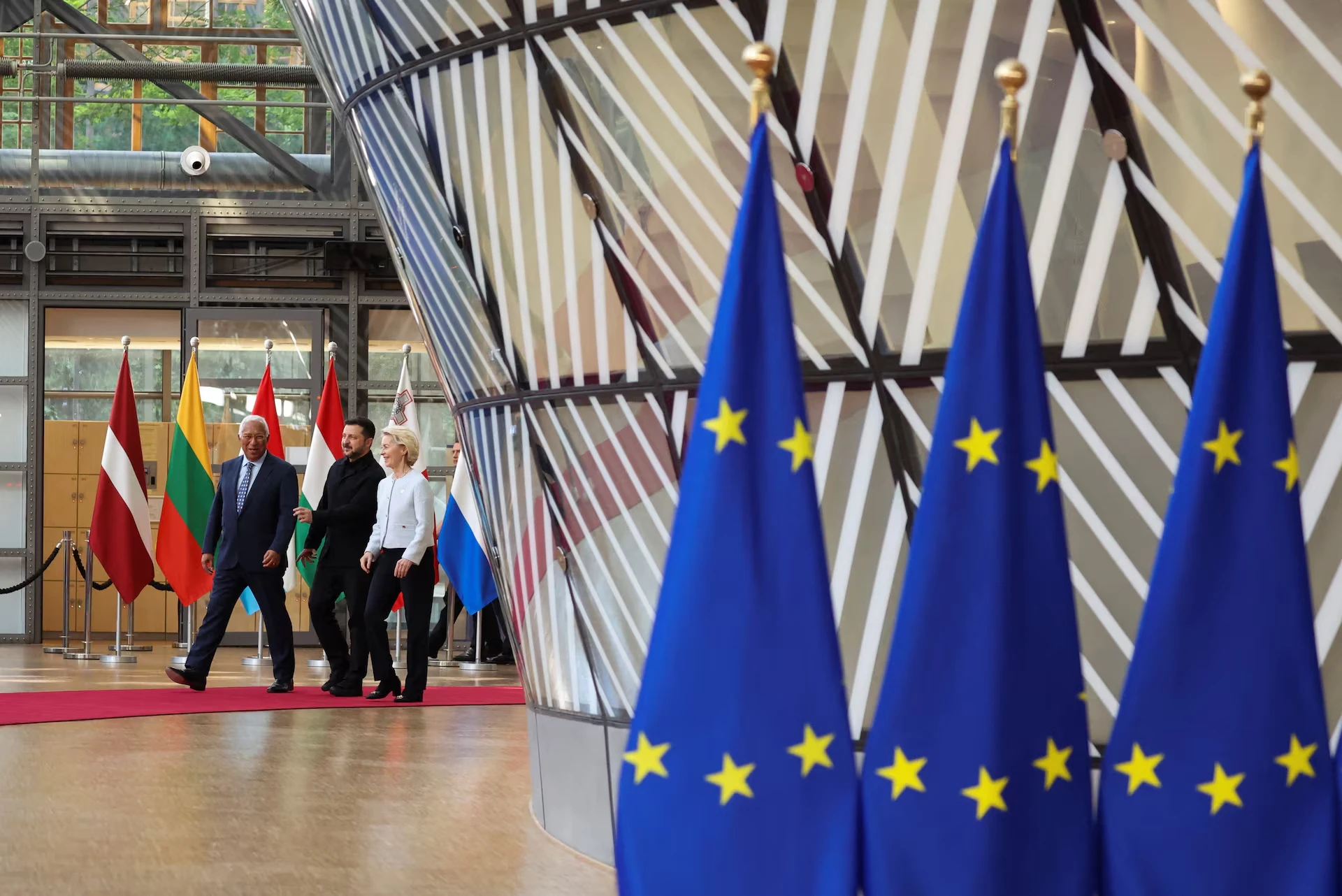
This is not simply a bet that Ukraine will survive. Investors are assuming that the country will preserve its sovereignty, continue towards European Union membership and gain deeper access to European markets, infrastructure funds and regulatory standards.
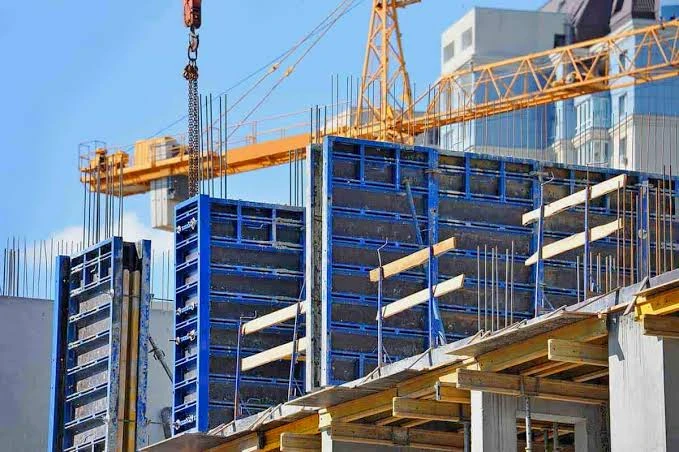
EU integration makes reconstruction far more ambitious than repairing what has been destroyed. Ukraine will need to modernise its energy system, transport network, housing stock, industrial base and public institutions. For private capital, that represents years of large-scale demand rather than a temporary humanitarian programme.
One of the clearest signals was a credit line of up to $300 million for Naftogaz from the Export-Import Bank of the United States. The financing is intended for American construction machinery and oil-industry services, supporting Ukrainian energy resilience while also creating business for US suppliers.
Naftogaz itself remains one of the central assets in Ukraine’s economic future. The country holds some of Europe’s largest known natural-gas reserves, with an estimated potential value of about $300 billion. Under stable conditions, those resources could reduce regional dependence on imports and strengthen Ukraine’s position in the European energy market.
Gas, however, is only part of the opportunity. Russian attacks on large coal- and gas-fired power stations have accelerated the move towards decentralised generation. Solar installations, wind farms and smaller gas units are harder to disable with a single strike, turning energy decentralisation into a security strategy as well as a climate policy.
The European Bank for Reconstruction and Development announced more than €500 million in new financing at the conference. Since the beginning of the full-scale invasion, it has invested about €10 billion in Ukraine, acting as an institutional anchor for private investors who remain less willing to absorb wartime risk.
Such institutions take on uncertainty that conventional lenders still avoid. They can guarantee loans, insure projects against war damage, acquire equity stakes and support infrastructure whose returns will emerge only over several years.
Without these mechanisms, reconstruction would remain dependent on allied government budgets. Donor assistance can pay for emergency repairs and essential public services, but it cannot finance the full modernisation of a country with tens of millions of consumers, a large agricultural sector, heavy industry, a sophisticated technology workforce and a complex transport network.
Investor interest is also spreading beyond infrastructure. Commercial property, shopping centres, logistics facilities and residential projects in Kyiv are again attracting large pools of private capital. Buyers are calculating that population returns, higher incomes and a shortage of quality space could lift valuations after the war.
The investments associated with former Google chief executive Eric Schmidt and his family are particularly revealing. Their interest includes shares in Ukrainian commercial real-estate funds, but also extends to drone manufacturers. The portfolio combines a bet on wartime technology with an expectation of wider economic recovery.
Ukraine’s defence sector has already become an investment story in its own right. Producers of unmanned systems, electronic warfare equipment, communications technology and battlefield software are testing their products under conditions no laboratory can reproduce. After the war, that experience could support a major export industry.
The technological spillover could extend well beyond defence. Navigation, sensors, autonomous systems, secure communications, artificial intelligence and advanced manufacturing all have civilian applications. Ukraine’s wartime industrial base may eventually resemble the technology ecosystems that emerged around the defence sectors of Israel and the United States.
Yet conference optimism should not be confused with a broad surge in foreign direct investment. Most companies that had no presence in Ukraine before 2022 are still waiting. They remain concerned about physical security, insurance costs, unstable logistics, workforce shortages and the predictability of courts and regulators.
The companies expanding most confidently are those that already understand the market. International food producers, retailers and service groups have learned that the state and consumer economy can continue functioning under attack. For newcomers, that resilience is encouraging, but it does not replace enforceable property rights.
Ukraine is therefore competing not only for capital, but for trust. It must demonstrate that the postwar economy will not reproduce the old system of political interference, selective justice, monopoly power and opaque permits. Otherwise, investment will remain concentrated in a small number of projects protected by international guarantees.
European integration could provide the strongest safeguard. Adopting EU rules requires changes in public procurement, corporate governance, competition policy, banking supervision and judicial practice. Investors place greater value on rules that survive elections than on assurances offered by any single government.
War-risk insurance will be equally important. Even a commercially attractive factory cannot secure ordinary financing if lenders do not know who will cover the loss after a missile strike. Public guarantees, international insurance pools and blended finance can turn uncertainty into a measurable cost.
The location of the conference carried its own symbolism. Gdańsk’s former Lenin Shipyard, where the Solidarity movement helped begin Central and Eastern Europe’s break from Soviet control, has since become a district of apartments, galleries, offices and cafés.
That transformation offers an appealing model for Ukraine: political liberation followed by integration, investment and urban renewal. But Poland’s experience also carries a warning. Capital followed institutional reform; it did not substitute for it.
Ukraine’s progress on the battlefield has opened a narrow investment window. It could close after a renewed Russian offensive, a domestic political crisis or disappointment with reforms. Each agreement matters not only for the money it may deliver, but for the message it sends to the next investor.
Reconstruction does not begin after the final shot. It begins when businesses believe the state will survive, preserve its strategic direction and protect invested capital. In Gdańsk, Ukraine showed that it can sell more than its need for assistance. It can also sell a credible claim on its economic future.