
















Iran’s strikes on U.S. bases across the Middle East are beginning to alter the very logic of how this war is being fought. The Pentagon has maintained the pace of its campaign against Iran, yet it is increasingly operating in a dispersed posture: some personnel have been pulled from major fixed installations, while command, coordination, and support functions are being shifted to backup sites, temporary office facilities, and other improvised locations. The full scale of that transition has not been publicly disclosed. But a combination of official statements, media reporting, and satellite imagery strongly suggests that the familiar architecture of American military presence in the region can no longer be treated as secure.
For Washington, the war initially rested on a long-established network of bases in Kuwait, Qatar, Bahrain, Saudi Arabia, Iraq, and Jordan. For decades, that geography was considered a strategic advantage: short logistical lines, well-developed infrastructure, hardened command centers, air assets, fuel depots, repair facilities, and predictable operational routines. But the current campaign against Iran has exposed the other side of that equation. What long functioned as an asset in lower-intensity regional wars becomes a liability in a confrontation with a state that possesses long-range missiles and drones. Fixed infrastructure that once projected control now also offers the enemy a map of valuable targets.
The Pentagon has, in effect, acknowledged that reality indirectly. Defense Secretary Pete Hegseth has said that the United States has struck more than 7,000 targets in Iran, while Chairman of the Joint Chiefs of Staff Dan Caine has emphasized that Iran still retains some military capability and that the United States is relying on “layered defenses” across the region. That phrasing matters. If a multilayered regional defense posture is required on a sustained basis, then the threat to U.S. facilities is not episodic. It is structural.
As Daycom assesses, the key shift is not simply that some bases have taken damage. It is that the Pentagon is now prosecuting a major war without full confidence in the security of its rear area. That is an unusual condition for the United States. In most of its wars over the past two decades, American forces quickly established air superiority and then operated from a relatively protected support architecture. The Iran theater breaks that pattern. Even large rear-area hubs can no longer be assumed to be durable sanctuaries.
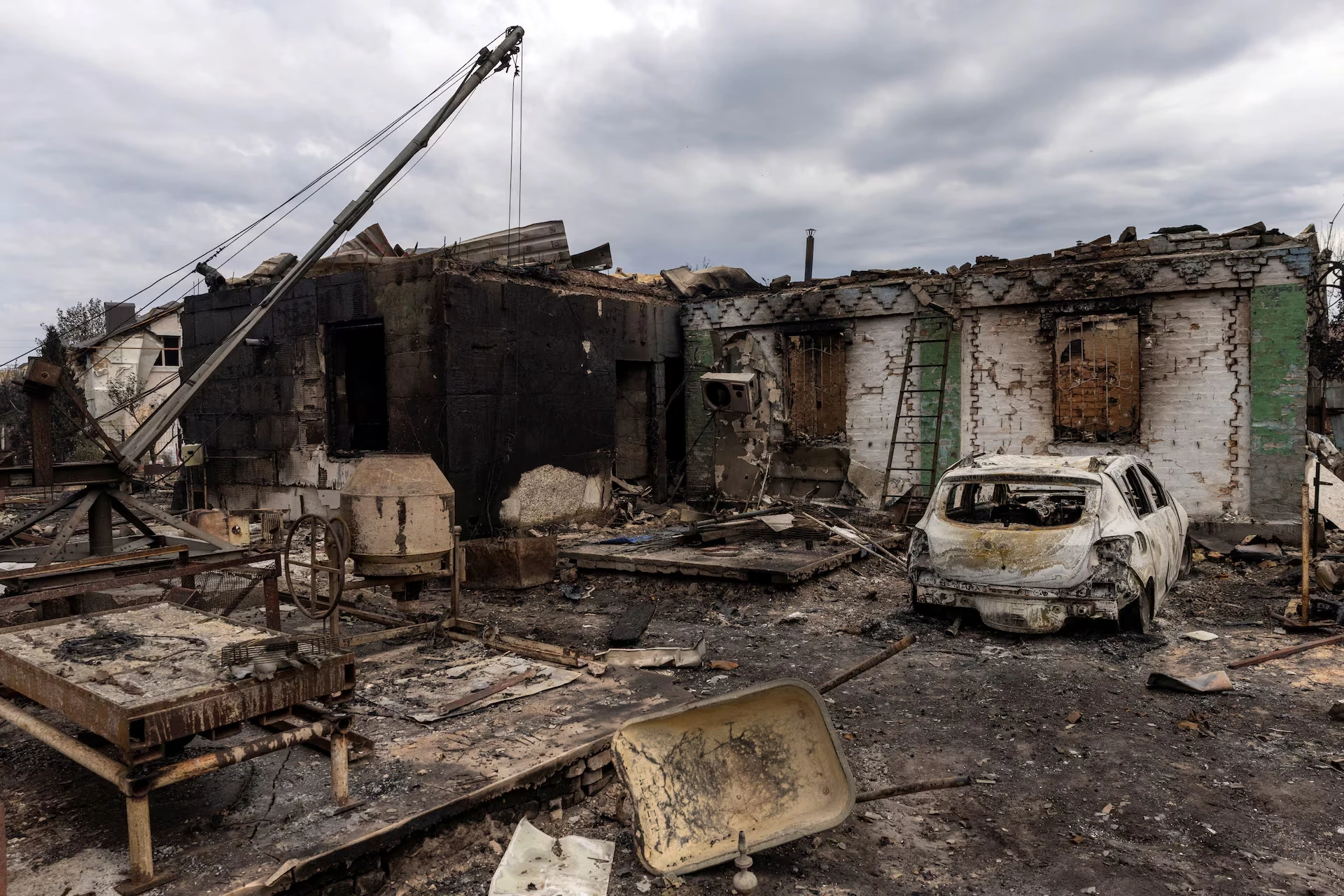
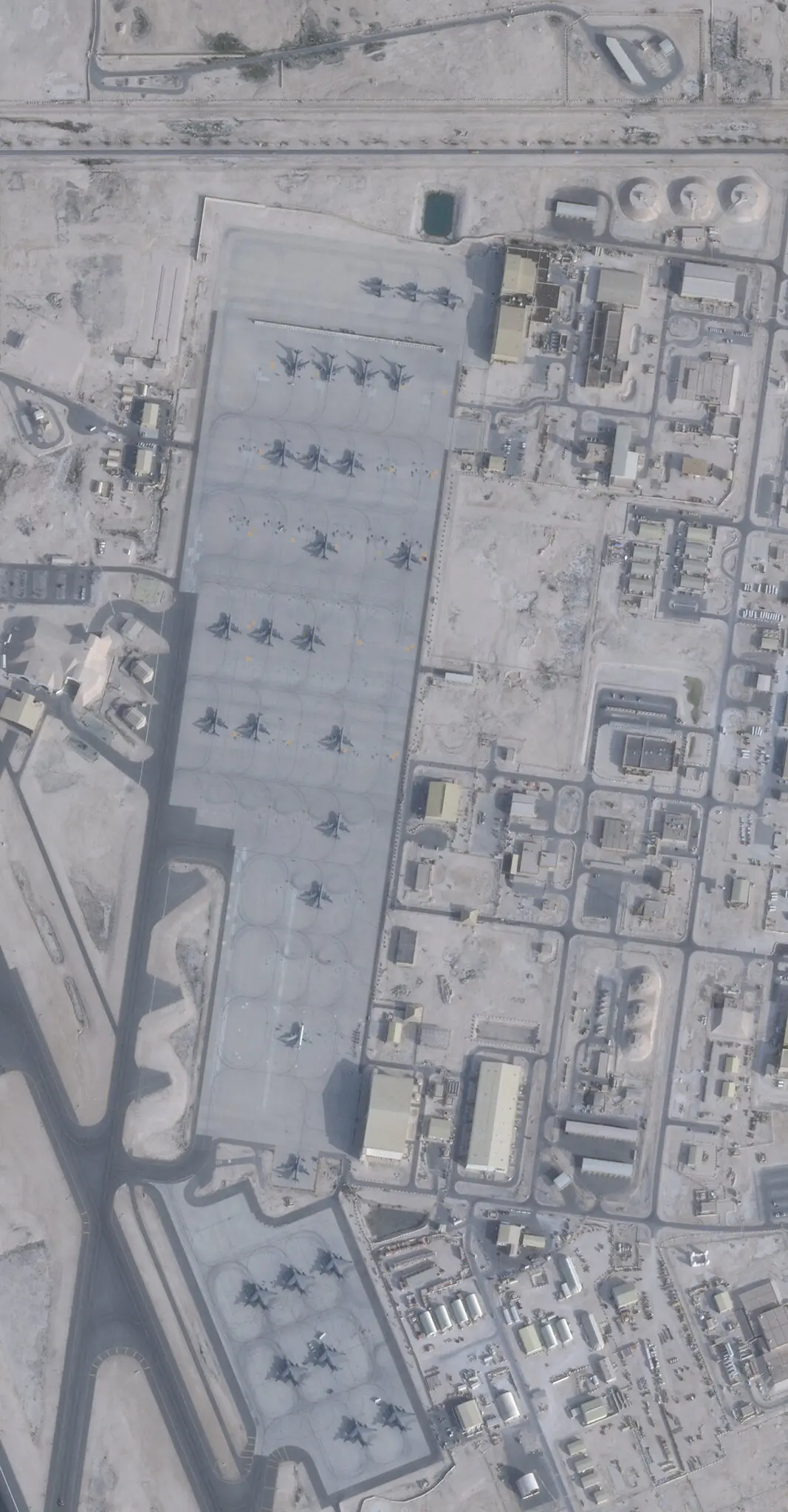
The clearest warning signs have come from the very countries where U.S. military infrastructure was long considered most stable. Satellite imagery and public reporting have pointed to damage at installations in Qatar, Kuwait, and Bahrain after Iranian strikes earlier this month. Additional reporting has indicated that American facilities in the Gulf have not only remained under threat, but have in some cases suffered direct hits that disrupted operations and raised new questions about force protection.
Official casualty figures have reinforced that picture. U.S. Central Command has confirmed the deaths of American service members in the first wave of Iranian attacks, including additional fatalities from injuries sustained in a strike in Saudi Arabia. Even without full public disclosure of where specific units have been moved, the fact of such losses makes one point unmistakable: these are not symbolic attacks. They are serious blows that force the United States to rethink how it protects personnel, equipment, and command functions across the region.
Against that backdrop, the information campaign launched by Iran’s security apparatus has also been revealing. Iranian outlets linked to the Islamic Revolutionary Guards Corps have circulated messages urging people in the region to report the whereabouts of American personnel allegedly sheltering in hotels and civilian buildings. This is clearly part psychological warfare and part intelligence fishing. But its significance lies elsewhere as well. Tehran is not only trying to strike U.S. military infrastructure. It is also trying to force American forces into a permanent condition of movement, uncertainty, and defensive adaptation.
That is why the idea of a “remote war” no longer sounds merely rhetorical. Aircraft, flight crews, technicians, and strike capabilities may remain concentrated at operational airfields. But a large share of the rest of the war effort — communications, planning, analysis, coordination, administrative support, and elements of command — increasingly depends on dispersed locations. Modern militaries can function this way, and the U.S. military is particularly strong at decentralized execution. But there is always a cost. Dispersal slows processes, complicates coordination, limits access to specialized equipment, and degrades some capabilities simply because not everything can be replicated or moved efficiently into temporary environments.
The implications reach well beyond this single campaign. Two decades of war in Iraq and Afghanistan shaped an American regional infrastructure built for adversaries that could mount insurgent attacks, suicide bombings, or indirect fire, but could not systematically threaten rear bases with large-scale missile and drone salvos. Iran can. That difference matters enormously. It means the United States is confronting not just a new battlefield, but the obsolescence of assumptions that governed its regional military posture for years. What Washington once treated as a secure operational ecosystem in the Gulf now looks more like a vulnerable forward grid.
The sharper question is whether the Trump administration adequately prepared for this scenario. Public criticism inside the United States is already pointing in that direction. If personnel truly had to be dispersed in haste, and if support and command functions had to be shifted out of their normal installations under pressure, that suggests not only flexibility on the part of the Pentagon, but also that the prewar model of force protection was not sufficient for a fourth week of sustained confrontation with Iran.
At the same time, it would be wrong to read this as evidence of American paralysis. The United States is still conducting a large-scale air campaign, and military leaders continue to insist that American forces remain fully capable of operating under dispersed conditions. One of the U.S. military’s enduring strengths is exactly this ability to continue functioning after disruption. Decentralized execution is not a slogan; it is a core operational principle. The system is designed to keep moving even when individual nodes are damaged or cut off. But that should not be confused with normality. This is a contingency mode, not an optimal one.
In that sense, Iran has already achieved one strategic effect even without stopping the American campaign. It has forced Washington to change the geography of the war, spend additional resources on protecting the rear, and confront the fact that its long-standing regional basing model no longer guarantees continuity, comfort, or invulnerability. That does not amount to an American defeat. But it does mean the war has entered a phase in which U.S. military superiority no longer translates into full operational ease.