

















The war reached another Russian city far from the front overnight on August 24, with an especially grave civilian toll. Three teenagers, aged 13, 15 and 16, were killed after drone debris struck a private childcare centre in Krasnodar, according to Russian officials. Kyiv had no immediate comment on the incident.
Russian children’s rights commissioner Maria Lvova-Belova said six other children had been hospitalised, while regional governor Veniamin Kondratyev reported two injured adults. Reuters said eight people were wounded, including seven children, indicating that the detailed casualty breakdown was still being reconciled.
Kondratyev said the fatalities occurred when debris from a drone fell on the childcare facility. Russian officials did not say that the centre itself had been directly targeted. That distinction is crucial: a deliberate strike on a civilian institution and damage caused by a falling intercepted aircraft are very different events legally and militarily.
There was no immediate Ukrainian account identifying the drone, its intended target or the circumstances in which it came down. It therefore remains unclear whether the aircraft was intercepted, malfunctioned or was damaged in another way before its fragments struck the building where the children were staying.
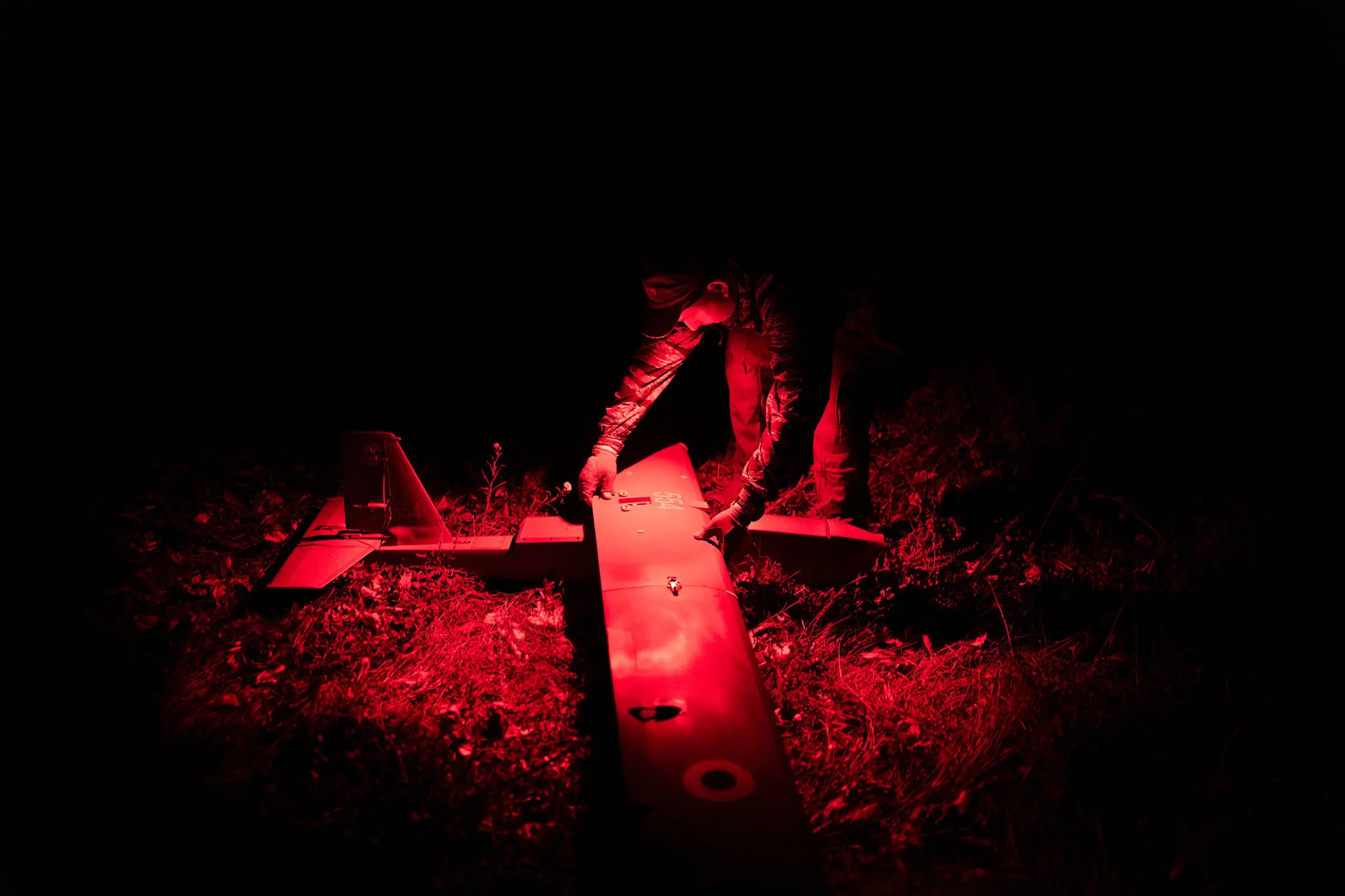
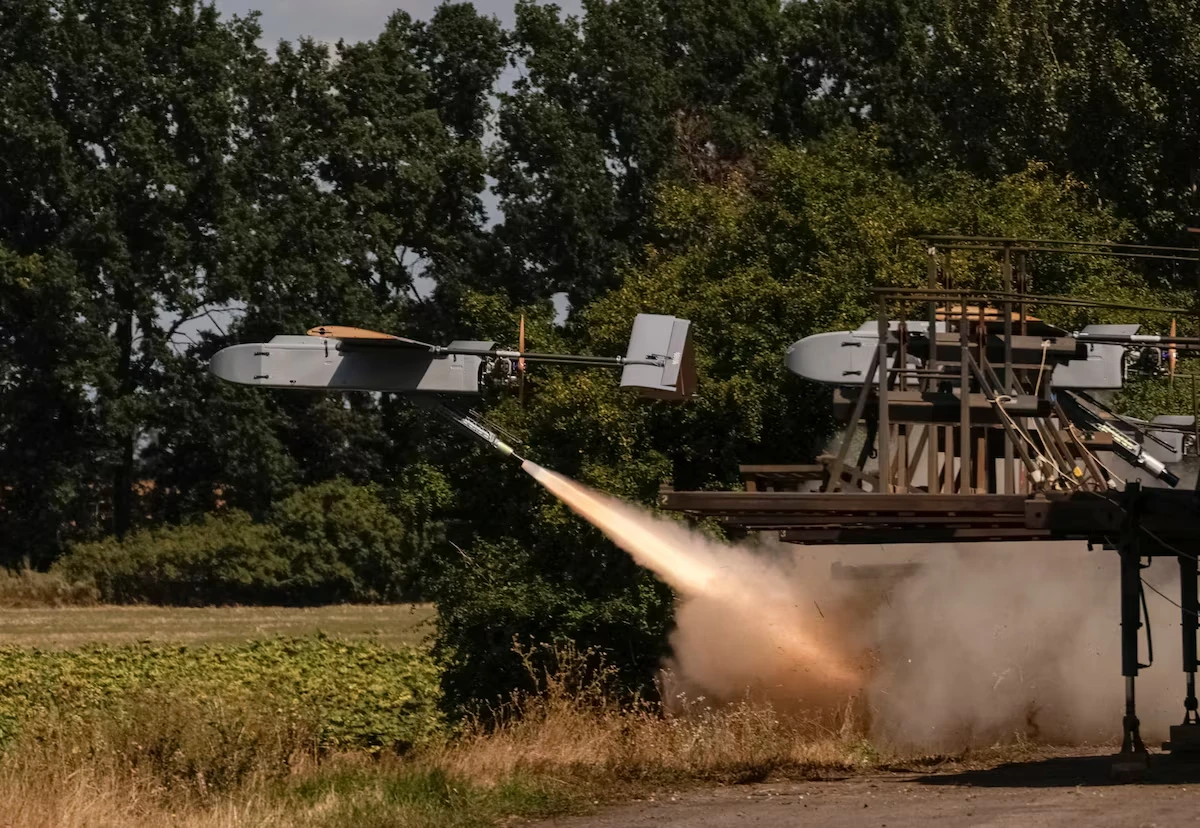
Daycom’s analysis of the available accounts indicates that two issues must be kept separate. Ukraine is openly expanding long-range attacks on Russian logistics and economic infrastructure. That fact alone does not establish that the childcare centre was a target, or reveal where the drone that struck it had originally been heading.
The Krasnodar drone attack occurred during a much wider wave of Ukrainian strikes extending across southern and other parts of Russia. Russian air defences were active over a broad area, while officials reported debris and damage at several locations. The full sequence of individual interceptions has not been independently reconstructed.
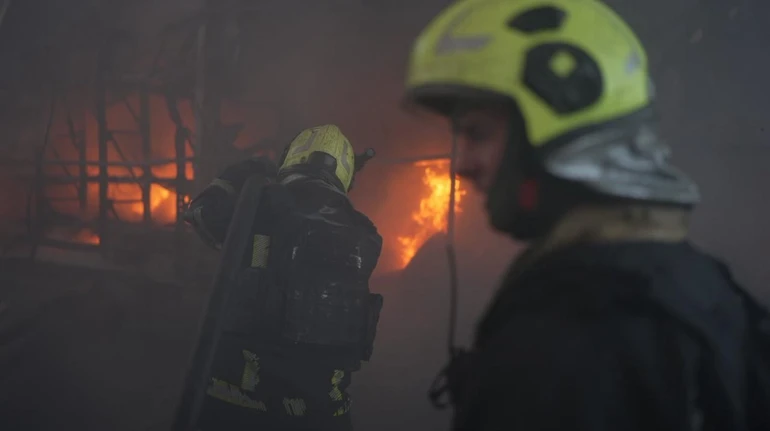
The same night also brought attacks on facilities belonging to Ozon, Russia’s second-largest online retailer. The company said a major fire broke out at a logistics hub in Enem, close to Krasnodar, while another facility in Makhachkala, Dagestan, was attacked and temporarily stopped operating.
Ozon also evacuated employees from warehouses in Adygeysk and Nevinnomyssk because of the drone threat. The company said those two facilities were not damaged. The episode nevertheless illustrates how long-range warfare is beginning to disrupt ordinary commercial networks far beyond Russia’s border regions.
The attacks are part of a broader pattern. Ukrainian forces have increasingly targeted warehouses, oil infrastructure, industrial plants and transport facilities that Kyiv says support Russia’s ability to wage war. Large logistics networks have become a newer and more controversial part of that campaign.
For a company such as Ozon, the effects extend beyond a damaged building. A warehouse shutdown can interrupt sorting, remove goods from circulation, force deliveries through other hubs and increase transport costs. Repeated attacks can turn a national distribution network into a sprawling collection of sites requiring protection.
That cumulative pressure appears to be part of Ukraine’s strategy. Instead of concentrating only on clearly military facilities, Kyiv has sought to impose costs on the economic systems that help sustain the Russian state and its armed forces, forcing Moscow to spread air defences across an enormous territory.
But the expansion also creates a more difficult question: when does a commercial logistics facility become a lawful military objective? A warehouse does not lose its civilian protection merely because soldiers may buy goods from the same company or because some products stored there could theoretically have military uses.
Under the laws of war, the relevant issue is how a specific site is actually being used and whether destroying it would provide a concrete military advantage. Even when an object qualifies as a military target, an attacker must still consider the foreseeable danger to civilians and take feasible precautions to reduce it.
That legal framework applies to Ukraine just as it applies to Russia. The fact that Russia launched the full-scale invasion in February 2022 does not remove protections from Russian civilians. Children, residential buildings and other civilian persons and objects remain protected irrespective of nationality or which side began the war.
The deaths in Krasnodar therefore demand their own factual examination. They cannot be resolved simply by pointing to Ukraine’s stated rationale for attacking logistics sites. Investigators would need to establish the drone’s route, its intended objective, whether Russian air defences engaged it and how the debris reached the childcare centre.
The Russian description of falling debris is especially important. If an incoming drone was intercepted and fragments subsequently struck the building, that would represent a different chain of events from an aircraft being deliberately guided into the centre. At present, there is insufficient public evidence to determine that sequence independently.
Nor can the childcare centre automatically be linked to the Ozon facility near Krasnodar merely because both were affected during the same overnight operation. Geographic proximity and timing can establish context, but not the intended destination of one particular drone among a much larger number of aircraft in the air.
The distinction matters because information produced during large drone raids is often fragmentary. Air-defence units report interceptions, local officials report fires, residents publish videos and military authorities identify targets. Connecting those pieces into a reliable account can take much longer than the first headlines suggest.
Russia has already framed Ukraine’s widening economic campaign as a dangerous escalation. President Vladimir Putin said days earlier that Kyiv had opened a “Pandora’s box” by attacking Russian economic targets and warned that Moscow would retaliate against what he described as Ukraine’s most sensitive economic sectors.
Kyiv presents its strategy differently. Ukrainian officials argue that strikes deep inside Russia are intended to degrade infrastructure that finances, supplies or otherwise supports Moscow’s war effort. That rationale has been used particularly for attacks on refineries, fuel facilities, industrial plants and transport networks.
As those strikes move into commercial logistics, however, the evidentiary burden becomes more important. Modern militaries undoubtedly rely on civilian supply chains, from electronics to vehicles and communications equipment. But a nationwide retailer can simultaneously serve military-related customers and millions of ordinary households.
This overlap is one of the defining problems of contemporary warfare. Civilian economies and military supply systems are deeply interconnected, especially in a prolonged conflict. The challenge is to distinguish a facility making an effective contribution to military operations from a business whose connection is merely indirect or incidental.
The strategic logic behind Ukraine’s campaign is nevertheless clear. Russia’s size gives it immense depth, but also creates an enormous defensive problem. Protecting every refinery, warehouse, railway junction, factory and port against long-range drones would require far more air-defence systems than can realistically be deployed everywhere.
Every successful penetration can therefore force Moscow to move interceptors and radars farther from the front, strengthen protection around industrial sites and accept higher costs for keeping civilian and military logistics functioning. Even unsuccessful attacks may impose disruption when workers have to be evacuated and facilities temporarily closed.
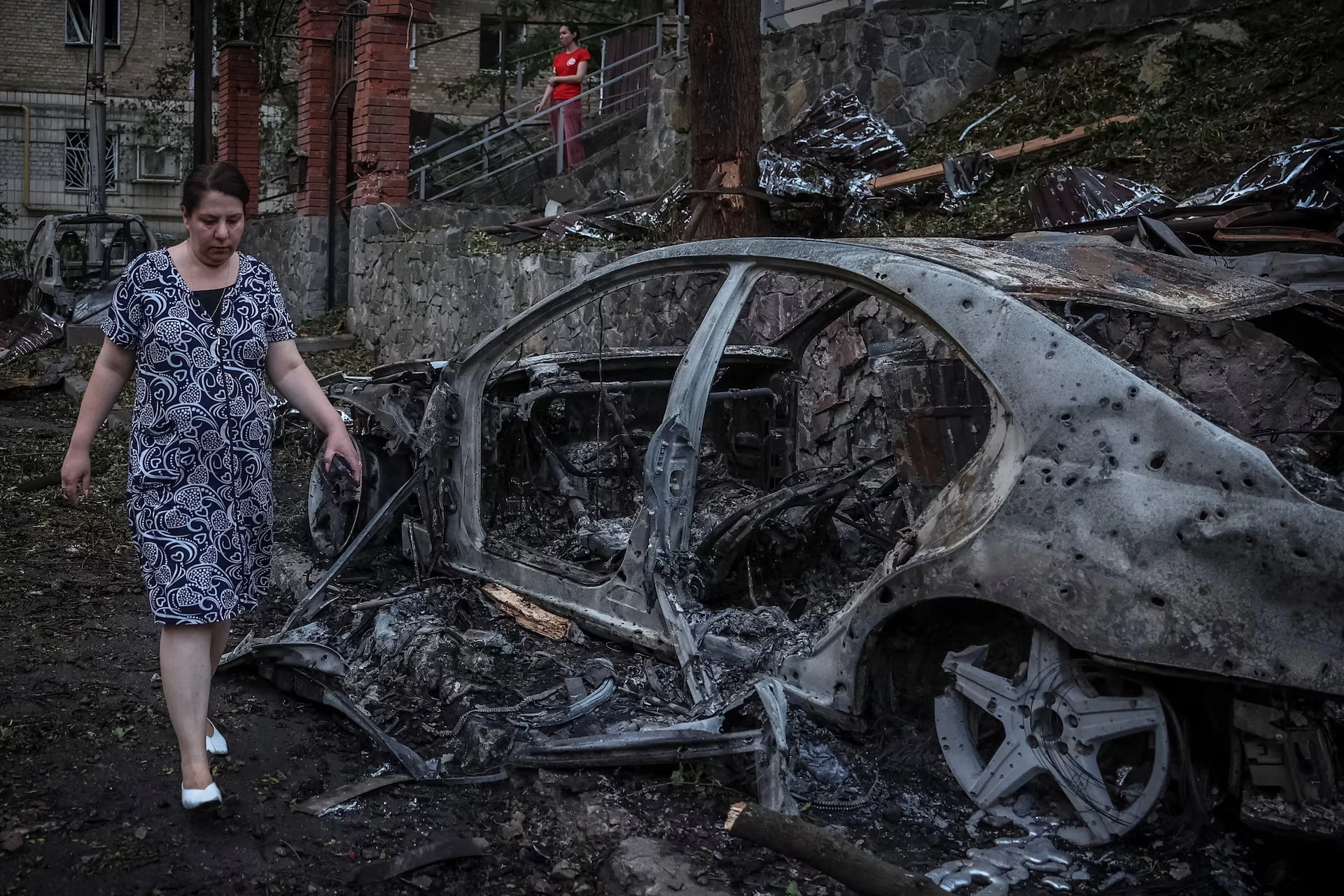
The same scale, however, increases risks to civilians. The more drones cross populated areas and the more frequently air-defence systems engage them over towns and cities, the greater the possibility that aircraft, interceptor missiles or fragments will fall somewhere other than the intended target.
That danger is not unique to one side. Long-range missiles and drones have transformed civilian risk throughout the war, allowing attacks hundreds of kilometres beyond the battlefield. In Ukraine, the United Nations has documented a steep rise in civilian casualties from such weapons, with the overwhelming majority of verified victims throughout the war being Ukrainian.
By July 2026, UN monitors had verified more than 16,800 civilian deaths in Ukraine since Russia’s full-scale invasion, while stressing that the real toll was likely higher. Russian authorities have also reported increasing civilian casualties on Russian territory as Ukraine’s long-range strike capability has expanded.
Those figures provide scale, but they do not diminish the significance of the three teenagers killed in Krasnodar. Civilian protection is not a balance sheet in which deaths on one side cancel deaths on the other. Each incident has to be assessed on its own facts, including what was targeted and what precautions were possible.
For Ukraine, that creates both a legal and a strategic challenge. Long-range attacks can impose meaningful costs on Russia and force the war into areas that had once felt insulated from it. Yet civilian deaths, particularly involving children, can undermine diplomatic support and give Moscow powerful material for its own political narrative.
For Russia, simply identifying an aircraft as Ukrainian would not answer every question either. A complete account would need to establish whether the drone had been engaged by air defences, what happened during that interception and where the intended target was located. Those details matter when responsibility for civilian harm is assessed.
The overnight operation also shows how rapidly the geography of the war is changing. Warehouses from southern Russia to regions much farther inland are now operating under the possibility of evacuation, while air-defence systems protect not only military bases but oil plants, industrial facilities and commercial distribution centres.
For ordinary Russians, that means a conflict once presented as distant increasingly intrudes into daily life. A drone attack can close a workplace, delay an online order, damage an apartment building or force families into shelters. For those in Krasnodar, the consequences on August 24 were incomparably more severe.
The deaths also demonstrate why terminology matters. Saying that Ukraine is attacking Russian logistics is supported by Kyiv’s broader campaign. Saying that Ukraine deliberately attacked a childcare centre would require evidence that has not been presented. Responsible reporting cannot collapse those two statements into one.
Equally, the phrase “falling debris” should not become a substitute for investigation. It describes what Russian officials say physically struck the centre, not why the debris was there. Determining that requires technical evidence about the aircraft, air-defence activity, trajectories and the wider operation taking place over Krasnodar.
Three teenagers — 13, 15 and 16 — are now the most serious known civilian casualties of the Krasnodar drone attack. No assessment of the military value of warehouses elsewhere can make their deaths incidental. At the same time, their deaths alone do not establish that civilians were intentionally targeted.
That narrow space between tragedy and attribution is becoming harder to preserve as drone warfare expands. Ukraine is bringing attacks deeper into the economic rear of the country that invaded it, while Russia is defending military and commercial infrastructure inside increasingly populated areas.
Long-range drones have compressed the distance between battlefield and home, but they have not erased the distinction between a military objective and a civilian person. As the number and range of such attacks increase, establishing that distinction accurately will become more difficult — and more important.
For now, the central fact in Krasnodar is the simplest and the gravest: three teenagers were killed. The unanswered question is how the drone whose debris struck their centre came to be there. Resolving it requires evidence about one aircraft and one night, separate from the much broader Ukrainian campaign against Russian logistics.