











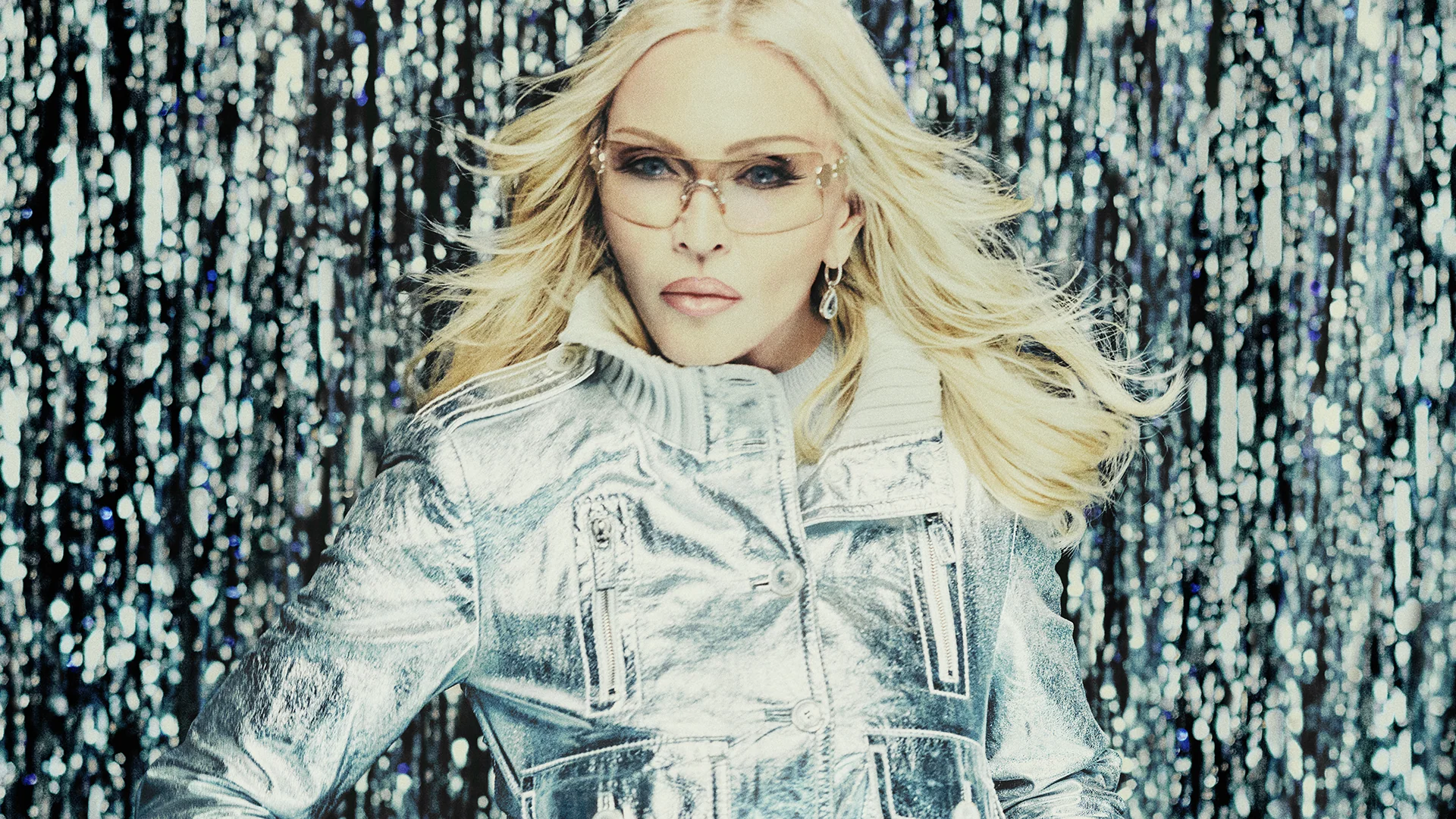





Madonna has just turned 68, yet the machinery of pop culture still treats her as an active participant rather than a retired monument. In 2026 she remains visible through new music, major awards attention and high-profile performances. The contradiction is that much of the conversation around her still returns, relentlessly, to her face.
That contradiction defines the present phase of her career. Madonna continues to do what once made her culturally disruptive: she controls her sexuality, reinvents her image, works with younger artists and refuses to behave according to expectations. The difference is that the rule she now breaks most obviously is simply the rule of age.
In 1984, the argument was about Like a Virgin, wedding dresses and whether a woman could so openly control the presentation of her sexuality. In the 1990s, it was Vogue, Justify My Love, the Sex book and religious symbolism. In the 2020s, the object of scrutiny is increasingly not the work but the body producing it.
That is why the debate over Madonna and aging is larger than whether someone likes her current appearance. It exposes a cultural trap: famous women are urged to “age naturally” and then punished for visible signs of age. If they try to soften or conceal those signs, they are punished again for refusing to look sufficiently authentic.
Daycom’s analysis suggests that Madonna now sits inside a contradiction pop culture has spent decades constructing for women. They are expected to remain youthful while also displaying a serene acceptance of aging. The two demands cancel each other out, yet women are still judged as though satisfying both were a reasonable expectation.
Speculation about cosmetic procedures often obscures that larger point. The public does not possess Madonna’s full medical or aesthetic history, and a photograph cannot establish what treatments someone has undergone. She has occasionally joked about changes in her appearance, but she has never supplied the exhaustive record that online commentary pretends to possess.
What matters more is how she has responded to the scrutiny. After the 2023 Grammys, discussion of her appearance threatened to eclipse the reason she was onstage. Madonna answered by accusing the culture around her of ageism and misogyny, arguing that women who remain highly visible after midlife are still treated as a kind of provocation.
The double standard is hardly unique to her. Male rock stars have long been permitted to age in public, with grey hair, wrinkles, altered bodies and even physical frailty becoming part of their mythology. For women, the same signs are more often read as evidence that charisma, sexuality or cultural relevance should be receding.
Madonna complicates the argument because she has never presented herself as a symbol of untouched naturalness. Her career has always involved construction: hair, clothes, bodies, choreography, genre, religious imagery, photography and self-invention. Demanding that she suddenly become an apostle of nonintervention would rewrite the history of how she made herself.
Yet there is an uncomfortable question here as well. If an artist who spent decades expanding the boundaries of female freedom still appears to exercise intense control over her image, does that reveal the power of the standards she once challenged? And can anyone become completely free of the culture in which their own power was built?
Madonna herself has suggested that provocation changes meaning over time. In 2026 she spoke about no longer treating nudity as an automatic act of rebellion, because public culture has changed around it. When almost everyone can perform sexual display online, refusing the expected gesture may become more disruptive than repeating it.
That adaptability has always been central to her career. Madonna was never a revolutionary of one trick. Lace, Catholic imagery, sexual explicitness, electronic music, yoga culture and high-fashion reinvention all worked because she understood when yesterday’s scandal was becoming tomorrow’s mainstream visual language.
Aging is different because it cannot be replaced with the next aesthetic. Youth is not a genre that can be abandoned after one album cycle. For a performer whose public identity has been built around bodily control, sexuality and movement, time is not another costume. It is a physical fact that eventually resists styling.
Madonna has begun acknowledging that reality more directly. Decades of dancing, running and high-impact training have taken a toll, particularly on her knees, and she has spoken about changing how she exercises. That is a far more revealing story about aging than any freeze-frame taken under bad lighting on a red carpet.
A pop performer’s body is not merely an image. At Madonna’s level, it has functioned for decades as professional equipment subjected to rehearsal schedules, touring, injuries and physical repetition closer to elite sport than ordinary life. Aging therefore affects not only appearance, but the ability to dance, recover and endure a full production.
That reality became impossible to ignore in 2023, when Madonna suffered a serious bacterial infection shortly before the planned launch of the Celebration Tour. She was admitted to intensive care and the opening of the tour had to be postponed. Later, she spoke onstage about the illness as an experience that altered the meaning of simply being able to perform.
What followed does not fit neatly into the idea of an artist merely clinging to the past. The Celebration Tour sold about 1.1 million tickets and grossed more than $225 million, while its free finale on Copacabana Beach in 2024 drew an audience estimated by organisers at roughly 1.6 million people.
In other words, Madonna is not aging quietly at the edge of the industry. She is doing it on major stages, in charts and in front of enormous audiences. That visibility intensifies the scrutiny because society finds it much easier to accept an older woman once she stops competing for attention and moves into the safer category of historical icon.
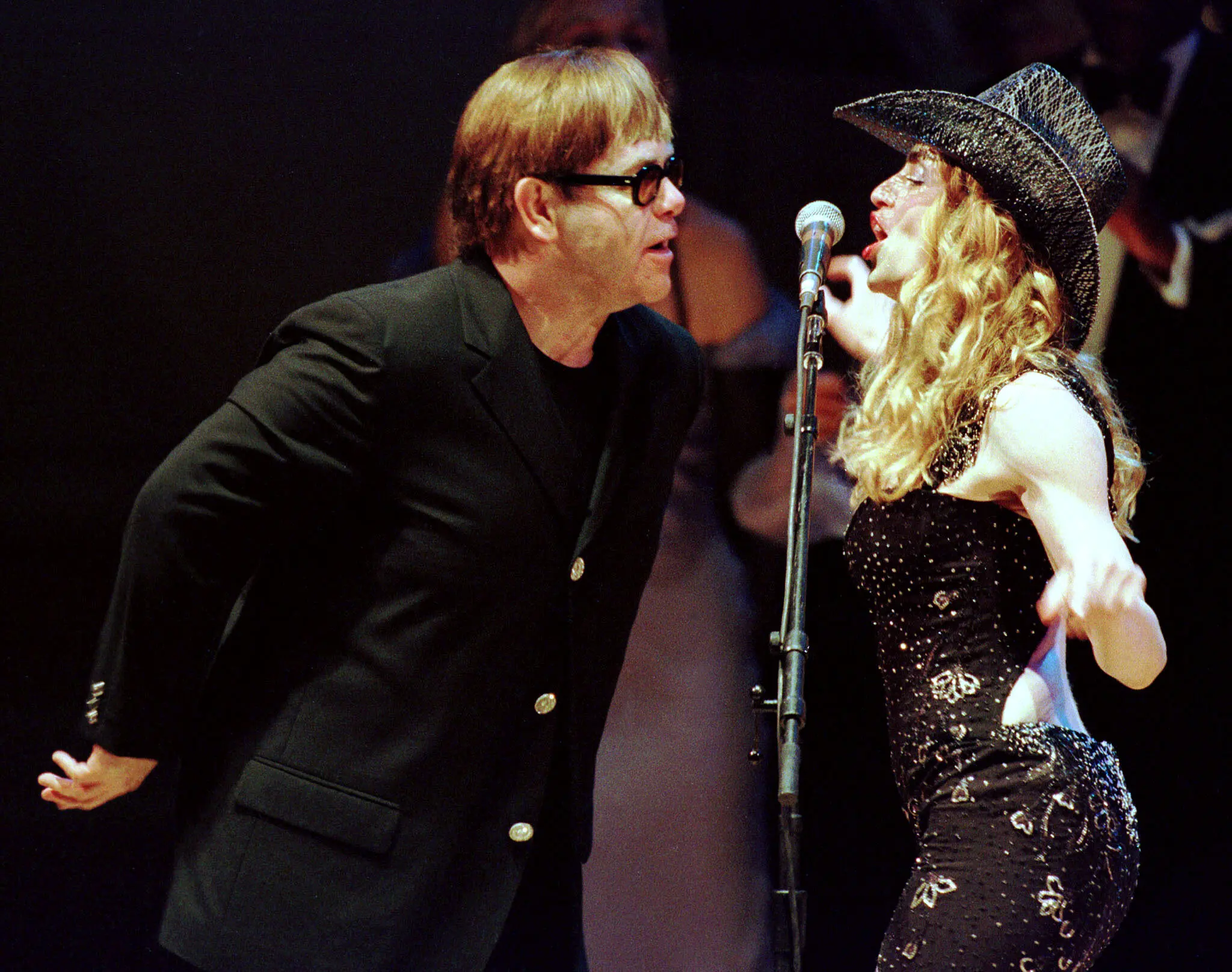
Her 2026 appearance with Sabrina Carpenter at Coachella made the generational contrast explicit. Madonna returned to a festival stage two decades after an earlier era of her career, while Carpenter represented a generation of pop stars raised in a cultural landscape already transformed by many of Madonna’s breakthroughs.
Some viewers were uncomfortable with Madonna using familiar sexual styling beside a much younger performer. Yet the staging raised a more interesting question: why does the same kind of costume read as ordinary pop language on a woman in her twenties, but become a social problem when worn by a woman in her late sixties?
Freedom, of course, does not mean immunity from criticism. A costume can be unsuccessful, choreography can be less effective than it once was, and an image campaign can feel overworked. But aesthetic criticism is different from the assumption that a woman of a certain age should no longer dress, move or behave in particular ways at all.
Madonna has worked at that boundary throughout her career. When Like a Prayer caused outrage, the dispute was not merely about the quality of the video. When Sex appeared, the argument was not simply photographic. At stake was the question of whether a woman could decide for herself what kinds of sexuality and visibility were permissible.
The boundary has shifted. A sexually self-directed woman at 30 no longer shocks mainstream culture in the way Madonna did in the 1980s. A sexually self-directed, highly ambitious and intensely visible woman at 68 can still produce discomfort — especially if she refuses to move gracefully into the role of revered but safely inactive legend.
That is what makes the phrase “age gracefully” so revealing. It sounds generous, but often contains a set of instructions: become less sexual, dress more quietly, demand less attention, avoid competing with younger stars and move gradually from the centre of the stage toward a position of respectable historical importance.
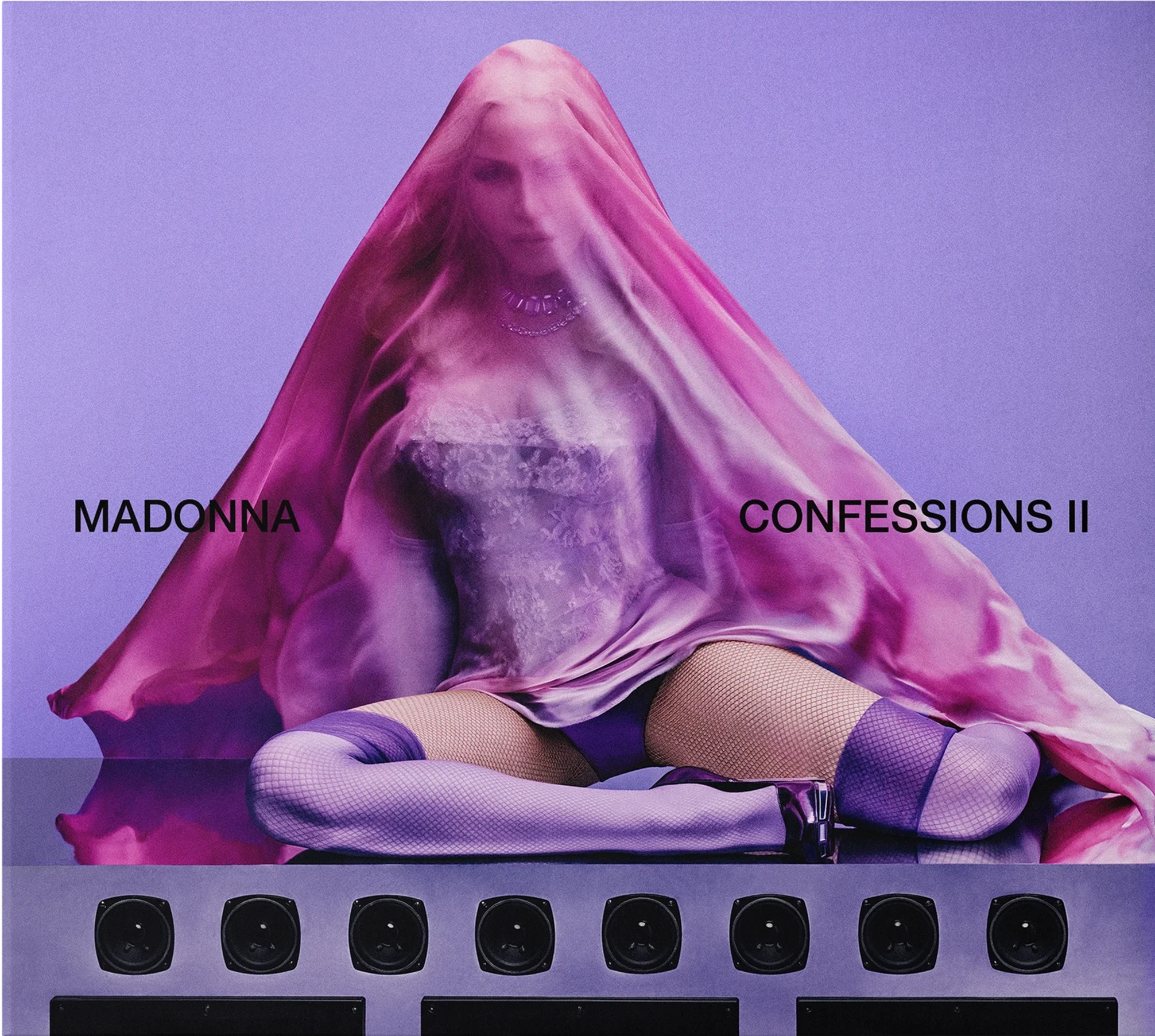
Madonna has shown little interest in following that script. She does not want only lifetime-achievement tributes and anniversary retrospectives. Confessions II arrived in 2026 as a new studio record with Stuart Price, new collaborations and a separate visual world, not as a decorative supplement to another archival reissue.
That distinction matters. Culture is much more comfortable loving an artist who is no longer fighting for airtime, headlines, festival slots or chart space. Once competition ends, admiration becomes easy. Madonna remains difficult because she continues to claim the same cultural resources that are normally redistributed to younger performers.
Her renewed awards visibility in 2026 sharpened that contradiction. Whether or not music prizes offer a perfect measure of influence, seeing a 68-year-old pop star competing near the centre of contemporary attention disrupts the expected progression from current relevance to nostalgia, heritage status and eventual ceremonial reverence.
Perhaps the mistake is expecting Madonna to provide a model for the “correct” way to age. For decades she was asked to demonstrate female sexual freedom, independence and control. Now she is implicitly asked to offer another cultural instruction manual — this time showing women how to embrace wrinkles, age and bodily change without anxiety.
That is an excessive demand, even for someone who willingly turned herself into a symbol. Madonna does not have to serve as therapy for an entire generation. She is allowed to fear aging, manipulate her image, make questionable aesthetic choices and contradict her earlier positions. In other words, she is allowed to be a person rather than a lesson.
That may be what makes this phase of her career so uncomfortable. Earlier Madonna often appeared to have found the next answer before everyone else, forcing the culture to catch up. Aging offers no elegant answer. She is inside the same anxiety experienced by millions of people, only with far more cameras pointed at her.
Social media has intensified that anxiety. A celebrity face can now be frozen at an unflattering instant, enlarged, compared with an image from 1989 and converted into an amateur forensic investigation. Aging is no longer allowed to unfold slowly. It becomes an endless sequence of before-and-after images subjected to public judgment.
At the same time, cosmetic medicine has become both younger and more ordinary. Procedures once associated with older film stars are now openly discussed by people in their twenties and thirties. Madonna therefore looks less like an exception than the most visible extreme of a culture increasingly trained to treat age as a condition requiring management.
That is why the question “Why doesn’t she just age naturally?” is too simple. Naturalness itself has become a product sold by cosmetics companies, clinics, wellness businesses and celebrities. The appearance of having done nothing can be just as carefully engineered as Madonna’s more theatrical approach to self-presentation.
A better question is why her age compliance matters so much to us. Why do new albums, touring records, recovery from serious illness and continued commercial power compete for attention with speculation about cheeks, lips, costumes and whether her wardrobe is sufficiently appropriate for a woman born in 1958?
Madonna has always functioned as a mirror, even when it was easier to describe her simply as a provocateur. In the 1980s she reflected anxiety about female sexual autonomy. In the 1990s she exposed discomfort around religion, queer culture and erotic power. Today she reflects a fear no marketing campaign can defeat: growing old.
And perhaps that is what makes the current Madonna more revealing than the caricature surrounding her. Not because she has discovered the right way to age, but because she plainly has not. At 68 she remains ambitious, sexual, contradictory, physically vulnerable and insistently visible, without offering the tidy resolution people expect.
Her earlier transgression could be summarised simply: a woman could desire, earn, control her image and refuse to apologise. The harder test comes later. Does the culture still grant a woman those freedoms once youth has ended, or were they always freedoms offered only for a limited period?
Madonna and aging, then, is not really a story about whether one pop star is aging successfully. It is a story about a culture that still cannot decide what it wants from older women: naturalness or eternal youth, modesty or confidence, disappearance or spectacle. Madonna, characteristically, refuses to choose the option that would make everyone else most comfortable.