




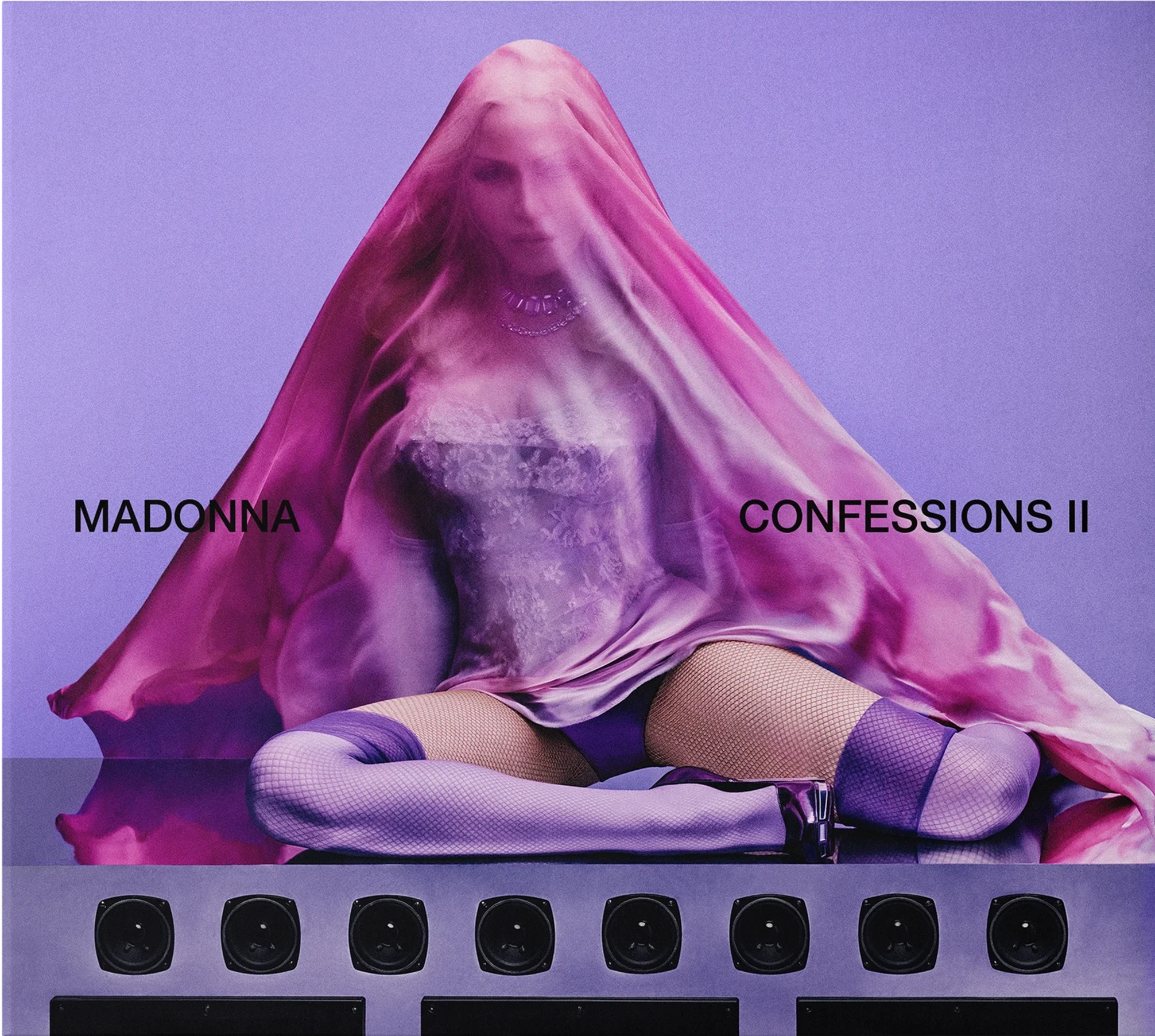








In November 2005, Madonna made a move that now seems almost inevitable. After the political tension and deliberately abrasive mood of American Life, she returned to the dance floor. Yet Confessions on a Dance Floor was not a retreat into familiar territory. It rebuilt an old idea with striking precision.
The album was conceived as continuous movement. Its original 12 tracks flowed into one another with barely a pause, creating the logic of a late-night DJ set rather than a conventional collection of singles. Once the beat started, the record resisted interruption, carrying the listener through nearly an hour of uninterrupted motion.
Stuart Price was central to that discipline. Instead of surrounding herself with an oversized committee of producers, Madonna found a collaborator who understood dance music as architecture. Disco, house, electro and synth-pop were not treated as competing styles. They became different rooms inside the same carefully engineered club.
Daycom’s analysis indicates that this structural discipline is one reason Confessions on a Dance Floor has aged so well. The record did not try to predict every trend that would follow. It concentrated instead on rhythm, melody, repetition, sexuality and momentum — elemental pop materials refined with almost mechanical accuracy.
The clearest proof was Hung Up. Built around an authorised sample from ABBA’s Gimme! Gimme! Gimme! (A Man After Midnight), the song turns a familiar melodic figure into something distinctly Madonna’s own. The ticking sense of time becomes both hook and anxiety: waiting hurts, so the body keeps moving.
The result was enormous. Hung Up became a global No. 1 across dozens of markets, while the album debuted at the top of the Billboard 200. Sorry, Get Together and Jump extended the cycle. More importantly, Madonna was again not merely a legacy superstar, but an active centre of international pop culture.
The album’s power was never limited to one single. Get Together rises naturally from the opening rush, Sorry sharpens the mood, Future Lovers slips into futuristic sensuality, and I Love New York adds abrasion. Even when the emotional temperature changes, the pulse remains remarkably steady.
That continuity made the Confessions Tour, which opened in May 2006, feel less like a promotional obligation than the album’s logical second act. Madonna did not simply take the new songs on the road. She built a theatrical machine in which the record’s uninterrupted flow became continuous movement through images, costumes and space.
Commercially, the tour was extraordinary. Sixty shows drew close to 1.2 million people and generated roughly $195 million, making it the highest-grossing tour by a solo female artist at the time. The figures mattered because they confirmed that the album’s aesthetic confidence could scale from headphones to arenas.
The show was divided into four major sections — Equestrian, Bedouin, Never Mind the Bollocks and Disco. These were more than costume changes. Each act had its own visual grammar, movement and emotional register, while three extended runways pushed the performance deep into the audience.
Its opening became one of the defining entrances of Madonna’s career. A giant mirrored disco ball descended above the stage, then opened to reveal her inside, dressed in black equestrian clothing. Future Lovers merged with Donna Summer’s I Feel Love, establishing the musical ancestry of the entire evening in a single gesture.
The equestrian imagery was erotic, stylised and knowingly excessive. Dancers became human horses, while Like a Virgin was staged around a mechanical saddle. Behind Madonna, X-ray images referred to injuries she had suffered after falling from a horse the previous year, turning a real accident into theatrical material.
That sequence captures much of her stagecraft. What could have remained a private injury became spectacle, self-parody and evidence of survival. Jump pushed the physicality further, using metal structures and parkour-like choreography to turn the song’s language of risk into something literal and athletic.
Then the production darkened. During the Bedouin section, Madonna performed Live to Tell suspended on a mirrored cross while wearing a crown of thorns. Screens displayed statistics connected to HIV/AIDS in Africa. The image became the most controversial moment of the entire tour.
Religious leaders in several countries condemned the scene, with criticism intensifying before the Rome concert. Madonna argued that the cross was meant to direct attention toward suffering rather than mock Christianity. The dispute ensured that the tour was discussed not simply as entertainment, but as a cultural event.
Yet the Confessions Tour was not powerful because it could still provoke. Madonna had mastered provocation long before 2006. What made the show unusually effective was the precision of its shifts: polished eroticism could give way to social commentary, then to confrontation, before the audience was returned to pure physical pleasure.
The Never Mind the Bollocks section changed the temperature again. Madonna strapped on an electric guitar, while I Love New York and Ray of Light acquired a harder edge. Some critics found the rock posture theatrical, but structurally it mattered: the show needed friction before surrendering completely to disco.
That surrender arrived in the final act. Religious symbolism, political messages and guitar-driven aggression gave way to white costumes, roller skates, mirror-ball light and unapologetic celebration. The arena was transformed into an exaggerated fantasy of a New York nightclub built for tens of thousands of people.
Music was fused with the Trammps’ Disco Inferno, a mash-up that almost functioned as a thesis statement for Madonna’s career. Her catalogue entered disco history, absorbed it and returned altered. La Isla Bonita and Lucky Star followed before the entire production finally exploded into Hung Up.
The ending worked because older songs were never presented as museum pieces. Arrangements, tempo and visual context were constantly rewritten. Nostalgia was not allowed to interrupt the new album’s world. The past was treated as raw material that could be reorganised according to the logic of the present show.
That distinguished the Confessions Tour from conventional greatest-hits spectacles. A large share of the set came from the new record, and those songs determined the evening’s structure. The tour behaved as though Confessions were already part of the canon even though the album had been released only months earlier.
The technical production was vast: multiple runways, huge video surfaces, hydraulics, moving scenery and an intricate lighting system. Yet the machinery rarely became the main attraction. Technology was organised around bodies — Madonna’s, the dancers’ and eventually the crowd’s — rather than used merely as evidence of budget.
Its physical demands remain striking two decades later. Madonna was 47 when the tour began and turned 48 during its European leg. Across roughly two hours, she sang, danced, played guitar and worked through elaborate choreography without allowing age to become either an apology or the show’s central narrative.
That carried broader cultural weight. Pop has historically allowed male stars far more time to remain sexual, physically commanding and commercially central. The Confessions Tour did not answer that bias with a manifesto. It simply placed a woman approaching 50 at the centre of one of the world’s most ambitious pop productions.
The show was not flawless. Some reviewers thought its politics were overly literal, and others found the production so meticulously programmed that spontaneity almost disappeared. Even sympathetic critics sometimes described it less as an unpredictable concert than as a colossal piece of precision theatre.
But precision was part of Madonna’s art. She has rarely sold chaos as proof of authenticity. Her live strength lies in making hundreds of premeditated elements feel inevitable. On this tour, even the giant disco ball seemed less like a stunt than the only plausible way such an evening could begin.
The London performances in August 2006 were filmed by Jonas Åkerlund and later became the basis of The Confessions Tour concert release. That recording gave the production a second life, preserving not merely a set list but one of the most meticulously designed visual eras of Madonna’s career.
The album and its stage incarnation also received institutional recognition. Confessions on a Dance Floor won the Grammy for Best Electronic/Dance Album, while the concert film later earned a Grammy of its own. Few pop cycles have been so convincingly realised in both studio and live form.
With time, the influence of Confessions has become clearer. Long before disco returned to the centre of mainstream pop in the 2020s, Madonna demonstrated how its vocabulary could be revived without becoming parody. Her version did not imitate the 1970s; it used the memory of disco to create something that felt modern in 2005.
What remains most impressive, however, is not simply how many later artists moved through similar territory. It is the confidence with which Madonna refused to explain why she needed dance music again. For her, the club was never a museum of former glories. It remained a working language.
The Confessions Tour made that philosophy physical. The album said: do not stop between songs. The concert answered: do not stop between images, decades, genres or versions of yourself. That is why horses, a mirrored cross, electric guitars and roller disco could occupy the same evening without feeling entirely accidental.
Two decades later, Confessions on a Dance Floor remains one of pop’s best examples of a major artist returning to her foundation without surrendering to nostalgia. The Confessions Tour took the next step, converting that foundation into a vast stage architecture built around movement, reinvention and control.
The Confessions era endures because everything briefly aligned: music, image, physical performance, technology, provocation and commercial scale all served the same idea. Madonna did not merely return to the dance floor in 2005. For a time, she made it the centre of pop culture again.