



















At the Ranok publishing warehouse in Kharkiv, it was not simply boxes of merchandise that burned. Textbooks, children’s books and years of work disappeared into the flames — roughly eight million copies in all. The Aug. 1 strike became the largest single loss suffered by Ukraine’s publishing industry during the full-scale war.
In recent months, Russian attacks have destroyed more than 10 million books. Another major publisher, BookChef, lost around 800,000 copies in July, most of its inventory. A subsequent strike hit a backup warehouse, destroying roughly another 100,000 books.
Compared with destroyed power plants, ports or industrial facilities, those numbers may appear secondary. But the publishing industry exposes another mechanism of a war of attrition: the destruction of goods that take months to produce, carry limited margins and cannot simply be replaced within weeks.
As Daycom noted in its earlier analysis, that is why the burned warehouses in Kharkiv and Kyiv have become such a precise symbol of the current phase of the war. Russian strikes are increasingly putting pressure not only on Ukraine’s military capacity, but on its ability to work normally, educate children, export goods and replace what has been lost.
Publishing is especially vulnerable to this kind of pressure. The production cycle of a book can take anywhere from six months to a year and a half. A destroyed print run cannot simply be reordered the next morning. It requires paper, printing capacity, financing, transportation and time.
Ranok also occupies a particularly important place in Ukraine’s education system. The company prints roughly a third of the textbooks used in Ukrainian schools. Losing millions of copies therefore affects more than the commercial book market. It can create shortages tied directly to the school calendar.
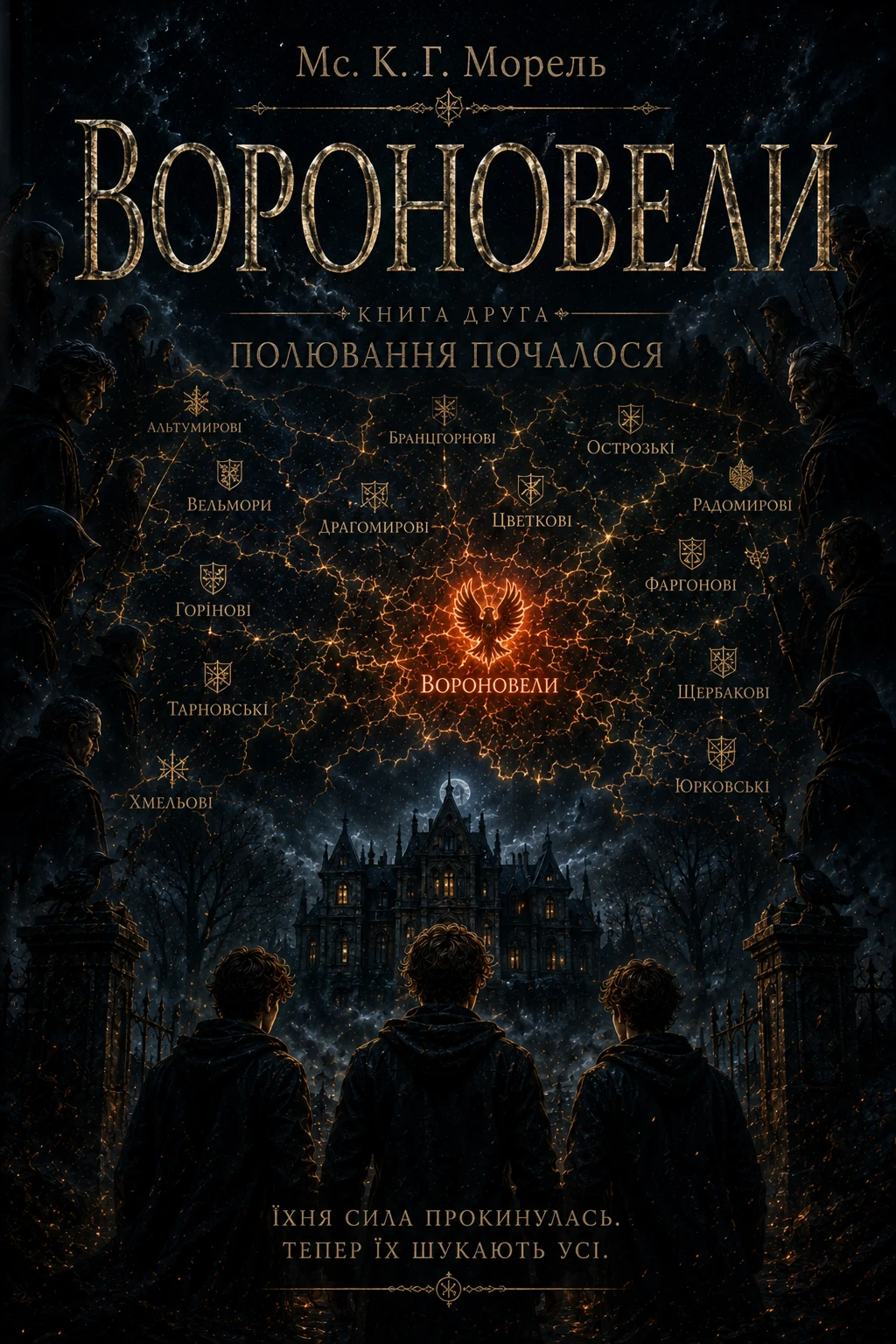
The destruction also carries powerful symbolic weight. After 2022, demand for Ukrainian-language literature rose sharply, Russian book imports were restricted, and domestic publishers experienced an unexpected surge. Reading became part of Ukraine’s broader cultural separation from Russia.
Now an industry that benefited from that social shift is becoming one of those paying directly for the continuation of the war. Destroying books hits business, education and the Ukrainian language at the same time — three areas central to the country’s long-term cultural transformation.
The structure of the publishing business makes it particularly exposed. Large print runs are concentrated in warehouses, turning a relatively small number of physical sites into critical nodes. The destruction of one facility can erase years of accumulated inventory overnight.
Stock can be dispersed, but resilience is expensive. The same is true of maintaining backup printers and multiple storage sites. Companies become harder to cripple with a single attack, but they pay for that protection through higher logistics costs, insurance and additional infrastructure.
Production itself has also become more expensive. Printing costs have risen by roughly 40 percent over two years. At the same time, the war is weakening household purchasing power, leaving publishers unable to pass all of those additional costs on to readers.
That creates a classic attritional trap. Businesses need more money simply to survive under attack at precisely the moment when customers have less money to spend. Each new strike makes recovery more expensive and financial reserves thinner.
The same logic extends far beyond publishing. Ukraine’s economy has learned to function through blackouts, labor shortages and repeated attacks on infrastructure, but overall output remains roughly one-fifth below its pre-invasion level.
Economic growth is also becoming increasingly dependent on defense production. Around 60 percent of state spending this year is devoted to defense, while factories producing drones, ammunition and military equipment account for much of the economy’s expansion. Outside that sector, activity is far closer to stagnation.
The paradox is stark. Defense manufacturers grow because battlefield demand is enormous, while civilian companies face higher energy costs, damaged warehouses, missing workers and unstable transportation networks.
Agriculture is under especially heavy pressure. Repeated strikes on Black Sea port infrastructure could cost the sector between $1.5 billion and $3 billion this year. For a country whose farm exports remain a major source of foreign currency, that is not simply a sectoral problem. It is a macroeconomic risk.
Seen together, the pattern becomes clear. A port in Odesa, a book warehouse in Kharkiv, a power facility and a grain terminal may look like completely different targets. But they serve the same broader function: they allow society to earn, consume, educate itself and recover from previous losses.
Ukraine is responding with its own campaign of economic pressure, striking Russian oil infrastructure, logistics hubs, weapons production and maritime transport. Both sides are increasingly targeting not only armies, but the resources that allow those armies to keep fighting.
Endurance is therefore becoming a weapon in its own right. The question is no longer only who can inflict greater damage, but who can restore electricity faster, reprint lost stock, repair a port, replace workers and finance the next production cycle.
In that sense, eight million destroyed books matter far beyond the balance sheet of a single publisher. They are eight million products that must now be printed again, financed again, transported again and returned to shelves — at a time when the same money, materials and labor are needed across dozens of other industries.
The loss of children’s books and textbooks is particularly severe. Infrastructure can be measured in tons of steel or the value of machinery. Cultural losses work differently. Their effects unfold over years because they concern the language children read in, the history they learn and the country they imagine themselves to belong to.
That is why publishing has become one of the quieter fronts of this war. It will not determine movement along the front line, but its condition reveals whether Ukraine can preserve ordinary civilian life under sustained pressure.
The greatest risk is not that Ukraine will suddenly stop printing books. It is the cumulative effect: more expensive print runs, fewer new titles, smaller inventories, weaker publishers and the gradual transformation of reading into something fewer households can afford regularly.
Wars of attrition rarely have a single moment when an economy suddenly breaks. They work through thousands of separate losses, each of which seems manageable on its own: a warehouse, a transformer, a port crane, a printing press, a million books. Then another warehouse. Another million.
That is the strategic danger of the war’s current phase. Russia is trying to make the very functioning of Ukraine more expensive — not only its defense, but its education, business, exports, culture and eventual reconstruction.
The images of books burning in a Kharkiv warehouse therefore mean more than the loss of merchandise. They are among the clearest images of a war of endurance — a struggle in which survival increasingly depends on whether a country can print again what has just been reduced to ash.