


















Five years ago, the West was still willing to risk a major diplomatic crisis with Turkey over human rights. Ten ambassadors called for the release of Osman Kavala, whom they viewed as a political prisoner, and Recep Tayyip Erdogan responded by ordering them to be declared unwelcome.
The sides stopped just short of rupture. Envoys from the United States, France, Germany, Canada and other countries issued conciliatory statements, while Erdogan said they would be more careful in the future. In the end, that is exactly what happened: caution turned into silence.
Today, the West rarely puts Turkey’s democratic record, press freedom, pressure on the opposition or politicization of the courts at the center of public diplomacy. After Russia’s invasion of Ukraine, Europe increasingly saw Turkey not as a problem of values, but as an indispensable military partner.
According to Daycom’s earlier analysis, that shift is the key to understanding today’s Ankara. Turkey has not become less authoritarian, but it has become more necessary. Its army, defense industry, drones, Black Sea position and role on NATO’s southeastern flank have sharply increased its value to allies.
The NATO summit in Ankara is meant to project unity among the Alliance’s 32 members. Yet behind that unity lies an uncomfortable pause: leaders are not expected to openly criticize the unprecedented legal pressure on Turkey’s main opposition force, the Republican People’s Party.
The loudest symbol of that pressure is the imprisonment of Istanbul Mayor Ekrem Imamoglu, Erdogan’s main political rival and a potential presidential candidate. For Turkey’s opposition, this is not just another criminal case, but part of a systematic attempt to remove a competitor before an electoral moment.
Over the past two years, hundreds of elected CHP officials and members have been jailed. The party calls it a judicial coup. The government rejects such accusations, insists that courts are independent and says its democratic legitimacy is beyond question.
This dispute has long moved beyond Turkish domestic politics. For NATO, it raises a fundamental question: can an Alliance founded on democracy, rule of law and shared values remain silent when one of its key members tightens the political field at home?
The West’s answer is becoming increasingly pragmatic. Diplomats acknowledge concerns privately, but in public they emphasize security, defense deals and Turkey’s role as a regional military power. The language of values has not disappeared entirely, but it has lost much of its political force.
Ahead of the summit, that trend became even more visible. Dozens of journalists from independent Turkish media were denied accreditation for the event. Authorities also detained more than 200 people, citing security concerns. To rights groups, that looked less like summit preparation than a demonstration of control.
NATO formally relies on the host country for accreditation matters. That is bureaucratically convenient, but politically awkward. The Alliance can say that the presence of journalists matters while avoiding direct responsibility for whom Ankara allows to cover the summit.
In this arrangement, Erdogan receives maximum room for maneuver. He hosts NATO leaders in the capital, presents Turkey as an irreplaceable ally, speaks about Alliance unity and avoids loud collective condemnation of domestic repression.
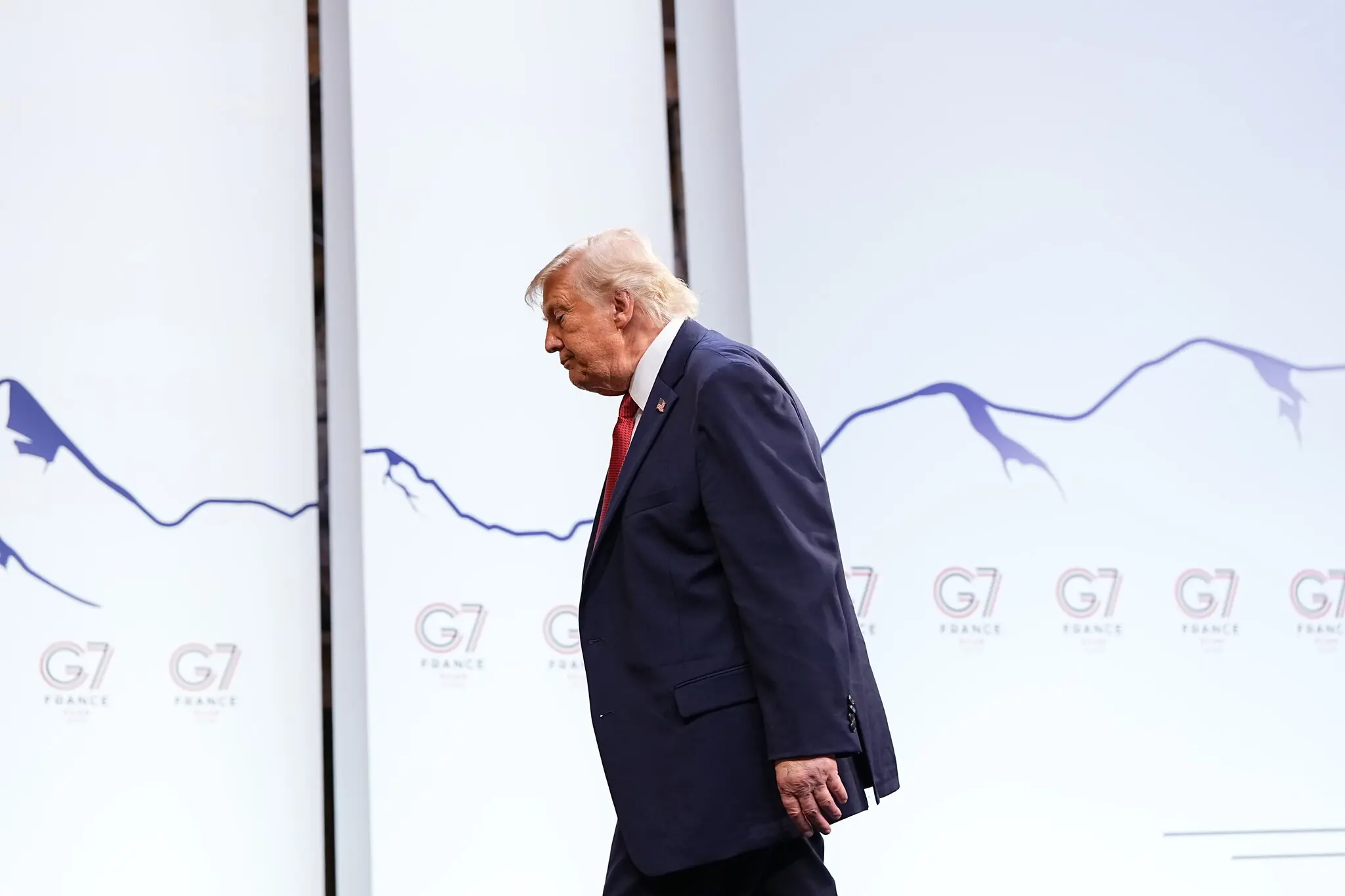
Donald Trump’s arrival carries particular weight. This is his first visit to Turkey in his new presidential term, and a bilateral meeting with Erdogan is expected to underline the warmest U.S.-Turkish ties in years. Trump regularly calls the Turkish president a friend, and that personal chemistry is changing Washington’s tone.
In Trump’s second administration, values-based rhetoric in foreign policy has weakened noticeably. Instead of public pressure over human rights, Washington increasingly thinks in terms of deals, access, bases, defense industry and balance of power. For Ankara, that is almost an ideal environment.
Turkey understands its leverage well. It has NATO’s second-largest military, a powerful defense-industrial base, experience producing armed drones and geography that cannot be replaced. Its position matters for the Black Sea, the Middle East, the Caucasus and the eastern Mediterranean.
After Russia’s invasion of Ukraine, that geography became even more valuable. Turkey controls the straits, balances between Kyiv and Moscow, sells weapons, avoids a complete break with the Kremlin and remains inside NATO. For allies, it is a difficult partner, but not one they can easily afford to lose.
That is why criticism has grown quieter. Western capitals may be concerned about arrests, limits on media freedom and pressure on the opposition, but they do not want to turn the Ankara summit into a confrontation with the host. Security logic is prevailing over moral pressure.
But this tactic has a cost. Allied silence does not only calm the diplomatic space; it also isolates Turkey’s opposition. For citizens trying to defend elections, judicial independence and freedom of speech, the absence of an external voice can look like acceptance of the new rules of the game.
Former diplomats warn that Turkey has not yet lost its chance for a democratic turn. That is why public language from the West still matters. It does not change a government in a day, but it signals to society that institutional degradation is not a minor internal matter allies are ready to ignore for the sake of deals.
Supporters of quiet diplomacy offer a different argument: open criticism does not stop Erdogan, but pushes Ankara into a defensive posture and damages working channels. In that logic, human rights are better discussed behind closed doors, while public attention remains focused on shared security.
The problem is that private diplomacy without public pressure often becomes invisible. The government hears cautious remarks but sees no threat of consequences. The opposition hears silence. Society sees Western leaders arriving, smiling, signing defense agreements and not speaking about those in prison.
Ankara wants to use the summit as a showcase. Expected defense deals worth tens of billions of dollars are meant to show that Turkey is not a problematic flank, but one of the centers of Europe’s new security architecture. For Erdogan, this is foreign-policy capital and domestic legitimization at the same time.
NATO truly needs Turkey. But that is precisely the trap. The more indispensable an ally becomes, the harder it is to speak to it about violations that contradict the very foundations of the Alliance. Strategic necessity gradually turns into political indulgence.
That does not mean the West should return to the diplomatic ultimatums of 2021. But a complete retreat from public language about democracy makes NATO look like a purely military club, where power weighs more than principles and loyalty is measured not by freedoms, but by usefulness.
For Erdogan, the current moment looks favorable. The Russian threat has raised Turkey’s importance, Trump favors personal diplomacy, Europeans fear new security fractures, and Ankara’s defense industry has become part of the continent’s wider rearmament.
For Turkish democracy, the moment is far darker. If an opposition candidate is in prison, independent journalists cannot access an international summit, and allies choose silence, the system receives a clear signal that the external price of repression remains low.
The Ankara summit will therefore be more than a NATO event. It will be a test of whether the Alliance can combine security pragmatism with its own principles. Turkey is needed by the West as a military power. But if the West stops speaking about freedom for the sake of that power, it will gradually lose the language it once used to explain the very purpose of its alliance.