















The most dangerous question for NATO’s eastern flank is rarely asked aloud, but it now shapes every defense plan: what happens if Russia attacks and the United States does not arrive immediately. For Poland, the Baltic states and northern allies, this is no longer a theoretical fear. It is becoming a working scenario.
Donald Trump’s return to the White House has changed the psychology of the alliance. Formally, Article 5 remains intact, American troops have not disappeared from Europe, and NATO publicly displays unity. Yet behind that language, doubts are growing over whether Washington would be ready to risk a direct war with Russia for smaller allies on the eastern border.
Those fears have deepened because of contradictory signals from Washington. Trump has repeatedly portrayed the current level of U.S. support for NATO as one-sided and unfair, demanding that Europe take on more of the defense burden. For allies, this sounds not merely like a dispute over budgets, but like uncertainty about the predictability of the American guarantee itself.
According to Daycom’s earlier analysis, the crisis of trust inside NATO is more dangerous than an ordinary transatlantic argument over spending. It touches the central mechanism of deterrence. The alliance works not only because it has tanks, aircraft and headquarters, but because an adversary believes that an attack on one member will truly activate the response of all.
It is precisely that automatic quality that is now in question. European leaders do not know whether the next American reaction would be a clear military response, prolonged consultations, political bargaining or a social media message. For the eastern flank, such uncertainty is itself a threat, because Russia always searches not only for weak points in defense, but for hesitation in decision-making.
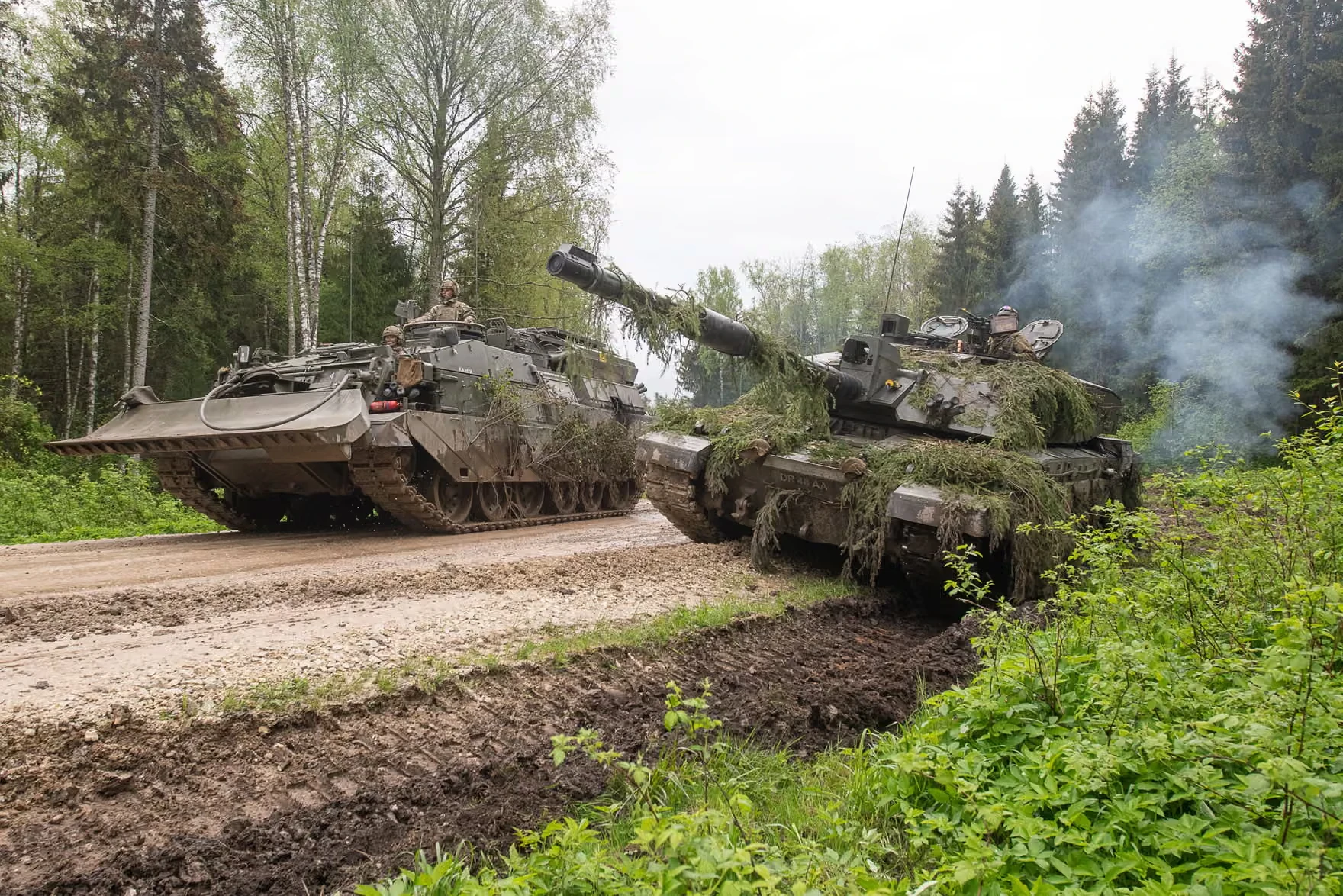 Війська НАТО беруть участь у масштабних військових навчаннях разом з естонськими силами оборони — Райго Паюла
Moscow would not necessarily begin with a tank column crossing the border. A test below the threshold of major war is more likely: drones in allied airspace, sabotage on a railway, a strike on a cable, an incident near the Suwałki corridor, a provocation at sea or an “accidental” border violation. Such actions allow Russia to probe NATO without giving allies an easy legal answer.
That is why NATO’s eastern flank today fears the gray zone more than a classic invasion. Russian drones, sabotage, cyberattacks and pressure on critical infrastructure have already become part of Europe’s security reality. Front-line states are strengthening fortifications, surveillance and short-range air defense, but these efforts remain uneven.
For the Baltic states, the problem is especially acute. Estonia, Latvia and Lithuania have limited strategic depth, little reaction time and close proximity to Russian forces in Kaliningrad and mainland Russia. If a crisis begins quickly, the question will not only be whether allies come, but whether they arrive before facts on the ground have already changed.
Poland has a different scale, but a similar fear. It has sharply increased defense spending, purchased weapons, expanded its army and positioned itself as the main rear hub for supporting Ukraine. Yet that is precisely what makes it one of the first targets for Russian pressure. Moscow understands that a strike on Poland would be not only a military act, but a political test of the entire alliance.
NATO is trying to respond with money and plans. Allies have agreed on a new framework for defense investment that is meant to sharply increase spending on defense and security in the coming years. This is a historic shift, but for the eastern flank the question is not only the final target. It is the pace.
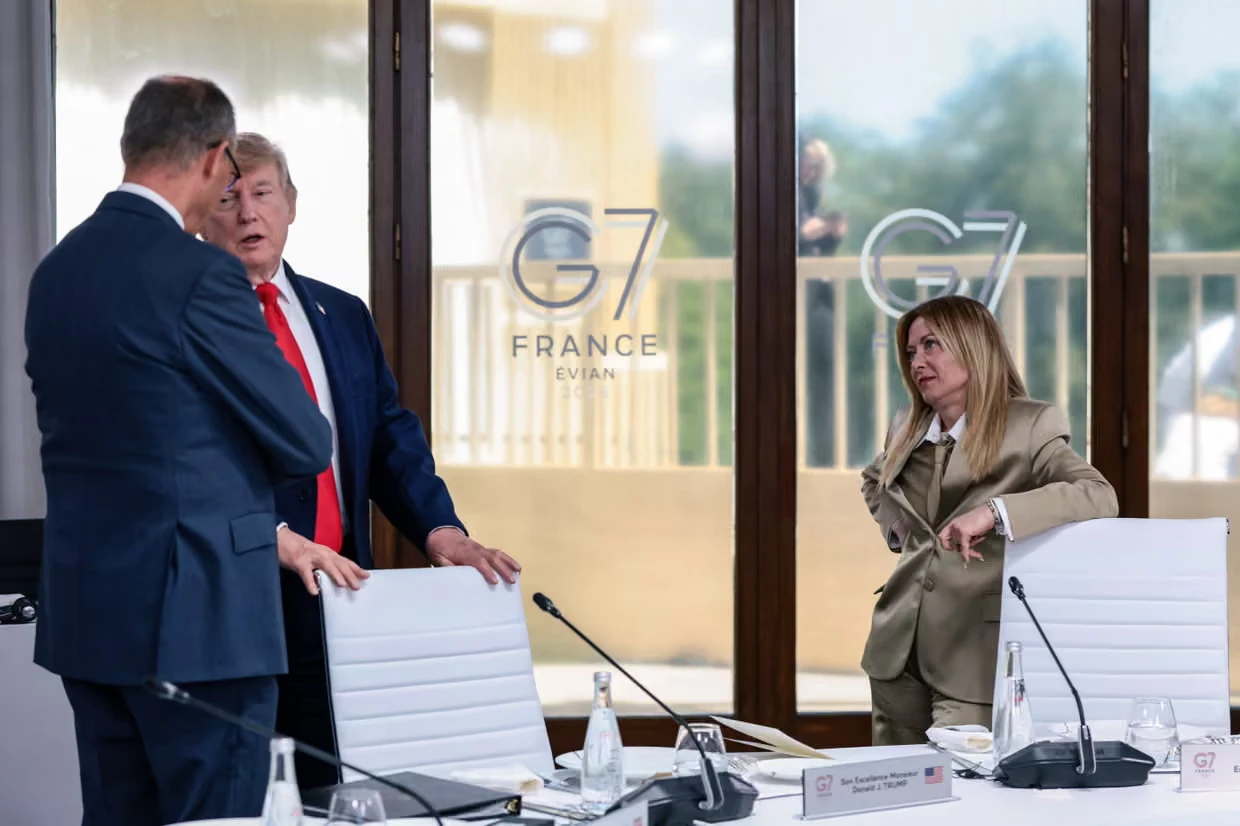 Мелоні заявила, що Трамп «повністю вигадав» історію, в якій він стверджував, що вона благала його сфотографуватися з нею під час саміту G7 — Евелін Хокштейн
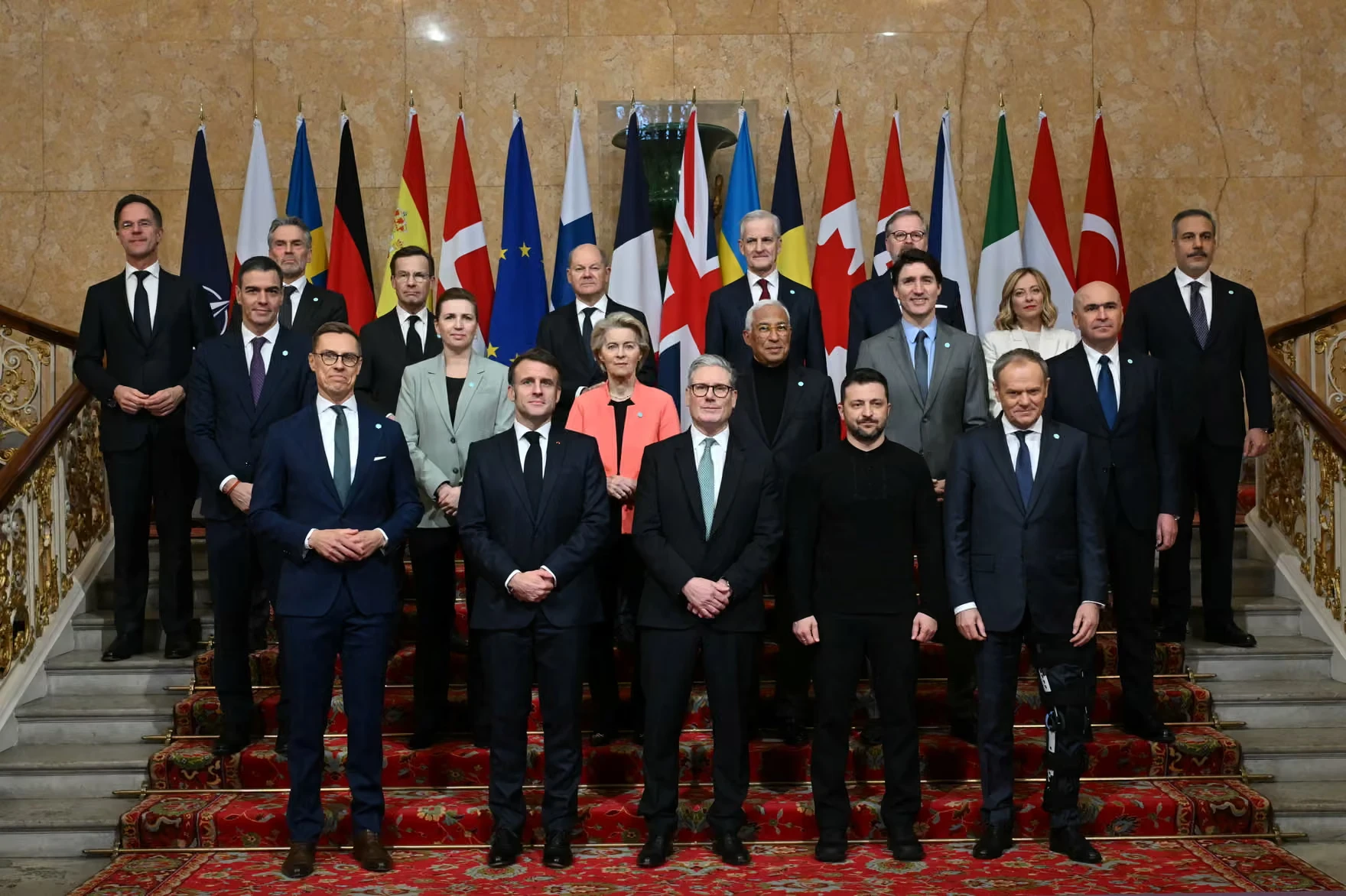 Стармер з лідерами групи країн, яка згодом стане відомою як «коаліція бажаючих», у Лондоні в березні 2025 року — Джастін Талліс
The next decade is too distant for states that live next to Russia every day. They need ammunition depots, air defense, long-range systems, railway mobility, military logistics, protection for ports, energy infrastructure and communications not someday, but now. Russia will not wait for European budget cycles to conclude.
The main dependence on the United States is not the number of soldiers, but the quality of capabilities. Europe can expand its armies, but it still relies heavily on American intelligence, satellite data, strategic aviation, missile defense, logistics, command structures and nuclear deterrence. Without those layers, European defense is not empty, but it is far less complete.
That is why discussions about a possible review of the American military presence in Europe provoke such nervousness. Even if any real reduction of forces is limited, uncertainty itself forces allies to prepare for scenarios in which the United States remains politically present but militarily less available.
A new security formula is emerging: NATO must remain transatlantic, but Europe can no longer be strategically helpless without America. For many capitals, this is a painful admission. For decades, European defense rested on the assumption that the United States would come, coordinate and fill the most difficult gaps. That assumption now needs insurance.
Ukraine has become both a warning and a school for Europe. It has shown that Russia is capable of fighting a long, brutal and technologically adaptive war. But it has also shown that the Russian army can be contained, exhausted and struck if there are drones, artillery, air defense, intelligence, industry and political will. The eastern flank is studying that experience closely.

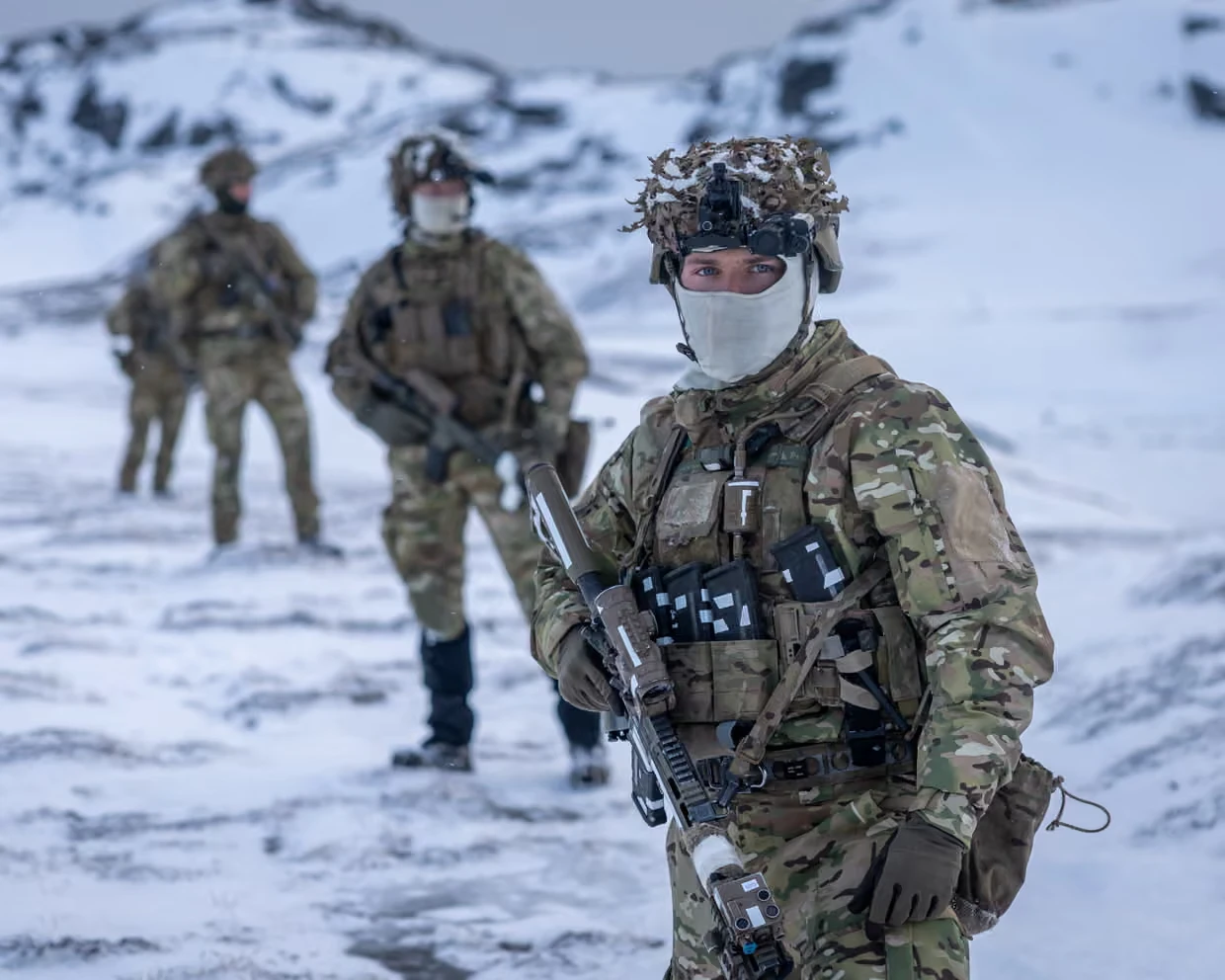 Данські солдати в Гренландії. У січні Трамп знову підтвердив свої погрози анексувати Гренландію від Данії — Саймон Елбек
The paradox is that Ukraine is now buying NATO time. The Russian army is tied down in battles in Donbas, spending equipment, manpower, missiles and industrial capacity. But time must not be confused with a guarantee. If Europe uses it for conferences and declarations, it will be lost. If it uses it for production and defense integration, it can become a strategic advantage.
Politically, the eastern flank is no longer asking Europe simply to “understand the threat.” It is demanding that the threat be made practical: buy ammunition, connect railways and ports to military plans, deploy air defense, create reserves, cut bureaucracy, prepare civilian infrastructure and teach societies to live with prolonged risk.
This also changes the idea of European integration itself. It used to be measured largely by markets, regulations, funds and political compromise. Increasingly, it is measured by the ability to move a brigade, defend an airport, keep an energy grid running, shoot down a drone, produce a shell and withstand the pressure of a Russian provocation.
The risk is that Moscow may decide to test NATO precisely at a moment of political confusion. Not because Russia is infinitely strong, but because it has traditionally looked for short windows in which the West argues, hesitates and delays decisions. The eastern flank fears not only Russian power. It fears Western delay.
In this sense, the question of the United States is not anti-American. It is realistic. Europe cannot force Washington always to act as it expects. But it can reduce the price of American unpredictability: build its own stockpiles, its own production, its own rapid-response plans and its own political capacity to act before the debate in Washington is over.
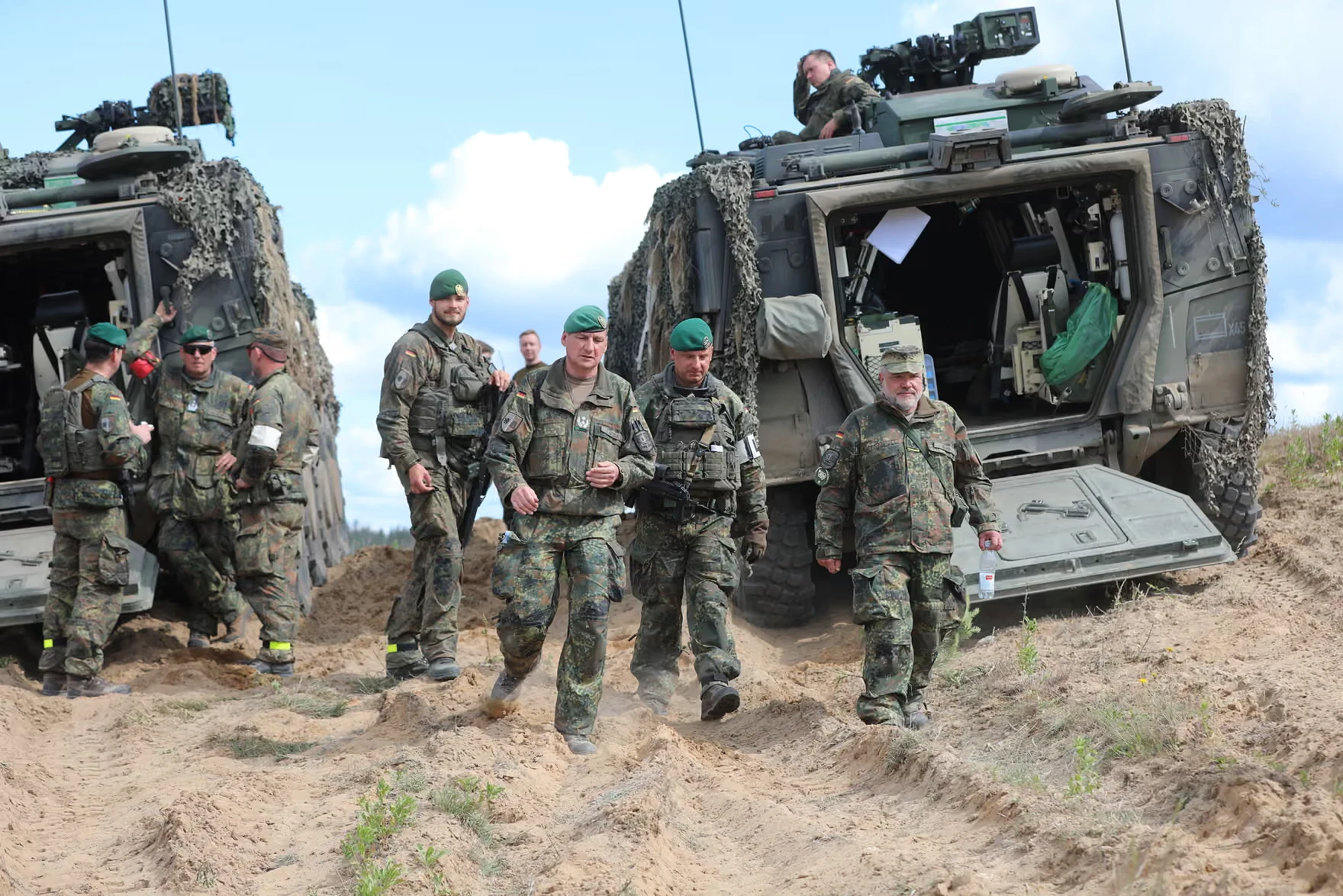 Німеччина розгортає повну бригаду військ до Литви, що стане першою постійною німецькою іноземною базою з часів Другої світової війни — Аліус Корольовас
NATO’s eastern flank remains quiet only on the surface. Beneath that quiet, the entire architecture of security is being reconsidered at speed. Poland, the Baltic states, Finland, Sweden, Romania and others are no longer asking whether Russia can be dangerous. They are asking whether Europe can become strong enough before the next test.
The greatest change is that trust is no longer treated as free. It has to be backed by warehouses, soldiers, radars, roads, factories, decisions and a willingness to act without illusions. NATO may remain the strongest alliance in the world. But if its eastern flank doubts that help will arrive in time, the alliance’s strength becomes not a question of power, but of timing.
Time is now the central currency of security. Time before a Russian provocation. Time before an American decision. Time for Europe to rearm. Time that Ukraine is buying with blood. If NATO wants to preserve deterrence, it must ensure that the Kremlin never faces the central temptation: to test whether the West can answer quickly enough.