







.jpg)













Russia’s overnight attack on the Odesa region followed the map of Ukrainian trade with unusual precision. Port and export facilities were struck alongside energy infrastructure and a border route linking southern Ukraine with Romania, extending a campaign that has increasingly focused on the country’s ability to move goods abroad.
Among the targets was the Orlivka-Isaccea ferry crossing on the Ukrainian-Romanian border. The attack damaged the checkpoint and forced authorities to suspend the processing of travellers and vehicles, redirecting traffic toward other crossings while emergency and repair teams assessed the site.
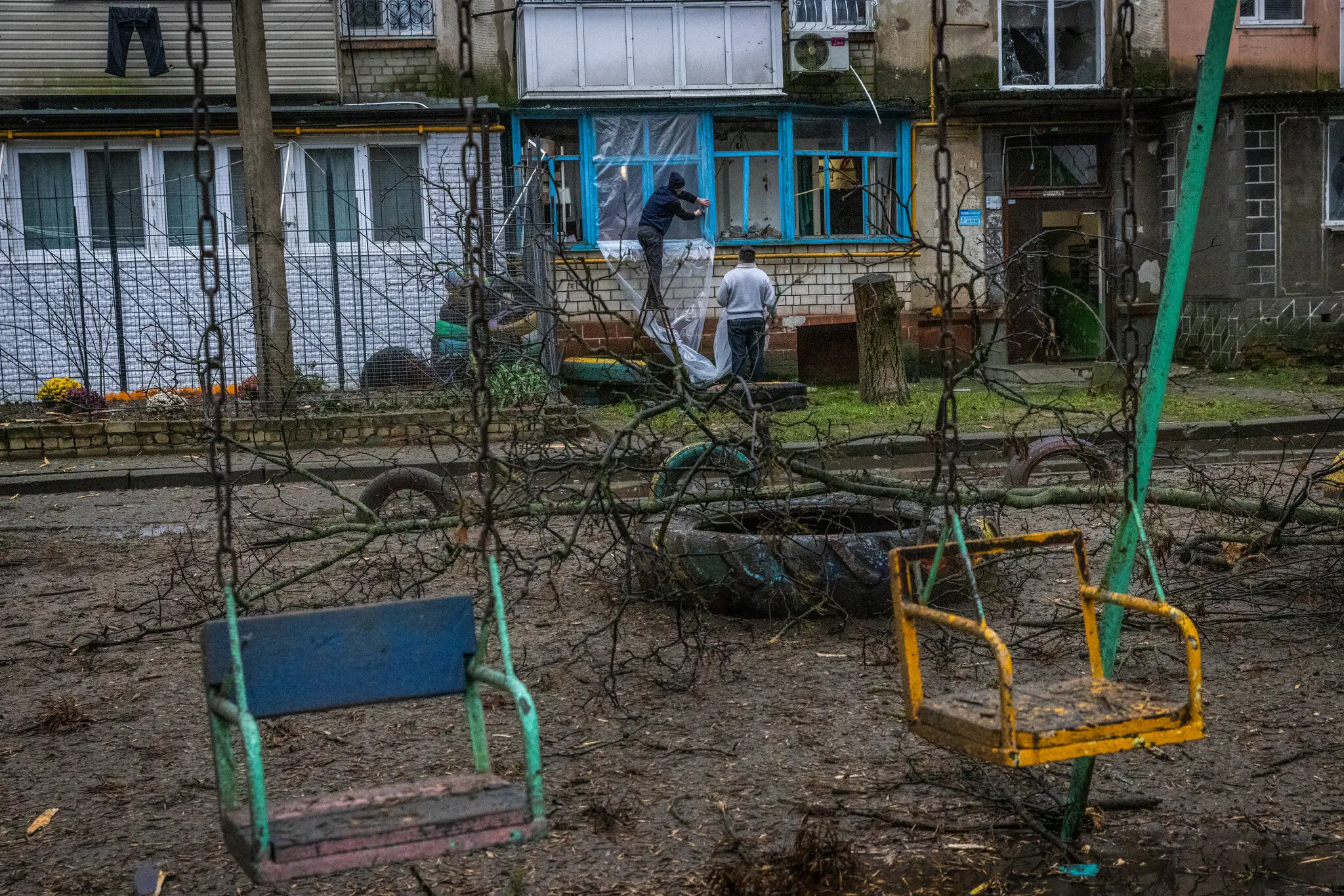
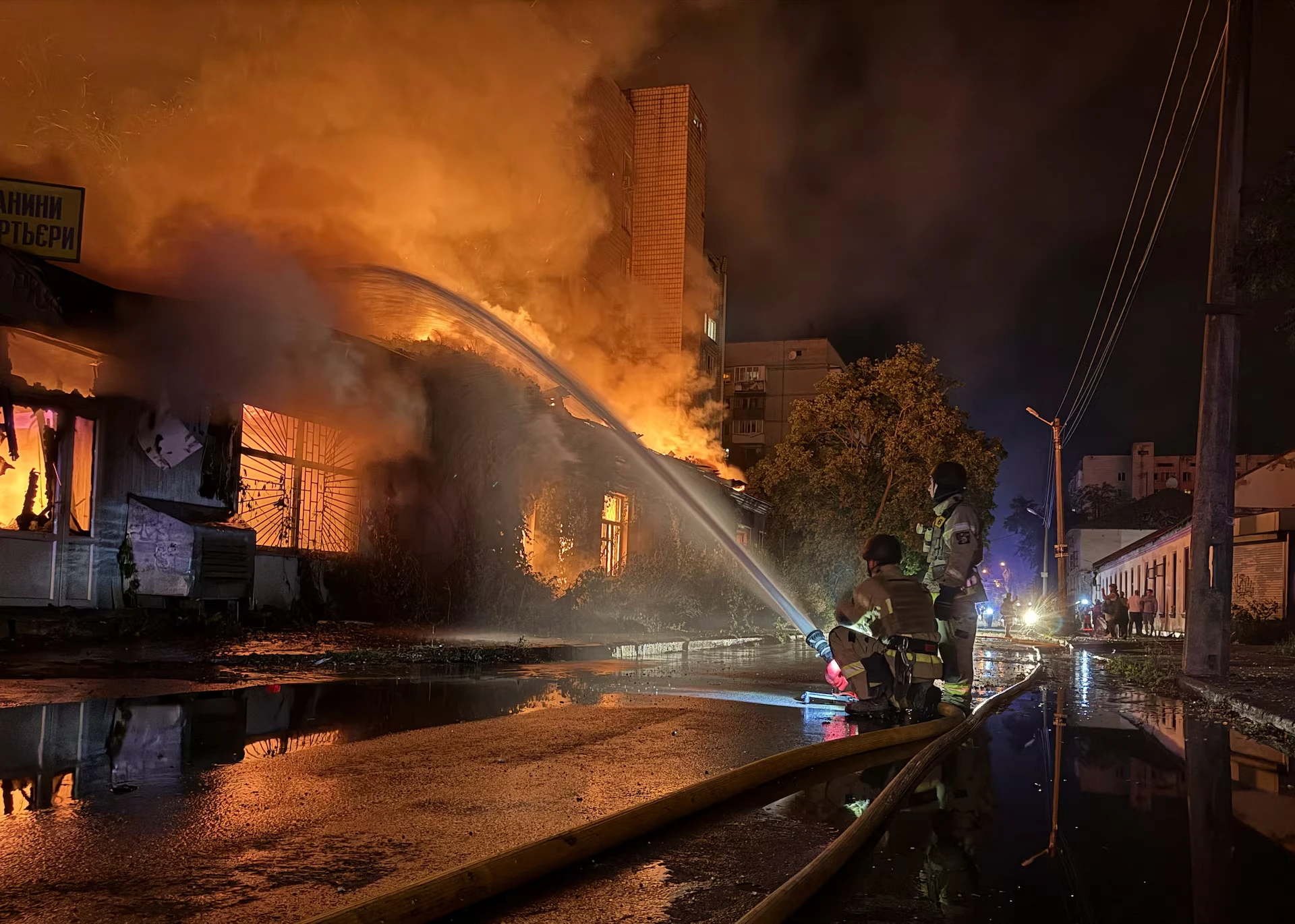
President Volodymyr Zelenskyy said Russia had deliberately damaged both the border crossing and export infrastructure. Ukrainian emergency services also reported damage to energy facilities and a fire at a residential building, where at least one person was injured.
The significance of the strike goes well beyond the physical damage at one crossing. Russia has sharply intensified attacks on the Odesa region, home not only to Ukraine’s principal Black Sea ports but also to the Danube ports of Reni and Izmail, which have become increasingly important to keeping exports moving.
According to Daycom’s analysis of verified public reporting, the Odesa port infrastructure attack illustrates the next stage of Russia’s campaign against Ukrainian trade. When one route becomes unreliable and Kyiv shifts cargo elsewhere, the substitute route itself becomes exposed to attack, delay and rising costs.
Before Russia’s full-scale invasion, seaports handled the overwhelming majority of Ukraine’s export volumes. As repeated attacks made maritime operations more dangerous, Kyiv increasingly relied on the Danube, railway connections and road crossings along its western border to keep agricultural and industrial goods flowing.
None of those alternatives can fully reproduce the capacity of major deep-water Black Sea ports. River ports are smaller, rail freight is generally more expensive, and trucks cannot move anything close to the volumes that bulk carriers can transport in a single voyage.
That means damage at one point in the system can produce consequences far beyond the immediate site. Close a border crossing and traffic shifts elsewhere. Slow a port and railcars accumulate on approach. Delay ships on the Danube and the entire logistics chain begins to absorb additional costs.
The pressure is already visible on the river. By the end of August, dozens of vessels were reportedly waiting to enter Ukrainian Danube ports through the Sulina Channel. The queue had grown as exporters tried to compensate for the reduced reliability of other maritime routes.
The Sulina route is strategically valuable but physically constrained. Vessel movements depend on pilots, channel capacity, navigation conditions and port availability. Those limits existed before the latest Russian attacks and become more severe when suddenly asked to absorb cargo diverted from larger Black Sea terminals.
For shipowners, every day spent waiting translates directly into money. Charter costs continue, crews remain on board, schedules slip and insurance exposure increases. Those expenses eventually become part of the price of moving Ukrainian grain or other goods to international buyers.
Russia therefore does not have to destroy a shipment to make Ukrainian exports less competitive. It can increase the cost of insurance, extend voyage times, force cargo onto longer routes and create additional handling stages. Each disruption adds another charge before the product reaches the global market.
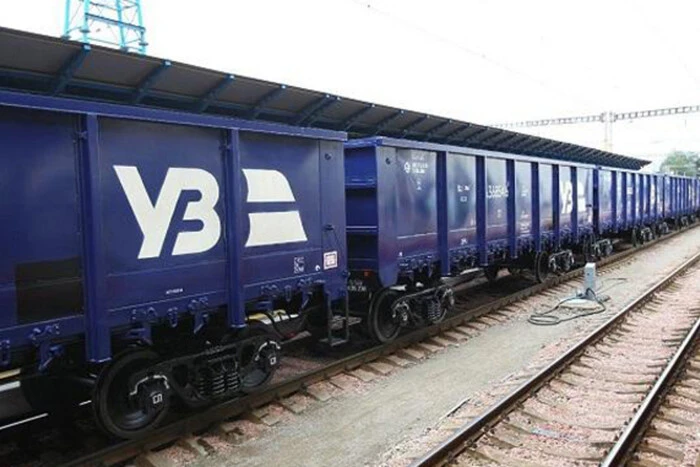
Ukraine’s railway operator has been trying to compensate by increasing grain deliveries toward the Danube. Rail can move substantial volumes and offers a vital alternative when maritime routes are disrupted, but greater numbers of railcars do not solve the problem if river ports and vessels cannot process the cargo quickly enough.
In that case, the bottleneck simply moves. Grain that once waited near a Black Sea terminal may instead accumulate in wagons, warehouses or loading facilities closer to the Danube. The route remains open in principle while its practical capacity becomes steadily more restricted.
Air-raid alerts create another form of lost capacity. Odesa region endured hundreds of alerts during August, amounting to many days of cumulative disruption. Even when a terminal escapes physical damage, workers may have to suspend loading, move to shelters and wait before operations can safely resume.
Wartime port capacity therefore cannot be measured only by cranes, berths and railway tracks. A terminal designed to handle a certain number of tonnes may achieve far less if operations are repeatedly interrupted by drones, missiles and the procedures required to protect its workforce.
The strike on Orlivka adds a land component to that same pressure. The ferry crossing connects Ukraine with Isaccea in Romania across the Danube. When it shuts, trucks and private vehicles do not disappear; they are diverted to other crossings, where they add to existing traffic.
A relatively local attack can therefore generate delays far from the blast site. Hauliers drive additional kilometres, fuel costs rise, border queues lengthen and customs officials elsewhere have to process volumes that were never intended to arrive through a single alternative checkpoint.
The location also places the wider campaign directly beside NATO territory. The confirmed target was on the Ukrainian side, so the attack does not in itself constitute a strike on Romania. But drones, explosions and debris are appearing increasingly close to the alliance’s external border.
For Bucharest and other NATO capitals, that proximity means continuous monitoring and the persistent risk that a drone could deviate from its route or debris could fall across the frontier. The war’s logistics battle is taking place only kilometres from infrastructure belonging to the European Union and NATO.
The Danube became crucial to Ukraine precisely because it provided redundancy. If Black Sea operations were constrained, cargo could be redirected through Reni and Izmail. When river capacity became saturated, some volumes could move by rail or road through western crossings.
Russia’s campaign increasingly challenges that entire concept of redundancy. A major seaport, a river terminal, a sorting hub, a railway depot and a border crossing perform different tasks, but economically they belong to the same chain: moving goods from a Ukrainian producer to a foreign customer.
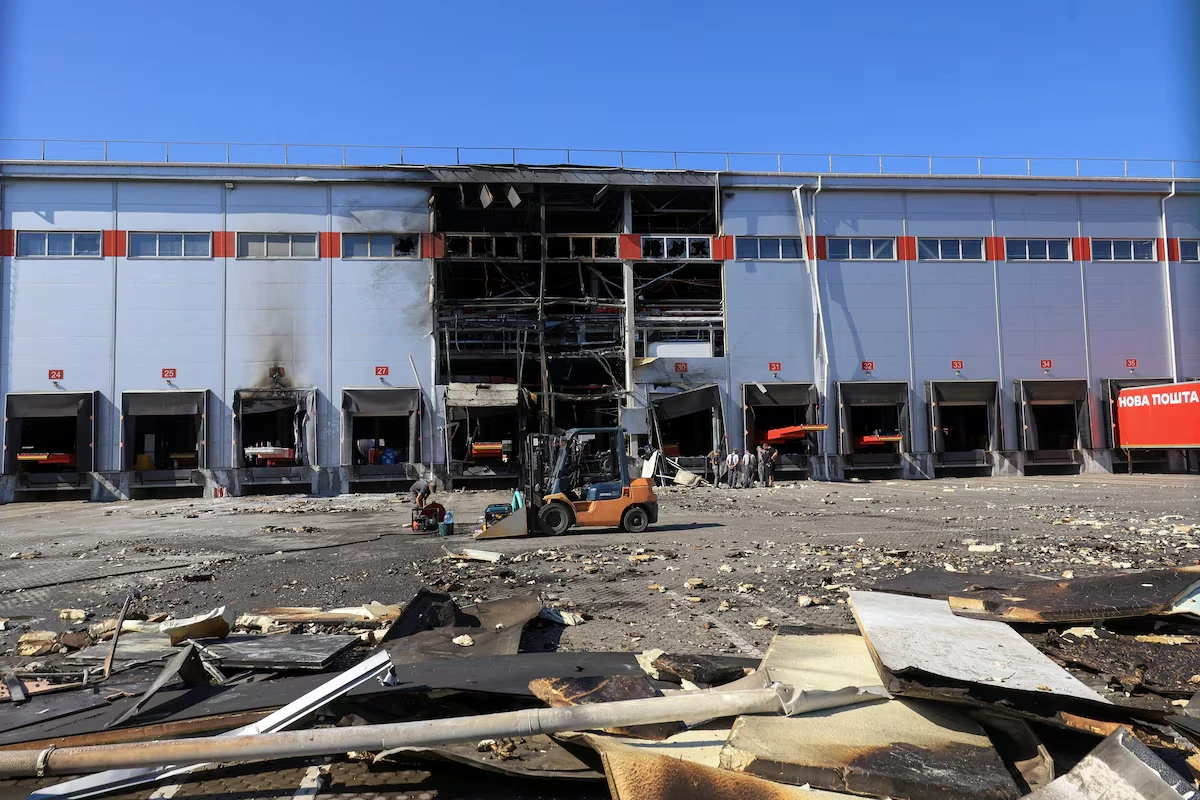
Recent strikes underline the pattern. Russian drones have damaged logistics and sorting facilities, while ballistic missiles have struck railway infrastructure around Kyiv. At the same time, southern export routes continue to face attacks on ports, energy systems and crossings.
The cumulative effect is pressure not simply on one industry but on Ukraine’s ability to move almost anything efficiently. Grain, industrial goods, parcels, fuel, passengers and military supplies all depend on transport networks that increasingly have to operate while parts of those networks are under attack.
Odesa region is especially exposed because so many alternatives converge there. Black Sea terminals, Danube ports, railway lines, energy systems and routes toward Romania and Moldova all occupy the same broad geographical space, making the region a critical junction in Ukraine’s wartime economy.
Repairing one damaged facility therefore does not solve the strategic problem. Ukraine must restore infrastructure while simultaneously dispersing operations, creating alternative routes and deciding where to allocate scarce air-defence systems across a long and vulnerable logistics network.
For the agricultural sector, the pressure comes at a particularly sensitive time. Grain has a seasonal rhythm. Harvests cannot remain indefinitely in fields or already crowded elevators, while farmers depend on export sales to generate the cash required for the next production cycle.
When transport becomes more expensive, part of that cost is pushed back toward the producer. A trader facing higher freight, insurance and handling charges can offer less for grain inside Ukraine, meaning a Russian attack hundreds of kilometres away can ultimately reduce the income received by a farmer.
The consequences do not necessarily stop at Ukraine’s border. Ukraine remains a significant supplier of grain to international markets, and prolonged restrictions on its export capacity can tighten supply and add volatility, particularly for import-dependent countries with little financial room to absorb higher food costs.
No single Russian strike determines the global price of wheat or corn. Harvests in the United States and South America, weather, currency movements and inventories all matter. What is potentially significant is the cumulative effect of persistent disruption to one of the world’s major agricultural exporters.
That is why a queue of vessels on the Danube may matter more economically than the spectacle of a particular explosion. It shows that an alternative route can remain physically open while becoming too congested to replace the throughput lost elsewhere.
For Kyiv, the answer cannot be limited to repairing Orlivka. It requires more border capacity, stronger railway links, additional storage near alternative routes and sufficient air defence to protect a dispersed network rather than a handful of major ports.
Romania consequently becomes part of Ukraine’s export resilience. Romanian ports, roads, waterways and border infrastructure help absorb cargo whenever Ukraine’s own maritime routes are disrupted, tying the security of Ukrainian trade more closely to European transport systems.
But the western route also has limits. Different railway gauges require additional handling at the EU border, road crossings can become congested quickly, and Danube navigation depends on channel depth, pilots and available vessels. None of these modes can simply replace deep-sea shipping at scale.
The Black Sea therefore remains indispensable for very large export volumes. A single bulk carrier can move cargo that would require hundreds of railway wagons or a vast convoy of trucks. For an economy exporting millions of tonnes of agricultural goods, that difference is decisive.
Russia does not need to impose a perfect physical blockade to achieve economic damage. If shipowners perceive routes as more dangerous, insurance premiums rise. If vessels wait longer, freight costs climb. If crossings close, trucking expenses increase. The system becomes steadily less efficient.
Each additional cost may appear manageable on its own. Across millions of tonnes of exports, however, they accumulate into substantial losses, reducing Ukraine’s foreign-currency earnings and making its products less competitive against suppliers operating through safer logistics networks.
The strike on Orlivka is a concise example of that arithmetic. One closed crossing moves traffic elsewhere; one damaged terminal increases railway queues; one prolonged alert interrupts loading. Repeated often enough, small disruptions become a structural surcharge on Ukrainian trade.
The battle over Ukraine’s ports is therefore no longer only a battle over quays and ships. It concerns the entire chain beginning at a farm or factory and continuing through warehouses, railcars, roads, customs posts, the Danube and the Black Sea before reaching an overseas buyer.
Russia is attempting to turn every workaround Ukraine develops into the next bottleneck. Kyiv’s response is the opposite: build enough parallel routes and reserve capacity that damage to one node cannot stop the broader flow.
The September 1 Odesa port infrastructure attack shows how difficult that contest has become. Ukraine can still send goods toward the Danube, through Romania and onward to international markets, but every diversion makes the route longer, more expensive and increasingly dependent on European infrastructure.
That is why protecting Ukrainian exports is becoming more than a Ukrainian economic problem. As the logistics network shifts westward and closer to EU territory, the resilience of Ukraine’s trade routes is becoming part of Europe’s own transport, food-security and strategic infrastructure.