




















The United States is continuing discussions on allowing Ukraine to participate in the production of Patriot interceptor missiles, even after Donald Trump publicly cast doubt on such an arrangement. The talks have not been halted, but their outcome will depend on technology security, political will and the readiness of allied countries to reshape their defense industries.
The most practical option would have Ukrainian factories manufacture selected components for final assembly in Germany. Other possibilities include adding Kyiv to an existing American-European production program and allowing Ukraine to participate in the manufacture of a less expensive PAC-3 variant.
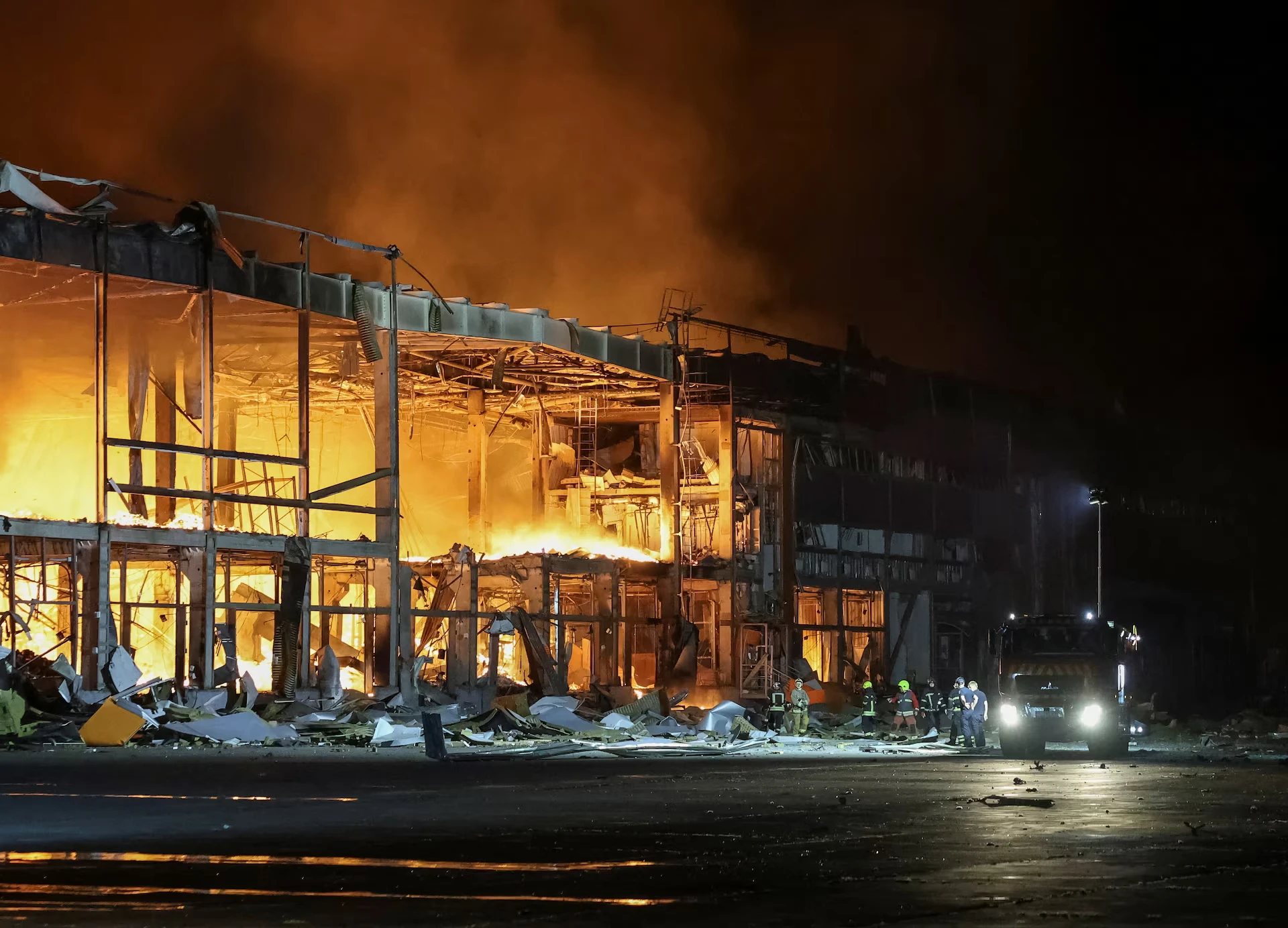
For Ukraine, this is no longer a question of industrial prestige. On August 5, Russian forces launched four Zircon missiles, 24 Iskander-M ballistic missiles and 115 drones. Ukrainian air defenses destroyed or suppressed most of the drones but failed to intercept any of the missiles.
In Daycom’s assessment, the Patriot negotiations expose the central contradiction in Western military support: Ukraine needs interceptors immediately, while the United States and Europe are considering solutions that may not produce results for years. The vulnerability of Ukrainian cities lies in the gap between those two timelines.
President Volodymyr Zelensky has warned that Ukraine’s stock of Patriot interceptors is effectively exhausted. During one recent Russian attack, only one of 27 ballistic missiles was reportedly brought down.
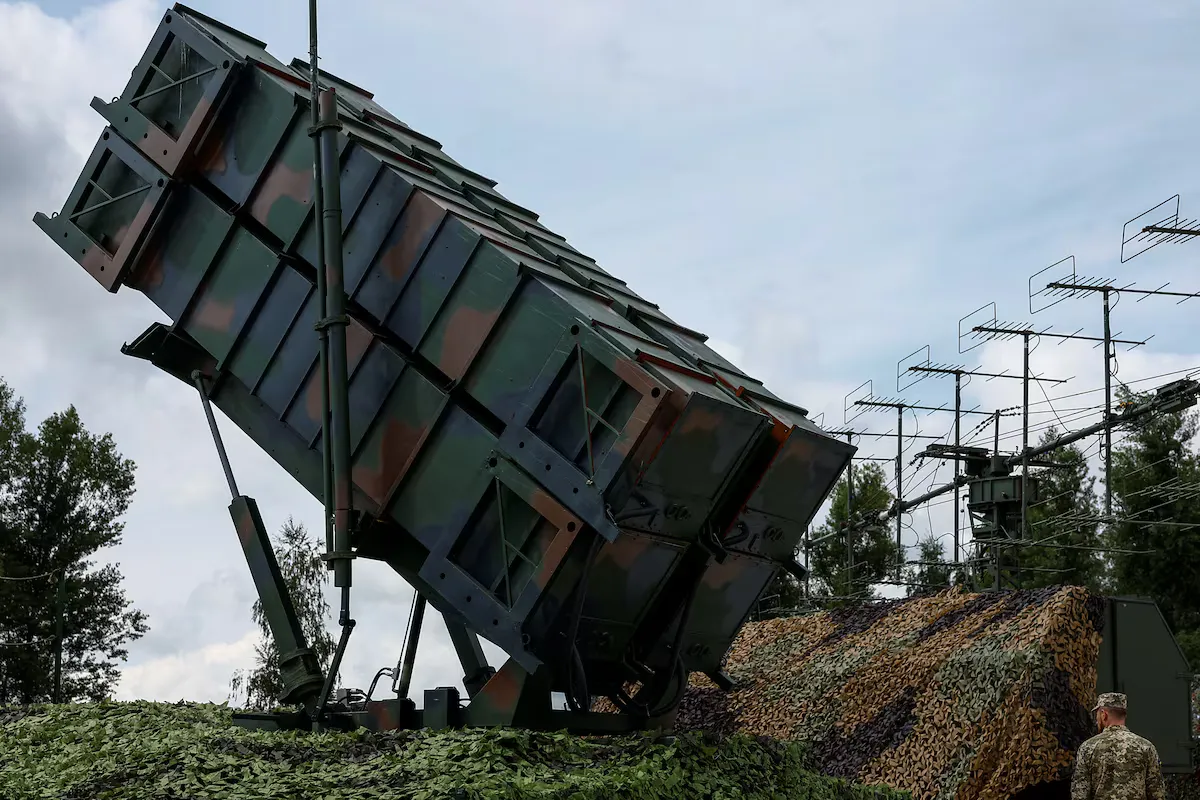
The PAC-3 is the most advanced interceptor used by the Patriot system and one of the few Western weapons capable of defeating ballistic missiles. Its availability directly affects how many Russian weapons reach Kyiv, industrial facilities and energy infrastructure.
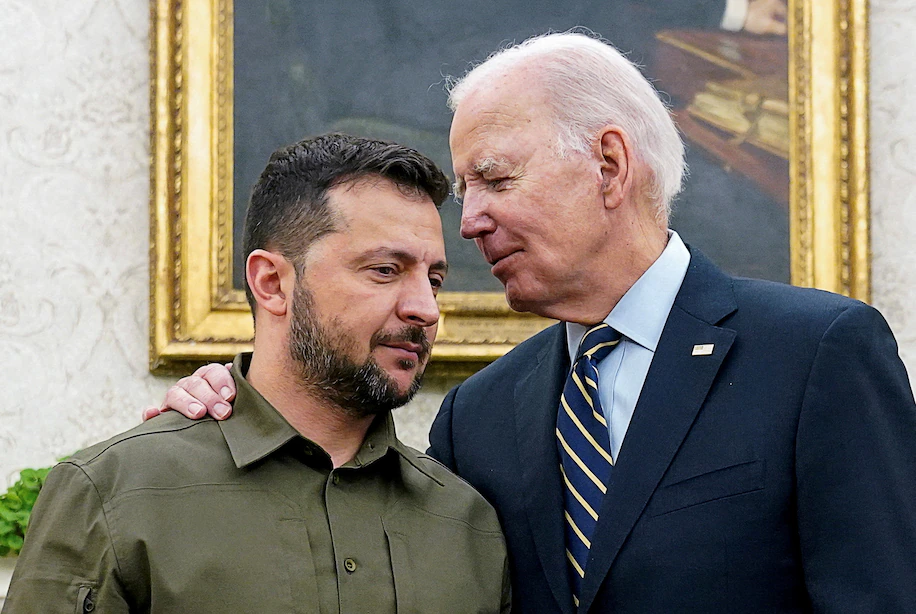
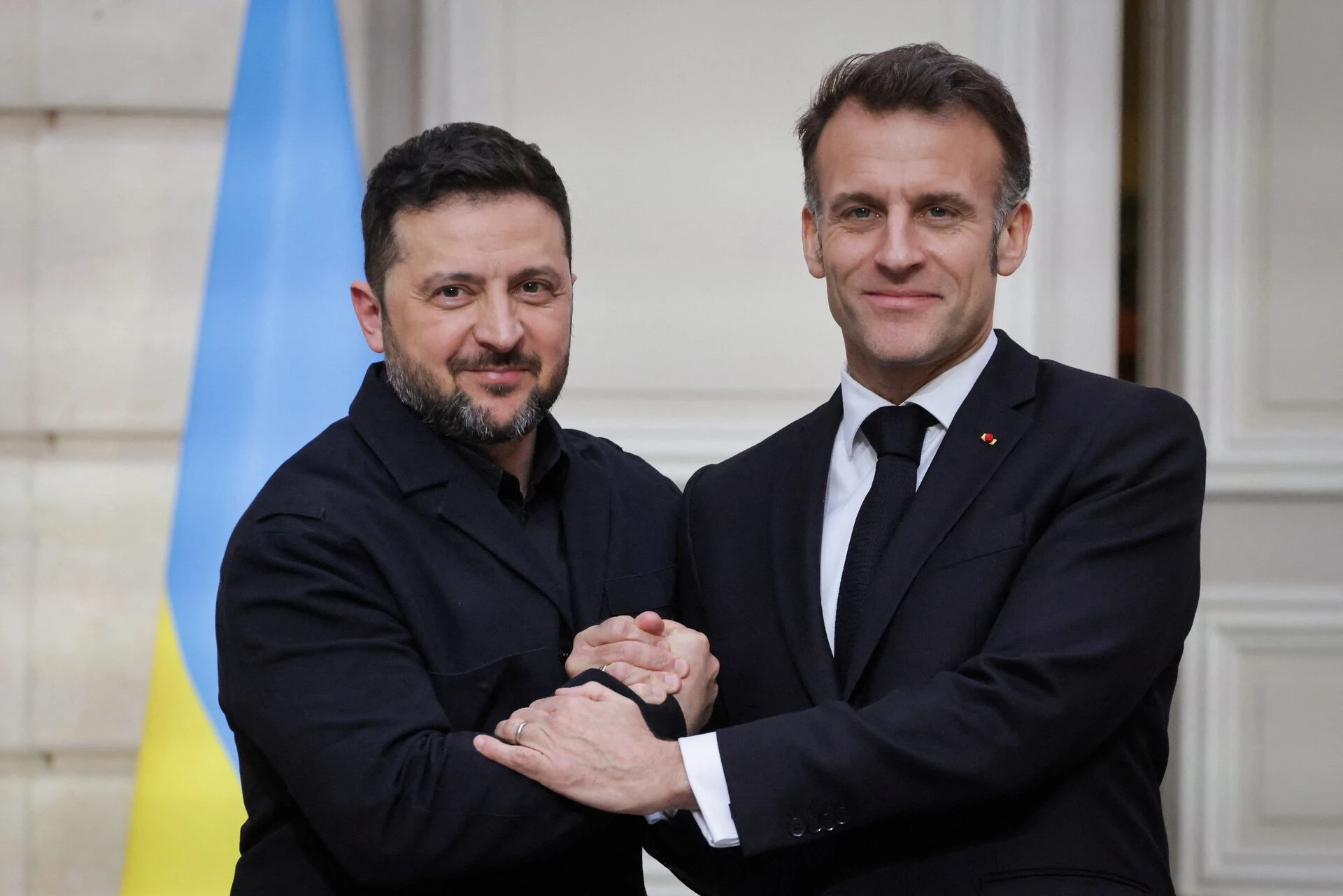
During a meeting with Zelensky in Ankara last month, Trump said the United States could grant Ukraine a license to manufacture PAC-3 missiles. Only weeks later, he changed his tone, saying Washington had not agreed to such a plan and must be careful about allowing another country to produce the weapon.
The reversal surprised more than Kyiv. It demonstrated how heavily Ukraine’s air defense still depends on the personal decisions of the American president, even when diplomats, military officials and defense companies are already engaged in negotiations.
Trump’s public skepticism did not become a formal order to end the discussions. American officials, arms manufacturers and military representatives continued examining possible production models.
Matthew Whitaker, the United States ambassador to NATO, has emerged as one of the principal advocates of an agreement. During a visit to Kyiv in July, he assessed Ukrainian industrial capacity and discussed cooperation with officials and defense executives.
Washington has publicly acknowledged that it is exploring several forms of future defense-industrial cooperation with Ukraine. Every option, however, must meet American requirements for protecting sensitive technology.
Security concerns have long restricted Patriot production outside the United States. American military officials and industry executives have feared the loss of design information, manufacturing processes and software.
The war has altered the balance between secrecy and capacity. Strict control protects American technology, but it also limits the production of weapons that are now in short supply for the United States, Ukraine and other allies.
The most feasible model would divide the manufacturing cycle. Ukrainian factories could produce specific components without gaining access to the full technological system, while final assembly and quality control would take place in Germany.
Such an arrangement would allow Washington to retain control over the most sensitive elements while using Ukraine’s industrial capacity. For Kyiv, it would mark a transition from dependence on finished deliveries toward participation in an international production chain.
Germany already has experience producing older Patriot missiles and is expected to manufacture more advanced interceptors. That makes it a natural location for assembling components made in several countries.
Another possibility is to include Ukraine in an existing American-European program. Politically, this could prove easier than negotiating a separate bilateral license, because Kyiv would operate within a broader allied framework.
A new interceptor known as the PAC-3 Adapted Capability Effector is also under consideration. Designed as a lower-cost alternative, it could address one of the defining problems of modern air defense: the weapon used to destroy a target often costs much more than the target itself.
Russia combines expensive ballistic missiles with relatively cheap drones, forcing Ukrainian air defenses to use several classes of interceptors. Kyiv needs a layered system in which the most valuable missiles are reserved for the most dangerous threats.
A cheaper Patriot interceptor would not replace the PAC-3 in every scenario. It could, however, reduce pressure on limited stocks and make air defense more sustainable during large, combined attacks.
Ukraine’s participation in such a program would have strategic as well as operational value. Ukrainian engineers have accumulated extensive experience against Russian missiles and drones under conditions no Western military has encountered at comparable intensity.
The United States also has something to gain. Ukrainian advances in drones, battlefield software, electronic warfare and rapid weapons modification are already of interest to American military planners.
Patriot production could therefore become part of a broader exchange. Washington would open access to selected air-defense technologies, while Kyiv would contribute combat experience and innovations tested against the Russian military.
Even the best agreement, however, would not solve the immediate shortage. Ukraine would not begin receiving newly produced missiles for at least a year, and fully licensed production lines often take three to seven years to become operational.
Manufacturing talks therefore cannot replace emergency deliveries. Ukraine will continue asking allies to transfer missiles from existing arsenals, rearrange delivery schedules and conclude long-term procurement agreements.
Kyiv may seek temporary access to interceptors ordered by other countries, promising replacement from later production batches. Such arrangements can save time, but they require allies to accept a temporary reduction in their own defenses.
That is where the competition becomes most intense. Global Patriot stocks have declined during the widening conflict with Iran, and interceptors previously designated for Ukraine have been redirected to American forces and U.S. partners in the Gulf.
Washington is attempting to protect Israel, Gulf energy infrastructure, American military bases and Ukrainian cities at the same time. Existing production capacity is no longer sufficient for the number of sites requiring protection.
The Patriot debate is therefore part of a broader industrial crisis. The United States built a global alliance system around promises of military protection without creating a manufacturing base capable of supporting every theater simultaneously.
Ukraine has demonstrated how quickly stockpiles designed for short campaigns can be depleted in a prolonged, high-intensity war. Even the most sophisticated air-defense system loses much of its value without a continuous supply of interceptors.
Europe is confronting the consequences of decades of limited defense investment. The continent has factories, engineers and capital, but many critical technologies remain under American control, and expanding production requires licensing approval.
Allowing Ukraine to manufacture Patriot components could establish a new model. Instead of relying on occasional military aid packages, allies would create a distributed industrial network capable of replenishing stocks during a long war.
For Ukraine, such a structure is especially important because factories on its territory would immediately become Russian targets. Production lines would have to be dispersed, protected and duplicated abroad.
Final assembly in Germany would reduce part of that risk. Ukraine could participate in manufacturing without concentrating the entire process at facilities vulnerable to ballistic missile strikes.
The arrangement would not give Kyiv full autonomy. Key components, software, certification and political control would remain in American and European hands.
Even limited participation, however, would change Ukraine’s position. A country that manufactures components and belongs to the supply chain has greater negotiating leverage than one that waits for approval of the next shipment.
Trump’s doubts therefore matter beyond a single license. The dispute concerns two competing models of support: managed dependence on American stockpiles or the gradual construction of a shared defense-industrial system.
The first allows Washington to retain maximum control. The second requires trust, partial technology transfer and recognition that the United States cannot satisfy global demand without allied production.
A subsequent phone call between Zelensky and Vice President JD Vance was intended to reduce the uncertainty. Kyiv was reassured that agreements reached between the two presidents would be honored.
A verbal assurance is not a manufacturing contract. Until there is a signed agreement, a security framework and committed financing, the future of Ukrainian Patriot production will remain vulnerable to shifts in American domestic politics.
Russia will not wait for the negotiations to conclude. Each new mass attack deepens the shortage of interceptors and reduces Ukraine’s ability to protect major cities from ballistic missiles.
Kyiv consequently needs two parallel strategies. The first is the immediate transfer of missiles from allied stocks. The second is integration into a production system that can reduce dependence on political changes in Washington over time.
These approaches are not alternatives. Without emergency deliveries, Ukraine may lack the means to defend itself today. Without participation in production, it will face the same crisis whenever another global conflict redirects Western weapons elsewhere.
The negotiations continue despite Trump’s doubts because the logic of the war is stronger than political improvisation. Western countries need more interceptors than they can currently manufacture, while Ukraine possesses industrial capacity and combat expertise that are increasingly difficult to ignore.
The question is no longer whether production should be expanded. It is whether the allies can turn negotiations into working assembly lines before the Patriot shortage becomes a permanent Russian advantage.